
Before preparing the property, decide when the household will leave and how everyone will travel. In ordinary dry conditions, one useful next step may be moving essential records out of low storage or arranging service for a known drainage problem. No maintenance task or barrier guarantees that water will stay outside.
Start with the complete flood preparedness guide. If an evacuation or higher-ground instruction applies, follow it. No pump, barrier, vehicle, or stored possession is worth entering rising water or losing the safe route.
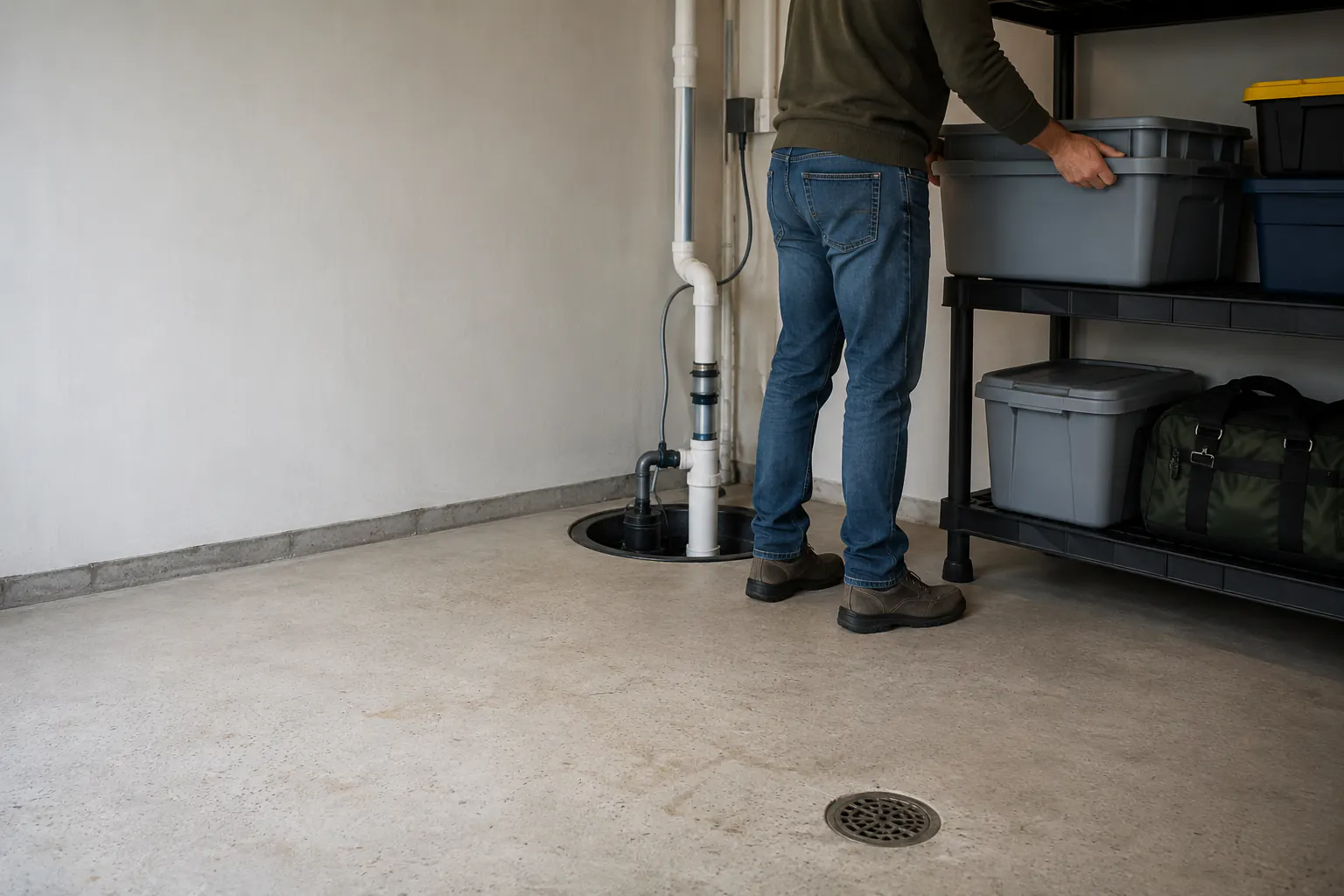
Know how water can reach the building
Flooding can come from rivers, coastal water, intense rainfall, overloaded drainage, groundwater, snowmelt, dam or levee problems, slopes, burn scars, sewer backup, and water redirected from nearby property.
Review official flood-risk and evacuation information, then document building-specific entry paths in ordinary dry conditions:
- doors, window wells, vents, and low wall openings;
- basement stairs and below-grade garage ramps;
- floor drains, toilets, showers, and sewer connections;
- foundation cracks and utility penetrations;
- roof drainage, gutters, downspouts, and ground drains;
- sump basin, discharge line, check valve, and backup power;
- wellhead, septic components, cistern, and water-treatment equipment;
- grading that directs water toward the structure.
Do not enter drains, culverts, pits, tanks, crawlspaces, wells, or confined areas. A wet-weather observation from a safe indoor or public position is not permission to approach moving water.
Use the weatherproofing and insulation hub for ordinary-season moisture, ventilation, opening, and renter boundaries. A known wet sill, damaged opening, swelling, or stain belongs with the window and door water-intrusion warning guide, not a last-minute application of sealant before rain.
Establish the evacuation deadline first
Write the official and earlier household movement triggers before working on property protection. Use the flood watch and warning guide to connect alerts with decisions.
End outdoor work when:
- local authorities direct evacuation or higher-ground movement;
- a Flash Flood Warning affects the route or location;
- water starts covering any access road or low crossing;
- lightning, wind, darkness, unstable ground, or visibility makes work unsafe;
- the household needs the remaining time for medication, pets, accessibility, or transport;
- the preplanned stop time is reached.
Do not wait for water to reach the yard. Complete the flood evacuation plan while routes are open.
Move important contents out of the lowest areas
Prioritize items that protect health, identity, recovery, and continuity:
- medication and approved medical-device equipment;
- identification, insurance, ownership or lease records, and contacts;
- computers, encrypted backups, and essential chargers;
- irreplaceable family records and photographs;
- hazardous household chemicals that could contaminate floodwater;
- portable electrical equipment and batteries;
- pet supplies, mobility equipment, and evacuation bags.
Move only what can be handled without injury and without blocking stairs, exits, alarms, sprinklers, or electrical panels. Heavy appliances, fuel tanks, water heaters, HVAC, panels, and fixed equipment require qualified anchoring or elevation plans.
An upper shelf does not make hazardous chemicals safe if the shelf can collapse or water can overturn containers. Follow labels, fire codes, and local household hazardous-waste guidance.
Protect records before the forecast
Photograph rooms, lower-level contents, exterior elevations, utilities from a safe distance, serial numbers, and existing damage. Keep copies away from the property through an encrypted backup and protected physical set.
Review insurance with the licensed provider. Ask specifically about flood, sewer backup, contents, temporary housing, deductibles, exclusions, documentation, mitigation requirements, and waiting periods. A standard home or renter policy may treat water sources differently.
Keep contractor invoices, permits, inspections and prior repair records that you have. The flood damage documentation guide helps organize useful pre- and post-event evidence without delaying safety or mitigation.
Maintain roof drainage from safe access
Before flood season, check visible drainage from stable ground. Clear only ordinary ground-level debris that is safely reachable, dry and permitted. Arrange qualified help for gutters or components needing a ladder, roof access, removal of a grate or work near utilities.
The pre-storm exterior and drainage checklist limits the inspection to occupied areas and stable ground, with an early stop for active weather, unsafe access, utilities, trees, roofs, and structural concerns. Existing overflow, erosion, ponding, or discharge concerns route to the gutter and drainage guide; neither page authorizes a storm-time drainage redesign.
Discharge water only where local rules permit and where it does not harm foundations, slopes, septic systems, neighbors, or public ways. Extensions can become trip hazards or detach if improvised.
Roof work, tall ladder work, buried drainage, grading, retaining walls, erosion, and foundation drainage need qualified evaluation. Do not clear a drain during flooding, lift a grate, enter a culvert, or reach into water.
Test the sump system before the event
Identify:
- pump model, rated circuit, float or sensor, alarm, and discharge route;
- check valve and accessible visible piping condition;
- backup pump or approved battery system;
- expected runtime and battery replacement schedule;
- who services the system and how failure is reported.
Test only by the manufacturer’s method in safe dry conditions. Do not reach into an energized basin, defeat covers or alarms, or use an extension connection not approved for the equipment.
A portable power station or generator must support the pump’s running and startup load. Never backfeed household wiring. Never operate a generator indoors, in a garage, porch, carport, basement, or near openings.
A sump handles water reaching its collection system; it cannot guarantee protection from river, surge, sewer, surface, or structural flooding. For the pump, discharge, alarm and backup questions to resolve before a storm, see sump pumps and backup power for flood-prone homes.
Understand sewer and septic limits
Ask the wastewater authority or septic professional how flooding changes safe use. Sewer backflow valves and septic protections must be selected, installed, and maintained for the exact system under local code.
Do not cap, plug, or modify plumbing based on a generic tip. An incorrect action can redirect sewage, damage fixtures, interfere with venting, or create pressure elsewhere.
When authorities direct reduced use or toilets begin backing up, stop using affected fixtures and keep people and pets away. Never enter a septic tank, sewer, pump chamber, manhole, or contaminated crawlspace. When water rises up through drains rather than in from outside, the sewer backflow and basement intrusion stop rules cover the biohazard response and why a backwater valve is a licensed-plumber decision.
Use temporary barriers within their limits
Sandbags, water-filled barriers, door dams, and temporary panels can reduce shallow water entry in selected conditions, but their performance depends on depth, duration, ground, flow, drainage, anchoring, building structure, and correct installation.
Use local emergency-management guidance and manufacturer instructions. Consider:
- whether the system redirects water toward another opening or property;
- safe lifting and team size;
- water pressure against walls and doors;
- seepage and the need for interior drainage;
- contaminated disposal after contact;
- removal before it blocks an exit.
Do not build a barrier in moving water or after the evacuation deadline. Do not seal intentional flood vents or openings without qualified design. Water pressure can damage a building not designed to resist it. To choose between sandbags, reusable water-filled barriers, and absorbent flood bags for a specific low opening, see temporary flood barriers compared.
Plan utility actions without entering water
Locate electrical, gas, water, solar, battery, generator, well, sump, and septic controls before an event. Label the household plan with the utility and professional contacts.
Operate a shutoff only when the utility, local authority, equipment instructions, or qualified professional directs it and the control is reachable from a dry, safe location. Never enter water to reach a panel or valve.
Do not touch wet electrical equipment or stand in water while operating a switch. If water threatens service equipment, leave and contact the utility or fire service. Flooded systems require evaluation before re-energizing.
Protect private water systems
Flooding can damage well piping, electrical controls, cistern openings, septic components, and treatment equipment. Maintain covers, seals, grading, and service records under health-department and qualified contractor guidance.
Store a separate drinking-water reserve. If flooding reaches or may contaminate a well or cistern, stop using it and follow public-health testing and service instructions. Boiling or household disinfection will not make fuel- or chemical-contaminated water safe.
The safe water after a flood guide covers public advisories, wells, cisterns, testing, and treatment limits.
Prepare an apartment or rental
Ask management in writing:
- Is the unit, garage, storage area, or access route in a flood or evacuation zone?
- How do elevators, electronic doors, pumps, sewer, water, and fire systems behave during an outage?
- When must vehicles leave below-grade parking?
- Which upper or alternate exit is part of the official building plan?
- Who reports water entry and utility hazards after hours?
- What temporary window, door, balcony, or storage changes are permitted?
- Where will official notices appear if internet and intercom service fail?
Move belongings out of basement storage early. Do not enter a flooding garage to retrieve a vehicle. Keep corridors, stairs, fire doors, and alarms clear.
Document requests and conditions. Habitability, repair, insurance, and tenant rights vary by jurisdiction; use qualified local housing or legal resources for a dispute.
Final departure check
Only complete these actions while conditions are safe and time remains:
- People, pets, medication, mobility equipment, and bags are ready.
- Records and irreplaceable items are already protected.
- Chemicals and portable electrical equipment are out of known low areas.
- Drains and sump systems were checked before the event, not during flooding.
- Utility actions match specific instructions and require no water entry.
- Doors and windows close normally; exits remain usable.
- Destination, route, pickup, and out-of-area contact are confirmed.
- Property work ends at the written stop time.
Leave using the flood evacuation plan. Do not return for a nonessential item.
After flooding
Wait for official re-entry clearance. Water receding does not establish structural, electrical, gas, sanitation, or air safety.
Do not enter with obvious damage, downed lines, gas odor, fire, active water, sewage, chemical release, or an official restriction. Begin with the flooded-home re-entry and cleanup guide, use damage documentation before cleanup, and contact the insurer before major cleanup when possible.
Home preparation succeeds when it buys time and preserves records without delaying people. A building-specific mitigation plan can reduce damage; it cannot replace higher ground and an open route.
Sources reviewed
- Ready.gov: Floods
- National Weather Service: Flood Warning vs. Watch
- U.S. EPA: Flooded Home
- National Flood Insurance Program: Document Flood Damage
Sources reviewed July 14, 2026.