
Before approaching a flooded home, confirm the area’s reentry instructions and who can assess the building and utilities. Stay outside if access, structure or contamination is uncertain. Call 911 for immediate danger; a drying deadline or cleanup kit never grants entry.
This checklist helps you organize the questions for local authorities, utilities, building officials, public health, the insurer and qualified remediation professionals. It does not grant clearance. Use it as the return phase of the flood preparedness plan, after the area’s restrictions and building-specific conditions are resolved.
Do not enter when a stop rule applies
Wait for official re-entry authorization. Remain outside and contact the appropriate authority or professional when there is:
- an official closure or do-not-enter notice;
- partial collapse, shifted walls, new foundation cracks, sagging roof or floor, or unstable stairs;
- a tree, pole, line, tank, or heavy debris on the structure;
- downed electrical lines or anything touching them;
- fire, smoke, arcing, buzzing, or burning odor;
- gas, fuel, solvent, pesticide, or strong unknown odor;
- active flooding, moving water, or water touching electrical equipment;
- sewage, chemical containers, industrial material, or unknown drums;
- an animal, insect, or biological hazard blocking entry.
Call 911 for collapse, entrapment, fire, serious injury, suspected carbon-monoxide exposure, or another immediate life threat.
Do not investigate a gas odor by operating a phone, switch, light, appliance, or flame inside. Leave the area and contact emergency services or the gas utility from a safe place under their instructions.
Return in daylight with a check-in plan
CDC recommends returning during daylight when hazards are easier to see. Tell another person the address, who is entering, and the next check-in time. Assume electricity, water, sewer, trash, emergency response, and cell service may be limited.
Keep children and pets away. People with asthma, allergies, immune suppression, pregnancy, or another condition affected by mold or contamination may need to avoid the building under clinician and public-health guidance.
Enter only long enough for the planned assessment. Maintain an exit path and stop if the building shifts, materials fall, odors change, breathing becomes difficult, or water rises.
The broader returning home after a hurricane checklist provides cross-hazard re-entry structure.
Survey outside before opening the door
Walk only on stable, visible ground. Stay away from floodwater, soft shoulders, undermined pavement, damaged trees, sharp debris, and overhead hazards.
Photograph each side, visible roofline from ground level, doors, windows, water marks, erosion, utilities, tanks, outdoor HVAC, solar equipment, and debris impact without touching them.
Do not climb onto the roof, move a loaded tree, enter a crawlspace, stand below damaged material, or approach a line. Treat every downed line and anything it touches as energized.
Electricity must be controlled from a dry location
Never turn power on or off, touch electrical equipment, or use a tool while standing in water. Do not enter water to reach the main panel.
If standing water is present and the electrical system cannot be controlled from a confirmed dry location, contact the utility, fire service, or qualified electrician. Have the electrical system evaluated before re-energizing.
Water can remain inside panels, wiring, receptacles, appliances, HVAC, solar equipment, batteries, pumps, transfer systems, and controls after surfaces look dry. Each may need separate manufacturer and professional decisions.
Utility restoration to the street does not prove the building is safe to energize.
Prevent carbon-monoxide poisoning
Generators, pumps, pressure washers, vehicles, grills, and camp stoves can produce carbon monoxide. Never operate fuel-burning equipment indoors, in a basement, garage, porch, carport, or other enclosed or partially enclosed space.
CDC and EPA guidance place portable combustion equipment outside and at least 20 feet from buildings, doors, windows, and vents; follow any stricter manufacturer or local requirement. Keep exhaust away from neighboring buildings and use working battery-backed CO alarms.
If a CO alarm sounds, leave immediately and call 911 from outside. Headache, dizziness, weakness, nausea, chest pain, or confusion can be consistent with exposure; move to fresh air and seek emergency help.
Read generator carbon monoxide safety before any cleanup equipment is powered.
Assume floodwater carried contamination
Floodwater may contain sewage, chemicals, fuel, germs, sharp objects, and animals. Avoid contact. Boots and gloves reduce selected exposure; they do not make moving water or unknown chemicals safe.
Wash exposed skin with soap and clean water as soon as possible under public-health guidance. Clean wounds and seek care promptly for deep, puncture, contaminated, infected, or otherwise concerning injuries.
Do not bring contaminated clothing and tools into the clean living location. Bag or isolate them according to cleanup guidance, change clothing, and shower when possible.
Unknown chemical, industrial, agricultural, asbestos, lead, or fuel contamination needs specialized assessment. Do not sweep, cut, sand, drill, or pressure-wash material that may release hazardous dust or fibers.
Choose PPE for the actual hazard
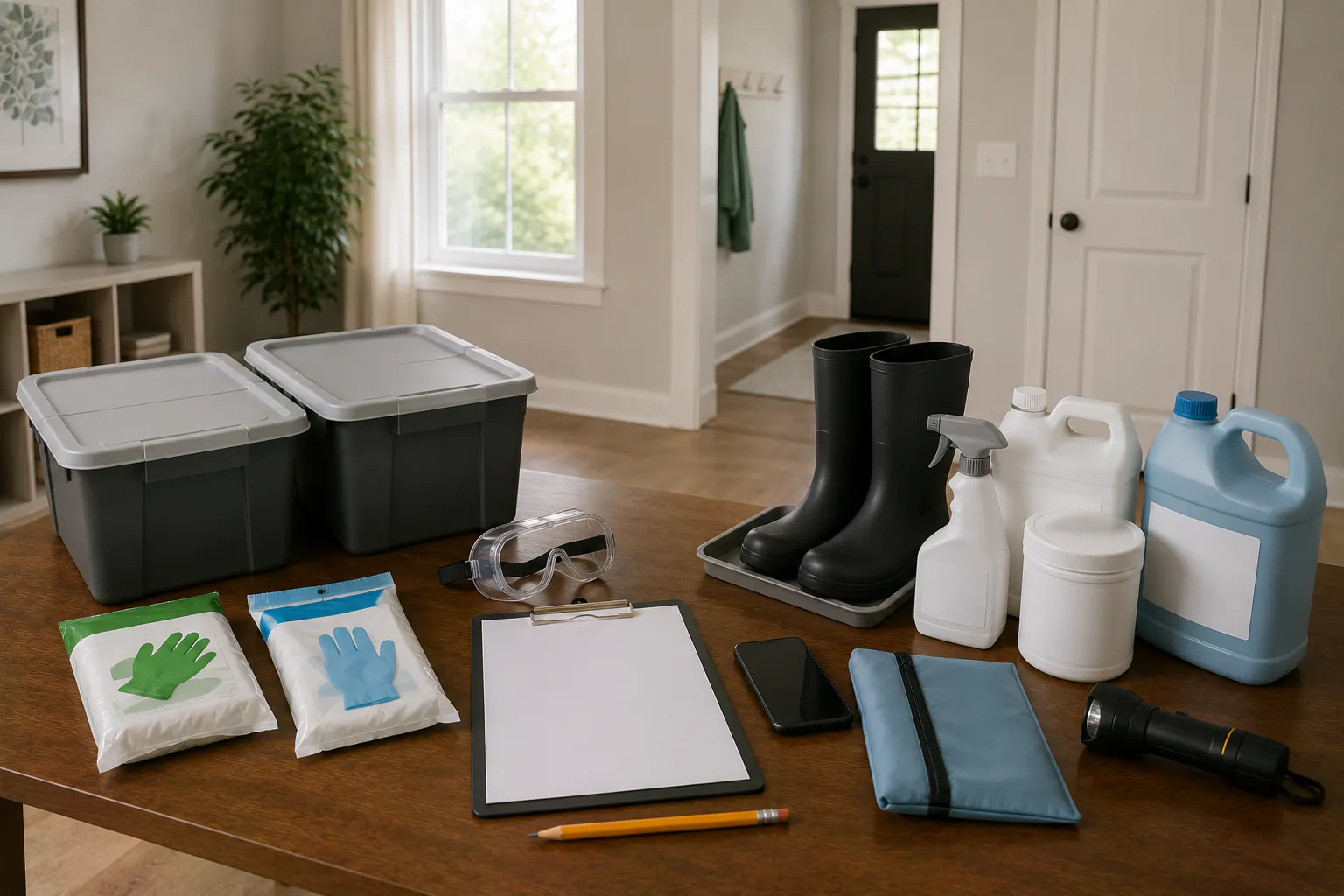
EPA’s flooded-home guidance describes, at minimum, an N95 respirator, goggles without ventilation holes, protective gloves, and clothing that covers exposed skin for mold and flood cleanup. Standing-water and chemical hazards can require different or greater protection and professional response.
A respirator must be appropriate, fit correctly, and used within its limitations. An N95 does not protect against gases, vapors, oxygen deficiency, or every particle. Facial hair and poor fit reduce performance.
Do not assign cleanup to children, older people who cannot tolerate the work, or anyone whose health plan excludes exposure. Volunteers need the same hazard assessment and stop rules as residents.
Document before cleanup
Contact the insurer or landlord early without delaying emergency action or authorized urgent mitigation. Take one safe overview when access permits, then add requested details of:
- exterior and interior water lines;
- each affected room and structural concern;
- flooring, walls, ceilings, cabinets, and built-ins;
- appliances, electronics, and serial numbers;
- contaminated contents before disposal;
- temporary safety or damage-control measures.
Keep a room-by-room inventory, receipts, contractor details, claim numbers, and communications. Ask the insurer how to handle samples and disposal. Do not keep spoiled food, sewage-contaminated soft goods, or another health hazard merely as proof after it is documented.
The flood damage documentation guide covers the claim record without encouraging unsafe entry.
Ventilate only after entry is cleared
If the building has been closed and authorities and structural conditions permit entry, CDC advises briefly opening doors and windows and allowing it to air before staying for an extended period. Current flooded-home guidance describes at least 30 minutes when the home was closed for several days.
Do not open a door against visible water pressure, enter beneath shifted materials, or ventilate when outdoor smoke or chemical hazards make it unsafe. Use battery lighting rather than switches, candles, torches, or gas lanterns in an unevaluated building.
Remove water only after utility and structural clearance
Standing-water removal can change pressure on walls and floors and expose electrical or contamination hazards. Basements and below-grade structures can be damaged by pumping at the wrong time or rate. Obtain local building and professional guidance.
Use electric pumps or wet vacuums only after a qualified person establishes that electrical service and equipment are safe. Fuel-powered pumps and generators remain outdoors away from buildings and wet areas under their instructions.
Do not enter a flooded basement, crawlspace, tank, pit, or sewer. Do not work alone.
Separate cleanable and discard materials
EPA and CDC guidance emphasize removing materials that cannot be cleaned and dried and controlling the moisture source. The decision depends on floodwater contamination, porosity, material, duration, hidden cavities, vulnerable occupants, insurance, and local disposal rules.
Porous materials such as carpet, padding, insulation, mattresses, upholstered furniture, and some wall materials can retain contamination and mold. Do not generalize one discard list to every building; use current public-health and remediation guidance.
Move wet materials without spreading debris into clean rooms. Isolate unaffected areas as EPA guidance describes. Do not block exits or overload floors with saturated contents.
Food touched by floodwater and improperly refrigerated perishables require discard under authoritative food-safety guidance. Use the power outage food safety guide; never taste food to assess safety.
Dry quickly without spreading contamination
EPA advises drying the building and contents as quickly as practical, commonly within 24 to 48 hours after safe access, because mold can develop. That target does not override entry and utility stop rules.
After clearance:
- Stop the water source.
- Remove standing water under the approved plan.
- Remove contaminated materials selected for disposal.
- Clean surfaces with water and detergent under EPA guidance.
- Use ventilation and drying equipment only under the released plan, with safe electricity and no spread from visible mold or other contamination.
- Measure and record drying progress.
- Reinspect hidden and previously wet areas.
Position fans so contaminated air does not spread into clean occupied areas. Do not turn on a flooded HVAC system. CDC recommends professional HVAC checking and cleaning by someone experienced in mold cleanup before operation.
Cleaning products require ventilation and separation
Use products according to the label, with required PPE and ventilation. Never mix bleach with ammonia, acids, or any other cleaner. More chemical is not more effective and can create toxic gas.
EPA notes that routine mold cleanup often relies on physical cleaning and moisture control rather than biocides. Hazard, material, and local public-health guidance determine the method.
Do not use pressure washing indoors to aerosolize contamination or run a fuel-powered pressure washer near openings.
Know when professional remediation is needed
Use qualified professionals for:
- structural movement or damage;
- flooded electrical, gas, HVAC, solar, battery, or fuel systems;
- sewage or extensive contaminated water;
- suspected asbestos, lead, pesticides, solvents, fuel, or industrial chemicals;
- extensive or hidden mold;
- major wall, insulation, flooring, or cabinet removal;
- vulnerable occupants whose health risks change cleanup scope;
- work requiring permits, specialized containment, or disposal.
Verify company identity, licensing where required, insurance, written scope, containment, disposal, price, payment stages, and warranty. Be cautious with unsolicited contractors, full payment in advance, pressure to sign broad claim assignments, and claims that one spray replaces drying and material removal.
Water, well, and sanitation remain separate hazards
Follow boil-water, do-not-drink, and do-not-use advisories. Do not use suspect water for drinking, food, ice, infant formula, brushing teeth, handwashing, or dishes unless the authority says the selected treatment is adequate.
Private wells and cisterns require health-department, certified laboratory, and qualified contractor processes. Sewage backup and damaged septic systems need specialized guidance. Never enter a well pit, tank, manhole, or pump chamber.
Use the safe water after a flood guide for advisory and testing decisions.
Pace the work and track symptoms
Heat, dehydration, stress, poor sleep, heavy lifting, sharp debris, noise, and PPE increase risk. Work in daylight, take breaks, rotate tasks, and drink according to personal medical guidance.
Leave the building and seek appropriate medical help for breathing difficulty, chest pain, confusion, fainting, severe headache, worsening asthma, chemical symptoms, infected wounds, or another concerning change. Call 911 for emergencies.
Printable re-entry sequence
- Obtain official re-entry clearance.
- Stop outside for structure, lines, gas, fire, water, sewage, and chemicals.
- Return in daylight with a named check-in.
- Keep children, pets, and vulnerable people out.
- Confirm electrical and CO controls before entry.
- Photograph conditions before moving materials.
- Use PPE selected for the actual contamination.
- Control standing water only after professional and utility clearance.
- Separate contaminated materials and prevent spread.
- Dry and clean under current EPA/CDC guidance.
- Keep HVAC off until professionally evaluated if flooded.
- Escalate structure, utilities, sewage, chemicals, and extensive mold.
The safest cleanup is not the fastest entry. It is the fastest work that begins after hazards are controlled and stops whenever the building exceeds household scope.
Sources reviewed
- U.S. EPA: Flooded Homes Cleanup Guidance
- U.S. EPA: Flooded Home
- CDC: Safety Guidelines for Reentering a Flooded Home
- CDC: Returning Home After a Natural Disaster
- CDC: Guidelines for Cleaning Safely After a Disaster
Sources reviewed July 14, 2026. Current emergency orders, utility and building clearance, public-health guidance, insurer instructions, product labels, and qualified professionals control actual reentry, cleanup, and reoccupancy.