
Before traveling back, confirm that authorities have reopened your exact area and that the route and property access are permitted. Calm weather or a neighbor’s return is not clearance. Stay out and call the responsible authority for damage or uncertain utilities; call 911 for immediate danger.
The first objective is not cleanup. It is to decide whether approaching and entering the property is permitted and safe enough for a limited assessment. This checklist is the return phase of the hurricane preparedness plan; the work before landfall lives there.
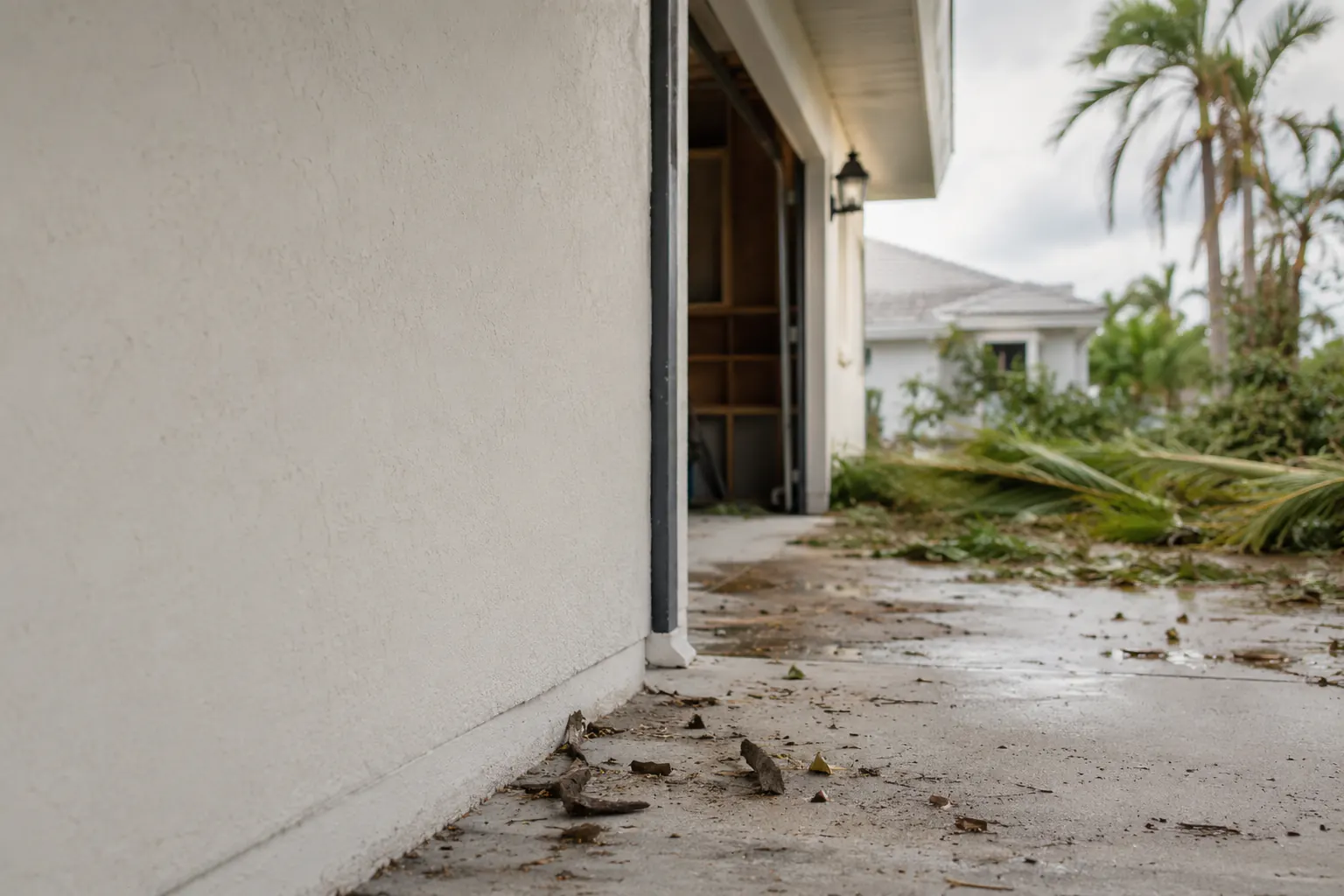
Wait for official re-entry clearance
Do not return because a neighbor went back, a map looks clear, or the weather appears calm. Follow state and local re-entry zones, checkpoints, curfews, road closures, utility restrictions, and building-management instructions.
Confirm:
- the area is open to your re-entry category;
- the planned route is open and not forecast to flood again;
- the destination has safe access, not merely an open road nearby;
- fuel or charging, medical care, water, and communication limitations are understood;
- another person knows where you are going and when you will check in.
Return during daylight when possible. CDC recommends daylight so hazards are easier to see when power is unavailable. Assume normal utilities and trash, sewer, emergency, and retail services may not be operating. (Source: CDC, Safety Guidelines: Returning Home After a Natural Disaster, updated April 30, 2026.)
Stop before entering when any red flag is present
Remain outside and contact the appropriate authority, utility, building official, insurer, landlord, or qualified professional when you see or detect:
- an official do-not-enter notice or restricted zone;
- partial collapse, shifted walls, new foundation cracks, sagging roof, leaning chimney, or doors suddenly jammed in their frames;
- a tree, pole, line, or large debris on or against the structure;
- downed electrical lines or anything touching them;
- fire, smoke, arcing, buzzing, or burning odor;
- gas or fuel odor, hissing, damaged tank, or displaced appliance;
- active flooding, moving water, or water touching electrical equipment;
- chemical containers, unknown drums, sewage, or strong unexplained odor;
- animals, insects, or another biological hazard blocking safe access.
Do not investigate a gas odor with a flame, switch, phone use inside, or electrical device. Leave the area and contact emergency services or the gas utility from a safe location under their instructions.
Call 911 for fire, collapse, entrapment, serious injury, suspected CO exposure, or another immediate threat.
Survey the exterior from a safe distance
Walk only on stable, visible ground. Avoid floodwater, soft shoulders, undermined pavement, broken glass, roofing nails, damaged trees, and overhead hazards.
Report hazards first. If safe and useful, photograph from a distance:
- each side of the structure;
- rooflines visible from ground level;
- windows, doors, cladding, porches, decks, and attached garages;
- utility service entrance, meter areas, outdoor HVAC, tanks, solar equipment, and generator area without touching them;
- water lines, debris marks, erosion, and displaced soil;
- vehicles and outbuildings.
Do not climb onto the roof, cut a loaded tree, move a line, enter a crawlspace, or stand beneath damaged material. A structure can look intact from one side while supports or connections have failed elsewhere.
Treat every downed line as energized
Stay away from downed lines and anything they touch, including fences, branches, vehicles, water, and wet ground. Distance requirements and emergency response belong to the utility and local authorities.
Do not touch the electrical panel, meter, service conductors, solar equipment, battery system, generator, cord, switch, receptacle, or appliance while standing in water or when equipment is wet or damaged.
CDC warns never to turn power on or off yourself or use an electrical device while standing in water. Flooded electrical equipment needs qualified evaluation before energization. (Source: CDC, Safety Guidelines: Reentering Your Flooded Home, reviewed July 2026.)
Utility power returning to the street does not prove the home’s wiring is safe.
Check carbon-monoxide risk before and during entry
Carbon monoxide is invisible and odorless. Generators, pressure washers, grills, camp stoves, pumps, and vehicles can produce it. Equipment operating outside can still send exhaust into a building through openings.
Never operate fuel-burning equipment indoors, in a basement, garage, porch, carport, or other enclosed or partially enclosed area. CDC currently directs portable gasoline or coal-burning equipment outside and at least 20 feet from doors, windows, and vents; follow the stricter manufacturer or local requirement when applicable.
Use working battery-operated or battery-backup CO alarms. If an alarm sounds, leave immediately and call 911 from outside. Headache, dizziness, weakness, nausea, chest pain, or confusion can be consistent with CO exposure; move to fresh air and seek emergency help.
Read the generator carbon monoxide guide before operating equipment.
Make the first entry short and deliberate
Enter only after official clearance and when no stop rule applies. Tell another person you are entering and set a check-in time. Bring a charged phone or radio, battery lighting, sturdy closed-toe waterproof footwear appropriate to the conditions, work gloves, eye protection, and other PPE identified by authoritative cleanup guidance.
Do not allow children or pets into a damaged or contaminated building. People with asthma, allergies, immune suppression, pregnancy, or other health concerns may need to avoid mold- or water-damaged buildings under clinician and public-health guidance.
Keep an exit path behind you. Do not close yourself into a room, crawlspace, attic, or basement. Stop if the building shifts, material falls, odors change, breathing becomes difficult, or water rises.
Use battery flashlights or lanterns, not candles, torches, gas lanterns, or a switch in an unevaluated building.
Do not restore utilities yourself after flood or damage
Electricity
Keep flooded or damaged systems off until the utility and qualified electrician determine the appropriate sequence. Wet HVAC, appliances, solar, batteries, transfer equipment, pumps, and controls may each require manufacturer or professional evaluation.
Gas and fuel
Do not turn a gas valve on after it has been shut off unless the utility or qualified professional authorizes and performs the required checks. Damaged propane or fuel tanks can move, leak, or contaminate soil and water; keep away and report them.
Water and sewer
Follow boil-water, do-not-drink, and do-not-use advisories. Do not use suspect water for drinking, food, ice, brushing teeth, infant formula, handwashing, or dishes unless the authority says the selected treatment is adequate.
Sewage backup, damaged septic systems, and flooded wells require specialized guidance. Never enter a tank, sewer, pit, or confined utility area.
The hurricane power outage plan covers safe restoration sequencing and household reserves.
Document before moving or discarding
Contact the insurer or landlord early without delaying emergency action or authorized urgent mitigation. Start with one safe overview if accessible; add details as requested. No record justifies entering a restricted area or retaining a health hazard.
Keep:
- a written damage inventory;
- claim and incident numbers;
- names and contact details of officials and contractors;
- receipts for lodging, transport, supplies, temporary protection, and disposal;
- samples or photographs only when the insurer instructs and handling is safe.
Do not retain contaminated material that creates a health hazard merely for proof. Ask the insurer how to document it before disposal.
Temporary work should prevent further damage without hiding the original condition or exceeding safe scope. Roof tarping, structural shoring, electrical work, gas work, tree removal, and major water extraction can require trained, insured professionals.
Floodwater is contamination, not ordinary rainwater
Avoid contact with floodwater. It may contain sewage, chemicals, sharp objects, animals, and electrical hazards. If skin contacts floodwater, wash with soap and clean water as soon as possible under public-health guidance and address wounds promptly.
Discard food touched by flood or storm water as authoritative guidance directs. Do not taste food to determine safety. Use the power outage food safety guide for refrigeration decisions and local guidance for flood-contact containers.
Do not let children participate in disaster cleanup. Keep pets away from floodwater, debris, wildlife, chemicals, spoiled food, and contaminated buildings.
Start drying only after the building and utilities are cleared
Moisture control is time-sensitive, but urgency does not override structural, electrical, gas, CO, or contamination stop rules.
After appropriate clearance:
- Photograph and coordinate with insurance.
- Use the PPE and cleanup approach recommended for the contamination and occupants.
- Ventilate when outdoor conditions and air quality permit.
- Separate items that can be cleaned and dried from porous materials that authoritative guidance says to discard.
- Track wet areas, material removal, drying equipment, humidity, and contractor work.
- Fix the water source before cosmetic repair.
Do not mix bleach with ammonia, acids, or any other cleaner. Never use combustion-powered pumps, pressure washers, or generators indoors or near openings. Extensive mold, sewage, hazardous materials, structural damage, and vulnerable occupants can require professional remediation.
CDC advises having a flooded HVAC system checked and cleaned by a service professional experienced in mold cleanup before turning it on. Air movement through contaminated equipment can spread material through the home.
Hire recovery contractors carefully
Demand a written scope, price structure, schedule, payment stages, business identity, license where required, insurance, and responsibility for permits and disposal. Verify credentials through the appropriate state or local authority.
Be cautious when someone:
- arrives unsolicited and pressures immediate signature;
- demands full cash payment before work;
- asks you to sign an assignment or broad authorization you do not understand;
- cannot identify the company, insurance, or local requirements;
- proposes unsafe generator, electrical, structural, roof, mold, or tree work;
- asks you to misstate damage or insurance facts.
Do not sign away claim rights or benefits without understanding the document and obtaining qualified local advice where needed.
Pace the recovery
Heat, dehydration, poor sleep, stress, heavy lifting, sharp debris, and unfamiliar tools increase injury risk. Work in daylight, take breaks, drink according to personal medical guidance, and rotate tasks. Stop when judgment or physical control declines.
Strong reactions after a disaster are common. Use family, community, health-care, and official disaster-support resources. Call 911 or the appropriate crisis service for immediate danger.
Re-entry sequence to print
- Obtain official area and building clearance.
- Return in daylight and tell someone the check-in time.
- Stop for structural, line, gas, fire, flood, chemical, sewage, or animal hazards.
- Photograph the exterior from stable ground.
- Confirm utility and CO conditions before entry.
- Keep children, pets, and vulnerable people out.
- Make a short first entry with a clear exit.
- Do not energize or operate wet or damaged systems.
- Photograph and contact insurance before major cleanup.
- Use qualified professionals for work outside safe household scope.
Returning slowly is not wasted time. The checklist is working when it prevents a damaged home from causing the next injury.
Sources reviewed
- CDC: Safety Guidelines for Returning Home After a Natural Disaster
- CDC: Safety Guidelines After a Hurricane or Other Tropical Storm
- CDC: Safety Guidelines for Reentering a Flooded Home
- CDC: Guidelines for Cleaning Safely After a Disaster
- Ready.gov: Hurricane Hazard Information Sheet
Sources reviewed July 14, 2026.
Streamlight’s current MicroStream information and exact Amazon black 66318 variant were checked October 12, 2026. This ordinary reading-light example was not tested; it does not authorize entry or replace professional utility, structural or contamination clearance.