
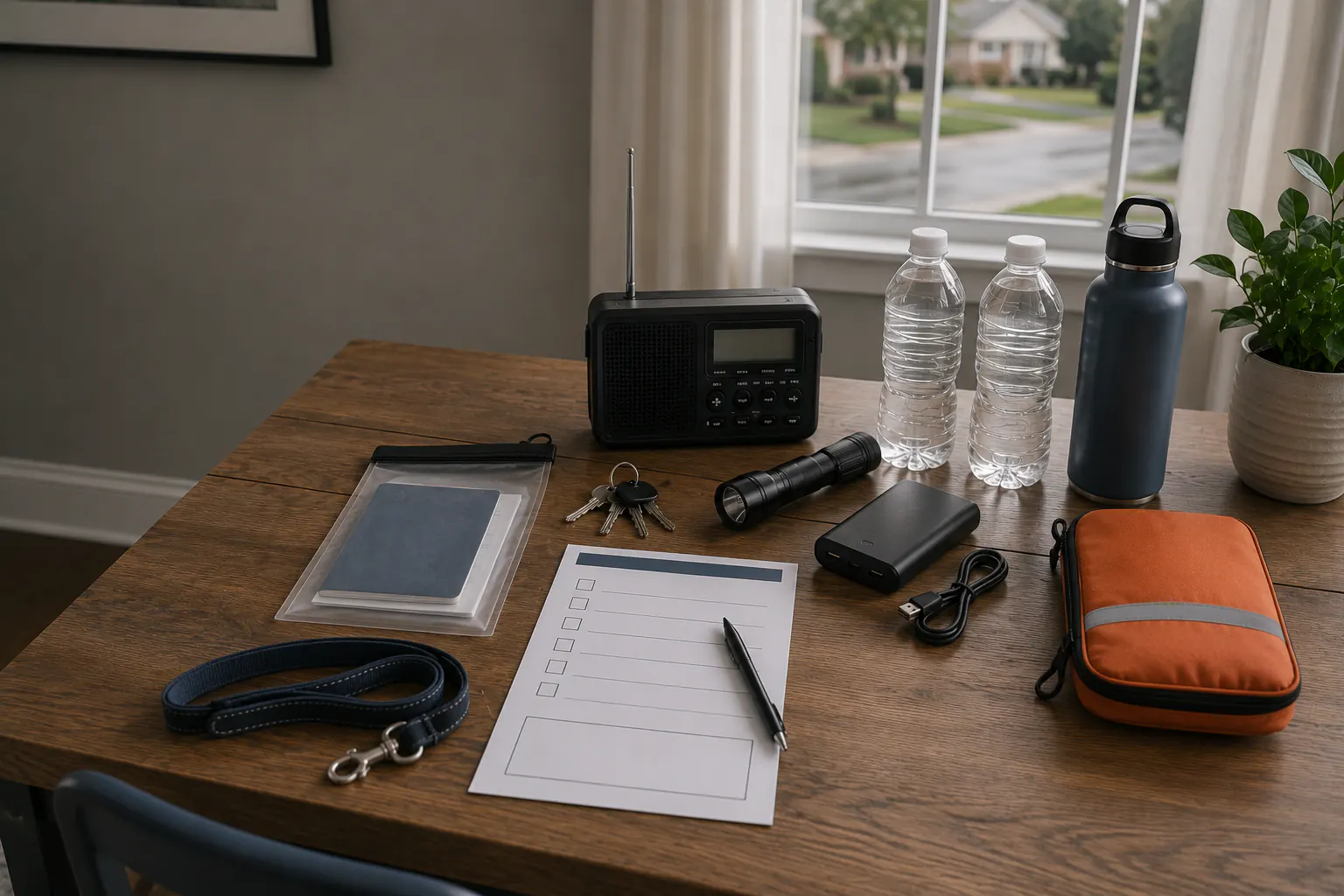
If flooding threatens now, read the complete local warning and follow its movement instructions. Never enter water to inspect a road, retrieve a car or reach a shutoff. Call 911 for entrapment or immediate danger. Before an event, begin with the route and assistance needed to leave earlier.
A complete flood plan covers alerts, movement, people, utilities, water and sanitation, records, and recovery. It must work for fast flash flooding as well as slower river, coastal, drainage, snowmelt, dam, levee, or urban flooding.
Use current National Weather Service warnings and instructions from local emergency management, law enforcement, fire services, utilities, public health, and building authorities. Local orders and event-specific conditions take priority over general advice.
If flooding threatens now
- Check the exact official alert, affected area, source of flooding, expected timing, and local action statement.
- Follow evacuation or movement instructions immediately. Move to higher ground when a flash-flood warning and local guidance require it.
- Do not walk, swim, or drive through floodwater. Do not move a barricade or use a closed road.
- Account for people, pets, medication, mobility equipment, and transport.
- Use the preplanned route and destination. Do not improvise across low roads, drainage channels, bridges, or underpasses.
- Keep away from basements, crawlspaces, storm drains, culverts, riverbanks, washes, and water near electrical equipment.
- Operate utilities only from a dry, safe location and only under specific authority, utility, equipment, or professional guidance.
- Call 911 for entrapment, rising water that threatens life, electrical fire, collapse, serious injury, or another immediate emergency.
If water is already entering and the normal exit is unsafe, move according to local rescue guidance. Do not climb into a closed attic where rising water can trap the household. Use a roof only as an emergency last resort under official guidance, and signal for help.
Know which flood alert you received
Flood watch
A Flood Watch means conditions are favorable for flooding. Flooding is possible, not certain or necessarily imminent. Use the time to confirm movement triggers, destinations, medications, transport, records, and the route to higher ground.
Flood warning
A Flood Warning means flooding is imminent or occurring. Take the action stated in the warning and local instructions. Do not wait for water to become visible at the home.
Flash flood warning
A Flash Flood Warning is urgent because dangerous flooding is in progress, imminent, or highly likely and can develop rapidly. If the warning directs people in a flood-prone area to higher ground, act immediately.
Flood advisory and outlook
An advisory can describe less severe expected flooding that still creates danger and disruption. An outlook provides earlier awareness. Neither is permission to enter water or ignore a vulnerable route.
NWS products vary by flood source and location, including river, coastal, lakeshore, and dam or levee concerns. Read the complete local message rather than relying on the color or headline alone. (Source: National Weather Service, Flood Related Products and Flood Warning vs. Watch, reviewed July 2026.)
The flood watch and warning guide connects each alert with local action.
Map the risks around the address
Review the official flood-risk and evacuation information used by the jurisdiction, but understand its limits. A map represents a defined scenario, dataset, and planning purpose. It cannot show every blocked drain, burn-scar debris flow, local cloudburst, construction change, levee problem, or future event.
Walk the neighborhood in ordinary dry conditions and identify:
- low roads, underpasses, dips, tunnels, and drainage crossings;
- rivers, streams, channels, washes, culverts, storm drains, and retention areas;
- bridges and single-access roads;
- slopes, burn scars, erosion, and debris-flow exposure;
- basement, below-grade garage, elevator, and underground parking access;
- private well, septic, cistern, sump, and wastewater dependencies;
- the highest safe nearby location identified by local planning.
Do not enter drainage infrastructure or private property to inspect it. Report blocked public drains and unsafe conditions through the responsible local service.
Build movement decisions before rain begins
Choose two destinations and routes that avoid the same vulnerable crossing. Record the local evacuation zone, route authority, pickup arrangement, shelter information, pet policy, accessibility, and out-of-area contact.
Set an earlier household trigger for people who need more time, lack a vehicle, depend on elevators, use powered medical or mobility devices, care for animals, or live where one road can close.
Use the flood evacuation plan for higher-ground and transport planning. The hurricane evacuation guide adds household carry and destination questions without replacing flood-specific instructions.
Never drive around a barricade. Floodwater can hide a washed-out road, open manhole, current, debris, or downed line. A vehicle’s size or four-wheel drive does not prove the crossing is safe.
Protect people who cannot move quickly
Assign a named primary and backup person for every household member needing assistance. Confirm:
- alert formats they can receive and understand;
- pickup and loading time;
- stair or elevator limitations;
- medication and refrigeration needs;
- approved device battery and charging continuity;
- mobility and communication equipment;
- service-animal or pet transport;
- destination accessibility and care capability;
- missed-contact escalation.
Do not improvise carrying a person on stairs without appropriate training and equipment. Arrange the plan with the care team, facility, device provider, local emergency resources, and transport program before an event.
Children should know never to play in floodwater, drainage channels, culverts, or storm drains, even after rain stops.
Prepare the home without creating false confidence
Move important contents, chemicals, medication, documents, and electrical equipment out of known flood-prone areas when safe. Keep exits and required fire systems accessible.
Clean accessible gutters, drains, and discharge points before the season from stable ground. Sump pumps, check valves, sewer backflow devices, flood vents, barriers, grading, foundation openings, and utility elevation require building-specific design, maintenance, permits, and qualified installation.
Temporary barriers and sandbags have limits and can redirect water. Use local guidance and safe lifting. They do not make an evacuation zone safe to occupy.
Do not seal a basement or building in a way that traps occupants, blocks egress, interferes with flood vents, or creates structural pressure the system was not designed to resist.
The home flood preparation guide separates permitted household tasks from qualified mitigation.
Make utility decisions from dry ground
Know the locations of electrical, gas, water, solar, battery, generator, well, sump, and septic equipment. Photograph labels and keep professional contacts.
Do not touch a panel, switch, receptacle, cord, appliance, pump, battery, or generator while standing in water. Never enter a flooded basement or utility room to reach a shutoff. Call the utility, fire service, or qualified professional.
Do not operate a wet electrical device. Utility power returning does not establish that flooded wiring or equipment is safe. Electrical service, HVAC, appliances, solar, batteries, pumps, and transfer equipment may require separate evaluation.
If you smell gas or fuel, leave the area without operating switches or causing a spark and contact emergency services or the utility from a safe location under their instructions.
Separate floodwater from drinking water
Floodwater can contain sewage, chemicals, fuel, sharp objects, animals, and electrical hazards. Avoid contact. It is not made safe for wading by boots alone.
Store drinking water before an event using the emergency water storage guide. After flooding, follow public-health and water-utility advisories for drinking, food, brushing teeth, infant formula, ice, handwashing, and dishes.
Boiling is effective against germs when the authority recommends it, but it does not remove every chemical or toxin. A do-not-use advisory requires different action from a boil-water advisory.
Private wells, cisterns, and treatment equipment can be contaminated. Do not use them until the responsible health authority and qualified service process says the water is safe. The safe water after a flood guide covers advisory types, private systems, testing, and treatment limits.
Protect sanitation without entering contaminated areas
Flooding can disable municipal sewers, septic systems, lift stations, and toilets. Follow utility instructions and reduce use when directed.
Do not flush when authorities say the system is unavailable or when sewage is backing up. Keep children and pets away. Never enter a septic tank, sewer, manhole, pump chamber, or confined space.
Sewage in a living area, extensive contaminated material, or a vulnerable occupant can require public-health guidance and professional remediation. Do not mix cleaning chemicals.
Keep documents and claim evidence portable
Maintain protected physical and encrypted digital copies of identification, insurance, ownership or lease records, medications, contacts, vehicle information, pet records, and the current home inventory.
Before flooding, photograph rooms, exterior elevations, lower-level contents, utilities from a safe distance, and existing damage. After official clearance, document the water line, affected rooms, contents, and temporary work before moving items when safe.
Contact the insurer early and ask how to document disposal and emergency measures. Flood coverage, waiting periods, exclusions, deductibles, and assistance programs vary. Obtain policy-specific answers before an event.
The flood damage documentation guide organizes safely accessible records without delaying urgent action.
Stay out until authorities allow re-entry
Water receding from the street does not prove the building is safe. Wait for official clearance and return during daylight when possible.
Stop outside for:
- downed lines, trees, or unstable debris;
- cracks, shifted walls, sagging roof, or partial collapse;
- fire, smoke, gas or fuel odor, arcing, or buzzing;
- active water, sewage, chemical containers, or unknown contamination;
- animals or insects blocking safe access;
- any official restriction.
Use the flooded-home checklist for utilities and contamination, and the hurricane reentry checklist for wider return planning. Neither grants entry or hazardous DIY permission.
Treat cleanup as controlled recovery
Cleanup begins only after structural and utility clearance. Keep children and pets out. People with asthma, immune suppression, pregnancy, or other health concerns may need to avoid mold- or water-damaged buildings under clinician and public-health guidance.
Use PPE and cleanup methods appropriate to the contamination. Ventilate only when outdoor air and structural conditions permit. Do not energize wet equipment. Do not run generators, pressure washers, pumps, grills, or other combustion engines indoors or near openings.
CDC advises having a flooded HVAC system checked and cleaned by a professional experienced in mold cleanup before it is turned on. (Source: CDC, Safety Guidelines: Reentering Your Flooded Home, reviewed July 2026.)
Document first, control the water source, separate cleanable from discard materials under authoritative guidance, and track drying. Structural work, electrical and gas systems, sewage, hazardous chemicals, extensive mold, and major material removal can require qualified professionals.
Run a dry-weather flood drill
- Receive a simulated watch and identify the exact official source.
- Locate the evacuation zone and two higher-ground routes.
- Pack medication, documents, communication, water, and pet or accessibility items.
- Time movement to the vehicle or official pickup point.
- Identify every low crossing the route avoids.
- Send a test message to the out-of-area contact.
- Review utility stop rules without operating equipment.
- Record one obstacle and assign its correction.
Never conduct the drill in heavy rain, near high water, inside drainage infrastructure, or by driving through a low crossing.
Flood preparedness succeeds when people move before water removes their choices. Property protection and cleanup matter, but they come after safe movement, official clearance, and controlled utilities.
Sources reviewed
- Ready.gov: Floods
- National Weather Service: Flood Warning vs. Watch
- National Weather Service: Flood Related Products
- CDC: Safety Guidelines for Reentering a Flooded Home
- CDC: Safety Guidelines for Returning Home After a Natural Disaster
- CDC: How to Make Water Safe in an Emergency
Sources reviewed July 14, 2026.