
When water rises up through a floor drain, toilet, or basement fixture instead of draining away, it is not the same problem as rain getting in. It usually means the sewer or septic system is overwhelmed and pushing contaminated water back into the house — a health hazard first and a cleanup job a distant second. This guide covers the stop rules; it does not turn a homeowner into a plumber. It is one branch of the home flood-preparation hub.
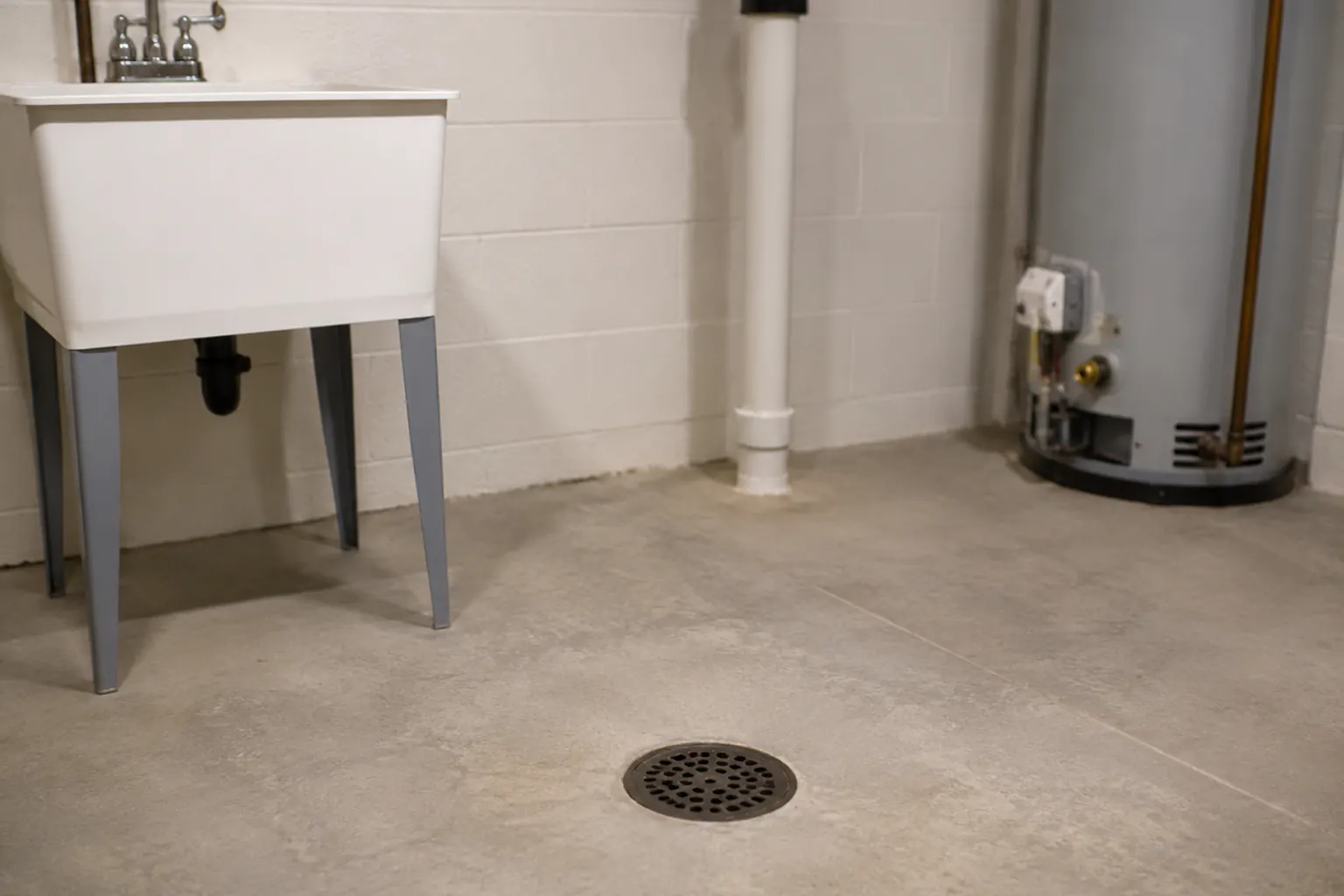
Why backflow is different from a leak
A leaking window or a wet foundation lets in rainwater. A sewer backup pushes sewage — what the EPA and CDC classify as contaminated “black water” — into living space. It carries bacteria, viruses, and chemicals, and it makes everything it touches a contamination and disposal problem rather than a mopping one. (Sources: EPA, Flooded Homes; CDC, floods and standing water.)
During heavy rain or a flood, the public sewer or a saturated septic field can back up regardless of anything inside your house. That is why this is a system-capacity problem, not a housekeeping one.
The stop rules
- Do not enter standing water in a basement that still has power. Water plus live electrical circuits can electrocute. If you cannot cut power safely from a dry spot, stay out and get help. Knowing where the main water shutoff is helps you reduce inflow without wading in.
- Stop adding to the system. During a backup, stop running water, flushing, and using drains — every gallon you send down makes the backup worse.
- Treat the water and everything it touched as contaminated. Keep people, especially children, and pets away. Porous materials soaked by sewage (carpet, drywall, upholstery) usually cannot be safely saved.
- Ventilate and protect yourself only if entry is safe: gloves, boots, eye protection, and no bare-skin contact. When in doubt, wait for professional remediation.
- Document before you clean if you may file a claim — the flood damage documentation guide owns that record.
What actually prevents it: a backwater valve (a professional decision)
The engineered fix for repeated sewer backups is a backwater (backflow) valve on the building’s sewer line — a one-way valve that lets waste out but blocks the sewer from pushing back in. It is effective, and it is squarely a licensed-plumber-and-permit job: valve type, placement, and code compliance depend on the building’s plumbing and the local sewer system. (Source: FEMA P-312, Homeowner’s Guide to Retrofitting.) A valve installed wrong can trap waste in the house or violate code, so this is not a DIY retrofit.
Interim, homeowner-level measures are limited and temporary: some households keep drain plugs or standpipes for known problem drains, but these are stopgaps, not a substitute for a proper valve and a plumber’s assessment.
After a backup
- Cleanup of Category-3 (black water) contamination is a remediation decision, often for professionals, and may involve removing and replacing soaked porous materials. The CDC and EPA guidance on disinfection and disposal governs it — not a general cleaning routine.
- Do not restore power or occupancy to a contaminated, wet space until it is safe and, where required, inspected.
- Water from the tap may be affected after area flooding; follow any boil-water or “do not use” advisory — the safe water after a flood guide covers advisories, wells, and testing limits.
Where this fits
Groundwater in the pit is the sump pump problem; water at the door is the temporary barrier problem; water rising up the drains is this one — and it is the one most likely to need a professional before anyone re-enters. When a backup is recurring, a plumber’s backwater-valve assessment is the durable answer.
Sources reviewed
- U.S. Environmental Protection Agency: Flooded Homes
- Centers for Disease Control and Prevention: floods and standing water
- Ready.gov: Floods
- FEMA P-312: Homeowner’s Guide to Retrofitting
Sources reviewed July 29, 2026. Licensed plumbing, local codes, and current EPA/CDC public-health guidance control real backflow-prevention and contamination decisions.