
On a dry day, ask the owner, manager, water utility, or plumber which valve controls your home and whether you may operate it. Do not turn an unfamiliar handle to find out. If water is already spreading and the route or control is uncertain, move away from hazards and call for help rather than beginning a search.
Start with the emergency plumbing basics plan. A valve is one part of the response; electricity, contamination, building authority, and water-heater or fire-sprinkler dependencies may change the safe action.
Stop when the route is unsafe
Do not walk or reach through water near outlets, panels, appliances, damaged wiring, elevators, or heating equipment. Leave and call 911 or the responsible utility for fire, smoke, gas odor, structural damage, a collapsing ceiling, rapid flooding, or immediate electrical danger.
Do not enter a curb box, pit, vault, crawlspace, flooded basement, locked utility room, or ceiling cavity. Do not operate a valve identified for gas, fire sprinklers, boilers, backflow prevention, a public main, irrigation, or another unit.
If water is safe to approach but the control is uncertain, call the water utility, landlord, or plumber. Guessing at valves can interrupt another household, disable fire protection, damage a brittle valve, or leave the actual leak pressurized.
Know which shutoff you are looking for
A property may have several controls:
| Control | Typical function | Authority question |
|---|---|---|
| Fixture stop | One toilet, faucet, or appliance supply | Is it accessible, intact, and assigned to this fixture? |
| Unit valve | One apartment or condominium | May the resident access and operate it? |
| House main | Customer plumbing after the service entry | Is it customer-owned and documented? |
| Meter-side valve | Service at or near the meter | Does the utility permit customer operation? |
| Well-system control | Pump and pressure system | What electrical and pressure procedure does the well professional require? |
| Fire-protection valve | Sprinkler or suppression supply | Only authorized fire-protection handling |
Municipal practice is not uniform. Seattle Public Utilities says customers should generally use home valves and allows customer meter shutoff only for a specified top-shutoff meter type. Portland directs apartment residents who cannot access a shutoff to contact property management or emergency dispatch. Record the rule for the actual address.
Search without opening hazardous spaces
Review the closing packet, inspection report, lease, building manual, plumbing plan, and prior repair invoices. Ask the owner, manager, utility, or plumber to identify the control.
Common house locations include where the service enters a basement, garage, utility room, crawlspace boundary, or exterior wall. A valve may be near the water heater, but proximity does not prove function. In apartments, it may be in a shared room or serve several units.
Look from finished, accessible areas. Do not remove wall panels, disturb insulation, climb over stored items, or dig around a meter. Photograph the valve and enough surrounding context to identify it later without publishing security-sensitive home details.
Verify identity before testing function
Ask a plumber, inspector, utility, or responsible building representative to confirm:
- which side belongs to the customer;
- what area the valve isolates;
- whether the system has a pressure regulator, check valve, expansion control, well equipment, boiler, or treatment equipment;
- whether water heaters, appliances, irrigation, or fire protection need a coordinated procedure;
- the approved direction and tool for the exact valve;
- who can restore service and what post-restoration checks are required.
Do not infer operation solely from handle shape. Ball, gate, globe, meter, and specialty valves have different designs and failure modes. Paint, corrosion, age, mineral buildup, freeze damage, or unsupported piping can make movement unsafe.
Prepare access and identification
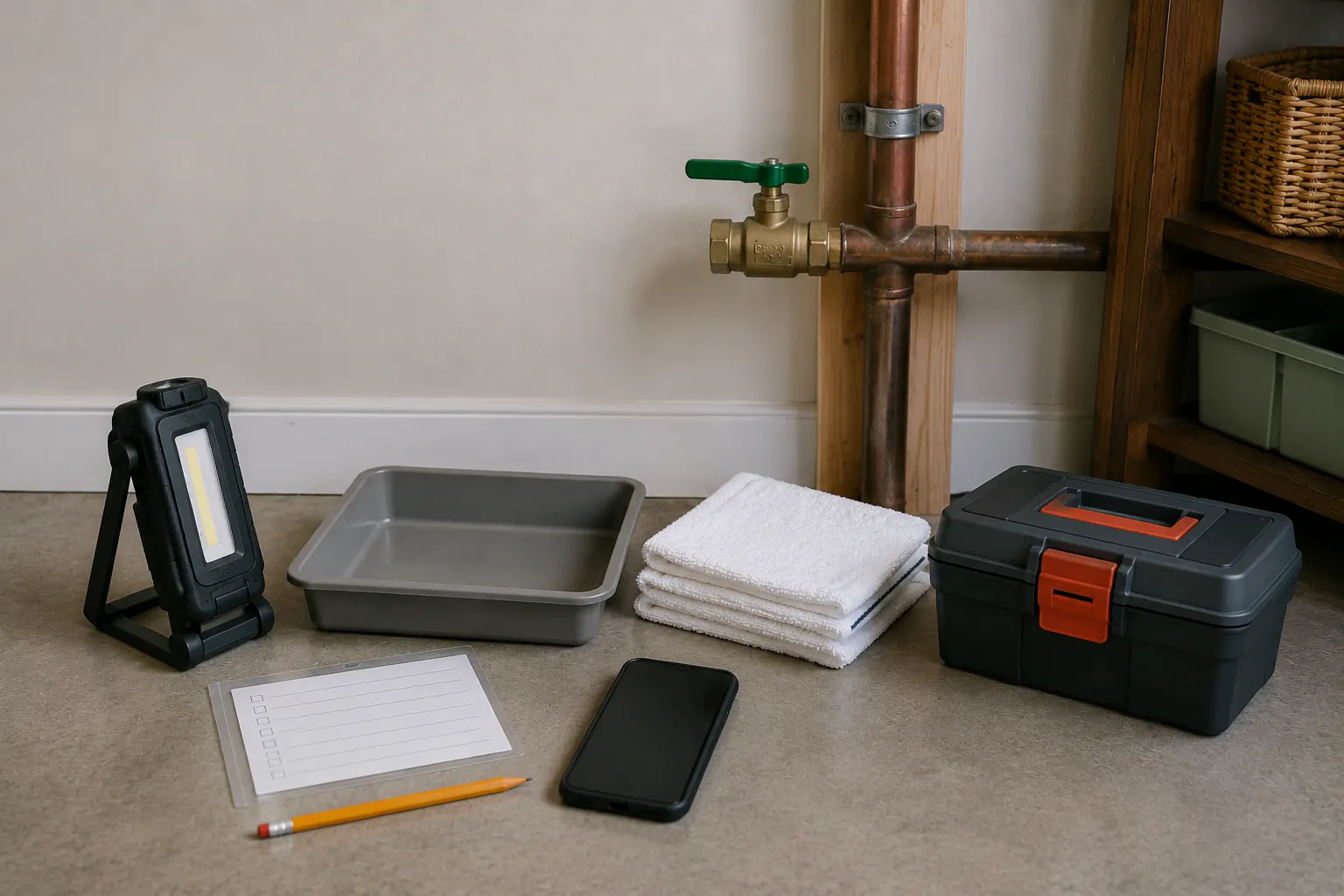
Keep the route dry, uncluttered, and lit. Store the documented key or wrench nearby but secured from children and unauthorized use. A general adjustable wrench is not automatically suitable for a meter or specialty valve.
Attach a durable tag stating the valve’s verified function, not a guess. Add a simple photo to the household emergency record and tell responsible adults where it is. Do not post valve locations publicly or include home access details in an unprotected cloud note.
Keep the utility emergency line, building maintenance line, plumber, insurer, and well contractor where they remain available during a power or internet outage.
Run a supervised readiness check
Arrange the first operational check with the responsible professional or utility when the system history is unknown. Notify household members and protect appliances or equipment that depend on water.
Use a normal cold-water fixture as the agreed observation point. Operate only the verified valve, with the documented motion and without extra leverage. Confirm whether flow stops after expected residual pressure clears. Watch the valve and nearby joints for leakage.
Stop immediately for binding, cracking sounds, movement of unsupported pipe, seepage at the stem or joint, a handle that will not reach its expected position, or flow that does not stop. Do not strike, heat, oil, extend the handle, or tighten packing as an emergency experiment.
Have defects repaired before counting the valve as part of the plan. A tag does not make a seized valve reliable.
Use it during a clean-water leak
When a known supply leak is active and the route is dry and safe:
- Keep people away from affected electrical and structural areas.
- Stop the source at a known fixture valve when that safely isolates only the failed component.
- Use the verified unit or house main when the source cannot be isolated locally.
- Apply steady documented motion only; stop rather than force resistance.
- Call the utility or manager immediately when flow continues or the valve cannot be used.
- Notify the plumber, landlord, insurer, and affected neighbors as appropriate.
- Follow the leak-control guide without energizing wet equipment or concealing damage.
Do not assume shutting off the supply removes stored hot water, pressure, contaminated water, electricity, or structural risk. A burst pipe changes the tempo entirely: the burst-pipe first actions and stop rules exist for the minutes when water is actively spreading.
Restore service deliberately
Restoration can reveal another leak, move sediment, affect appliances, or require a utility advisory. Confirm the repair, valve positions, and any water-heater, well, filter, softener, boiler, irrigation, and appliance steps with the responsible professional.
Open only as directed and monitor accessible joints and fixtures. Follow utility instructions for flushing, discoloration, pressure loss, or drinking-water advisories. Do not drink unusual water merely because pressure returned.
Update the household map after any valve, meter, service-line, appliance, or building change. Include the shutoff in the annual plumbing readiness review, but do not repeatedly operate fragile hardware without professional advice.
Renter and accessibility planning
Renters should obtain the written emergency procedure and after-hours number. They may have no lawful or physical access to a riser or meter. A resident’s job may be to report the location and move away, not turn a building control.
Plan for reach, grip, vision, mobility, lighting, and hearing. If no responsible household member can reach or operate the verified valve safely, request an accessible control or automatic system evaluation from the owner and a licensed plumber. Do not solve access by leaving a shared room unlocked or adding an unapproved extension to a handle.
Sources reviewed
- Seattle Public Utilities: How to Shut Off Your Water
- Seattle Emergency Management: Prepare Your Home
- Portland Water Bureau: How to Check for Leaks
- DC Water: Preparing for a Water Emergency
Sources reviewed July 14, 2026. The actual utility, property authority, plumbing code, fire-protection requirements, well design, appliance instructions, and licensed plumber control the site-specific procedure.