
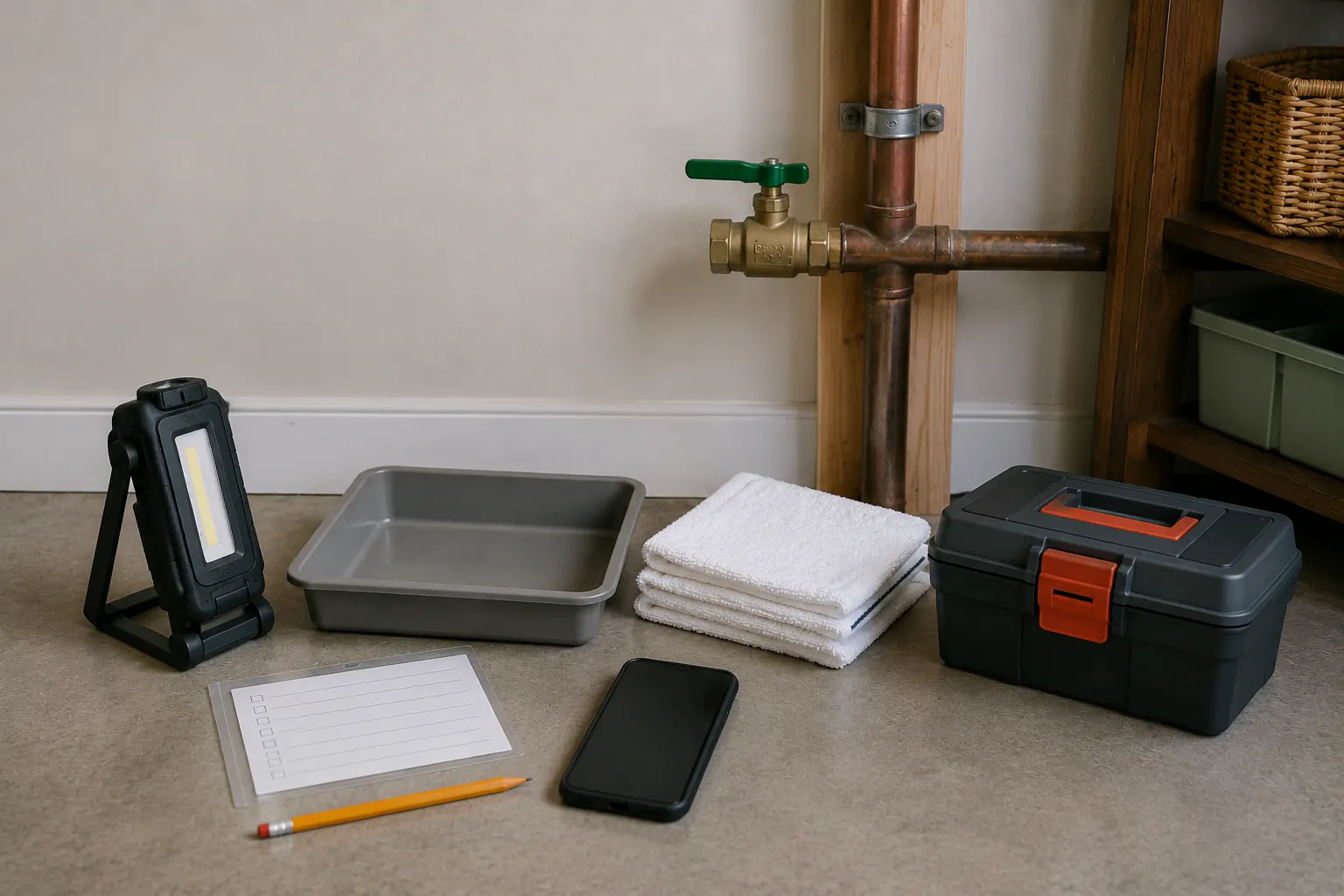
If water is spreading now, keep people away from electrical, structural, hot-water, or contamination hazards and call the responsible emergency service, utility, or building maintenance. Operate a shutoff only if its identity, permission, and safe access are already known. For preparation on a dry day, start by saving the after-hours number and asking who may operate the household control.
My practical renovation background includes my apartment, my wife’s professional office, and my parents’ home. It is not a plumbing qualification. A licensed plumber, the utility, property authority, and exact equipment instructions control the work; a household plan helps you know whom to call and what remains off-limits.
Choose the guide that matches the problem
| Need | Start here |
|---|---|
| Locate and verify the correct household valve | Find and use the main water shutoff |
| Limit a known household leak while help is coming | Control a leak until a plumber arrives |
| Investigate warning signs before visible damage spreads | Hidden water-leak signs not to ignore |
| Respond to one slow fixture without dangerous chemicals | Clear a slow drain without damaging plumbing |
| Prepare exposed lines for cold and an outage | Reduce frozen-pipe risk during a power outage |
| Act when a line has split or water is spreading | First actions and stop rules for a burst pipe |
| Work within renter and multi-unit limits | Apartment plumbing emergency plan |
| Compare alarms, flow monitors, and shutoff systems | Leak detectors and water-shutoff tools |
Leave before reaching for a valve
Move people and pets away and call the responsible emergency service when water is touching or approaching a panel, outlet, appliance, elevator, heating system, damaged battery, exposed conductor, or other electrical equipment. Do not stand in water to reach a breaker or valve.
Leave for gas odor, hissing gas, fire, smoke, carbon monoxide alarm, structural movement, a sagging or collapsing ceiling, rapidly rising water, sewage, chemical contamination, or water entering from a damaged public system. A plumbing shutoff cannot make those conditions safe.
Do not enter a crawlspace, pit, utility vault, flooded basement, ceiling cavity, or locked service room. Do not operate a fire-sprinkler valve, backflow device, boiler connection, fuel-gas valve, street valve, or unknown building control. Call 911, the utility, building management, fire-sprinkler service, or qualified trade as the situation requires.
Map the system while everything is dry
An optional private page can keep verified controls and contacts together. Start with the information already known; do not enter a restricted space or operate a valve to fill a blank. Useful details include:
- the household or unit main shutoff, photographed and labeled by function;
- fixture isolation valves that are accessible and known to work;
- the water meter location and the utility’s rules for meter-side operation;
- landlord, property manager, water utility, plumber, well, septic, and restoration contacts;
- water heater, boiler, filtration, softener, irrigation, well-pump, sump, and fire-sprinkler dependencies;
- prior leak, freeze, backup, or pressure-loss locations;
- the route from the sleeping area to the valve, with task lighting that does not depend on house power;
- lease, building, insurance, and local reporting requirements.
Municipal rules differ. Seattle Public Utilities generally directs customers to use home valves and limits customer meter operation to a specific meter type. A rule for one utility is not permission to turn another utility’s curb valve. Ask the local utility which control belongs to the customer and record its emergency number.
Do not repeatedly exercise a corroded, seized, leaking, buried, painted, or unsupported valve. Have it evaluated and repaired before depending on it.
Build a small response module
Keep absorbent towels, a shallow tray, waterproof flashlight, pencil, removable labels, measuring tape, phone power, disposable bags, nitrile gloves for clean-water handling, and insurer contact details together. Add only the exact shutoff key or wrench approved for the identified household valve.
This module does not need pipe patches, drain chemicals, electrical testers, torches, adhesives, or an assortment of universal fittings. A temporary product must match the pipe material, diameter, temperature, pressure, surface condition, location, and manufacturer limits. Using the wrong product can hide a worsening failure or complicate the permanent repair.
PPE does not make sewage, electricity, structural damage, hot water, steam, mold, or an unknown substance safe. Keep the essential home toolkit separate from hazardous specialty work.
Read the pattern before acting
One dripping faucet, several fixtures losing pressure, a meter moving while all use is off, a warm or discolored wall, a ceiling stain, a sewer odor, and water appearing after rain point to different systems. Do not assume every wet surface is a supply-pipe leak.
Record:
- first observation time and whether flow is increasing;
- color, odor, temperature, and apparent source without touching unknown water;
- fixtures or appliances operating before the event;
- meter or utility alert, if available;
- weather, freeze, outage, construction, or maintenance context;
- rooms above, below, and beside the affected area;
- photographs from a dry stable location.
Avoid destructive searching. Cutting a wall can hit wiring, plumbing, gas, fire protection, asbestos-containing material, or lead-painted surfaces. A qualified professional can select an inspection method appropriate to the building.
Control damage without concealing evidence
If the correct water valve is documented, authorized, accessible, and safe, isolate the affected fixture or household supply. Do not apply extreme force or heat. Contact the utility or building manager if the valve does not move, does not stop flow, serves multiple units, or appears damaged.
Move dry portable contents away only along a safe route. Place a container under a slow clean-water drip when it can sit stably and be monitored. Do not puncture a ceiling bulge, energize wet equipment, pull a wet appliance, or remove fixed finishes.
Notify the landlord, insurer, or responsible owner promptly. Preserve photos, times, invoices, damaged-item lists, and professional findings. Follow insurer instructions before disposal when delay does not create a health hazard.
Drying has a clock and a contamination boundary
CDC advises drying wet materials as quickly as possible, generally within 24 to 48 hours, to reduce mold growth. That is a response target, not proof that an assembly is dry or safe. Water can remain behind cabinets, floors, insulation, and walls.
Treat sewage, floodwater, water from a contaminated source, and water contacting chemicals as a different class from a small clean-supply leak. Keep people away and use public-health and qualified remediation guidance. Children and people with asthma, chronic lung disease, or weakened immune systems should not participate in mold or disaster cleanup.
Do not aim a fan into suspected mold or contaminated material. Do not mix cleaners. The sewage-backup stop rules and flood re-entry guide define stricter boundaries.
Review the plan twice a year
Confirm contacts, access, labels, lighting, stored water, and whether renovations changed the valve or pipe layout. Look for corrosion, moisture, damaged supports, expired batteries, and blocked access without operating uncertain hardware.
EPA WaterSense recommends routine leak checks and annual checks of installed leak-detection or flow-monitoring equipment. Test only through the manufacturer’s documented method; an alert test does not prove that an automatic valve can isolate every leak.
Sources reviewed
- U.S. EPA WaterSense: Home Maintenance; Leak Detection and Flow Monitoring Devices
- Seattle Public Utilities: How to Shut Off Your Water
- Portland Water Bureau: How to Check for Leaks
- CDC: Mold and Water-Damage Cleanup Guidance
- American Red Cross: Preventing and Thawing Frozen Pipes
Sources reviewed July 14, 2026. Current utility rules, lease and building authority, plumbing and fire codes, manufacturer instructions, insurer requirements, and qualified trade guidance control actual work.