
An apartment plumbing problem can cross unit boundaries before the resident sees much water. A failed supply above can appear in a ceiling below. One blocked branch can back up through the lowest fixture. A shutoff may serve several units, and water can reach elevators, alarms, fire-rated assemblies, or shared electrical equipment.
The renter’s strongest plan is to recognize danger, report quickly through more than one channel, use only verified unit controls, protect portable contents, and preserve a written record. The lease and local law determine responsibility; this guide is preparedness information, not legal advice. The mechanics of shutoffs and first actions live in emergency plumbing basics; this page adds the renter’s authority boundary.
Leave and call for immediate danger
Move away and call 911 or building emergency staff for:
- water touching or approaching outlets, panels, appliances, elevators, heating systems, alarms, or exposed wiring;
- fire, smoke, gas odor, carbon monoxide alarm, or active sparking;
- a sagging ceiling, falling material, cracking, wall movement, or a door that suddenly binds;
- rapid flooding, scalding water, steam, or an uncontrolled pressurized release;
- sewage, black water, chemical odor, fuel, or unknown contamination;
- entrapment, blocked accessible exit, or water affecting medical equipment.
Do not stand under a wet ceiling or puncture a bulge. Do not enter a basement, mechanical room, meter pit, riser closet, crawlspace, roof, or locked utility area. Keep elevators out of the plan when water, fire alarms, or official instructions make them unsafe.
Build the contact chain before a leak
Save these contacts on paper and in the phone:
- property management and after-hours emergency maintenance;
- owner or landlord notice address required by the lease;
- 911 and local non-emergency services;
- water and sewer utility emergency numbers;
- renter’s insurer and claim instructions;
- local housing or public-health authority;
- trusted neighbor or accessibility support contact;
- temporary lodging and pet arrangements.
Know how management wants an urgent report made. A portal may be unavailable during an outage, so keep phone, text, email, and physical notice alternatives. Do not rely only on a social-media direct message.
Ask management to identify in writing what the resident may operate: fixture stops, a unit shutoff, appliance controls, or nothing beyond normal fixture use. Request the location of the unit control and the procedure for a failure after hours.
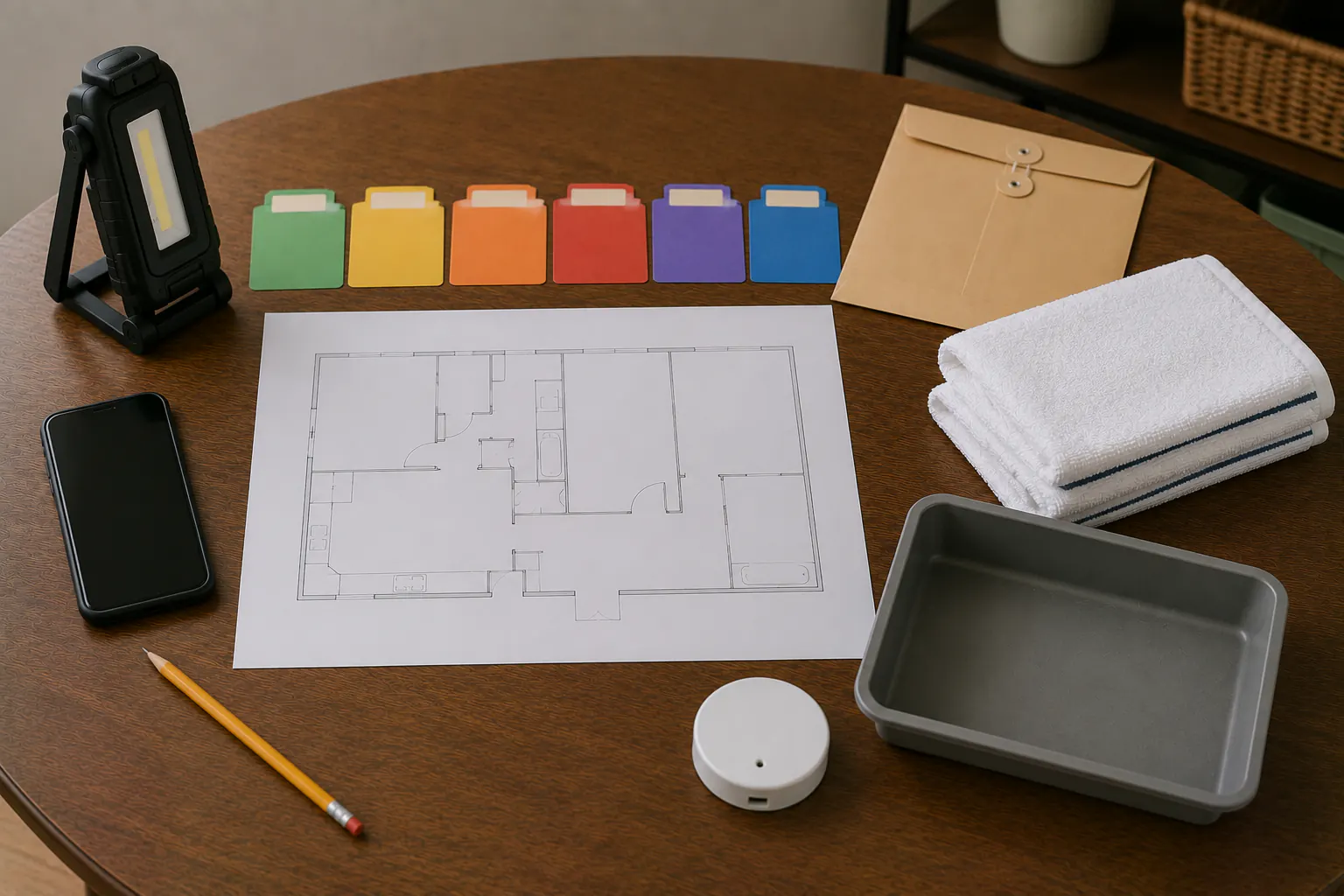
Create a unit plumbing map
Without opening panels or service spaces, record:
- accessible stops for toilets, sinks, and resident-owned appliances;
- any verified unit shutoff and whether it serves only the unit;
- rooms above and below wet areas when known;
- water heater, laundry, dishwasher, disposal, HVAC condensate, and refrigerator connections;
- sprinkler heads and controls that residents must not touch;
- prior leaks, stains, sewer backups, and repair dates;
- accessible exits and a dry route away from each plumbing area.
Photograph controls with enough context for emergency maintenance, but do not publish building access or security details. Report a corroded, blocked, unlabeled, or inaccessible control before depending on it.
Report the first sign, not only the flood
EPA advises renters to report plumbing leaks and moisture problems immediately to the owner, manager, or superintendent. Early signs include a recurring stain, musty odor, swollen baseboard, peeling finish, wet cabinet, unusual flow sound, reduced pressure, multiple slow drains, or unexplained water use charged to the unit.
Send a concise record:
- address, unit, room, and exact observation;
- time first noticed and whether it is changing;
- clear water, hot water, sewage, odor, or unknown category;
- electrical, structural, accessibility, child, pet, or medical concern;
- fixture or appliance used before the problem;
- photos or video from a dry safe location;
- action already taken and case or work-order number.
Avoid asserting a cause that has not been diagnosed. “Water is dripping from the ceiling below the upstairs bathroom” is more useful than “the upstairs tenant broke a pipe.”
Use only an authorized isolation point
For a small known fixture supply leak, an intact verified fixture stop may be appropriate. For wider flow, use a unit shutoff only when management confirmed its identity, authority, and operation and the route is dry.
Stop for resistance, leakage, pipe movement, or uncertainty. Do not force a valve, use a curb key, enter a riser room, operate a shared building valve, or close fire-sprinkler equipment. Portland’s water utility specifically notes that apartment residents may not have access to the shutoff and should contact property management; local procedures control.
If management cannot be reached and water remains uncontrolled, call the local water utility or emergency service and explain that the event is in a multi-unit building. Do not improvise access.
Protect people and portable contents
After immediate hazards are excluded, move dry portable belongings away from the water path. Keep children and pets out. Use a stable container for a slow clean-water drip only when it can be monitored and will not create a trip, overflow, or electrical hazard.
Do not move a built-in appliance, wet furniture, ceiling material, cabinet, or floor covering. Do not use extension cords, an ordinary vacuum, a fan near suspected mold, or a dehumidifier on an unverified wet circuit.
For a known clean-water leak, the temporary leak-control guide defines further limits. For sewage, stop normal use and follow the sewage-backup guide.
Keep emergency maintenance separate from repair
Avoid pipe patches, wall opening, trap removal, powered drain machines, chemical drain openers, heat cable, electrical work, sprinkler work, and appliance disconnection unless the property has expressly assigned the task and the exact procedure is safe and documented.
Never mix cleaners or add a drain product after another resident or maintenance worker may have used one. Tell every arriving worker about any chemical already placed in a fixture.
Do not paint, caulk, or cover a stain or visible growth before the water source and material condition are resolved. Cosmetic work can conceal continuing moisture.
Document impact and response
Keep a timeline of reports, replies, entry notices, work orders, workers, findings, shutoff duration, drying equipment, damaged contents, expenses, and symptoms. Preserve original files and back them up outside the affected device or unit.
Photograph damage before moving safe portable items. Ask the insurer what to retain and how to document replacement. Do not discard wet materials that management or the insurer needs to inspect unless keeping them presents a health hazard; obtain written direction when possible.
Do not record private conversations or enter another unit without understanding local law and consent. Document your own observations and communications.
Ask for a drying and restoration plan
EPA and CDC guidance emphasizes prompt moisture control, generally drying wet material within 24 to 48 hours when possible. Ask management:
- what water source and category were identified;
- when flow stopped and drying began;
- which rooms and assemblies were inspected;
- whether electrical, structural, HVAC, sprinkler, or elevator systems were affected;
- how moisture will be measured and when equipment can be removed;
- what material will be cleaned, removed, or replaced;
- when the unit is safe to occupy and who made that decision.
A portable fan in the room is not proof that a wall, floor, or ceiling is dry. EPA notes that some apartment problems can only be remedied by the owner or manager.
People with asthma, allergies, chronic lung disease, weakened immunity, and children should not participate in mold or disaster cleanup. Request qualified assessment and temporary relocation when health or access needs cannot be met safely.
Plan for loss of water and sanitation
Keep stored drinking water and the apartment sanitation plan ready. Do not use a toilet or drain that management has taken out of service. Do not collect water from a water heater, sprinkler system, pool, radiator, or questionable building source as drinking water.
Follow utility and public-health advisories after pressure loss. Pressure returning does not by itself prove water is safe to drink or the repaired system is leak-free.
Review after every incident
Update contacts, controls, photos, access needs, insurance inventory, and relocation plan. Ask for the final cause and repair record. Note whether a point moisture alarm could provide earlier warning, but obtain written permission before installing anything connected to plumbing or building systems.
Use the leak-detector comparison to separate a removable alarm from an in-line automatic valve that likely requires owner approval and licensed installation.
Sources reviewed
- U.S. EPA: A Brief Guide to Mold, Moisture and Your Home
- U.S. EPA: Indoor Air Quality in Apartments
- Portland Water Bureau: Prepare Plumbing for Winter Weather
- CDC: Natural-Disaster Re-entry and Mold Guidance
Sources reviewed July 14, 2026. Current emergency instructions, lease, local law, building authority, utility, public-health agency, insurer, and qualified trades control the actual response.