
A temporary leak response has one purpose: reduce immediate harm while preserving a clear path to permanent diagnosis and repair. It is not a way to keep a damaged pipe under pressure for days, conceal moisture inside a wall, or prove that an assembly is safe.
Use this guide only for a known household clean-water source that can be approached from dry stable footing. Start with the emergency plumbing hub if the system or water category is uncertain.
Leave the area for these conditions
Call 911 or the responsible utility and keep people away when water is touching or approaching live electrical equipment, a panel, outlet, appliance, elevator, heating system, or damaged battery. Do not step into water to unplug equipment, reach a breaker, or operate a valve.
Leave for:
- fire, smoke, gas odor, carbon monoxide alarm, or active sparking;
- rapidly rising water, a bulging or collapsing ceiling, wall movement, or falling material;
- scalding water, steam, boiler or hydronic-system release;
- sewage, floodwater, chemical odor, fuel, or unknown contamination;
- a fire-sprinkler line, public main, shared riser, concealed line, or utility vault;
- a leak inside an inaccessible crawlspace, attic, wall, floor, or locked room.
PPE and a water shutoff do not remove electrical, structural, pressure, heat, gas, or contamination hazards.
Identify the source category
Observe without tasting or touching the water. A visible drip at a faucet connection differs from water emerging through a ceiling, around a water heater, from a drain, or after rainfall.
Ask:
- Is the water clear and apparently from a pressurized supply line?
- Does flow change when the fixture is used?
- Is it hot, discolored, odorous, oily, foamy, or carrying solids?
- Is a toilet, drain, sump, HVAC unit, roof, appliance, fire sprinkler, or neighboring unit involved?
- Is the flow increasing, and are surfaces deforming?
If the category is not clear, treat it as unknown and get qualified help. Do not call sewage or floodwater a plumbing leak simply because it appeared indoors.
Make notifications early
Call the building manager or landlord immediately in a rental or multi-unit property. Water can travel into another unit, common electrical equipment, an elevator shaft, or a fire-rated assembly before the source looks serious inside one room.
Call a licensed plumber and describe the apparent source, rate, shutoff status, building type, water temperature, and hazards. Contact the water utility when the service line, meter, street supply, pressure, or customer-side boundary is uncertain. Notify the insurer or property owner according to the policy and lease.
Write down names, times, case numbers, and instructions. A phone conversation is easy to misremember during an active event.
Isolate only a verified control
Use the main water shutoff guide before an emergency. During a leak, choose the smallest verified isolation point that fully stops the source: an intact fixture stop may preserve water elsewhere, while a failed concealed line may require the documented unit or house main.
Operate only a valve that is:
- positively identified for the affected system;
- authorized for the resident;
- reachable without water, electricity, unstable material, or confined access;
- intact, supported, and previously verified;
- used with the documented motion and tool.
Stop for resistance, leakage at the valve, pipe movement, cracking sounds, or continued flow. Do not force, strike, heat, lubricate, extend, or disassemble the valve. Call the utility, manager, or plumber.
Turning off the supply does not make a hot-water tank, boiler, well pressure tank, fire sprinkler, appliance, or electrical system safe. Follow professional instructions for dependent equipment.
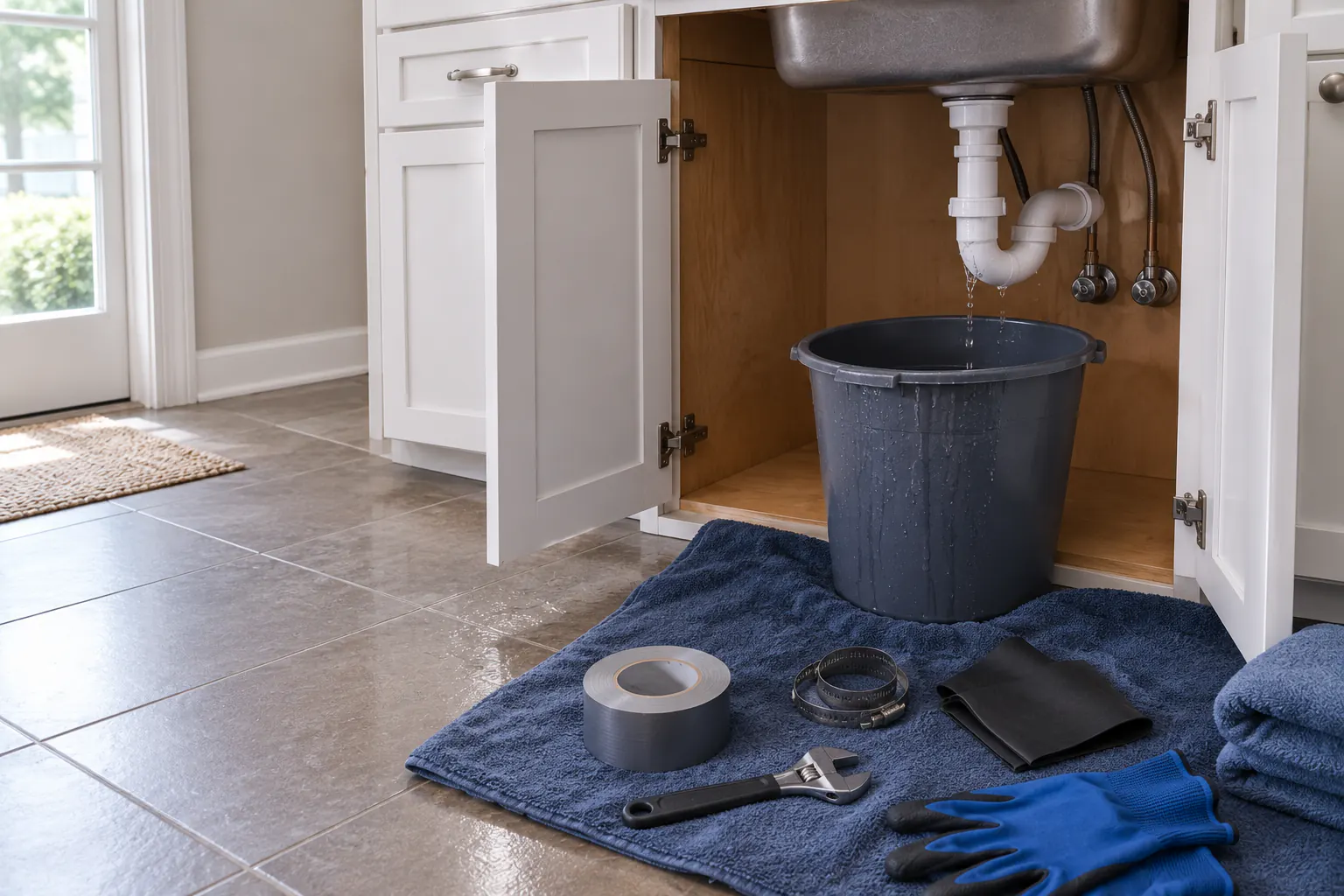
Contain a small clean-water drip
When the source is slow, visible, cool, and isolated from hazards:
- place a stable shallow tray or bucket beneath it;
- protect the floor with absorbent material that can be removed before saturation;
- check the container frequently and keep the route clear;
- move dry portable contents to a dry area;
- use battery task lighting rather than cords near water;
- keep children and pets out;
- monitor adjacent rooms and the floor below.
Do not leave a container where it creates a trip hazard or can overflow unattended. Do not direct water into an electrical opening, wall cavity, questionable drain, or outside location where it can freeze or damage another property.
Be skeptical of clamps, tapes, putties, and plugs
A temporary repair product has compatibility limits for pipe material, diameter, surface, pressure, temperature, potable-water use, installation clearance, cure time, and duration. Some require complete depressurization and dry preparation. None should be treated as universal.
Use a patch or clamp only when the licensed plumber or exact manufacturer documentation confirms it for the identified condition and the resident can install it without cutting, heat, electricity, excessive force, concealed work, or continued pressure. Keep the packaging and record the installation time.
Do not:
- wrap an unidentified active line and restore pressure to “see if it holds”;
- apply a product over corrosion, a split fitting, flexible connector failure, or moving joint without approval;
- plug a relief, drain, vent, sprinkler, or safety discharge;
- use automotive, fuel, electrical, or general adhesive products as plumbing repair;
- conceal the area before permanent inspection;
- represent a temporary measure as completed repair.
When in doubt, leave the supply isolated and use stored water.
Document before conditions change
From a dry safe location, photograph the apparent source, surrounding assembly, room, and affected contents. Capture a ruler or fixed reference when useful without disturbing the failure. Record:
- discovery time and progression;
- fixture or appliance use before discovery;
- valve actions and whether flow stopped;
- utility, landlord, plumber, and insurer instructions;
- rooms and units affected;
- product name and exact instructions for any authorized temporary measure;
- temperature, outage, freeze, storm, or construction context.
Do not remove failed parts, discard damaged property, or open assemblies before asking the responsible professional and insurer, unless leaving them creates an immediate health hazard.
Start drying only within a safe scope
Remove standing clean water from a small accessible surface only when electricity and structure are confirmed safe. Use dry towels or equipment approved for the location. Do not use a household vacuum unless it is specifically designed and safely powered for liquid pickup.
CDC recommends drying wet materials within 24 to 48 hours when possible to reduce mold growth. That deadline means professional response should begin quickly; it does not authorize risky demolition or prove hidden cavities are dry.
Use qualified remediation for extensive, concealed, contaminated, or long-wet material. People with asthma, chronic lung disease, allergies, or weakened immunity and children should not participate in mold or disaster cleanup.
Keep the repair isolated until released
Permanent repair requires identifying why the component failed: movement, pressure, freeze, corrosion, incompatible material, installation defect, appliance fault, or another cause. Replacing the visible wet part without correcting the cause can invite recurrence.
Before restoring pressure, obtain the plumber’s instructions for valve order, dependent equipment, flushing, leak checks, and water quality. Watch the repaired area and other accessible joints during controlled restoration. Follow utility or public-health advisories after pressure loss.
Update the plumbing map, photos, invoice, material information, shutoff notes, and inspection schedule. Add an appropriate leak detector only after understanding what location and failure mode it can actually detect.
Sources reviewed
- U.S. EPA WaterSense: Home Maintenance
- Seattle Public Utilities: How to Shut Off Your Water
- CDC: Mold Cleanup and Natural-Disaster Re-entry Guidance
Sources reviewed July 14, 2026. Qualified plumbing, electrical, structural, restoration, utility, insurer, landlord, and public-health review controls the actual response.