
A sewage backup is not confirmed only by dark water in a toilet. Warning may begin as several slow fixtures, gurgling in one drain when another is used, wastewater at a low shower or floor drain, a septic alarm, or sewage surfacing outdoors.
The first objective is to stop adding wastewater and prevent contact. It is not to identify the blockage by opening pipes, pouring chemicals, or repeatedly testing fixtures.
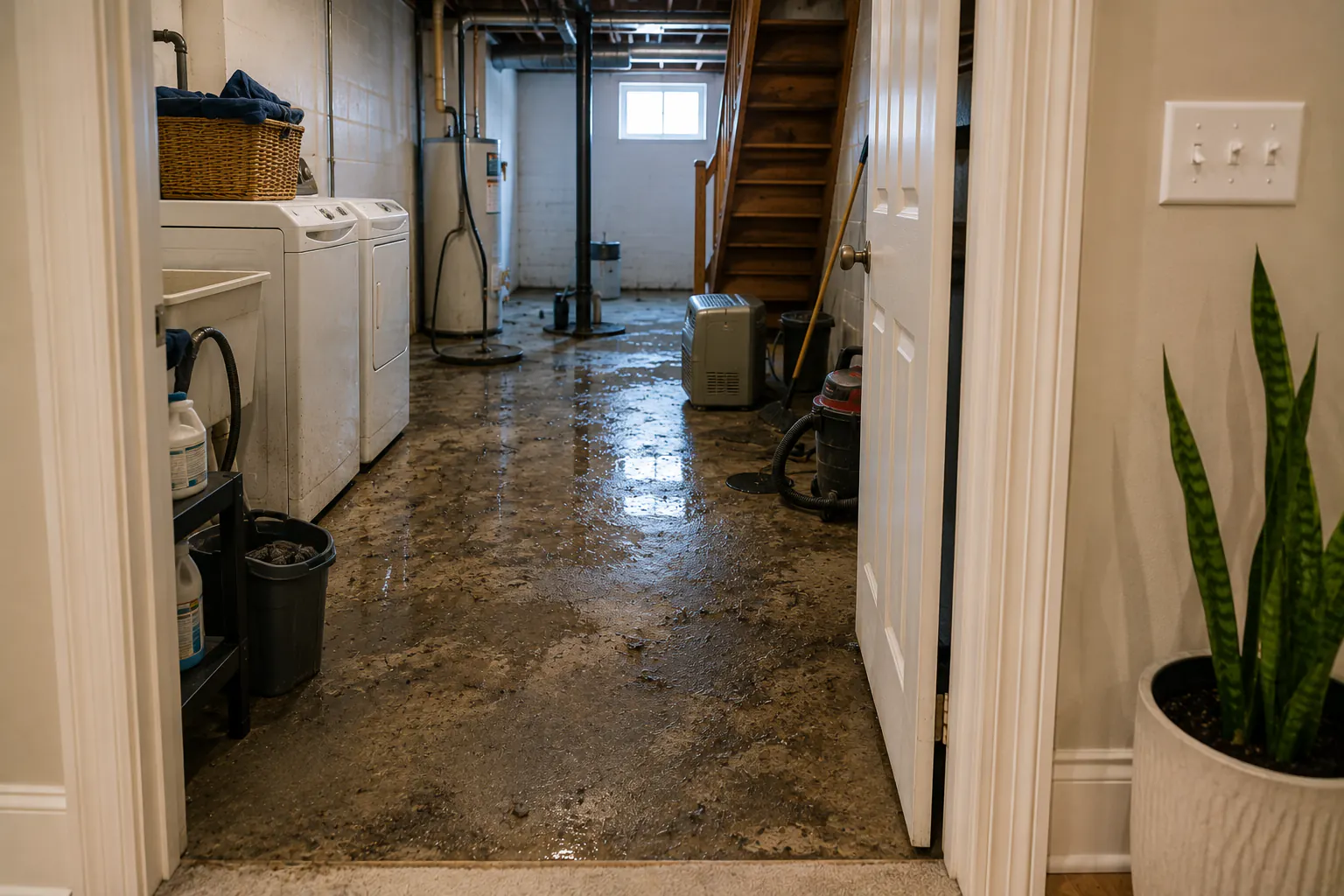
Leave and call for immediate danger
Call 911 from a safe location for:
- fire, smoke, collapse, or an unstable structure;
- sewage or standing water near outlets, panels, appliances, cords, or energized equipment;
- strong gas, fuel, solvent, or unknown chemical odor;
- severe breathing difficulty, confusion, loss of consciousness, or other acute symptoms;
- rapidly rising water that blocks a safe exit;
- a child, older adult, person with a disability, or pet trapped in the affected area.
Do not enter water to switch off electricity. Use the utility or emergency responder. Do not re-enter until the responsible authority clears the immediate hazard.
Recognize a pattern across fixtures
One slow sink can have a local cause. Concern rises when symptoms involve multiple fixtures or the lowest plumbing points.
Watch for:
- a toilet bubbling when a sink, shower, or washing machine drains;
- wastewater rising in a tub, shower, floor drain, or lower-level toilet;
- several drains becoming slow at the same time;
- new gurgling across rooms or floors;
- sewage odor accompanied by drainage change;
- water around a basement drain or cleanout;
- a grinder-pump, lift-station, or septic alarm;
- wet, unusually green, sunken, or sewage-odorous soil near a drain field;
- backup after heavy rain, flooding, power loss, or a utility notice;
- neighboring units reporting the same problem.
Do not lean over a drain to smell it or remove a cover to inspect. A single odor without wastewater symptoms can have another source, but it still deserves qualified assessment when persistent or strong.
Stop adding water and waste
Once a backup or wastewater-system failure is suspected:
- Stop flushing toilets.
- Stop showers, sinks, dishwashers, washing machines, and garbage disposals that enter the affected system.
- Tell every occupant and guest which fixtures are out of service.
- Keep children and pets away from the area.
- Call the utility or building management and the qualified service responsible for the system.
- Activate a toilet alternative only after checking the toilet sanitation guide.
Do not “test one more time.” Each test adds volume and may move contamination into another room or unit.
Leave diagnosis with qualified service
Avoid:
- chemical drain opener, bleach, acid, caustic product, or a mixture of cleaners;
- opening a cleanout cap under unknown pressure;
- inserting a tool into an unfamiliar building drain or shared line;
- dismantling a toilet, pump, alarm, or backwater device;
- operating a sewage ejector, septic control, valve, or breaker without authorization and training;
- pumping a septic tank while the drain field or surrounding soil is flooded;
- entering a crawlspace, pit, manhole, tank, sewer, or pump chamber;
- using a wet/dry vacuum not designed and professionally controlled for sewage;
- running a fan or HVAC system through a contaminated area without remediation guidance.
Confined spaces and wastewater systems can involve toxic atmospheres, pathogens, electricity, mechanical equipment, and engulfment. Household PPE does not make entry safe.
Notify the right owner of the system
| Setting | First operational contacts |
|---|---|
| Single-family municipal sewer | wastewater utility and qualified plumber |
| Private septic | local health/environmental authority and qualified septic professional |
| Apartment or condominium | emergency property management and building maintenance; utility if directed |
| Street or neighborhood overflow | wastewater utility and local public-health/environmental reporting channel |
| Flood or declared disaster | emergency management, wastewater utility, health department, and building authority |
| Commercial or shared facility | facility manager and occupational/environmental health process |
Call the insurer after the immediate hazard is controlled. Ask what documentation is required and whether an approved remediation vendor is needed. Coverage varies; do not delay emergency protection for a claim call.
Isolate the area without spreading contamination
Close an interior door when doing so does not interfere with escape or required ventilation. Use a simple warning that all occupants can understand. Keep shoes, tools, toys, laundry, food, and clean supplies out.
Do not carry dripping items through the home. Do not send contaminated water into another drain, outside onto soil, into a street, or into a storm sewer. Do not use a household fan to blow air from the affected area into clean rooms.
If HVAC return air, a furnace, air handler, duct, or electrical equipment is affected, leave system decisions to the appropriate qualified professional. Do not enter contamination to reach a switch.
Avoid direct contact
Sewage may contain disease-causing organisms and other contaminants. Cuts, eyes, mouth, and broken skin increase exposure concerns.
For incidental contact that can be addressed safely:
- move away from the source;
- remove contaminated clothing without spreading material;
- wash exposed skin with soap and safe water;
- flush eyes with safe water when appropriate and seek medical guidance;
- clean and cover wounds;
- contact a clinician for wound exposure, symptoms, or individual health risks.
Seek prompt care for vomiting, diarrhea, fever, worsening wound redness or drainage, eye symptoms, breathing symptoms, or signs of dehydration. Call 911 for severe symptoms.
Do not apply bleach, surface disinfectant, sanitizer, or another cleaning chemical to skin or wounds.
Protect renters and neighboring units
Report in writing:
- unit and exact affected fixture or area;
- observable symptoms and time first noticed;
- whether multiple fixtures or units are involved;
- whether an alarm, outage, rain, or utility notice preceded the event;
- immediate accessibility, medical, child, pet, or sanitation impact;
- photos taken from a dry, safe position;
- request for emergency response, temporary sanitation, and written work order.
Do not diagnose the hidden cause or accept responsibility in the report. State what is visible. If management is unavailable, use the local housing, health, building, or wastewater emergency channel.
Do not use shared hallways, balconies, trash rooms, or neighboring plumbing for contaminated belongings or temporary waste unless authorities approve the arrangement.
Document without entering the hazard
After emergency clearance, photograph from dry, stable positions:
- the extent and source area without moving objects;
- water height or boundary using a safe reference;
- affected rooms and materials;
- equipment labels visible without touching wet equipment;
- utility, management, and service communications;
- temporary authorized measures and receipts.
Do not wade, open cabinets over contaminated water, move heavy furniture, touch electrical items, or preserve sewage-contaminated soft goods solely as proof. The flood damage documentation guide provides a claim record that does not outrank health protection.
Keep cleanup separate from emergency response
Small clean-water spills and sewage are not the same category. Sewage can enter porous flooring, wall cavities, insulation, HVAC systems, furniture, and personal items. The affected area, material, exposure duration, vulnerable residents, and other hazards determine whether professional remediation is needed.
Qualified review is especially important for:
- extensive or repeated backup;
- porous building materials or hidden cavities;
- HVAC, electrical, or mechanical involvement;
- floodwater or unknown chemical contamination;
- schools, childcare, food areas, healthcare, or shared housing;
- immunocompromised residents, infants, older adults, or people with respiratory or skin conditions;
- structural damage, asbestos, lead, mold, or hazardous debris;
- work requiring containment, removal, drying equipment, or regulated disposal.
EPA advises cleaning soil before label-directed disinfectant use and never mixing bleach with ammonia or other chemicals. Review the cleaning-products warning. This page does not provide a universal sewage-disinfection recipe.
The flooded-home re-entry and cleanup guide covers the broader structural, electrical, gas, water, mold, and insurance sequence.
Ask for a cause and prevention record
After qualified service restores the system, request:
- observed cause and affected segment;
- work performed and parts changed;
- whether the municipal, building, private lateral, pump, or septic system was involved;
- testing or operational verification completed;
- cleanup and drying scope;
- restrictions before reuse;
- recommended inspection or maintenance interval;
- permits, photos, invoices, warranties, and insurer documents;
- building or household action if symptoms recur.
Do not install or modify a backwater valve, pump, vent, cleanout, septic component, or alarm from a generic recommendation. Selection, access, maintenance, code, and failure behavior depend on the exact system.
Restore fixtures only after authorization
Before normal use resumes, confirm:
- The utility, building, plumber, or septic professional says the system can receive wastewater.
- Electrical and mechanical equipment is cleared.
- Contaminated areas are isolated or remediated as required.
- Toilets and drains operate under the professional verification plan.
- Household members know the recurrence signs.
- Temporary human waste has an approved disposal route.
- Safe water and hand hygiene remain available.
The Emergency Sanitation and Hygiene hub connects the restored toilet with waste, water, hands, cleaning supplies, and longer disruption planning.
Return to the post-disaster cleanup hub for the complete reentry-to-reoccupancy sequence. If water has reached building materials, use the first-day water-damage triage, then apply the mold-risk reduction guide. Select clothing and equipment through the cleanup PPE checklist, not from a generic sewage-kit claim.
Sources reviewed
- EPA: Sanitary Sewer Overflows; Flood Cleanup and Indoor Health
- CDC: Septic and Onsite Wastewater Systems; Protecting Workers Handling Human Waste; Flooded Home Re-entry
Sources reviewed July 14, 2026. Local wastewater, public-health, building, landlord, septic, plumbing, remediation, and insurance instructions control actual response and cleanup.