
Before trying another flush, check the wastewater utility or building management’s instructions. If sewage is backing up, multiple drains are slow, or a wastewater alarm is sounding, stop using the affected plumbing and follow the steps below.
The question is not just “Will it flush?” It is whether the responsible authority has confirmed that the system can receive wastewater. A successful test flush does not establish that; water, building pumps, sewers, and septic systems can fail separately.
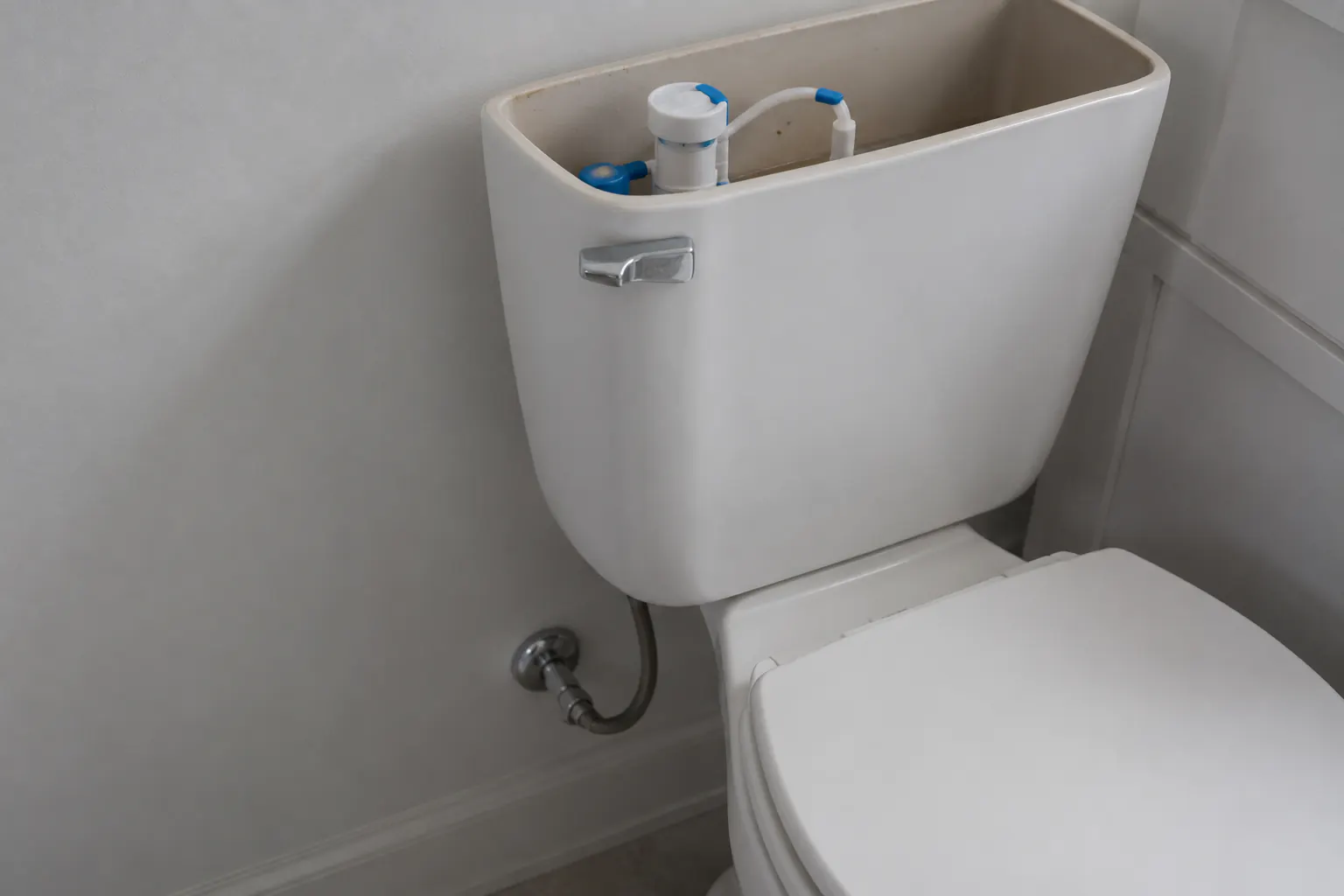
Stop immediately for backup signs
Stop using affected toilets, sinks, showers, dishwashers, and washing machines when you observe:
- sewage or wastewater entering a toilet, tub, shower, floor drain, or sink;
- several fixtures draining slowly at the same time;
- new gurgling or bubbling across fixtures;
- strong sewage odor with a drainage problem;
- a wastewater, septic, grinder-pump, or lift-station alarm;
- wastewater surfacing near a drain field;
- flooding around a septic system;
- a utility, landlord, or health-department instruction to reduce or stop use.
Keep children and pets away. Avoid contaminated water and wet electrical equipment. Contact the utility or building management and the qualified plumbing or septic service responsible for the system.
Do not remove a cleanout cap, use chemical drain opener, operate an unfamiliar valve, pump a flooded septic tank, or enter any sewer or confined space. Use the sewage backup stop-rules guide before considering cleanup.
Classify the outage
Water supply interrupted, wastewater service confirmed available
The utility or building may permit toilet flushing with stored non-drinking water. Ask what water may be used, how much conservation is required, and whether pumps or pressure affect the building.
Do not use the household’s safest drinking reserve if an approved sanitation source and method are available. Do not use water contaminated with sewage, fuel, toxic chemicals, or floodwater. A boil-water advisory does not automatically answer toilet-use questions; follow the actual notice.
Wastewater service restricted or unavailable
Do not flush. More water adds volume to a system that cannot carry or treat it. This can occur during a power failure even when municipal water is still flowing.
Use an approved public facility, portable toilet, or preplanned temporary collection system. Ask where and when waste will be collected.
Septic system flooded, damaged, or uncertain
CDC advises reducing water use during floods and other emergencies. Rest the septic system entirely while the soil around it is flooded or while the responsible authority or professional says it is unavailable, and keep vehicles, digging, and heavy equipment off the drain field.
Apartment or high-rise system uncertain
Call property management. The building may depend on pumps and shared stacks, and a lower unit may show backup before an upper unit. Do not assume a neighbor’s functioning toilet proves the system is safe.
Prefer a functioning approved toilet
The best temporary option is often a confirmed functioning toilet at a safe destination: an official shelter, public sanitation site, workplace, relative’s home, or portable facility established by authorities.
Verify:
- hours and current availability;
- safe route and building access;
- privacy, lighting, and security;
- wheelchair or transfer accessibility;
- diapering and caregiver space;
- handwashing supplies;
- pet policy and transportation;
- whether the facility remains open during the next operational period.
Do not take an unsafe route or wait until a vulnerable household member can no longer travel.
Plan a temporary collection toilet before the outage
State and local public-health agencies describe temporary systems that use a normal toilet bowl or a stable, appropriately sized container lined with heavy-duty bags. Local instructions differ, so the household plan must follow its own health and solid-waste authorities.
A basic planning inventory may include:
- a stable toilet or container designed to support the intended user;
- a compatible seat or lid that does not shift;
- heavy-duty bags sized for the container, with extras for secondary containment;
- an absorbent material allowed by local guidance;
- toilet paper and personal hygiene supplies;
- disposable gloves for waste handling, not as a substitute for handwashing;
- soap, safe water, controlled spout, wastewater catch container, and clean drying method;
- alcohol-based hand sanitizer containing at least 60 percent alcohol as a backup;
- a rigid, lidded secondary storage container permitted by local rules;
- labels that identify the waste category without displaying medical details;
- cleaning supplies used only according to their original labels.
Do not store loose bleach, ammonia, acids, drain cleaner, fuel, powdered chemicals, or unlabeled deodorizer with the toilet kit. Do not add cleaning chemicals to human waste unless an approved product label and local sanitation instruction explicitly direct that exact use.
Set up for stability, privacy, and separation
Choose a location that is:
- on a stable, level floor;
- reachable by every intended user or caregiver;
- separated from food preparation, drinking water, medications, infant feeding, and clean supplies;
- away from heat, flame, and electrical equipment;
- protected from children and pets;
- ventilated without spreading contamination into clean areas;
- close enough to the hand hygiene station for immediate use;
- not blocking a door, hallway, stair, fire escape, or mobility route.
Test the empty setup for normal sitting, standing, transfer, lid operation, and caregiver space before an emergency. Do not have someone sit on an improvised container that is not designed or safely supported for the load.
Collect waste with the least handling
Follow the local public-health method and the product instructions. General controls include:
- Place supplies within reach before use.
- Confirm the liner is intact and correctly supported.
- Add only the locally approved absorbent material in the prescribed way.
- Keep surrounding surfaces and clean supplies from contacting waste.
- Replace the inner collection bag before weight, liquid, or volume makes closure unsafe.
- Close it without compressing, shaking, or forcing out air.
- Place it in required secondary containment.
- Clean hands immediately after handling, even when gloves were worn.
- Clean visibly soiled hard surfaces before any label-directed disinfectant use.
Seal bags while they still close easily; overfilling makes handling and closure harder. Carry them away from the body and outside food areas whenever another route exists, and treat every human-waste collection bag as single-use.
Store sealed waste under local rules
Local authorities control how long waste may be stored, where, and in what container. A safe plan keeps sealed units:
- upright in a rigid, closed secondary container;
- protected from puncture, rain, heat, floodwater, and direct sun;
- away from drinking water, wells, food, living areas, and air intakes;
- inaccessible to children, pets, insects, rodents, and unauthorized people;
- separate from batteries, chemicals, sharps, medication waste, food, and recyclables;
- inventoried so capacity and collection timing are visible.
An apartment balcony, fire escape, public hallway, stairwell, roof, trash chute, shared bin, basement, or utility room is not automatically an approved storage location. Obtain management and local waste guidance.
If secure storage is unavailable, the home may no longer be a sustainable shelter. Relocate before bags accumulate in occupied space.
Dispose only when authorities provide a route
Some jurisdictions allow bagged emergency toilet waste in regular collection only after a declared emergency instruction. Others require a designated drop-off, portable-toilet service, wastewater facility, or another method. Advice from one county is not permission in another.
Never:
- put bagged waste in ordinary trash without current local approval;
- empty a bag into a restored toilet or sewer unless the responsible authority explicitly permits the method;
- pour waste into a storm drain, gutter, street, yard, water body, abandoned well, or damaged plumbing;
- bury waste without explicit local public-health and environmental authorization;
- burn human waste or sanitation bags;
- abandon a bag at a portable toilet, park, shelter, public bin, or collection site that has not accepted it.
Record the authority, instruction date, destination, collection time, and any packaging requirement.
Protect hands and surrounding surfaces
Wash hands with soap and clean running water for at least 20 seconds after toilet use or waste handling and before food, medication, wound, infant, or caregiver tasks. A controlled-spout water container can support a temporary station when the sink is unavailable.
Alcohol-based sanitizer with at least 60 percent alcohol is a backup when soap and water are not available. It is not as effective on visibly dirty or greasy hands and does not remove harmful chemicals. See the limited-water hand hygiene guide.
Gloves reduce selected contact but can transfer contamination. Remove them without touching skin with the contaminated exterior, discard or isolate them as their type requires, and clean hands afterward.
Include every user in the capacity plan
Estimate daily uses and supplies for:
- adults and children;
- diapers and toilet training;
- menstruation and incontinence;
- older adults and transfer assistance;
- mobility, grip, balance, vision, or cognitive needs;
- clinician-directed ostomy, catheter, wound, or personal care;
- diarrhea or vomiting, which can increase waste and dehydration risk;
- guests, caregivers, and service animals.
Do not change medical or personal-care procedures based on a general sanitation guide. Ask the clinician what safe water, clean surfaces, disposal, and relocation triggers are required.
Set relocation triggers
Leave for a safer destination before:
- no approved toilet or collection method remains;
- secure waste storage is nearly full;
- handwashing and safe water cannot be maintained;
- sewage enters the occupied space;
- temperature or ventilation makes storage unsafe;
- pests reach the containment area;
- a resident cannot use the setup without fall, transfer, skin, or medical risk;
- diarrhea, vomiting, dehydration, wound infection, or other illness cannot be safely managed;
- authorities direct evacuation or building closure.
Return to the Emergency Sanitation and Hygiene hub for the complete waste, cleaning, water, and household routine.
Sources reviewed
- Washington State Department of Health: Toilet Use During Emergencies
- King County Public Health: How to Create an Emergency Toilet
- CDC: Emergency Personal Hygiene; Preventing Diarrheal Illness; Septic and Onsite Wastewater Systems
- EPA: Sanitary Sewer Overflows
Sources reviewed July 14, 2026. The local health department, wastewater utility, solid-waste authority, landlord, and incident instructions determine actual toilet use, collection, storage, and disposal.