
When the sink is unavailable, put soap, a confirmed-safe water supply, and clean drying material together where the household can use them. Check the current water advisory first; water allowed for flushing is not automatically suitable for washing hands.
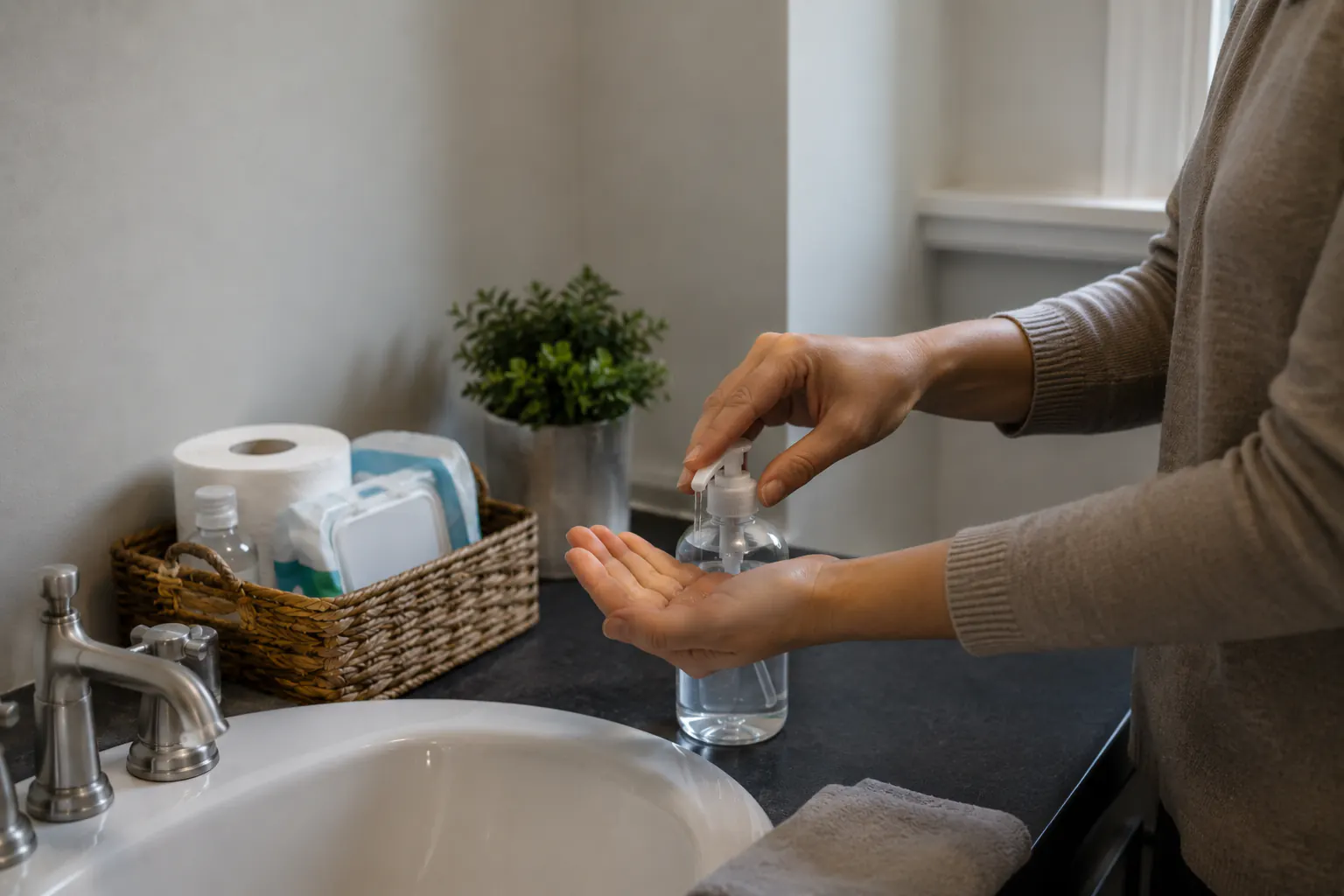
CDC recommends washing hands with soap and clean running water for at least 20 seconds. Alcohol-based hand sanitizer containing at least 60 percent alcohol is a useful backup, but it is not equivalent in every situation.
Follow the exact water advisory
The words matter:
- Boil-water advisory: tap water may remain acceptable for handwashing in many cases, but local officials control the instruction.
- Do-not-drink advisory: permitted hygiene uses depend on the contaminant and notice.
- Do-not-use advisory: do not use the tap for handwashing unless authorities explicitly allow it.
- Pressure loss or unknown status: use a confirmed safe source until the utility or health department provides direction.
- Fuel, toxic chemical, harmful algal toxin, or sewage concern: boiling and ordinary household disinfection may not make the water safe for skin contact.
Do not decide from appearance, taste, smell, or a neighbor’s practice. Keep a paper copy or screenshot of the current notice and its update time.
Use the emergency water storage guide to protect a known source for drinking, food, oral care, medications, wound care, infant needs, and handwashing.
Prioritize the moments with the greatest transfer risk
Wash hands with soap and clean water:
- after using the toilet;
- after handling human waste, diapers, incontinence products, garbage, or animal waste;
- before preparing food, eating, feeding a child, or handling clean dishes;
- before and after wound care or caring for someone who is ill;
- after contact with floodwater or a contaminated surface;
- after removing gloves;
- after coughing, sneezing, or blowing the nose;
- before handling medications or clinician-directed equipment when the care plan requires it.
Add household-specific moments for ostomy, catheter, feeding, respiratory, or other medical care only under clinician and product instructions.
Build a controlled-flow station
A temporary station should provide flowing water without requiring a person to touch the outlet with dirty hands. It should also keep used water from becoming a second contamination source.
Plan for:
- a stable food-grade or otherwise appropriate clean-water container with a controlled spout;
- plain soap in a dispenser or clean bar-soap arrangement;
- a catch basin or wastewater container that cannot be mistaken for clean water;
- a clean drying method, such as disposable towels or individual clean towels;
- a closed trash container;
- a separate hand-sanitizer location away from heat and flame;
- accessible height, clear floor space, lighting, and assistance for intended users;
- labels or color cues that distinguish clean supply from used water without relying only on color.
Place it close to the toilet or diapering area but outside the immediate splash and waste zone. Keep it away from food preparation and stored drinking water.
Do not suspend a heavy container from a weak fixture, place it above electrical equipment, create a hose across a walking path, or allow the catch container to overflow.
Use soap and water efficiently
- Place soap and drying material within reach.
- Wet hands with a controlled amount of clean running water.
- Apply soap and lather all surfaces, including palms, backs, between fingers, thumbs, fingertips, nails, and wrists.
- Scrub for at least 20 seconds.
- Rinse under clean flowing water without dipping into shared standing water.
- Dry completely with a clean method or air dry.
- Avoid touching a contaminated spout, lid, or waste container with clean hands.
Warm water is not required for germ removal; water hot enough to kill germs would injure skin. Preserve fuel and burn safety rather than heating wash water by default.
Understand what sanitizer can and cannot do
Use an alcohol-based hand sanitizer with at least 60 percent alcohol when soap and water are not available. Apply the label-directed amount, cover all hand surfaces, and rub until dry.
Sanitizer is less effective when hands are visibly dirty or greasy. It does not eliminate every type of germ and may not remove harmful chemicals. It does not wash away fecal material, flood residue, pesticides, fuel, or other contamination.
Store sanitizer:
- in its original labeled container;
- away from flame, heat, and ignition sources;
- out of reach of young children;
- where it cannot be mistaken for a drink or medicine;
- within its temperature and expiration instructions.
Supervise children and do not let anyone swallow it. Contact Poison Control at 1-800-222-1222 in the United States for exposure guidance; call 911 for severe symptoms.
Do not create a communal wash basin
A bowl of water used by several people can accumulate germs and soil. CDC recommends clean running water. A controlled-spout container lets you manage the flow without asking people to dip their hands into shared water; the amount used still depends on the setup and task.
Do not reuse toilet-flush water, catch water, bathwater, floodwater, pool water, or water from a container with an unknown history for handwashing unless the local health authority explicitly approves that use.
Dispose of captured wash water according to wastewater, septic, landlord, and public-health instructions. Do not pour it into a storm drain, street, water body, food area, or a plumbing system authorities have closed.
Keep the station itself clean
Assign one person per shift or day to inspect:
- clean-water level and source;
- soap and drying supplies;
- spout cleanliness and leaks;
- catch-container level and stability;
- trash closure;
- floor dryness and trip risk;
- sanitizer storage;
- accessibility and lighting.
Cleaning physically removes soil and many germs. If disinfecting is needed, use an EPA-registered product only on listed surfaces, follow dilution and contact time, and never mix it with another cleaner. Review the cleaning-product mixing warning.
Do not spray disinfectant onto hands, food, drinking-water containers, or surfaces the label excludes.
Handle gloves as contaminated tools
Gloves can reduce selected contact but do not make a dirty task clean. They can transfer waste to handles, phones, faucets, door knobs, and clean supplies.
- Choose the glove type required by the task or product label.
- Inspect for tears before use.
- Keep gloved hands away from the face and personal items.
- Remove them without touching bare skin with the contaminated exterior.
- Discard or isolate them according to their type and local waste rules.
- Wash hands immediately after removal.
Do not wash disposable gloves for reuse or use food-preparation gloves for toilet and waste work.
Plan diapering and incontinence care
Prepare the clean diaper, wipes, liner, cream, clothes, bag, and hand supplies before beginning. Use a stable, easy-to-clean surface away from food preparation. Keep one hand on a child as appropriate for fall safety.
Contain the used diaper and wipes promptly, isolate soiled clothing, clean the person’s hands, clean the surface, and wash the caregiver’s hands. CDC provides emergency diapering steps and emphasizes that even microscopic fecal contamination can spread germs.
The household waste isolation guide covers diapers, incontinence products, and separate medical waste categories.
Protect wounds and skin
Use clean water and follow clinician guidance for wound care. Keep open wounds covered with a clean, dry, waterproof dressing when contaminated water exposure is possible. Avoid floodwater, sewage, salt or brackish water, and unknown standing water.
Seek prompt care for increasing redness, swelling, warmth, pain, drainage, fever, or a wound exposed to contaminated water. Do not put household disinfectant, bleach, sanitizer, or cleaning chemical into a wound.
Repeated washing and sanitizer use can irritate skin. Use a compatible moisturizer after hands are clean and dry when appropriate, and follow medical advice for eczema, dermatitis, allergy, or damaged skin.
Separate hand hygiene from surface disinfection
Soap for hands, detergent for cleaning, and surface disinfectant have different jobs. A surface product is not a hand product. A hand sanitizer is not a counter disinfectant unless its label specifically establishes that use.
Use the smallest product set that the household can store, identify, and use correctly. Original labels and readable instructions matter more than a shelf of overlapping chemicals.
Set resupply and relocation triggers
Track daily use of safe water, soap, towels, sanitizer, diapers, gloves, and waste capacity. Obtain resupply or relocate before:
- safe water cannot cover drinking and priority hygiene;
- the station cannot be kept stable and separate from food;
- wastewater cannot be disposed of legally and safely;
- sewage enters the home;
- a caregiver cannot maintain required medical or personal hygiene;
- diarrhea, vomiting, dehydration, or infection is spreading or cannot be managed;
- authorities close the building or direct evacuation.
Return to the Emergency Sanitation and Hygiene hub to connect handwashing with toilets, waste, cleaning chemicals, and the household operating plan.
Sources reviewed
- CDC: Personal Hygiene During an Emergency; Clean Hands FAQ; Preventing Diarrheal Illness; Emergency Diapering
- EPA: Selected Registered Disinfectants and Label Directions
Sources reviewed July 14, 2026. Current local water and public-health instructions, clinician plans, and product labels control actual water uses and care procedures.