
When collection stops, “trash” quickly becomes several different problems. Spoiled food attracts pests. Human waste can spread germs. Loose sharps can injure. Lithium-ion batteries can ignite. Medicines expose children and privacy. Cleaners, pesticides, fuel, and paint may react or leak.
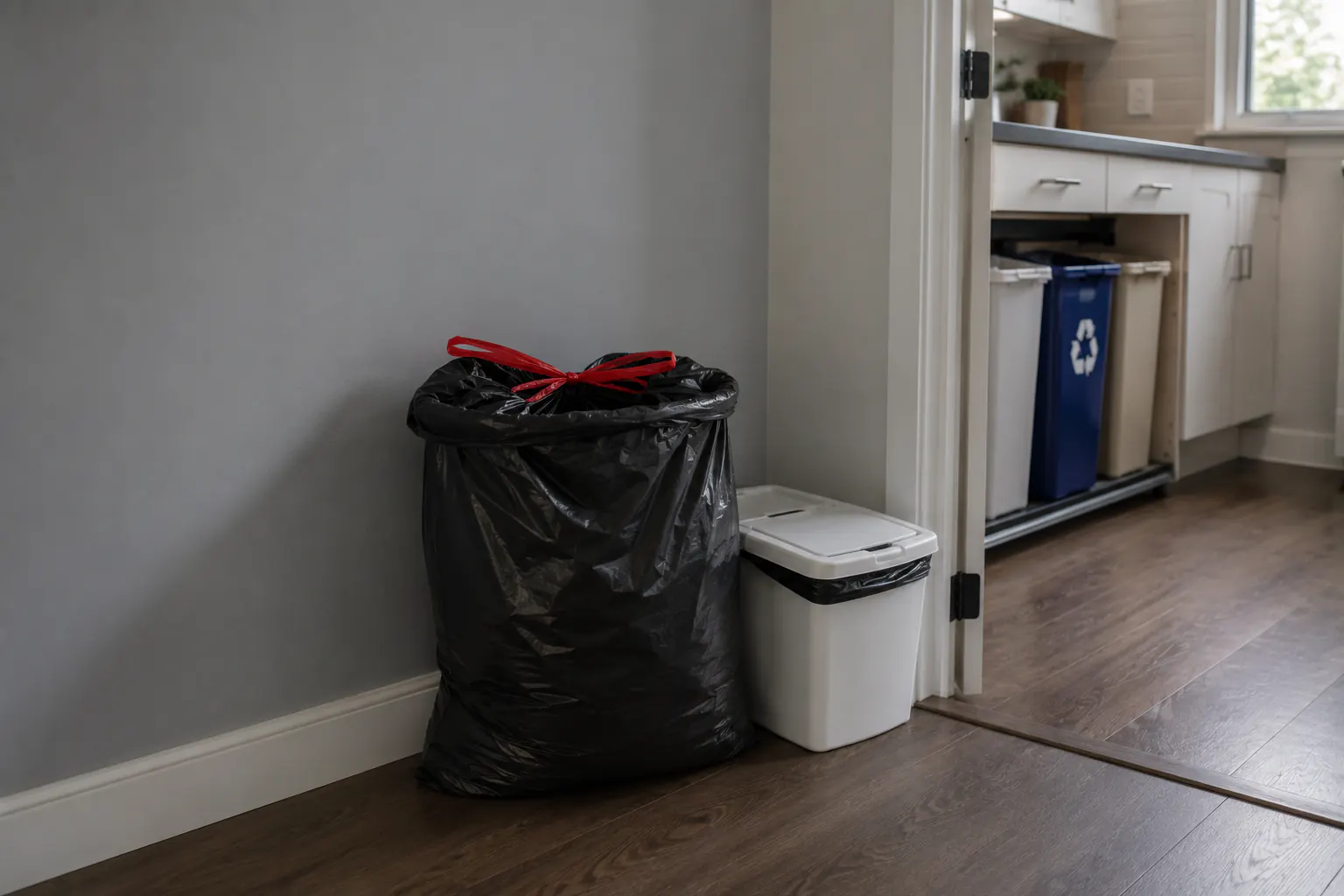
The household plan should separate waste at the point where it is created, keep each category stable and inaccessible, and wait for the correct collection instruction. Combining everything in one heavy bag makes later handling more dangerous.
Stop for an active hazard
Call 911 for fire, smoke, hissing, rapid heat, severe chemical fumes, collapse, or another immediate threat. Move away without carrying a dangerous item through occupied space.
Do not touch or move:
- a hot, swollen, smoking, leaking, or damaged battery;
- an unlabeled, bulging, corroded, or reacting chemical container;
- a compressed cylinder, fuel container, pesticide, or oxidizer involved in fire or flood damage;
- loose needles, broken glass, or sharp debris hidden in waste;
- sewage-contaminated material in an electrically or structurally unsafe area;
- suspected asbestos, lead dust, hazardous ash, or unknown disaster debris.
Use the fire department, hazardous-waste authority, health department, utility, landlord, or qualified remediation service for the actual condition.
Create categories before bags accumulate
Use the categories required by local collection. A practical starting map is:
| Category | Examples | Keep separate because |
|---|---|---|
| Human sanitation waste | temporary toilet bags, heavily soiled personal-care waste | pathogen and disposal controls |
| Putrescible food waste | spoiled meat, dairy, produce, leftovers | rapid odor, liquid, insects, rodents |
| Ordinary dry household trash | clean packaging, paper, nonhazardous disposables | lower hazard and different collection |
| Diapers and personal-care waste | diapers, incontinence products, wipes | moisture, germs, privacy, odor |
| Sharps | needles, lancets, syringes | puncture and infection risk |
| Medicines | unused or damaged medications, patches, inhalers | poisoning, privacy, special instructions |
| Batteries and electronics | lithium-ion cells, power banks, lead-acid batteries, devices | fire, corrosive, and recycling hazards |
| Household hazardous waste | cleaners, pesticides, paint, oil, fuel, chemicals | toxic, corrosive, reactive, or flammable properties |
| Pet waste | litter, feces, bedding | germs, odor, insects, species-specific risks |
| Disaster debris | wet drywall, insulation, glass, lumber, ash | structural, chemical, mold, and sharp hazards |
Do not rely only on bag color. Add a durable written or tactile identifier that does not expose a resident’s diagnosis or personal data.
Designate a clean side and a waste side
Keep waste away from:
- drinking and hygiene water;
- food, dishes, infant feeding, and pet bowls;
- medications and medical equipment;
- clean bedding and clothes;
- HVAC intakes, heaters, flame, and direct sun;
- exits, halls, stairs, fire escapes, and accessible routes;
- wells, floodwater, storm drains, and surface water.
In apartments, obtain management direction before using a balcony, trash room, garage, basement, roof, hallway, chute, or shared container. These areas may create fire, pest, egress, odor, or lease problems.
Control ordinary and food waste
Keep wet food waste out of dry recyclables and ordinary trash when collection rules separate them. Use bags that can contain moisture, then place them in a rigid container with a tight lid where permitted. Do not compress a bag with hands or feet.
Reduce new waste safely:
- follow the power-outage food safety guide and discard unsafe food without tasting it;
- use existing food in a safe order rather than opening more packages;
- keep packaging clean and dry when practical;
- do not rinse containers when safe water is scarce or wastewater use is restricted;
- flatten only clean, nonhazardous material without sharp edges;
- keep collection records and the next pickup time visible.
Bag, contain, and stage — never burn: household garbage, plastic, treated wood, batteries, chemicals, and disaster debris all stay out of any fire. During a wastewater restriction, food waste stays out of closed plumbing and the garbage disposal too.
Keep human waste in its own controlled path
Use the temporary toilet guide for collection and the local health and solid-waste authority for storage and disposal. Do not combine toilet waste with food waste, chemicals, sharps, or recyclables.
Human-waste bags require compatible secondary containment, protection from puncture and pests, and a disposal instruction that applies to the actual jurisdiction. Ordinary trash collection is not permission unless local authorities explicitly say it is.
Wash hands with soap and clean water after handling. Gloves are not a substitute; review the limited-water hand hygiene guide.
Isolate diapers and personal-care waste
Close diapers, wipes, and incontinence products promptly and protect privacy. Keep soiled clothing in a separate closed, washable or disposable container until it can be laundered safely. Do not put wipes into a toilet, even when the package uses a flushable claim, unless the wastewater authority and plumbing instructions permit it.
Plan extra capacity for infants, menstruation, incontinence, ostomy care, and illness. Follow clinician and product instructions for medical personal-care waste.
Put sharps directly into an approved container
FDA recommends immediately placing used needles and other sharps in an FDA-cleared sharps disposal container. If one is unavailable, FDA describes specific features for a heavy-duty alternative: puncture-resistant, leak-resistant, stable, upright, correctly labeled, and closed with a tight-fitting lid.
Do not:
- recap, bend, break, or remove a needle unless the medical instructions require a specific technique;
- place loose sharps in trash, recycling, bags, bottles, or toilet waste;
- overfill the container;
- put fingers into the opening;
- leave it within reach of children or pets.
Follow community disposal rules before the fill line is reached. A disaster does not make a loose needle ordinary trash.
Keep medicines secure and follow current FDA instructions
Do not discard medicines merely because collection is delayed. Protect continuity first, including temperature-sensitive and controlled medicines under pharmacist or clinician guidance.
For unwanted medicines, FDA prefers take-back or mail-back options for most products. Some medicines have specific immediate disposal instructions; others can follow FDA household-trash steps when no take-back option is readily available. Read the current label and FDA guidance or ask a pharmacist.
Do not improvise flushing during a sewer outage, wastewater restriction, septic failure, or flood. Keep identifying information off discarded packaging while preserving required prescription and emergency information.
Inhalers, aerosol products, patches, and medical devices can have specific handling rules. Do not puncture or burn them.
Treat batteries and electronics as a fire category
Keep battery terminals protected from short circuit and follow manufacturer and local recycling instructions. Store intact batteries in a cool, dry location away from metal objects and combustible waste.
A swollen, wet, damaged, recalled, leaking, unusually hot, hissing, or smoking battery gets distance, not handling or charging: move people away and contact emergency services for fire or immediate risk. Lithium-ion batteries and power banks leave the home only through a program that explicitly accepts the exact item — never ordinary trash or curbside recycling.
Leave chemicals in original containers
EPA advises keeping household hazardous products in their original labeled containers and never storing them in food containers. Do not mix leftovers, consolidate partial bottles, or guess at an unlabeled product.
Separate products as their labels and local hazardous-waste authority require. Keep lids closed and containers upright in compatible secondary containment. Do not put cleaners, disinfectants, pesticides, oil, fuel, paint, batteries, or compressed gas down drains, toilets, storm sewers, onto soil, or into ordinary trash without authorization.
Read the cleaning-products mixing warning before handling leak or odor concerns.
Keep a daily waste log
Record:
- category and number of sealed units;
- date and area generated;
- container condition without opening it;
- remaining capacity;
- pest, odor, leak, heat, or damage observation;
- authority or hauler instruction;
- scheduled collection or drop-off;
- person responsible for the next check.
Do not record diagnoses, medication names, or access details on a publicly visible sheet.
Relocate before storage fails
The home may no longer be a safe shelter when:
- approved storage capacity is nearly full;
- waste cannot be protected from children, pets, pests, heat, or weather;
- sewage, chemicals, or contaminated liquid enters occupied space;
- collection instructions are unavailable for a growing high-risk category;
- odor or ventilation creates an intolerable or unsafe environment;
- a resident cannot perform required care without exposure;
- authorities close the building or direct evacuation.
The Emergency Sanitation and Hygiene hub connects waste isolation with toilets, clean hands, water, cleaning, and the two-week operating plan.
Sources reviewed
- EPA: Managing Debris After a Natural Disaster; Household Hazardous Waste; Food Waste
- FDA: Sharps Disposal Containers; Where and How to Dispose of Unused Medicines
- CDC: Protecting Workers Handling Human Waste
Sources reviewed July 14, 2026. Local health, solid-waste, wastewater, fire, hazardous-waste, pharmacy, medical, and building instructions control actual storage, transport, and disposal.