
Before selecting gloves or a respirator, ask what task has actually been released for household participation and who assessed its hazards. If that is unclear, do not enter or work. Protective equipment cannot clear an unknown atmosphere, unstable building or wet electrical area.
Use this checklist only after reentry is authorized, immediate hazards are controlled, the task is defined, and a competent person has decided that household participation is reasonable.
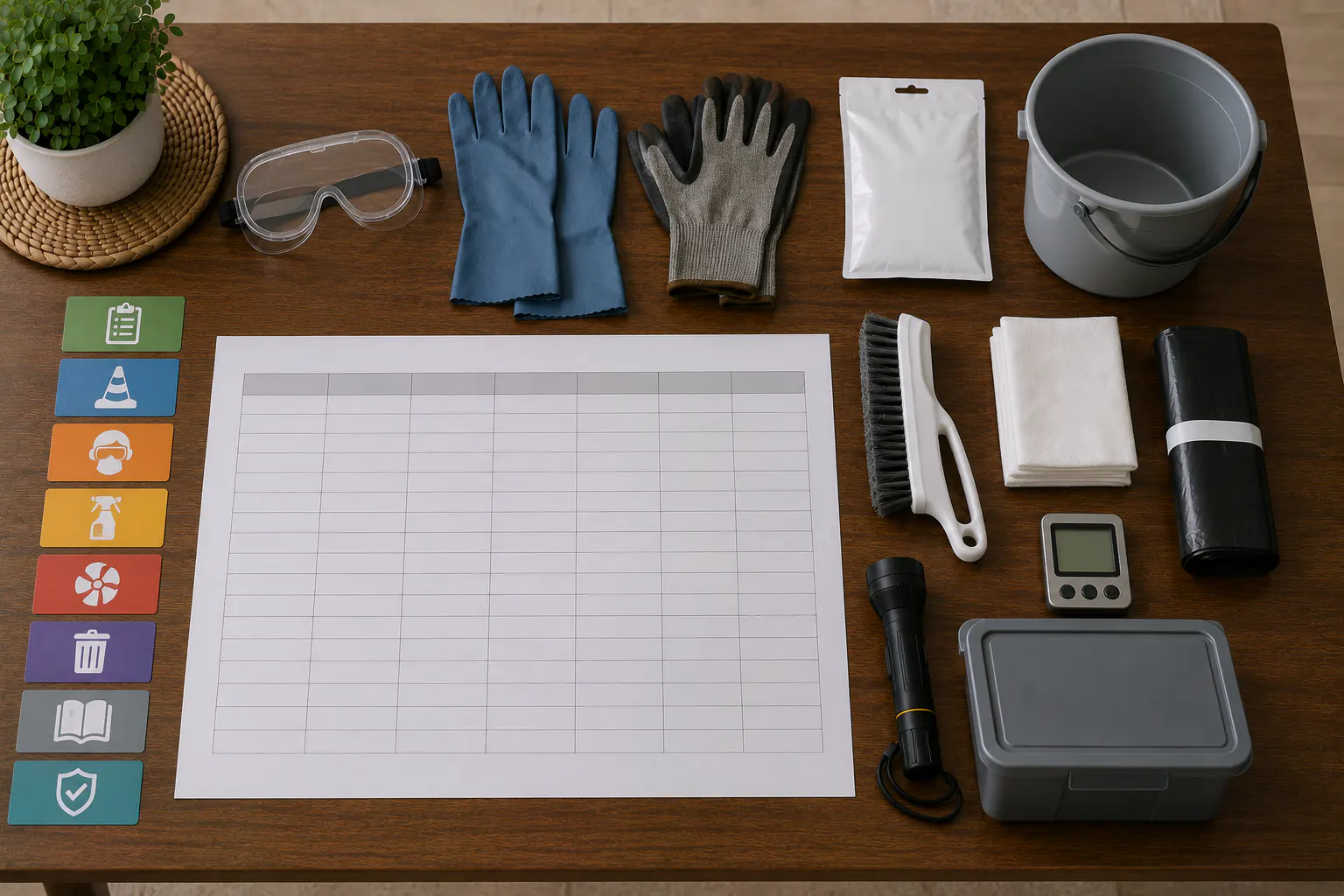
Pass the entry gate first
Do not enter or work in:
- active fire, smoke, hot spots, gas or fuel odor, or a carbon monoxide alarm;
- standing water with uncertain electricity or wet electrical equipment;
- a sagging, leaning, shifted, partially collapsed, or storm-damaged structure;
- moving floodwater, a confined space, a tank, sewer, septic chamber, crawlspace, or poorly ventilated unknown area;
- an area with a chemical leak, unlabeled container, cylinder problem, pesticide, solvent, or unknown vapor;
- downed-line, battery-fire, asbestos, lead, silica, or demolition conditions outside a qualified plan;
- rapidly changing weather, unstable trees, suspended debris, or blocked egress.
Call 911 for immediate danger. Use utilities, the fire department, building and health authorities, and qualified professionals for clearance. No combination of store-bought PPE overrides those stop rules.
Identify exposure routes
Write the hazards before selecting equipment. Cleanup exposure can occur through:
- breathing: mold, dust, soot, fibers, mist, vapor, gas, or low oxygen;
- eyes and face: splash, particles, branches, fragments, or chemicals;
- skin: sewage, floodwater, cleaners, mold, ash, fuel, contaminated contents, or sharp surfaces;
- feet: puncture, slip, crush, water, chemicals, cold, and unstable footing;
- hearing: generators, vacuums, saws, blowers, pumps, and demolition tools;
- heat and exertion: protective clothing, hot weather, humidity, lifting, and respirator use;
- ingestion and transfer: dirty hands, food, drinks, phones, clothing, vehicles, and clean living areas.
If the material, concentration, atmosphere, or task is unknown, stop. PPE selection cannot be accurate without a defined hazard.
Use the control hierarchy
Before buying or putting on PPE, ask whether the work can be made safer by:
- Eliminating the hazard through utility, structural, source, or professional control.
- Substituting a safer material or non-dust-producing method.
- Isolating the area with barriers, local exhaust, containment, or restricted access.
- Changing the work plan, duration, sequence, staffing, weather window, or equipment.
- Adding PPE for the remaining exposure.
Examples include waiting for the utility rather than approaching a wet panel, bagging debris before transport rather than carrying it uncovered, using wet methods or HEPA-controlled equipment rather than dry sweeping, and hiring a qualified crew rather than issuing more PPE to an untrained household.
Build a task card
A short task note can help you follow the released work plan. It is not an approval form: the responsible authority or professional must define the scope first. Useful details include:
- exact area and material;
- known hazard and source of that information;
- authority or professional who released the work;
- tools and products;
- maximum work period and required breaks;
- clean, transition, and affected zones;
- PPE required by product labels, equipment instructions, and the work plan;
- stop conditions and emergency contact;
- decontamination, disposal, and storage method.
“General cleanup” is too broad. Photographing from a doorway, moving dry intact furniture, bagging moldy drywall, handling sewage residue, and wiping a released hard surface are different tasks.
Select body and skin protection
Choose clothing for contact, abrasion, weather, heat, and disposal needs. Long sleeves and long pants may reduce incidental skin contact, but ordinary fabric can absorb liquids and snag on debris.
Consider:
- disposable or washable coveralls appropriate to the assessed material;
- closures at wrists and ankles that do not create circulation or heat problems;
- an apron or chemical-protective garment only when the product and hazard require it;
- high-visibility clothing near authorized vehicle or equipment routes;
- dry replacement clothing at the transition zone.
Do not use loose clothing around moving equipment. Do not take contaminated work clothing into sleeping, eating, childcare, or clean storage areas. Bag it at the transition zone and launder or dispose of it under the cleanup plan.
Chemical-protective clothing is material-specific. A generic disposable suit does not protect against every liquid or vapor.
Match gloves to the task
No glove does every job.
| Task exposure | Selection question |
|---|---|
| Sharp, rough, dry debris | Does the glove provide appropriate cut, puncture, abrasion, grip, and dexterity protection? |
| Wet contents or flood cleanup | Is it waterproof, long enough, and compatible with the contamination and cuff arrangement? |
| Cleaner or disinfectant | Does the product label name a glove material, thickness, or breakthrough limitation? |
| Fine handling or documentation | Can the task be done outside the affected zone with clean hands instead? |
| Mixed sharp and chemical hazard | Does the work require layered, professionally selected protection or a different method? |
Never reach into a pile, drain, wall, bag, or container where you cannot see. Replace gloves that are torn, punctured, degraded, contaminated inside, or outside the manufacturer’s use limits.
Do not wash disposable gloves for reuse. Wash hands with soap and safe water after removal even when gloves appeared intact.
Choose protective footwear
Footwear may need to address water, chemicals, punctures, crushing, slips, cold, and ankle support. Waterproof rubber boots can help with certain wet cleanup, but they do not protect against electricity and may not resist punctures or chemicals.
Check:
- sole condition and slip resistance;
- toe and puncture protection appropriate to the authorized work;
- material compatibility with known liquids;
- height relative to splash, not as permission to wade;
- fit with socks, circulation, mobility, and stairs;
- decontamination or disposal method.
Do not enter water because boots are tall. Do not wear contaminated footwear into a vehicle or clean living area. Use a seated, stable doffing point so balance is not lost while removing boots.
Protect eyes and face
Safety glasses can reduce impact exposure but do not seal against dust or splash. Vented goggles may allow liquids or fine material through. CDC flood and mold guidance identifies goggles without ventilation holes for relevant cleanup.
Select based on:
- impact, splash, fine particulate, overhead debris, or chemical exposure;
- compatibility with the respirator and prescription eyewear;
- anti-fog needs without compromising the seal;
- product-label requirements;
- whether a face shield is an additional splash layer rather than a substitute for primary eye protection.
Do not use scratched, cracked, loose, or contaminated equipment that impairs vision. Reduced vision creates trip, tool, and egress hazards.
For eye exposure, use the product safety instruction and seek Poison Control or medical guidance. Do not neutralize one chemical with another.
Understand particulate respirators
For mold or disaster dust within a released household task, CDC guidance may call for at least a NIOSH Approved N95 filtering facepiece respirator. “N95” describes particulate filtration performance under its approval; it is not a universal disaster mask.
An N95 does not protect against:
- carbon monoxide;
- oxygen deficiency;
- gases or vapors;
- every oil-containing aerosol;
- an unknown atmosphere;
- poor fit, facial hair in the seal, incorrect use, damage, or saturation.
Look for NIOSH approval information and verify current approval through the official Certified Equipment List. A marketing phrase such as “N95 style,” “PM2.5,” or “dust protection” is not the same as NIOSH approval.
Follow the model’s instructions for donning, strap placement, user seal check, limitations, storage, and replacement. Tight-fitting respirators must seal to clean-shaven skin along the sealing surface. Stop for breathing difficulty, dizziness, chest symptoms, failed seal, damaged straps, wet or dirty material, or rising work intensity.
People with medical concerns should ask a clinician before respirator use. Children should not participate in mold or disaster cleanup and NIOSH Approved respirators are not designed for children.
Do not improvise chemical respiratory protection
Cartridge color, half-mask appearance, or a strong filter does not establish protection. Chemical respirator selection requires the identified contaminant, concentration, exposure limit, oxygen level, cartridge capability, service-life plan, fit, training, and emergency conditions.
An odor is not a reliable cartridge-change indicator. Some contaminants have poor warning properties, and smell can fatigue. Unknown chemical, fire, fuel, pesticide, sewer-gas, or confined-space atmospheres belong to trained responders or qualified workers with monitoring and an appropriate respiratory-protection program.
Do not buy a cartridge by matching a product photo to a cleanup task.
Add hearing, head, and visibility protection only where justified
Hearing protection should be selected from equipment noise and exposure duration while preserving alarms, speech, and situational awareness. Turning up music through earbuds is not hearing protection and can hide warnings.
Hard hats require the correct type, class, fit, suspension, condition, and work context. They do not permit entry below an unstable ceiling, tree, roof, or demolition area. Bump caps are not substitutes for impact-rated head protection.
High-visibility garments can help in an authorized traffic or equipment zone, but a household should not direct traffic or work inside a public debris operation without the responsible authority.
Prepare the clean and transition zones
Before work, stage:
- safe drinking water and handwashing supplies;
- first-aid materials and emergency contacts;
- clean replacement PPE;
- separate containers for reusable, disposable, and damaged equipment;
- bags for work clothing;
- a chair or stable surface for footwear removal;
- mirrors or a trained partner for respirator and contamination checks;
- a no-touch location for phones and documentation.
Do not store food, medicine, clean PPE, or first aid inside the affected area. Keep children and pets away from both the work and transition zones.
Put PPE on in a consistent order
Follow manufacturer and work-plan instructions. A practical sequence may be:
- Hydrate, use the restroom, secure hair, and remove jewelry that interferes.
- Inspect every item in clean light.
- Put on protective clothing and footwear.
- Put on the respirator and perform its user seal check.
- Add eye protection without disturbing the respirator.
- Add hearing or head protection if required.
- Put on gloves last and check cuff interfaces.
- Have a partner verify fit and exposed areas without touching clean surfaces with contaminated gloves.
If components conflict, stop and resolve compatibility. Fogged goggles, broken seals, restricted movement, and unstable footwear are not acceptable tradeoffs.
Work in short controlled cycles
Protective clothing and respirators increase heat and effort. Plan shorter work periods, clean-area breaks, water, shade or temperature control, and a partner check. Do not work alone in a post-incident setting.
Stop immediately for:
- breathing difficulty, chest pain, confusion, faintness, severe headache, weakness, nausea, or loss of coordination;
- heat illness, chills, numbness, or wet cold clothing;
- a torn glove, failed respirator seal, obscured vision, or contaminated skin;
- new odor, dust cloud, liquid leak, arcing, structural movement, or blocked exit;
- weather, fatigue, light, or noise that makes communication unreliable.
Move to safety and seek emergency or medical guidance as indicated. Do not push through symptoms to finish a bag or room.
Remove PPE without contaminating yourself
Use the transition zone and the item’s instructions. Avoid snapping, shaking, or touching the face with contaminated surfaces.
A task-specific removal plan commonly keeps the dirtiest surfaces away from clothing and skin, removes gloves without touching their exterior, cleans hands at intermediate points, removes eye and respiratory protection only after leaving the affected air, and finishes with thorough handwashing and a clothing change.
Do not invent one fixed doffing order for every chemical or biological hazard. The cleanup plan and product instructions control. If skin or clothing becomes contaminated, stop and use the substance-specific decontamination and medical route.
Shower after mold or dusty cleanup when possible and keep work clothing out of clean living quarters. Clean reusable PPE using manufacturer instructions; never use a solvent, disinfectant, heat, or washing method that can degrade it.
Inspect and store after every use
Clean, separate, inspect and replace equipment according to the instructions first. Keep records required by the work plan, with other useful details as available:
- task, date, user, duration, and exposure;
- model, size, approval or rating, and relevant product lot;
- damage, contamination, cleaning, and replacement;
- filter or cartridge installation and service-life control where professionally applicable;
- fit concerns, symptoms, and stop events;
- storage location and next inspection.
Store clean, dry equipment away from sunlight, heat, moisture, chemicals, deformation, dust, and children. Do not return used disposable equipment to the clean stockpile. Check recalls and current approval before future use.
Use the incident-specific route
- Water-damage first-day triage
- Mold-risk reduction after flooding
- Sewage-backup stop rules
- Post-storm debris hazards
- Small household fire cleanup
- Wildfire smoke and ash cleanup
- Winter storm recovery
The right PPE list changes when the task changes. Reassess before crossing into another room, material, or cleanup stage.
Return to the post-disaster cleanup hub when a task boundary changes. Use the cleanup-supplies comparison for equipment categories, approval and recall checks, storage, and a product gate that remains separate from the entry decision.
Sources reviewed
- National Institute for Occupational Safety and Health: Personal Protective Equipment; Respirator Selection and Use
- Centers for Disease Control and Prevention: Disaster-Cleanup Respiratory Health
- U.S. Environmental Protection Agency: Flooded Home
- Occupational Safety and Health Administration: Hurricane eMatrix General Recommendations
Sources reviewed July 14, 2026. Current emergency and property authority, hazard assessment, employer obligations where applicable, product and equipment instructions, and qualified safety, remediation, environmental, utility, structural, and medical professionals control actual selection and use.