
Wait for the fire department’s explicit entry instructions before returning for cleanup or belongings. Call 911 and stay out for active smoke, heat, alarms, severe symptoms or uncertainty that the fire is fully out. A fire that looked small can still leave hidden heat, damaged utilities and hazardous residue.
“Small” describes the visible incident, not the cleanup risk. The fire department, utilities, building authority, insurer, and qualified restoration professionals determine what can be entered, energized, handled, and occupied.
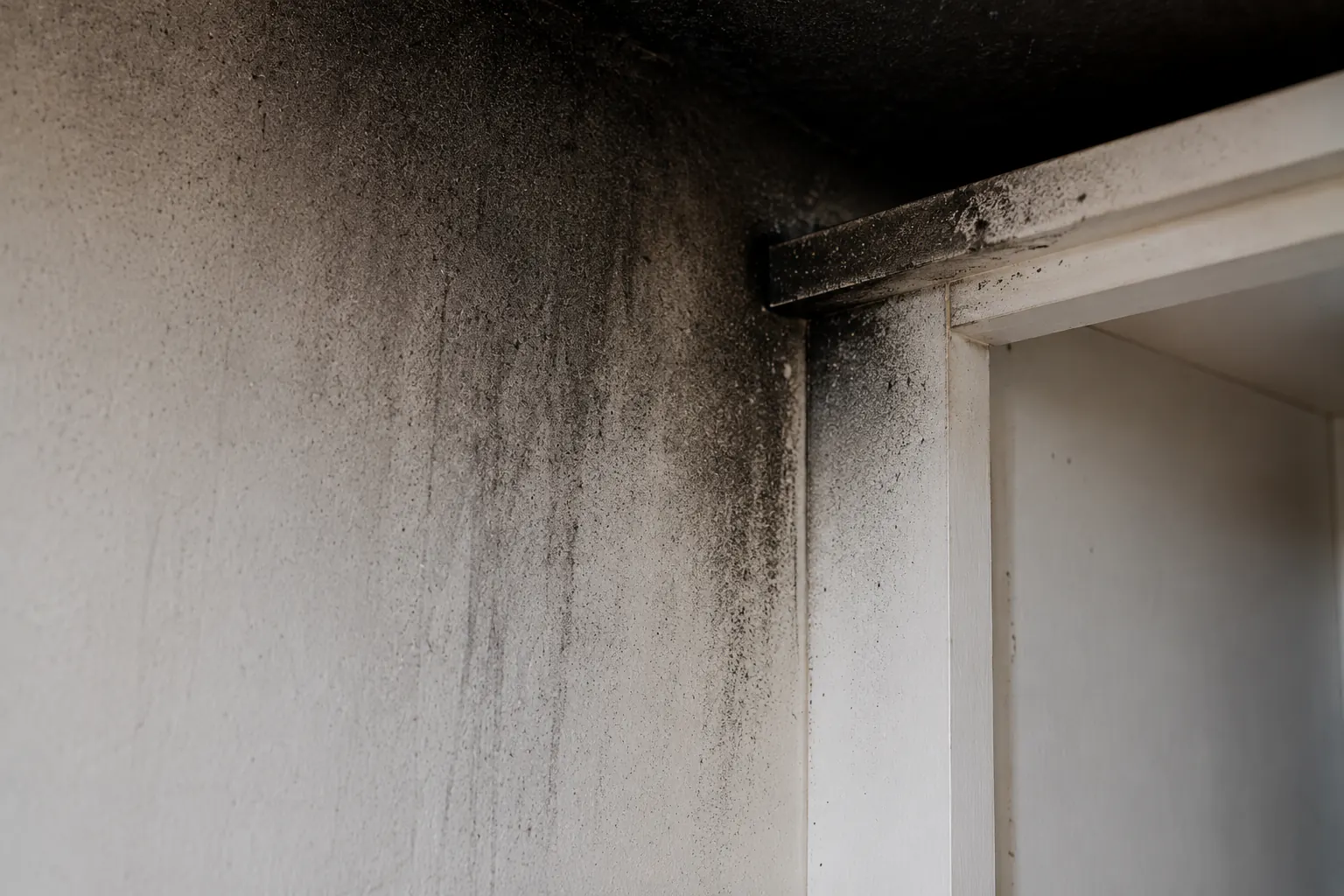
Call the fire department and stay out
Call 911 for any active fire, smoke, suspected hidden fire, hot wall or ceiling, carbon monoxide alarm, gas or fuel odor, explosion, severe symptoms, or uncertainty that the fire is fully out. Leave the building, close doors behind you when safe, and do not reenter for belongings.
Do not use water on energized electrical equipment, cooking oil, or an unknown burning material. Do not move a burning pan. Do not rely on odor, silence, or a discharged extinguisher as proof that fire has not spread into a hood, cabinet, wall, ceiling, duct, appliance, or void.
After suppression, enter only when the fire department expressly permits it. Ask whether the release applies to the entire building or only a limited area, whether utilities remain off, and whether a fire investigator or insurer must document the scene first.
Separate four different decisions
Do not collapse recovery into “wipe the soot.” Resolve these decisions in order:
- Reentry: May anyone enter, and where?
- System safety: Which electrical, gas, HVAC, appliance, and structural components remain restricted?
- Documentation: What must be recorded before movement, cleanup, or disposal?
- Remediation: Which residues, materials, contents, and odors require specialized methods?
A fire-department release does not certify wiring, appliances, food, HVAC, finishes, or contents for use.
Make the first calls
Contact the property authority and insurer as soon as practical. Use the fire-department incident number and retain all written restrictions. Ask the insurer before hiring, cleaning, moving, or discarding unless emergency action is necessary to protect life or prevent additional damage.
Possible contacts include:
- electric and gas utilities;
- landlord or building management;
- licensed electrician and gas professional;
- fire-damage restoration provider;
- HVAC professional;
- appliance manufacturer or qualified service provider;
- building or structural authority;
- public-health or environmental authority;
- textile, electronics, document, or art conservator for valuable contents.
Verify contractors. Require a written scope, credentials and insurance where applicable, itemized methods, exclusions, pricing, change authorization, and completion criteria. Do not sign an assignment or broad authorization under pressure without understanding it.
Document before wiping
When reentry and the insurer permit documentation, start with a safe overview. Add the following details only when safely accessible; no photo justifies crossing a restriction:
- the fire origin area from outside the restricted boundary;
- each room, doorway, ceiling, wall, floor, cabinet exterior, and smoke path;
- soot and residue boundaries before touching them;
- suppression water, extinguisher residue, staining, and damaged finishes;
- contents in place, then item labels and serial numbers where safely visible;
- fire-department notices, utility tags, contractor signs, and access restrictions;
- food, medicine, textiles, electronics, and HVAC registers potentially exposed.
Do not move the suspected origin, appliance, fuel, wiring, battery, detector, or other evidence until the fire department, investigator, property authority, and insurer release it. Do not energize an item to obtain a serial number.
Use the damage documentation checklist and keep untouched original files.
Keep utilities and appliances off
Heat, smoke, water, and extinguisher agents can damage insulation, contacts, motors, controls, fuel lines, and internal components. Do not reset breakers, replace fuses, reconnect gas, plug in appliances, charge batteries, or restart HVAC until the responsible utility and qualified professional clear the system.
Discarding a scorched cord or wiping an appliance exterior does not address internal damage. Check model and serial information against current manufacturer notices and CPSC recalls only after it can be accessed safely.
Use the basic electrical safety hub for stop rules and the carbon monoxide guide for combustion-related evacuation principles. Neither replaces post-fire inspection.
Identify what burned
Cleanup method and professional scope depend on the fuel and suppression method. Record whether the incident involved:
- cooking oil, food, plastic, wiring, battery, appliance, upholstery, paper, wood, paint, solvent, fuel, or unknown material;
- dry chemical extinguisher, water, sprinkler discharge, fire blanket, or another agent;
- open flame, smoldering, overheated equipment, arcing, or battery thermal event;
- one surface, a cabinet, wall or ceiling cavity, HVAC, or multiple rooms.
Do not sweep or vacuum unknown powder. Extinguisher agents, ash, battery residue, and combustion debris require identification and material-compatible cleanup. A lithium-ion battery event, chemical fire, fuel fire, or substantial smoke spread is not a routine household soot-cleaning project.
Protect occupants from residue
Keep children and pets out. People with asthma, chronic lung disease, weakened immunity, significant allergies, pregnancy-related concerns, or other vulnerabilities may need to remain elsewhere and seek medical guidance.
If anyone develops breathing difficulty, chest pain, confusion, fainting, severe headache, eye injury, or significant exposure symptoms, move to fresh air and call 911. Contact Poison Control for a suspected product exposure as appropriate.
Do not eat, drink, smoke, or take medication in the affected area. Keep clean clothing and supplies outside it. Wash exposed skin with soap and safe water; do not apply cleaning chemicals to skin.
Do not spread dry soot
Soot can smear, embed, become airborne, and move through shoes, clothing, tools, and air systems. Before a household handles any released, limited area, establish:
- a clean zone for first aid, water, documents, and unused PPE;
- a transition zone for footwear, clothing, bagging, and handwashing;
- an affected zone with controlled access;
- a clean-to-dirty work direction;
- separate tools and containers for each residue type.
Do not dry sweep, use a leaf blower, run an ordinary vacuum, or use an affected HVAC system. Do not point a fan through soot toward clean rooms. Do not scrub before the restoration method is selected; friction and liquid can set residue into porous or painted surfaces.
Match PPE to the assessed residue
The fire or restoration assessment should identify particulate, chemical, sharp, wet, and physical hazards. Task-appropriate clothing, gloves, eye protection, and respiratory protection may be required.
A NIOSH Approved particulate respirator may reduce exposure to certain particles when correctly selected, fitted, and used. It does not protect against carbon monoxide, oxygen deficiency, gases, or vapors. Unknown fire atmospheres require responders with appropriate monitoring and respiratory equipment, not a household N95.
Review the post-incident PPE checklist. PPE is not authorization to enter a fire-damaged space.
Triage contents by exposure and material
Use four questions for every item:
- Was it exposed to heat, flame, smoke, soot, suppression water, or extinguisher agent?
- Is it food-contact, medical, absorbent, electrical, mechanical, valuable, or sentimental?
- Can every affected surface and internal layer be accessed, cleaned, and verified?
- Who is qualified to make the salvage decision?
Food and medicine
Do not taste food to judge safety. Heat, smoke, fumes, chemicals, and loss of refrigeration can affect food and packaging. Follow current public-health, USDA, FDA, pharmacy, and insurer guidance for the specific exposure. Do not use medicine exposed to heat, water, smoke, or chemicals until a pharmacist or clinician advises it is safe.
Porous contents
Mattresses, upholstered furniture, carpet, paper, cardboard, unfinished wood, and textiles can hold soot, odor, water, and chemical residue. A textile or contents specialist may be able to treat some items, but surface fragrance or a home wash does not prove complete removal.
Electronics and appliances
Do not plug in, charge, open, blow out, or vacuum electronics. Residue can be conductive or corrosive, and water or heat damage may be hidden. Use qualified assessment, data-recovery planning, and insurer authorization.
Hard surfaces
Even hard surfaces vary. Paint, metal, glass, stone, grout, plastic, laminate, and finished wood can react differently to alkaline or acidic residue and cleaning products. Test and method decisions belong in the written restoration plan.
Treat suppression water as water damage
Water used during suppression can enter flooring, walls, cabinets, insulation, electrical systems, and the level below. It may pick up soot, chemicals, and building contaminants.
Follow the first-day water triage and mold-risk guide. Do not use fans or HVAC until fire, electrical, contamination, and spread concerns are controlled.
Avoid universal cleaning recipes
Do not mix products. Never combine bleach with ammonia, acids, or another cleaner. Do not use a stronger dilution or longer contact time than a product label. Do not apply an odor counteractant, ozone treatment, fog, sealant, paint, or antimicrobial as a shortcut for removing residue and wet material.
Ozone can harm health and materials and should not be treated as an occupied-space deodorizer. Sealing or repainting before surfaces and assemblies are cleaned, dried, and evaluated can hide continuing residue or moisture.
The cleanup-supplies comparison separates documentation, containment, particulate-control, surface-cleaning, drying, and disposal tools.
Require a room-by-room restoration scope
Ask the provider to specify:
- released and restricted areas;
- fire, smoke, soot, water, extinguisher, and odor boundaries;
- affected materials and contents;
- HVAC, electrical, gas, and appliance decisions;
- containment, air-control, and occupant plan;
- dry-removal and wet-cleaning methods by surface;
- contents inventory, pack-out, cleaning, storage, and return process;
- moisture and mold response;
- hazardous-material assessment;
- completion inspection, unresolved damage, and warranty.
The scope should distinguish cleaning from demolition, repair, deodorization, and reconstruction. Ask who approves each change and how pre-existing conditions are recorded.
Verify before returning
Reoccupancy requires more than the absence of visible soot. Confirm that:
- The fire department and property authority permit occupancy.
- Utilities, wiring, gas systems, HVAC, alarms, appliances, and structure have the required clearances.
- Fire, smoke, soot, suppression residue, water, and damaged material have been addressed.
- Exits, doors, windows, lighting, sanitation, safe water, and temperature are functional.
- Remaining surfaces and contents are clean, dry, and free of visible residue and persistent smoke odor.
- Documentation, contractor reports, receipts, and item decisions are complete.
- Occupants can enter without new or worsening symptoms.
If odor or residue returns when HVAC operates or humidity changes, or if symptoms develop, leave the affected area and reopen the professional assessment.
For a wildfire-specific event, use the separate wildfire smoke and ash cleanup guide. Wildfire ash, community orders, outdoor air, and regional cleanup programs create a different scope from a contained household fire.
Return to the post-disaster cleanup hub to coordinate the fire record with water, debris, sanitation, and reoccupancy decisions.
Sources reviewed
- U.S. Fire Administration: After the Fire: Returning to Normal
- Centers for Disease Control and Prevention: Returning Home After a Natural Disaster
- U.S. Environmental Protection Agency: Dealing With Debris and Damaged Buildings
- National Institute for Occupational Safety and Health: Personal Protective Equipment
- U.S. Consumer Product Safety Commission: Recalls
Sources reviewed July 14, 2026. Current fire-department orders, utility restrictions, building and health authorities, property and insurer requirements, product instructions, and qualified fire-restoration, electrical, gas, HVAC, environmental, appliance, textile, and contents professionals control actual cleanup and return.