
Cleaning after wildfire smoke ranges from replacing a loaded filter in a home far from the fire to professional hazardous-debris removal on a burned property. Those are not versions of the same household chore.
Begin by classifying the event. Light smoke odor without visible residue may need controlled ventilation and surface cleaning. Visible ash, fire damage, burned structures, damaged batteries, chemicals, or official cleanup restrictions require a much more conservative response.
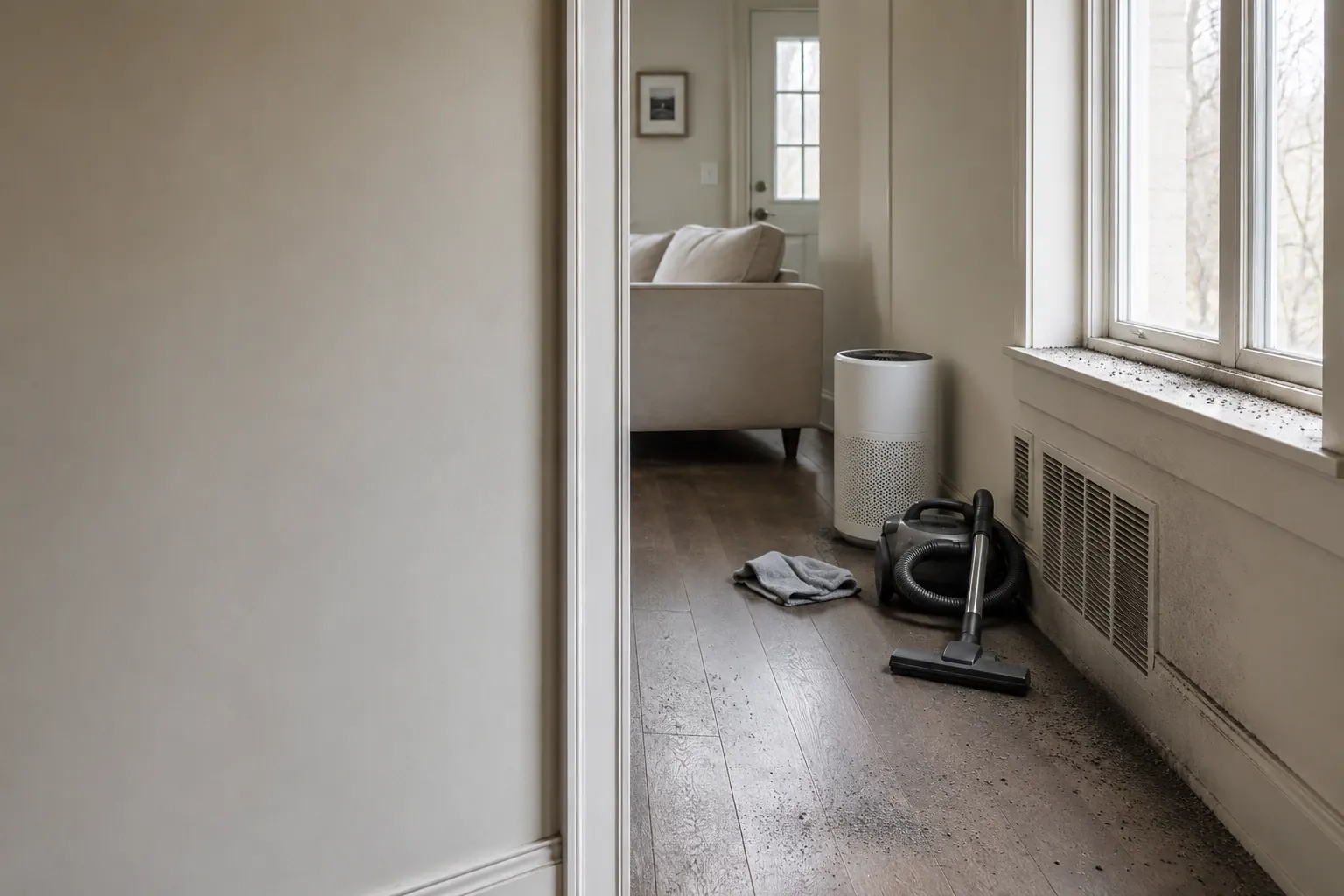
Do not enter until authorities allow it
Wait for re-entry authorization for the exact zone and property. Stop outside and contact the responsible authority when there is:
- active flame, hot ash, smoldering debris, or hidden heat;
- partial collapse, shifted walls, sagging roof or floor, or unstable chimney;
- downed lines, damaged service equipment, arcing, or water near electricity;
- gas, fuel, solvent, pesticide, chemical, or strong unknown odor;
- damaged electric vehicles, home batteries, power tools, e-bikes, or other lithium-ion products;
- propane cylinders, ammunition, compressed gas, or household hazardous waste;
- sewage, firefighting water, mold, or contaminated wells;
- burned structure ash, asbestos, lead, treated lumber, industrial material, or unknown debris;
- official instruction not to disturb ash or enter.
Call 911 for immediate fire, collapse, injury, entrapment, or exposure danger. A household respirator and gloves do not make an unstable or chemically contaminated property safe.
Use the wildfire evacuation guide for return authority and the flooded-home re-entry checklist when firefighting water, wet electricity, sewage, or mold adds another hazard.
Distinguish smoke residue from burn debris
Regional smoke only
The building was not exposed to flame or nearby structural ash. Smoke entered through normal leakage or open windows. There is no official hazardous-debris concern. Controlled household cleaning may be reasonable after outdoor air improves.
Visible vegetation ash
Ash from trees and vegetation is present indoors or outdoors. It can become airborne and irritate lungs, eyes, and skin. Exposure control, damp methods, disposal, and at-risk-person restrictions apply.
Wildland-urban interface or structural ash
Homes, vehicles, batteries, treated wood, paint, plastics, electronics, pesticides, fuel, asbestos-containing material, and household products may have burned. Ash can contain hazardous chemicals and metals. Do not characterize or remove it yourself without local environmental and cleanup direction.
Fire-damaged building
Structure, utilities, HVAC, roof, walls, contents, or suppression water were affected. Building, fire, electrical, gas, environmental, insurance, and professional remediation decisions come before ordinary cleaning.
When the category is uncertain, use the more protective path and ask the local public-health or hazardous-waste authority.
Keep higher-risk people out of cleanup
EPA’s 2026 guidance says children, pregnant people, older adults, and people with heart or lung disease such as asthma should not participate in ash cleanup. Other health conditions, medications, disability, or prior exposure may also change the plan.
Keep pets out. Do not use children to carry bags, shake fabrics, sweep, or sort debris. Arrange a clean location away from the work and prevent contaminated clothing, shoes, tools, and vehicles from entering it.
Anyone with severe breathing difficulty, chest pain, confusion, fainting, significant burns, poisoning symptoms, or another emergency condition needs immediate help. Call 911 as appropriate and follow poison-control/public-health direction for suspected exposure.
Document before disturbing residue
Contact the insurer, landlord, or property manager through a verified channel. Photograph and video safe wide views and close details of residue, water lines, HVAC registers, filters, contents, and damaged surfaces before cleaning.
Record:
- date, location, fire/smoke timeline, and re-entry authorization;
- rooms and surfaces affected;
- visible ash, soot, odor, moisture, and equipment condition;
- filters, air cleaners, HVAC status, and power interruption;
- professional inspections and official instructions;
- temporary measures, labor, supplies, lodging, and receipts;
- items discarded and the reason.
Use the flood damage documentation guide as a general evidence workflow, while confirming wildfire-specific coverage and disposal rules with the insurer. Do not preserve hazardous debris merely as proof.
Select protection for the actual scope
EPA household ash guidance describes a well-fitting NIOSH Approved N95 respirator, gloves, safety glasses or goggles, long sleeves, long pants, and rugged closed shoes for selected ash cleanup.
An N95 filters particles when it fits. It does not protect against gases, vapors, oxygen deficiency, carbon monoxide, every chemical, or an explosive battery atmosphere. Facial hair and gaps reduce protection. Greater or unknown hazards require professional respiratory protection, training, monitoring, and containment.
Wear disposable or washable outer clothing that can be isolated after the work. Prevent heat stress, dehydration, and trips. Stop when equipment shifts, residue becomes airborne, symptoms develop, or the task exceeds the written scope.
Establish clean and dirty boundaries
Choose one entry path and a place to remove contaminated shoes and outer layers. Cover or isolate clean storage without blocking egress. Keep doors to unaffected rooms closed.
Use separate tools for contaminated and clean areas. Do not carry open ash containers through occupied space. Bag contaminated clothing before transport and wash it separately under current public-health guidance.
EPA advises changing clothes and shoes before entering a vehicle or temporary residence. If an ash-contaminated item must be transported, bag and seal it while wearing appropriate gloves.
Avoid methods that put ash back into the air
Do not:
- use a leaf blower or compressed air;
- dry sweep or aggressively dust;
- shake rugs, filters, bedding, or clothing;
- use an ordinary household or shop vacuum on fine ash;
- pressure-wash ash into the air, soil, street, or drains;
- mix cleaning chemicals;
- burn debris;
- run contaminated HVAC merely to test the odor.
EPA recommends avoiding disturbance, lightly misting hard-surface ash when appropriate, and using damp wiping or wet mopping. Use as little water as practical and do not wash ash into storm drains. Local water and hazardous-waste rules control the actual method.
A HEPA-type vacuum can be used for selected dusty surfaces under EPA guidance. Confirm that the complete machine is designed to retain fine particles and that bags, seals, exhaust, and disposal are suitable. A “HEPA filter” attached to a leaking shop vacuum does not make the whole system HEPA-contained.
Clean from low-disturbance assessment to controlled removal
For a home cleared for household-level cleaning:
- Wait until outdoor air is suitable for the planned ventilation.
- Photograph conditions and establish clean/dirty boundaries.
- Turn off contaminated HVAC until its inspection decision is made.
- Remove people and animals who should not participate.
- Wear protection appropriate to the confirmed scope.
- Collect loose hard-surface ash with approved damp methods.
- HEPA-vacuum suitable surfaces when the equipment and guidance support it.
- Damp-wipe from cleaner/high areas toward dirtier/lower areas without spreading slurry.
- Change cloths and water before they redistribute residue.
- Bag waste and contaminated disposables under local rules.
- Clean tools and the transition area before removing PPE.
- Wash hands and exposed skin and change clothing.
This is a sequence, not authorization. Structural ash, hazardous residue, extensive contamination, fire-damaged materials, and sensitive occupancy may require professional remediation from the first step.
Handle soft goods conservatively
Carpet, upholstery, mattresses, pillows, pet beds, plush toys, curtains, clothing, and paper can retain particles and odor. EPA’s 2026 guide notes that HEPA-filtered vacuuming may be used for selected soft goods, while difficult-to-clean items may need professional cleaning or disposal.
Material, contamination source, visible residue, odor, washing instructions, occupant sensitivity, insurance, and replacement value all matter. Do not shake an item indoors or transport it uncovered to another residence.
Food, medication, cosmetics, and children’s mouth-contact items exposed to heat, ash, chemicals, or suppression water need authoritative product-specific discard guidance. Do not taste food or use appearance alone.
Inspect HVAC before circulation
Replace loaded portable-air-cleaner and HVAC filters according to manufacturer, EPA, and professional guidance. Turn equipment off before service and remove filters gently to avoid releasing captured material.
Inspect accessible registers and returns without dismantling the system. Fire, heat, ash, water, electrical damage, or heavy residue requires qualified HVAC assessment.
EPA does not recommend automatic duct cleaning after every smoke event. Consider it when ducts are clogged with excessive dust/debris or particles are actually released from supply registers, and vet the provider and method carefully.
Do not apply fragrance, ozone, hydroxyl, or unverified “odor shock” treatment as a substitute for source removal and cleaning. Some processes can create harmful exposures or damage materials.
The wildfire filtration guide explains filter fit, replacement, and ozone limits.
Treat odor as one clue, not a clearance test
Smoke odor can remain after particle levels fall, and hazardous residue can exist without a strong odor. Fragrance can mask smell without removing contamination.
Assess visible deposition, source, fire proximity, HVAC contamination, duration, sensitive occupants, and response to controlled cleaning. Persistent odor, symptoms, visible residue, or uncertainty about structural-fire chemicals supports professional assessment.
Do not expose a vulnerable household member to “see if the room is okay.” Use qualified environmental, public-health, medical, and remediation advice.
Dispose without spreading contamination
EPA’s general household ash factsheet says collected ash may be bagged or otherwise contained to prevent disturbance and may go in regular trash when local rules allow. Hazardous waste, asbestos, batteries, chemicals, compressed cylinders, and incident-specific debris require local hazardous-waste direction.
Do not place hot material in a container. Do not puncture, charge, move, or store a fire-damaged lithium-ion battery. Damaged batteries can reignite, explode, and emit toxic gases; contact the incident’s battery or hazardous-material authority.
Keep receipts, disposal tickets, photographs, and instructions. Do not dump ash on soil, in the street, or into a storm drain.
Verify water and outdoor conditions
Fire can affect water systems, wells, tanks, and pressure. Follow utility and public-health advisories. Use the safe-water-after-flood guide for the distinction among boil-water, do-not-drink, and do-not-use orders, while recognizing wildfire chemicals may require different testing and treatment.
Avoid hot ash, charred trees, unstable slopes, damaged retaining walls, hidden holes, sharp debris, and downed lines outdoors. Keep pets leashed and children away until the property is cleared.
Professional escalation checklist
Use qualified services when there is:
- any burned structure or vehicle ash;
- unknown chemical, battery, asbestos, lead, pesticide, fuel, or treated-wood contamination;
- structural, roof, chimney, electrical, gas, solar, battery, or HVAC damage;
- extensive visible residue or contamination across multiple systems;
- suppression water, sewage, mold, or contaminated drinking water;
- a vulnerable occupant whose health changes the acceptable scope;
- persistent symptoms or odor after controlled cleaning;
- work requiring containment, permits, specialized waste, or respiratory protection.
Verify business identity, license where required, insurance, written scope, containment, methods, waste handling, price, payment stages, references, and conflicts. Be cautious with pressure sales, full payment in advance, guaranteed insurance outcomes, and one-product odor claims.
Return-to-use checklist
- Official re-entry and utility restrictions are resolved.
- Structural-fire ash and hazardous debris are professionally addressed.
- Higher-risk people and pets remained outside the cleanup area.
- Evidence was documented before disturbance.
- Clean/dirty boundaries and particle controls were used.
- No dry sweeping, blowing, ordinary vacuuming, or drain disposal spread ash.
- HVAC, air cleaners, and filters received the appropriate assessment.
- Soft goods, food, water, medication, and children’s items were evaluated separately.
- Waste followed current local instructions.
- Persistent residue, odor, symptoms, or uncertainty was escalated.
The safest cleanup is the narrowest method justified by a known contaminant and a cleared building. When the ash source is unknown, stop and identify the responsible authority before creating airborne dust.
Continue through the post-disaster cleanup hub when wildfire residue overlaps with water, debris, sanitation, or reoccupancy. Use the post-storm debris hazard guide, cleanup PPE checklist, and cleanup-supplies comparison only within the current local cleanup program.
Sources reviewed
- U.S. EPA: Protect Yourself from Ash, 2026
- U.S. EPA: Wildfire Smoke: A Guide for Public Health Officials, 2026
- U.S. EPA: Wildfires and Indoor Air Quality
- U.S. EPA: Frequent Questions About Wildland Fire Smoke for Individuals
- Ready.gov: Be Prepared for a Wildfire
Sources reviewed July 14, 2026. Current public-health, fire, environmental, property, utility, waste, water, battery, and qualified remediation instructions control re-entry, cleanup, disposal, and return.