
A storm debris pile is not one material. It can combine live conductors, wet appliances, broken glass, nails, trees under tension, fuel, batteries, pesticides, compressed cylinders, sewage, mold, asbestos-containing material, lead-painted debris, spoiled food, animal waste, and unstable building parts.
The safe question is not “What can I carry first?” It is “Which authority controls each hazard, and what must remain untouched?”
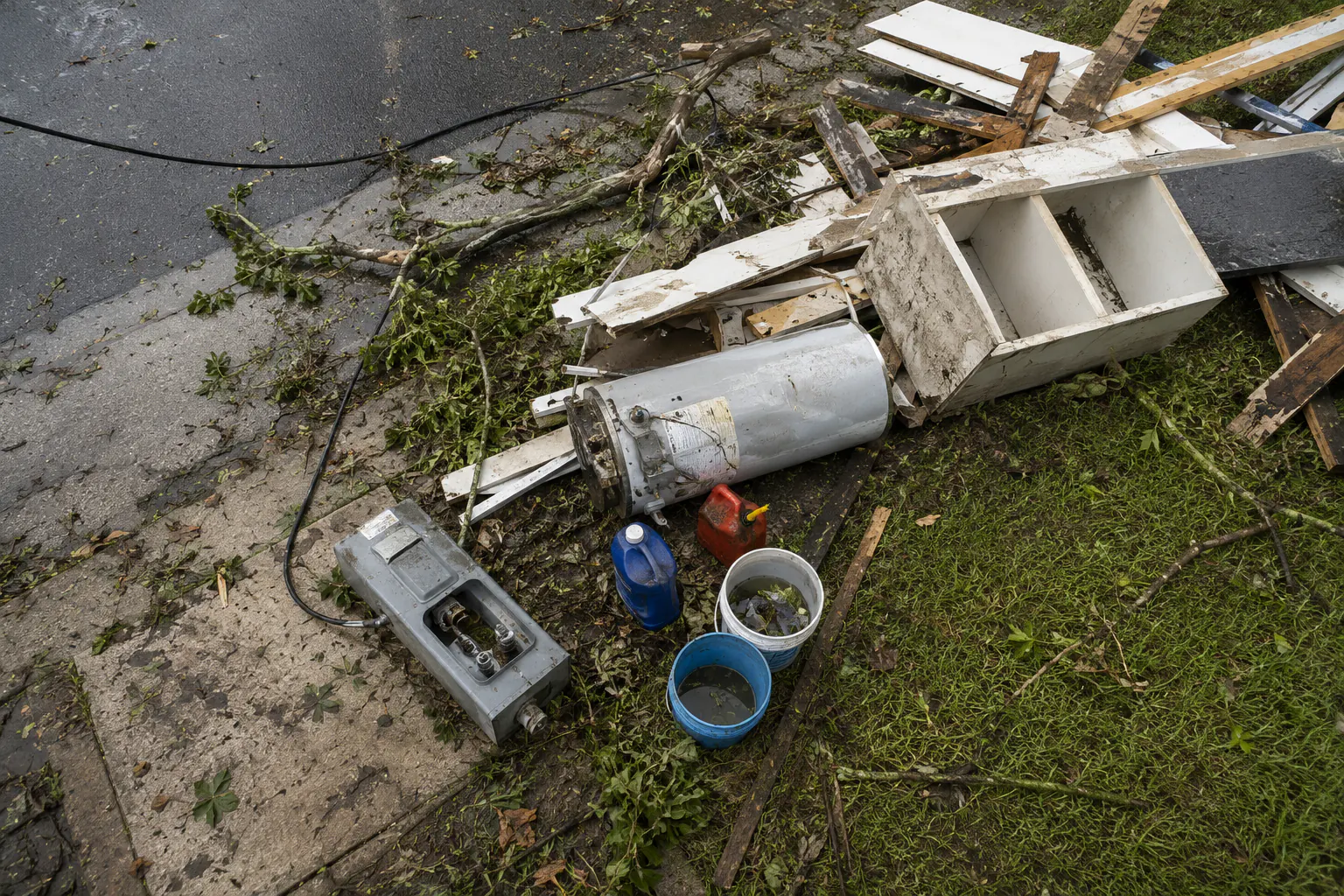
Stop before approaching the pile
Call 911 for fire, collapse, severe injury, trapped occupants, active arcing, explosion, or another immediate danger. Stay well away from:
- downed or low power lines, service drops, transformers, poles, meters, and anything touching them;
- standing water near electrical equipment or unknown electrical sources;
- leaning walls, shifted roofs, sagging ceilings, unstable masonry, damaged stairs, or suspended material;
- trees or limbs resting on a structure, vehicle, utility, or other loaded object;
- gas, fuel, solvent, pesticide, chemical, sewage, or strong unknown odor;
- hissing, bulging, leaking, hot, corroded, or fire-exposed cylinders and batteries;
- smoke, hot ash, flare-ups, carbon monoxide alarms, or combustion equipment used indoors;
- moving floodwater, unstable ground, sinkholes, washed-out pavement, or hidden drop-offs.
Treat every line as energized and every wet electrical device as unsafe until the utility or qualified electrician controls it. Do not move a branch, fence, ladder, antenna, metal siding, vehicle, or tool that may contact a line. Do not assume a neighborhood outage means conductors are dead.
Wait for access and property authority
Area reentry permission does not clear a particular building or yard. Confirm emergency-management access, utility restrictions, fire-department release, building safety, and ownership before work.
Renters should report debris and damage in writing and follow the landlord or building emergency route. Do not enter roofs, basements, utility rooms, neighboring property, fenced-off areas, or common mechanical spaces. Do not move municipal, utility, contractor, or another resident’s property.
For public streets, sidewalks, waterways, easements, and curb collection, follow the local public-works and waste authority. Debris collection rules vary by incident and location.
Survey from a stable clean position
Before handling anything, photograph wide views and mark a no-entry boundary. Use binoculars or camera zoom from stable ground instead of climbing or walking into the field.
Map:
- lines, meters, panels, appliances, batteries, solar components, and generators;
- leaning trees, broken limbs, roof edges, glass, nails, metal, and unstable stacks;
- containers, cylinders, tanks, fuel, paint, pesticides, cleaners, pool chemicals, and oils;
- floodwater, sewage, mold, spoiled food, dead animals, medical waste, and sharps;
- older siding, insulation, floor tile, pipe wrap, roofing, painted debris, and other suspect hazardous materials;
- access, exit, clean zone, transition zone, and collection point;
- children, pets, neighbors, traffic, and responders who could enter the area.
Identify what you can from photos and distance; a label that requires stepping into debris stays unread. Leave a damaged or unlabeled container exactly as found — not opened, smelled, shaken, uprighted, combined, or repackaged.
Use a hazard hierarchy, not PPE alone
The preferred order is to eliminate or control the hazard, isolate the area, define work practices, and then use task-specific PPE. A hard hat does not make an unstable wall safe. Electrical gloves do not authorize utility work. An N95 does not protect against gases or vapors. Boots do not make floodwater, sharp debris, or unstable ground safe.
For debris that authorities have placed within a household scope, the post-incident PPE checklist helps assess eye protection, gloves, clothing, footwear, hearing protection, and particulate respiratory protection. Selection depends on the actual task.
Stop if the work produces dust, odor, heat, sparking, leaking, shifting, symptoms, or a condition not covered by the plan.
Separate electrical and energy hazards
Storm debris can involve utility power, generators, photovoltaic panels, batteries, electric vehicles, power stations, damaged cords, and appliances. Some sources remain energized when the grid is down.
Do not:
- touch or move wet or damaged electrical equipment;
- backfeed a building or connect a generator to household wiring without approved transfer equipment and qualified installation;
- open a battery, inverter, panel, meter, appliance, charger, or vehicle high-voltage component;
- charge a wet, crushed, punctured, swollen, hot, leaking, or fire-exposed battery;
- place a damaged battery in ordinary trash or a mixed debris pile;
- use an extension cord, wet/dry vacuum, fan, pump, or power tool until the supply, circuit, rating, ground-fault protection, and location are cleared.
Use the electric utility and a qualified electrician for service and building-system decisions. Follow the manufacturer, fire department, and local hazardous-waste authority for damaged batteries and energy-storage equipment. The basic electrical safety hub explains household stop rules without teaching energized work.
Leave chemicals and cylinders undisturbed
EPA advises leaving damaged or unlabeled chemical containers undisturbed whenever possible. Household hazardous waste can include:
- gasoline, diesel, kerosene, oil, antifreeze, and solvents;
- paint, stripper, stain, adhesive, and aerosol products;
- pesticides, herbicides, fertilizers, and pool chemicals;
- bleach, ammonia, drain opener, cleaners, and disinfectants;
- propane, oxygen, refrigerant, fire extinguisher, and other compressed cylinders;
- lead-acid, lithium-ion, button-cell, and other batteries;
- mercury-containing devices and damaged electronics.
Incompatible chemicals can react, release gas, ignite, or make disposal harder, so containment means leaving things alone: nothing poured onto the ground or into a sink, toilet, storm drain, sewer, or waterway; no consolidating partial containers; no sawdust, cat litter, another chemical, or absorbent unless an authority or product emergency instruction directs it for the known substance.
For suspected poisoning or exposure, move away without spreading contamination and contact 911 or Poison Control as the situation requires. For spills and environmental releases, use the local fire, environmental, or hazardous-material authority.
Treat contaminated debris as a separate stream
Floodwater may carry sewage, agricultural waste, industrial contaminants, fuel, and chemicals. Debris can also contain mold, animal waste, spoiled food, medical waste, needles, and pest contamination.
Keep contamination where it sits: no dry-brushing or power-washing it into the air, soil, drains, or neighboring property, and no leaf blower. Keep food, drinking water, medicine, clean clothing, and first-aid supplies away from the affected zone.
Use the sewage backup stop rules, mold-risk reduction guide, and local public-health instructions. Wash exposed skin with soap and safe water, clean and cover wounds, and seek medical guidance for punctures, contaminated wounds, bites, symptoms, or individual risk.
Never handle a needle or unknown sharp by hand. Keep people away and use the local sharps or public-health reporting route.
Do not disturb suspect asbestos or lead
Storm and demolition debris may contain asbestos in insulation, pipe wrap, siding, roofing, flooring, mastics, textured material, and other products. Older painted surfaces may contain lead. Visual appearance cannot reliably identify either.
If suspect material is damaged or work would cut, sand, drill, scrape, break, or demolish it:
- Stop and isolate the area.
- Do not sweep, vacuum, sample, bag, or transport it yourself.
- Contact the building, health, environmental, or occupational authority.
- Use appropriately trained and licensed professionals as required.
- Follow the incident-specific disposal route.
An ordinary dust mask, consumer vacuum, or wetting attempt is not a substitute for assessment and regulated controls.
Respect trees, roofs, and stored energy
Bent branches, trunks, fencing, sheet metal, garage doors, springs, cables, and compressed piles can release energy suddenly. Root plates and storm-softened soil can move after the weather clears.
Leave to qualified tree, roofing, structural, utility, or demolition professionals:
- trees or limbs near structures, lines, roads, or people;
- chainsaw work, elevated cutting, rigging, or winching;
- roofs, ladders, scaffolds, damaged decks, and unstable stairs;
- garage-door springs, cables, gates, and tensioned fencing;
- heavy, suspended, pinned, leaning, or interlocked material;
- excavation, shoring, structural cutting, and demolition.
Do not work alone. Daylight, communication, weather, fatigue, heat, hydration, footing, and an emergency route are part of the plan even for ordinary branch or contents handling.
Avoid lifting and tool injuries
Waterlogged material is heavier than it appears, and sharp edges may be hidden. Before moving an authorized item, ask:
- Is it stable and fully visible?
- Can it be divided without cutting a hazardous material?
- Is the path flat, dry, lit, and clear?
- Is the destination prepared?
- Does the item require a cart, lift, team, or contractor?
- Could it contain liquid, pests, sharps, glass, nails, or electrical components?
Wear task-appropriate gloves and footwear, but never reach where you cannot see. Use tools only within their rating and normal purpose. Do not improvise levers against damaged structure or stand downhill from rolling or sliding material.
Sort only under local instructions
EPA presents common debris streams, but local authorities decide actual categories and placement. They may require separate piles for:
| Possible stream | Examples |
|---|---|
| Household garbage | Food, ordinary packaging, clothing |
| Construction and demolition | Drywall, lumber, flooring, shingles, furniture |
| Vegetative | Branches, leaves, logs |
| Household hazardous waste | Oils, batteries, pesticides, paints, cleaners, cylinders |
| Appliances | Refrigerators, washers, air conditioners, water heaters |
| Electronics | Computers, televisions, phones, radios, chargers |
Stage debris only where collection instructions put it — clear of trees, poles, hydrants, meters, drains, mailboxes, sidewalks, roads, utility access, and emergency equipment. Burning is not a disposal route: open burning may be illegal and can create fire, vapor, smoke, and residue hazards.
Photograph each pile and retain collection instructions, item logs, contractor records, and receipts. Use the damage documentation checklist before disposal when it is safe to do so.
Define the handoff before work starts
A qualified debris or restoration scope should identify:
- site hazards and responsible authorities;
- exclusion zones and utility status;
- hazardous-material assessment;
- tree, structure, demolition, and heavy-equipment controls;
- waste streams, containers, staging, transport, and destinations;
- worker protection and decontamination;
- dust, runoff, noise, traffic, and neighbor controls;
- documentation, permits, insurance, and completion evidence.
Do not allow a cleanup crew to move an unknown container or suspect material simply because it is already in the pile. Discovery should trigger a stop and route change.
Use the post-disaster cleanup hub to connect debris work with reentry, utilities, sanitation, drying, and reoccupancy. The cleanup-supplies comparison distinguishes clean-side readiness items from tools that require a defined professional scope.
Sources reviewed
- U.S. Environmental Protection Agency: Dealing With Debris and Damaged Buildings; Managing Debris After a Natural Disaster; Household Hazardous Waste
- Occupational Safety and Health Administration: Hurricane eMatrix General Recommendations
- U.S. Consumer Product Safety Commission: Surviving the Aftermath of a Hurricane
- Centers for Disease Control and Prevention: Returning Home After a Natural Disaster
Sources reviewed July 14, 2026. Current emergency, utility, public works, waste, environmental, health, fire, building, property, insurer, and qualified contractor instructions control actual access, handling, cleanup, transport, and disposal.