
The storm is not over when snow stops falling. Roads can refreeze, branches and ice can continue to fall, utility lines may be energized or unstable, blocked exhaust vents can create carbon monoxide risk, and frozen pipes may leak only after thawing.
Recovery should begin with clearance, observation, and small safe access, not a rush to clear the roof, restart equipment, or drive for supplies.
Follow local emergency management, road authorities, utilities, building officials, and water providers. If the building was evacuated or restricted, do not return until the responsible authority allows it.
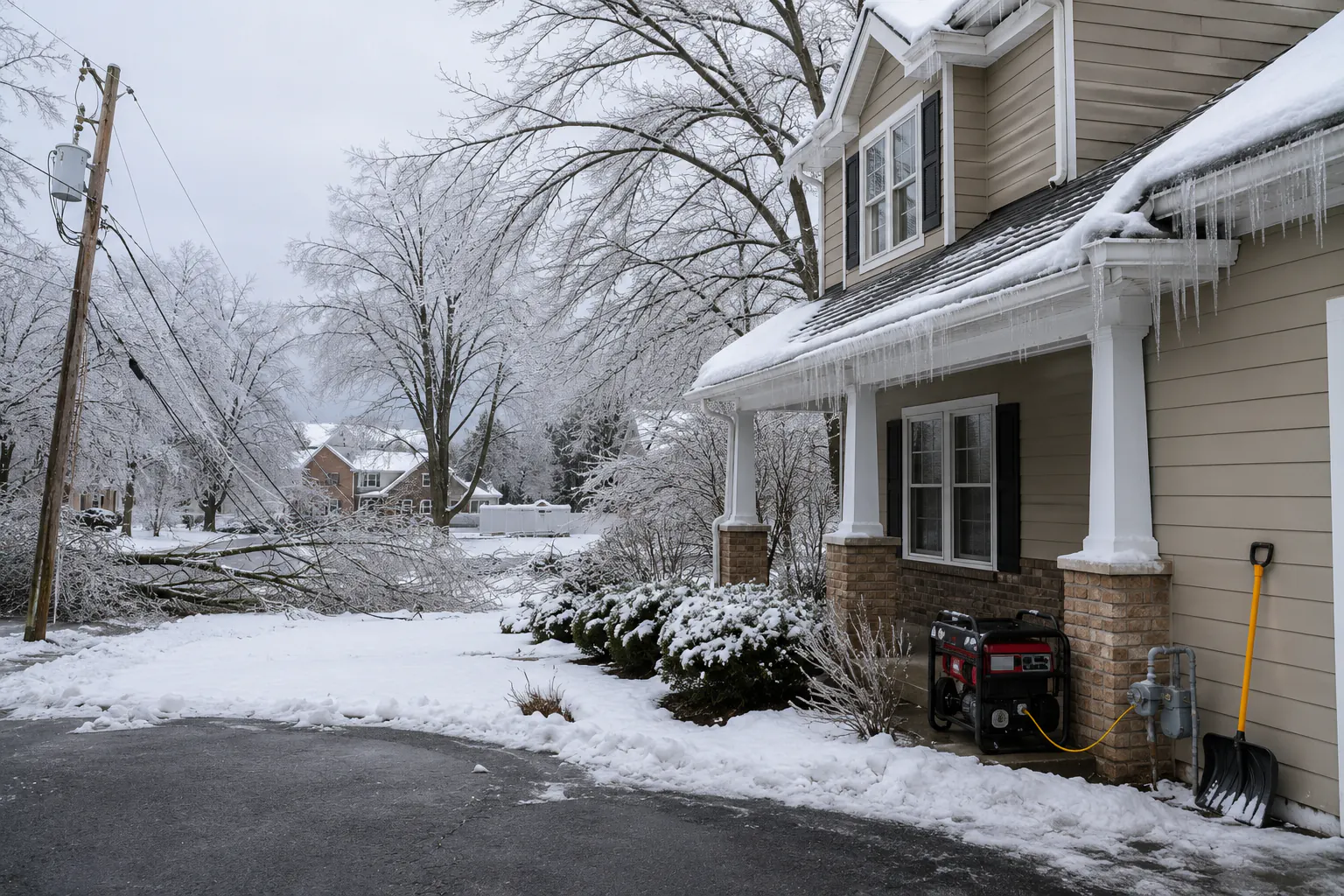
Stop outside for these hazards
Call 911 or the responsible utility from a safe location for:
- a downed or sagging line, or a tree, fence, vehicle, or structure touching a line;
- fire, smoke, arcing, buzzing, sparks, or a burning odor;
- gas or fuel odor;
- partial collapse, shifted walls, a sagging roof, or new major cracking;
- a blocked exit with occupants inside;
- rapidly entering water near electricity or structural damage;
- a CO or smoke alarm;
- a person with chest pain, breathing difficulty, confusion, severe cold symptoms, or serious injury.
Treat every downed line as energized. Stay away from it and anything it touches. Snow, ice, wet ground, fences, trees, and vehicles can conduct electricity. Do not move a line with a tool, branch, rope, or vehicle.
Use a daylight inspection from stable ground
Before clearing anything, look from inside and from a safe exterior position for:
- hanging branches, icicles, snow slides, and falling ice;
- roof deformation, unusual sounds, separated connections, and damaged gutters;
- blocked furnace, boiler, water-heater, dryer, and generator exhaust paths;
- damaged meters, service cables, outdoor equipment, solar panels, and batteries;
- frozen, split, or leaking plumbing;
- water staining, ceiling bulges, and meltwater;
- blocked fire exits, hydrants, vents, drains, and accessible routes;
- snow banks that hide traffic, children, pets, or equipment.
Do not stand below a loaded roof edge, tree, overhead line, or hanging ice. Do not climb a ladder or roof covered by snow or ice. Binoculars and photographs from stable ground are safer than a close inspection.
Renters should report observations to management in writing and avoid opening walls, utility rooms, roofs, or shared systems.
Restore one safe exit before broad cleanup
Prioritize a narrow, usable route for emergency exit and access rather than clearing the entire property at once. Preserve required fire doors, hydrants, vents, meters, ramps, and handrails.
Use footwear with appropriate traction, adequate lighting, and tools sized for the person. Apply deicer or abrasive material according to the product, surface, pets, plants, drainage, and local rules. More chemical is not always safer and can damage surfaces or contaminate runoff.
Mark unavoidable ice and keep people away until it is controlled. Do not pour hot water onto a cold walkway; it can refreeze and create more ice.
Treat snow removal as physical work
Cold weather adds strain to the heart, and snow can be heavier than it appears. CDC advises people with heart disease or high blood pressure to follow their doctor’s guidance about shoveling or other hard work in cold weather.
For anyone who can safely shovel:
- warm up indoors and dress in dry layers;
- choose a smaller tool load and push snow when practical;
- work in short sessions with rest and hydration;
- avoid twisting while lifting;
- stop before exhaustion or heavy sweating;
- keep clear of traffic and snowplow discharge;
- stop immediately for chest discomfort, unusual breathlessness, dizziness, weakness, nausea, or pain.
Arrange help or professional service for deep, wet, compacted, or roof snow; large properties; medical limitations; and areas under trees or lines.
Do not use a snow blower without reading its manual in advance. Shut it down and isolate its energy source before addressing a blockage, and use the manufacturer-provided clearing tool. Never put a hand or foot in the auger or chute, even when the machine appears stopped.
Leave roofs, large trees, and ice dams to qualified work
Roof loading depends on snow water content, drifting, roof design, prior condition, and local construction. A ground-level guess cannot prove safety.
Stop and contact the building authority, structural professional, roofer, or emergency service for sagging, cracking, popping sounds, displaced walls, jammed doors, major leaks, or visible deformation. Leave the affected area.
Do not:
- climb onto an icy or snow-covered roof;
- use a ladder below falling snow or ice;
- strike ice on roofing, gutters, solar equipment, or vents;
- pull large branches with a rope or vehicle;
- operate a chainsaw on a ladder, overhead, near a line, or without training;
- use flame, salt not approved for the assembly, or improvised high heat on an ice dam.
Interior leaks may involve electricity, damaged ceilings, insulation, and mold. Keep people away from a bulging ceiling and call the appropriate professionals.
Check combustion vents and CO protection
Snow can block exterior vents and vehicle exhausts. Inspect vents from stable ground without touching hot or damaged equipment. Clear only an accessible vent using the equipment instructions and without climbing, leaning over an edge, or entering a drift.
If a vent is damaged, inaccessible, repeatedly blocked, or associated with shutdown, soot, odor, or a CO alarm, stop the equipment as directed, leave if needed, and call qualified HVAC, gas, or emergency service.
Portable generators remain outdoors at least 20 feet from the home and openings, with exhaust directed away. Do not move one into a garage, porch, carport, shed, or makeshift enclosure because snow resumes. Follow the generator CO guide.
Expect leaks during thaw
Ice can conceal a split pipe until water begins moving. Check accessible plumbing, ceilings, cabinets, basements, and utility areas without entering water near electricity.
Use the frozen-pipe response guide. Never thaw with open flame. Shut water only at the correct authorized valve from a dry, safe location. Contact the landlord, utility, fire-sprinkler service, or licensed plumber for shared, inaccessible, leaking, or uncertain systems.
Melting snow can also create surface flooding, overwhelmed drains, roof leaks, sump failure, and contamination. Keep snow piles away from known building openings and drainage paths only when movement can be done safely and lawfully. Do not direct meltwater onto neighboring property, sidewalks, roads, septic systems, or utility equipment.
Use the flood preparedness guide if water begins entering or roads flood. Never enter a flooded basement to operate a pump, breaker, or valve.
Restore utilities and appliances deliberately
Power returning does not prove every circuit, appliance, HVAC component, battery, solar system, pump, or medical device is ready.
- Follow utility and building instructions.
- Keep wet or damaged equipment off.
- Disconnect unnecessary loads only if they can be reached dry and safely.
- Restore critical systems according to their manuals and qualified service instructions.
- Check for leaks, unusual odor, heat, sound, repeated trips, alarms, or error messages.
- Verify medical-device settings and clocks according to the provider plan.
- Have wet electrical equipment and damaged combustion systems evaluated before use.
Do not reset a repeatedly tripping breaker, bypass a safety switch, dry an appliance with a heater, or backfeed a panel.
Use the post-outage load restart checklist before ordinary equipment returns. Wet, storm-damaged, hardwired, solar, battery, generator, panel, or recurring-fault work remains inside the licensed-electrician boundary.
Verify food and water
Use the power-outage food-safety guide rather than judging food by smell or using outdoor cold as proof of safe storage. Record outage time and appliance temperatures.
Check the water utility or building notice before drinking, cooking, making ice, preparing infant formula, brushing teeth, or using tap water with a medical device after pressure loss or a main break. Use stored water from the emergency water guide until the applicable advisory is resolved.
Boiling does not remove every chemical contaminant. Follow the exact advisory type.
Drive only after route clearance
Clear the vehicle’s roof, windows, mirrors, lights, cameras, and exhaust from stable ground. Do not use hot water on glass. Check official road status and allow for black ice, blocked lanes, snowplows, debris, and refreezing.
Do not drive around barricades or under hanging branches and lines. Use the winter vehicle guide before leaving for supplies.
Document and learn before repairs hide evidence
Photograph damage, water lines, leaks, affected contents, exterior conditions, and temporary safety work from a safe location. Record dates, outage duration, utility notices, calls, receipts, and professional findings.
Contact the insurer or landlord early for documentation and temporary-work requirements. Do not enter a restricted building or delay emergency mitigation solely to obtain photographs.
After immediate needs are stable, record:
- the first system that failed;
- which alert changed the plan;
- whether heat and medical triggers were early enough;
- which pipe, vent, route, or tree created risk;
- supplies consumed or inaccessible;
- one maintenance or service improvement with an owner and deadline.
Recovery is complete when people, utilities, water, access, and the building have been checked at the right level of authority, not when every patch of snow has been moved.
Continue through the post-disaster cleanup hub when winter damage becomes a water, debris, sanitation, or occupancy problem. Use the post-storm debris hazard guide, damage documentation checklist, and cleanup PPE checklist before any released household cleanup task.
Sources reviewed
- National Weather Service: After a Winter Storm
- National Weather Service: Essential Tasks After It Warms Up
- CDC: Safety Guidelines During and After a Winter Storm
- CDC: Returning Home After a Natural Disaster
- U.S. Consumer Product Safety Commission: 2026 Winter Storm CO and Fire Warning
Sources reviewed July 14, 2026. Current medical, structural, utility, emergency-management, property, road, and qualified recovery instructions control an individual return and cleanup decision.