
Pipes do not freeze because of one universal outdoor temperature. Risk depends on duration, wind exposure, insulation, air leaks, pipe location, water movement, building heat, plumbing material, and local construction.
A winter outage raises the risk because the building may lose heat while roads and plumbing services are delayed. The practical plan is to know the vulnerable sections, maintain safe warmth, prepare the shutoff, and recognize when a pipe problem is no longer a household task.
Use the broader emergency plumbing basics hub to map the shutoff, leak response, renter contacts, and recovery steps before cold weather.
Never risk cold injury, fire, electrical shock, or unsafe travel to prevent property damage.
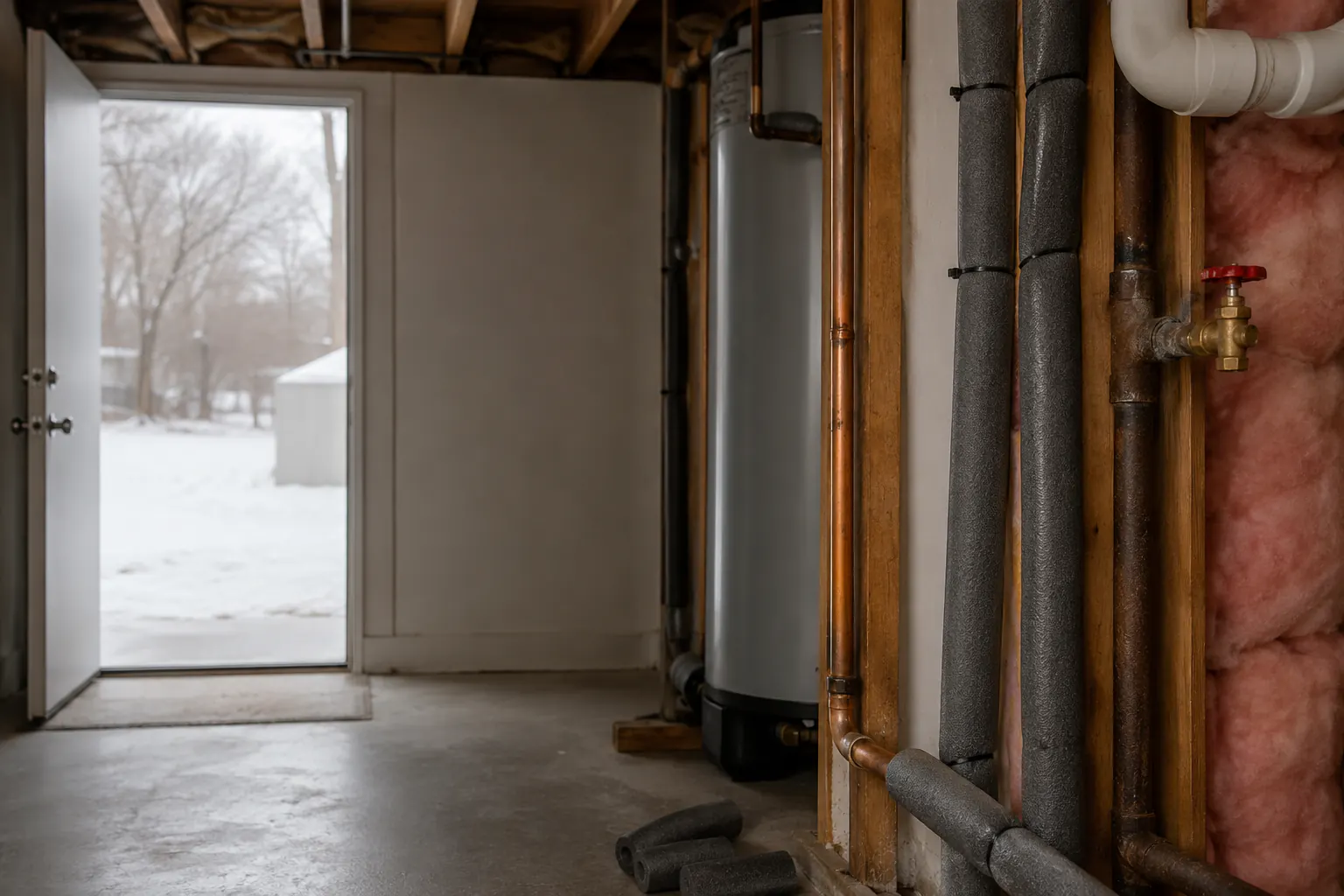
If water flow has slowed or stopped now
- Check whether the utility, well, pump, building, or neighboring units also lost water.
- Look and listen from a dry, safe location for leaking, spraying, bulging, cracking, or water movement.
- Keep people away from water near outlets, panels, appliances, heating equipment, or damaged structures.
- Contact the landlord or building manager immediately in a rental or multi-unit building.
- Contact the water utility if the service line, meter, street supply, or scope of the outage is uncertain.
- If a known accessible household pipe appears frozen but is not leaking, open the supplied faucet and use only controlled, flameless warming consistent with local and professional guidance.
- Stop and call a licensed plumber for an inaccessible section, split pipe, active leak, fire-sprinkler line, repeated freezing, or uncertainty.
- If water threatens electrical equipment or structural safety, leave the area and call the appropriate emergency service or utility.
Do not use a torch, lighter, candle, heat gun, open flame, charcoal, or improvised burner. Do not apply power to wet equipment or stand in water to reach a valve or breaker.
Map the plumbing before cold weather
From accessible finished areas, identify:
- the main water shutoff and any meter or utility restrictions;
- the building-management and after-hours maintenance contacts;
- pipes in exterior walls or unheated cabinets;
- plumbing in a garage, attic, basement, crawlspace, utility room, or addition;
- outdoor faucets, irrigation, pool, and seasonal lines;
- water filters, softeners, treatment equipment, and pressure regulators;
- well pump, pressure tank, heat tape, sump, and septic dependencies;
- fire-sprinkler piping, which requires its own qualified service plan;
- previous freeze or leak locations.
Do not remove building panels, enter a crawlspace, climb into an attic, or disturb insulation merely to complete the map. Concealed, shared, or fire-protection systems belong with the owner and qualified trades.
Label the household shutoff only if it can be done without obstructing or altering it. Practice the decision sequence, not repeated valve operation. Old valves can leak or fail when moved.
Reduce exposure as routine maintenance
Air leaks can carry cold air to a pipe even when the room feels warm. Appropriate air sealing and pipe insulation may reduce risk, but the correct material and placement depend on the wall assembly, moisture, heat sources, electrical systems, and code.
Use a qualified professional when work involves:
- concealed pipes or exterior-wall cavities;
- heat cable or heat tape wiring;
- a panel, receptacle, circuit, or extension cord;
- combustion equipment or its air supply;
- sprinkler or suppression systems;
- asbestos, mold, pests, or damaged insulation;
- a shared building system;
- relocation or replacement of plumbing.
Do not wrap a pipe in combustible material near a heat source or cover a valve, leak, electrical connection, manufacturer label, or service point that must remain visible.
Disconnect and drain seasonal outdoor systems only according to the equipment, local utility, irrigation, pool, and plumbing instructions. A closed valve with trapped water can still freeze.
During an outage, protect warmth strategically
Use the winter outage heat plan to keep people safe while slowing building heat loss. Pipe protection is secondary to maintaining a safe occupied environment.
Safe household actions can include:
- keeping exterior doors and garage doors closed;
- maintaining building heat at the planned safe setting while power remains available;
- opening an interior sink-cabinet door so room air reaches plumbing, only after securing cleaners, medicines, blades, and hazards from children and pets;
- monitoring indoor temperature near known exposed areas without placing a device in water or on a heat source;
- checking for a utility or building instruction about vulnerable lines;
- keeping the shutoff route dry, lit, and accessible;
- storing drinking water before pressure is lost.
Whether to let a faucet drip is building- and location-specific. Some utilities recommend it for known vulnerable lines; others may restrict water use, and a drain line can also freeze. Follow the local utility, landlord, plumber, and building plan rather than treating a drip as universal protection.
Do not leave a faucet running unattended into a questionable drain or closed basin. Do not use hot water continuously as a substitute for fixing an exposed system.
Distinguish a frozen pipe from a wider outage
One faucet with little or no flow may point to a localized freeze, but it can also reflect a closed valve, failed fixture, well or pump outage, utility interruption, building work, or a leak.
Check other hot and cold fixtures without repeatedly operating questionable valves. Ask neighbors or management whether the problem is shared. Check official utility notices.
A frozen section is often near an exterior wall or unheated area, but ice can extend beyond the obvious cold spot. The section may already be split even before thawing reveals the leak.
Call for help rather than searching destructively. Do not cut walls, floors, ceilings, or insulation during an outage without controlling water, electricity, hidden services, and material hazards.
If an accessible pipe appears frozen
NWS guidance describes opening the faucet and applying controlled heat with an electric heating pad, hair dryer, portable heater kept away from combustibles, or towels warmed with hot water. Apply that guidance only when all of these are true:
- the pipe is visible and reachable from dry, stable footing;
- there is no split, bulge, active leak, electrical hazard, or damaged material;
- the appliance and outlet are dry, intact, and approved for the location;
- combustible clearance can be maintained;
- an adult can supervise continuously;
- the pipe is not part of a fire-sprinkler, shared, concealed, or utility-owned system;
- the landlord or building rules allow the action.
Keep the faucet open so melting water and pressure have a path. Warm gradually from the faucet side toward the frozen section. Stop when normal flow returns, then check other vulnerable fixtures and inspect for leaks.
Never use open flame. Do not leave a hair dryer, heating pad, or portable heater unattended. Do not use an extension cord in a wet area or place an electric device where melting water can reach it.
If the frozen section cannot be located or safely reached, call a licensed plumber.
If a pipe leaks or bursts
- Keep people away from the water and identify electrical or structural concerns.
- Shut off household water only if the correct valve is authorized, accessible from a dry safe location, and can be operated without force.
- In a rental or multi-unit building, contact emergency maintenance immediately; a unit valve may not isolate the correct line.
- Call the plumber, water utility, fire-sprinkler contractor, or emergency service appropriate to the system.
- Move undamaged portable contents only when the route is dry and safe.
- Photograph the source and damage from a safe location before temporary work.
- Follow insurer and landlord documentation instructions.
- Do not energize wet wiring, outlets, appliances, HVAC, pumps, or controls.
If the shutoff is stuck, corroded, leaking, buried, frozen, electrically unsafe, or utility-owned, do not force or heat it. Call the responsible service.
Use stored water from the emergency water guide while the system is isolated. Ask the utility or public-health authority whether a drinking-water advisory applies after loss of pressure or repair.
Restore the system in a controlled order
Thawing weather can reveal leaks that ice temporarily concealed. Before restoring full pressure or heat:
- confirm repairs and valve positions with the responsible professional;
- inspect accessible areas for water, bulging finishes, staining, and unusual sounds;
- keep electricity isolated from affected wet equipment through a qualified electrician;
- follow water-utility and public-health instructions after pressure loss;
- dry affected materials according to the scope and contamination;
- document repairs, materials, and the freeze location for future mitigation.
Repeated freezing indicates a building problem, not a need for a stronger improvised heater. Have the pipe route, insulation, air leakage, heat distribution, controls, and code requirements evaluated.
Apartment and renter boundaries
Renters can prepare contacts, stored water, temperature monitoring, cabinet access, and contents. They should report inadequate heat, leaks, and frozen plumbing promptly and preserve written records.
Do not open walls, install heat cable, alter building heat, shut a shared riser, access a locked utility room, or modify fire sprinklers without written authority and qualified service. Keep required fire exits and sprinkler clearance intact.
If management cannot maintain safe heat or water, contact the local housing or emergency authority and use the relocation plan. Lease rights and emergency procedures vary by jurisdiction; this guide is not legal advice.
Sources reviewed
- National Weather Service: Essential Tasks After It Warms Up
- National Weather Service: Before and After a Winter Storm
- Ready.gov: Winter Weather
- CDC: Preparing for a Winter Storm
Sources reviewed July 14, 2026. A frozen-pipe, water, electrical, structural, or heating concern can change quickly; use current local guidance and qualified help where the household boundary ends.