
When power fails in winter, the first question is not “Which heater should I turn on?” It is whether the home can remain a safe shelter without creating a fire, carbon monoxide, electrical, or medical emergency.
Some central heating systems stop even when they burn gas or oil because controls, pumps, ignition, or blowers need electricity. Apartment residents may lose building heat, elevators, water pressure, access systems, or communication at the same time. Staying warm is the most urgent chapter of the winter storm preparedness plan, which covers the rest of the storm.
Use the current utility estimate, local National Weather Service alerts, building information, and the household’s health and equipment needs. Do not wait for a generic room-temperature number if a clinician, device instruction, local authority, or facility plan requires earlier action.
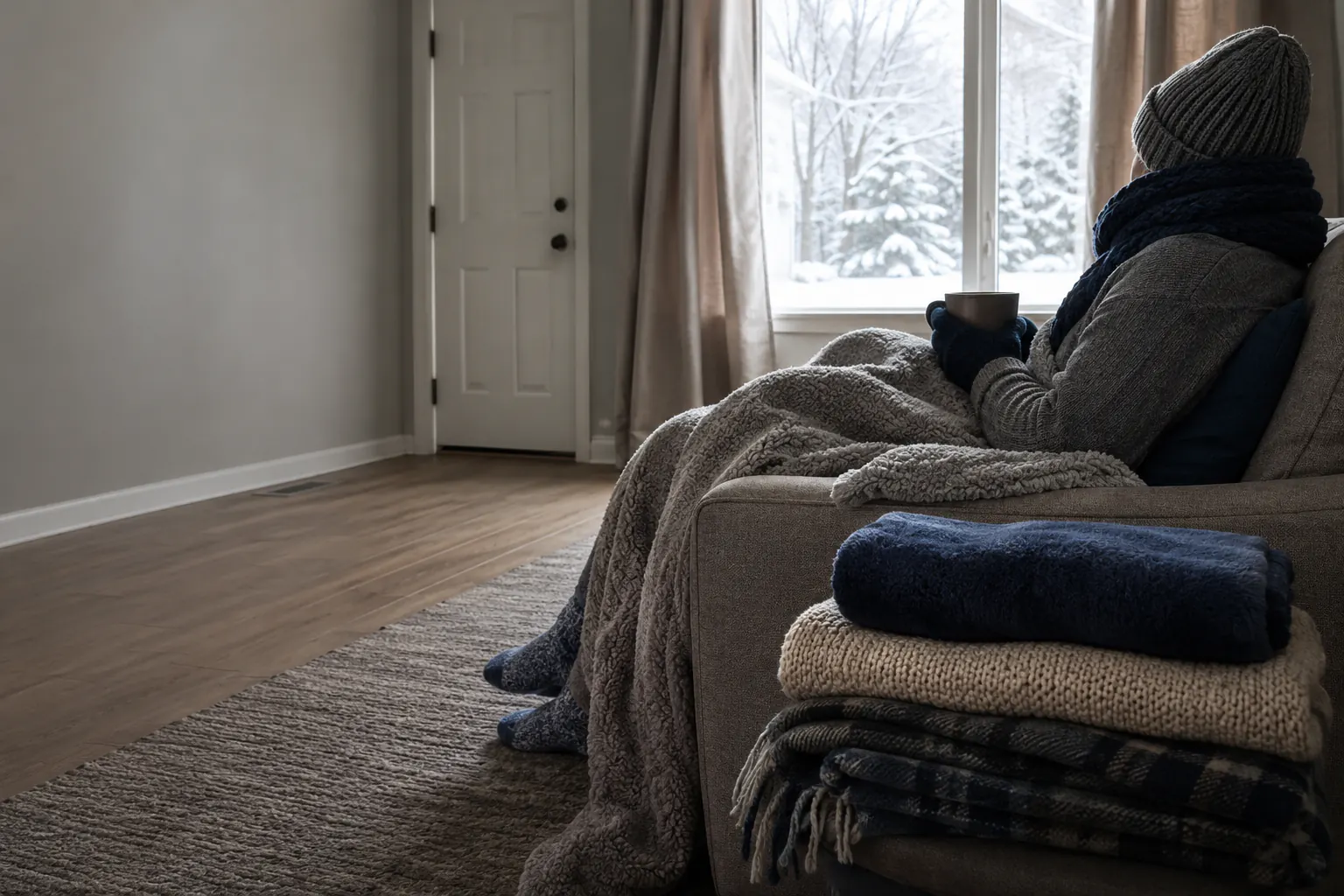
If heat and power are out now
- Confirm the outage and report it through the utility or building channel. Do not approach a downed line or damaged service equipment.
- Account for everyone and check for cold stress, medical concerns, and required equipment.
- Read the indoor temperature from a reliable thermometer and record the time. Track the trend in the occupied area.
- Put on dry layers, warm socks, footwear, and a hat. Replace wet clothing immediately.
- Gather in a smaller safe occupied zone without blocking exits, alarms, sprinklers, vents, or access to essential care.
- Close doors to unused rooms when that does not interfere with required heat circulation, plumbing protection, ventilation, or fire egress.
- Use flashlights or battery lanterns instead of candles.
- Use only heating equipment approved for the location, power source, and conditions. Follow its instructions exactly.
- Start the relocation plan early if temperature is falling, restoration is uncertain, or anyone is medically vulnerable.
Leave immediately if a CO alarm sounds. Get everyone, including pets, outside to fresh air and call 911. Do not search for the source, silence the alarm and remain inside, or re-enter until emergency authorities say it is safe.
Choose an occupied zone carefully
A smaller occupied area can slow heat loss, but “seal one room” is incomplete advice. The room still needs safe exit, required ventilation, functioning alarms, and enough space around any approved heat source.
Prefer an interior room that:
- has a clear route to an exterior exit;
- is not a basement with combustion equipment or a garage connection;
- has a working smoke alarm and nearby CO detection as required for the home;
- is away from large areas of glass when another suitable room exists;
- can hold people, bedding, medication, mobility equipment, and pet needs without crowding a heater;
- does not isolate plumbing that needs warm-air circulation;
- remains reachable without an elevator for anyone who may need to leave.
Close curtains or shades if they do not touch a heat source. Temporary window coverings must not hide damage, trap moisture against unsafe materials, block an exit, or cover a combustion-air opening. Keep blankets, mattresses, clothing, paper, and furniture away from all heat-producing equipment.
Warm people before trying to warm the whole building
Dry clothing and bedding reduce demand on limited heat. CDC advises several loose-fitting layers with a moisture-managing inner layer, insulating middle layer, and wind- or water-resistant outer layer when outside. Indoors, adjust layers to avoid sweating; damp clothing can accelerate heat loss.
Use:
- dry base layers and loose insulating layers;
- warm socks, slippers or shoes, and a hat;
- sleeping bags or blankets used as bedding, not heater enclosures;
- shared occupancy while preserving privacy, exits, and safe space;
- warm food and drinks prepared without unsafe indoor combustion.
Do not drink alcohol to feel warmer. It can impair judgment and does not make cold exposure safe. Account for hydration and dietary restrictions.
Infants should sleep according to current safe-sleep guidance, not under loose emergency bedding or beside a heater. Ask the child’s clinician about cold-weather planning rather than improvising insulation around a crib.
Monitor people and temperature as a trend
Write down the indoor temperature, time, utility estimate, and condition of each vulnerable person at regular check-ins. Older adults may be less able to sense a temperature change; CDC recommends an easy-to-read indoor thermometer and frequent checks.
Cold illness is not limited to a particular outdoor number. Wetness, wind, duration, age, health, medication, activity, and inadequate shelter change risk.
Warning signs of hypothermia in adults can include shivering, exhaustion, confusion, fumbling hands, memory loss, slurred speech, and drowsiness. Babies may have bright red, cold skin and very low energy. Suspected hypothermia is a medical emergency. Call 911 and follow dispatcher instructions.
Frostbite can cause numbness, white or grayish-yellow skin, and skin that feels unusually firm or waxy. Seek medical care and do not rub the area or use direct high heat.
The winter medical-device and vulnerable-household plan adds clinician-approved triggers, transport, medication storage, and caregiver contingencies.
Treat every heat source as a controlled system
Central heating
Do not modify wiring, bypass a safety control, power a furnace through an improvised cord, or connect a generator to household circuits without approved transfer equipment installed for that purpose. Ask the HVAC professional and electrician what the system requires before winter.
Prepare that system-specific record through the HVAC resilience hub, and use the HVAC post-outage restart checklist only after utility and property release.
Keep furnace and water-heater vents clear of snow only when the exterior task can be done from stable ground. A blocked vent, unusual odor, soot, repeated shutdown, damaged flue, or CO alarm requires shutdown or evacuation according to the equipment and emergency guidance, followed by qualified service.
Electric portable heaters
Use only a listed heater in good condition, directly in a suitable wall outlet, with the clearance and supervision specified by the manufacturer. Do not use a power strip or extension cord. Turn it off when leaving the room or sleeping. The space-heater safety guide covers placement, load, and stop rules.
Fuel-burning appliances
Use only equipment explicitly approved for indoor residential use and installed, vented, fueled, and operated exactly as required. Many portable combustion devices are never safe indoors. Never use a grill, charcoal device, camp stove, patio heater, or oven to heat the home.
Working CO alarms are a warning layer, not permission to use an unsafe device.
Generator power
Generators stay outdoors at least 20 feet from the home, doors, windows, and vents, with exhaust directed away, consistent with current CDC and CPSC guidance. A porch, carport, shed, garage, basement, or crawlspace is not safe generator placement. Snow and inclement weather add electrical and exhaust hazards; follow the manufacturer and do not improvise an enclosure.
Review the generator carbon monoxide guide before an outage, not after the generator is running.
Understand the backup-power limit
Electric resistance heaters commonly draw a large continuous load. A battery system that comfortably runs lights, phones, and a refrigerator may provide only a short heater runtime or may not support its startup and continuous requirements.
Before connecting any heater, compare:
- heater input watts at the intended setting;
- power source continuous and surge output;
- usable watt-hours after reserve and conversion losses;
- outlet and circuit rating;
- whether the manufacturer permits that power source;
- runtime needed and the battery’s temperature limits.
Do not daisy-chain power strips, defeat a grounding feature, run cords under rugs or doors, or use a wet cable. The backup-power planning guide explains load and runtime calculations without promising that a portable station can heat a home.
Protect water without sacrificing people
Open interior cabinet doors around vulnerable plumbing only when household chemicals and sharp objects are secured from children and pets. Keep garage doors closed if plumbing runs through the garage, but do not remain in a garage with a running vehicle or combustion device.
Whether to drip a faucet depends on the plumbing, local utility advice, water availability, drainage, and building rules. It is not a universal substitute for heat. Use the frozen-pipe guide to prepare the shutoff and escalation plan.
Do not keep an unsafe home occupied solely to protect pipes. Property damage is secondary to life safety.
Set relocation triggers before the room becomes cold
Write triggers that are specific enough to act on:
- the utility cannot provide a restoration estimate and indoor temperature is steadily falling;
- a clinician-approved temperature, device-runtime, oxygen, medication, or health trigger is reached;
- smoke or CO protection is unavailable;
- the only proposed heat source is unsafe or cannot be supervised;
- a caregiver, elevator, water supply, or communication system required for safe care has failed;
- fire, gas odor, damaged venting, a downed line, or structural damage appears;
- local authorities or building management order evacuation;
- roads remain passable now but are forecast to close before the household’s likely departure.
Confirm the destination before leaving. It must be open, heated, accessible, reachable, and able to support pets, medication, mobility, and medical equipment. Send the route and expected arrival through the family communication plan.
Sources reviewed
- CDC: Safety Guidelines During and After a Winter Storm
- CDC: Preparing for a Winter Storm
- National Weather Service: Before a Winter Storm and Extreme Cold Safety
- U.S. Consumer Product Safety Commission: 2026 Winter Storm CO and Fire Warning
- U.S. Fire Administration: Heating Fire Safety
Sources reviewed July 14, 2026. A carbon-monoxide alarm, fire concern, falling indoor conditions, cold-illness symptoms, or a clinician-directed limit means the household should follow the applicable emergency, care, or relocation plan rather than extend this checklist.