
A household that depends on electricity, controlled medication temperature, oxygen, dialysis, mobility equipment, a caregiver, or accessible transport cannot use a generic “wait for the power” plan.
Winter adds two constraints: the home can cool while the outage continues, and transport may become unavailable. The safer plan is written with clinicians and equipment providers before the forecast, with triggers early enough to move while roads, elevators, caregivers, and destinations still work. This plan sits inside the household’s broader winter storm preparedness plan and takes priority over every comfort decision in it.
This page is the winter variant. The all-hazard frame — device inventory, measured loads, the questions to ask a clinician and manufacturer, and the trigger table — lives in the medical device continuity plan, and refrigerated medicine has its own outage plan.
This guide is a planning framework, not medical advice. It does not supply a universal safe indoor temperature, battery duration, medication range, oxygen setting, or treatment substitution.
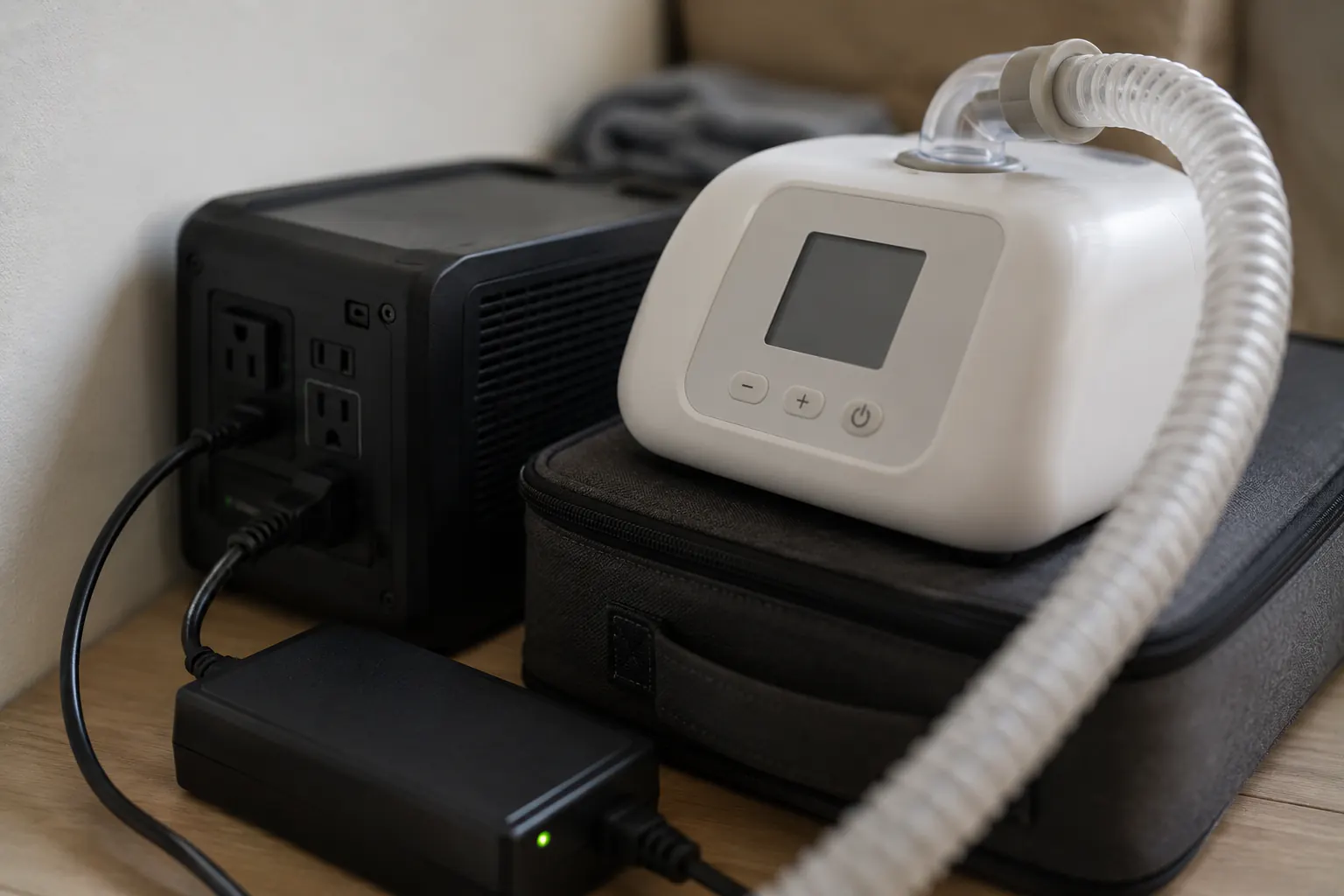
If a required device or service is failing now
- Follow the device instructions and the clinician’s emergency plan.
- Call 911 if a life-sustaining device has failed, urgent symptoms appear, or the plan says immediate medical help is required.
- Tell dispatch the device, condition, current symptoms, power status, location, access barriers, and number of people needing help.
- Do not connect the device to an unapproved battery, inverter, generator, adapter, or extension arrangement.
- Do not change a prescription, dose, treatment setting, oxygen flow, or device mode unless the authorized clinician or emergency professional directs it.
- Use the prearranged accessible destination while transport remains available.
- Bring the device, approved power supplies, medication, records, consumables, and caregiver information.
A warming center or ordinary shelter may not provide medical care, refrigeration, oxygen, charging compatibility, transfer equipment, privacy, or an accessible sleeping arrangement. Verify capability directly.
Create one inventory for care and power
For every device, record:
| Field | What to document |
|---|---|
| Identity | exact name, manufacturer, model, serial number |
| Clinical role | what happens if it stops and how quickly help is needed |
| Normal power | voltage, adapter, watts or amps from the label/manual |
| Approved backup | internal battery, external battery, approved DC adapter, UPS, or other manufacturer-approved source |
| Runtime | provider-verified duration under the actual settings and battery condition |
| Environment | permitted temperature, humidity, storage, and ventilation |
| Supplies | consumables, sterile water if applicable, tubing, filters, chargers, spare parts |
| Contacts | clinician, pharmacy, distributor, home-care service, manufacturer, utility |
| Transport | weight, case, transfer help, accessibility, destination capability |
| Trigger | when to call, relocate, or seek emergency care |
Photograph labels and power connectors. Keep a printed copy with the device and an encrypted digital copy accessible to the caregiver. Do not publish serial numbers or diagnoses in a public document.
FDA advises users to understand how loss of power, moisture, or contamination affects a device and to plan for supply disruption. The device manual and manufacturer or distributor are the authority for compatible power and post-outage checks.
Measure the load without guessing at clinical runtime
The nameplate or approved documentation provides electrical requirements. A plug-in meter may be useful for some non-invasive household equipment only when the manufacturer and clinician say measurement will not interrupt or alter therapy. Never disconnect a life-sustaining device merely to test it.
Record:
- continuous draw and any startup or cycling behavior from approved information;
- internal battery runtime and battery age;
- approved charging time and whether use while charging is allowed;
- required reserve for transport and delays;
- backup source output and usable energy;
- cold-temperature limits for batteries and electronics.
The backup-power guide explains watts and watt-hours. Its runtime calculator is an estimate, not a medical guarantee. Build reserve and use the provider’s trigger, not the calculator’s final minute.
Ask the clinician and provider direct questions
Use a scheduled appointment or support call to document answers:
- What symptoms or interruption duration require 911, urgent care, or relocation?
- What indoor temperature range is required for the person, treatment, and device?
- Which backup power sources and adapters are approved?
- How much battery reserve must remain before travel begins?
- Can the treatment schedule change during an outage, and who may authorize that?
- How should medication, sterile supplies, and temperature-sensitive items be stored and monitored?
- What should happen after power returns? Do settings, alarms, clocks, calibration, or data need checking?
- Which destination can provide the required treatment and accessibility?
- What transport can operate in snow or ice, and how early must it be requested?
- What is the backup if the caregiver, pharmacy, distributor, or home-care service cannot arrive?
FDA notes that some devices can reset to a default mode after power interruption. The user’s plan should include an approved post-restoration check without changing settings independently.
Build a trigger table
Avoid vague phrases such as “leave if it gets too cold.” Write observable triggers and the responsible action.
| Trigger category | Household-specific example to complete with professionals | Action owner |
|---|---|---|
| Device | approved backup reaches the provider-defined reserve | caregiver calls provider and begins relocation |
| Temperature | room reaches the clinician-defined limit or falls at the planned rate | named adult activates transport |
| Medication | monitored storage approaches the labeled range limit | pharmacist/clinician instruction |
| Oxygen | supply, concentrator power, or delivery is disrupted | follow oxygen provider and emergency plan |
| Access | elevator, ramp, plowing, or caregiver route may close | relocate before closure |
| Symptoms | the clinician-defined warning or emergency sign occurs | call the designated service or 911 |
| Destination | receiving site changes status | use verified backup destination |
Do not assume enrollment in a utility medical program guarantees priority restoration. Enroll where available, keep contact details current, and still maintain an independent emergency plan.
Protect medication and supplies
Keep a current list of prescriptions, doses, allergies, prescribers, pharmacy contacts, refill limits, and storage instructions. Rotate emergency supplies legally and clinically; do not stockpile or alter use without authorization.
For refrigerated or temperature-controlled medication:
- use the product label, pharmacist, manufacturer, and clinician for the permitted range and excursion rules;
- use an appropriate thermometer and record time and temperature without freezing the product;
- keep medication separate from food contamination and meltwater;
- do not place it directly on ice unless the instructions require that method;
- never decide by appearance alone that a temperature-exposed product is usable;
- arrange replacement or professional advice when limits may have been exceeded.
Maintain sterile and clean supplies in sealed, dry storage away from floors, pets, fuel, and crowded work areas. Do not reuse a single-use item or contaminated device because deliveries are delayed unless an authorized medical source provides specific instructions.
Plan oxygen and combustion boundaries
Oxygen increases fire intensity. Follow the oxygen supplier, clinician, fire code, and equipment instructions. Keep oxygen away from smoking, flames, candles, gas lights, torches, stoves, heaters, and sparking equipment.
FDA specifically advises battery flashlights or lanterns rather than gas lights or torches when oxygen is in use. Do not place petroleum products on oxygen equipment or change a regulator or flow setting without authorization.
A generator used for medical power follows the same outdoor CO rules as any generator. It must remain outdoors at least 20 feet from the home and openings under current CDC and CPSC guidance, with exhaust directed away. A garage, porch, carport, shed, basement, or crawlspace is not acceptable placement.
Use the generator CO guide and never backfeed a home circuit. For the household’s wider cold-weather heating decisions around this plan — heating categories, safe-room selection, and departure triggers — use the extreme cold and emergency heating hub. Clinician-approved thresholds in this guide always take precedence over it.
Prepare mobility, communication, and transport
Record the weight and dimensions of wheelchairs, batteries, oxygen systems, lifts, and cases. Confirm whether the transport provider can secure and power them. Keep manual backup procedures only if the user, caregiver, and clinician have approved and practiced them.
In an apartment or high-rise, ask management about:
- elevator behavior and emergency power;
- accessible exits and areas of refuge under the building plan;
- door and access-control behavior during outage;
- fire-alarm and sprinkler status;
- generator outlets and whether medical use is supported;
- staff availability and after-hours contacts;
- snow clearing at the accessible entrance.
Do not improvise carrying a person down stairs. Arrange trained assistance and appropriate equipment before the event.
Use the family communication plan with a concise medical status message, an out-of-area coordinator, and a missed-check-in trigger. Keep a communication card for someone who cannot speak, hear, see, or process ordinary instructions during stress.
The winter vehicle guide covers cold, delay, visibility, and medication questions for transport.
Protect older adults and people who may not sense cold
CDC advises an easy-to-read indoor thermometer for adults over 65 and frequent temperature checks because the ability to sense temperature change can decrease with age.
Assign a named person to record the room temperature and check the resident, not just send a text asking whether they feel cold. Watch for confusion, fumbling, slurred speech, drowsiness, unusual fatigue, and other hypothermia signs. Call 911 for suspected hypothermia.
Medication, chronic illness, limited mobility, cognitive impairment, isolation, and inability to operate a phone or thermostat can require an earlier relocation trigger. Set it with the care team.
Rehearse without interrupting treatment
Run a tabletop drill, not an unapproved power failure test:
- Read a simulated winter storm warning.
- Call the backup contact and receiving destination.
- Gather the device inventory, medication, power, supplies, and documents.
- Confirm battery status without disconnecting treatment.
- Time packing and accessible movement to the departure point.
- State the exact clinical, battery, temperature, and road triggers.
- Check that the driver and vehicle can transport every item.
- Record one gap and assign it to the appropriate provider.
Do not unplug a medical device, change settings, consume reserve batteries, or transport a medically fragile person for practice without clinician approval.
Sources reviewed
- FDA: Emergency Situations and Medical Devices
- FDA: Medical Devices and Natural Disasters
- CDC: Emergency Power Sources
- CDC: Personal Needs in Emergency Preparedness
- CDC: Preparing for and Staying Safe During a Winter Storm
Sources reviewed July 14, 2026. Current clinician, device manufacturer, supplier, utility, emergency-management, and transport instructions control an individual medical-device or care decision.