
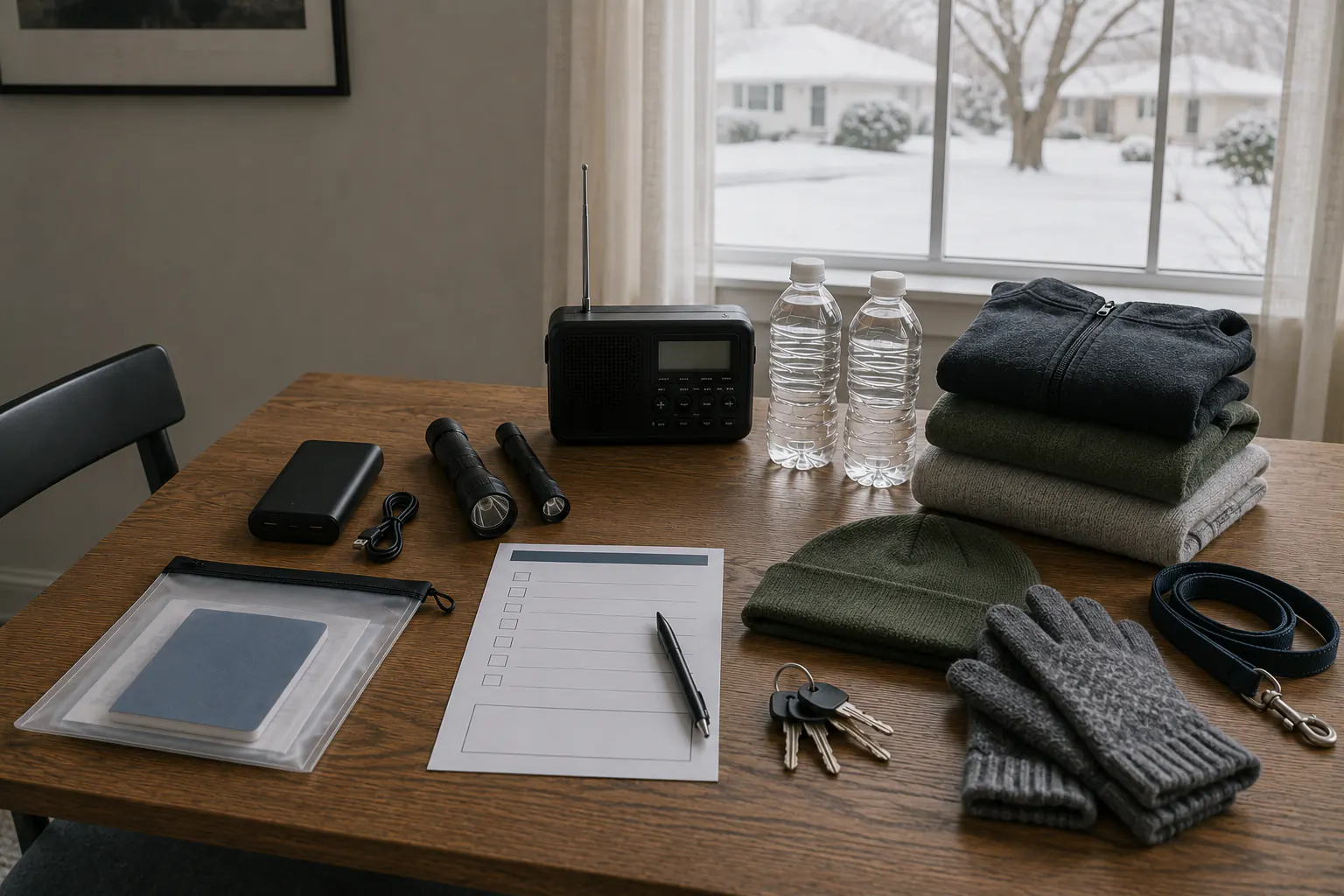
A winter storm is not just a snow event. The same forecast can create several household emergencies at once: roads become unusable, power and heat fail, water lines freeze, prescriptions or fuel cannot be delivered, and routine outdoor work becomes dangerous.
Good preparation protects people first, then heat, water, communication, mobility, and the building. It also recognizes a hard limit: staying home is not always safer when the home cannot maintain a safe environment or a resident depends on services that are failing.
Use forecasts and alerts from your local National Weather Service office, instructions from local emergency management and transportation agencies, and directions from utilities and building management. Winter thresholds vary by region. A snowfall that is routine in one place can close roads and services in another.
If dangerous winter weather is happening now
- Read the complete official alert, including the affected area, timing, expected hazards, and action statement.
- Delay travel when officials advise it. Do not assume four-wheel drive, an SUV, or experience makes an ice-covered or closed road safe.
- Account for every person and pet. Check the indoor temperature and the status of heat, power, water, communications, medication, and medical equipment.
- Move away from downed lines, damaged trees, sagging branches, unstable structures, and areas where ice or snow is falling.
- Use only heating and cooking equipment approved for its location and purpose. Never heat the home with an oven, grill, camp stove, or unvented improvised flame.
- Leave immediately if a carbon monoxide alarm sounds or anyone has possible CO symptoms. Get outside and call 911 from a safe location.
- Call for help for confusion, slurred speech, unusual drowsiness, severe shivering or shivering that stops, suspected frostbite, breathing difficulty, chest pain, or another urgent medical problem.
- If the home is becoming unsafe, use the household’s earlier relocation trigger instead of waiting for conditions to become impossible.
The winter storm preparation timeline organizes the work that can still be done before travel and deliveries deteriorate.
Understand the alert, not just the weather icon
Winter Storm Watch
A watch means conditions are favorable for a significant winter event. Exact timing, location, and impacts can still change. Treat it as the point to verify supplies, prescriptions, fuel, transportation, heat, detectors, and the needs of people who require more time.
Winter Storm Warning
A warning means a significant combination of snow, sleet, ice, or blowing snow is expected or occurring. Travel can become difficult or impossible. Follow the local action statement and change plans before roads worsen.
Blizzard Warning
A blizzard warning is about wind and visibility as well as snow. The National Weather Service definition includes frequent gusts of at least 35 mph and visibility frequently below one-quarter mile for at least three hours. The safe household decision is generally to avoid travel; a person can become disoriented close to home or a vehicle.
Ice Storm Warning
Freezing rain can make walking and driving dangerous while loading trees and power lines. Prepare for falling limbs and outages without standing beneath branches or trying to remove ice during the storm.
Extreme Cold products
An Extreme Cold Watch, Warning, or Cold Weather Advisory addresses dangerously cold air or wind chill. The local criteria vary. These products can matter even when little snow falls.
Advisories still describe hazardous conditions. Read the full message rather than treating the word “advisory” as permission to travel. (Sources: National Weather Service, Winter Weather Warnings, Watches and Advisories and Understanding Cold Weather Alerts, reviewed July 2026.)
Build the plan around service failure
List the household systems that cold weather can interrupt:
| System | What can fail | Decision to make before the storm |
|---|---|---|
| Heat | furnace, boiler, fuel delivery, electrical controls | safe backup, indoor-temperature checks, relocation trigger |
| Power | grid supply, local lines, building systems | lighting, communications, device backup, CO-safe generator boundary |
| Water | frozen pipes, pump or well power, utility break | stored drinking water, shutoff access, leak response |
| Travel | ice, closures, visibility, vehicle failure | cancel trigger, destination, route, vehicle kit |
| Communication | cellular congestion, charging loss, internet outage | alerts, radio, out-of-area contact, check-in schedule |
| Care | caregiver, pharmacy, oxygen, dialysis, mobility transport | clinician-led continuity plan and earlier movement |
Write down who decides to relocate and where the household can go. A warming center, hotel, friend, family member, shelter, or medical facility is useful only if it is open, accessible, reachable, and appropriate for pets and care needs.
Protect heat without creating fire or CO risk
Have the primary heating system and venting maintained according to the equipment manufacturer and by qualified professionals where required. Know which parts depend on electricity. A gas furnace may still need grid power for controls and a blower.
Test smoke and carbon monoxide alarms and maintain them according to their instructions. Keep exterior vents for fuel-burning equipment visible and clear only when they can be reached safely from stable ground. Never climb onto an icy roof or use a generator, grill, vehicle, or combustion engine in a home, garage, basement, crawlspace, shed, porch, or carport.
If heat fails, the safe winter outage heat plan prioritizes clothing, a smaller occupied zone, temperature monitoring, and early relocation. The separate space-heater safety guide addresses electrical load, clearance, supervision, and combustion boundaries. For the complete cold-weather heating picture — category comparison, safe-room selection, bedding, and departure triggers — use the extreme cold and emergency heating hub.
Backup power for electric resistance heat is usually demanding. Size power around measured loads and the equipment’s instructions rather than assuming a portable battery can run a room heater overnight. The backup power guide explains capacity, output, surge, and runtime limits.
Keep water available and reduce pipe damage
Store drinking water before the storm with the emergency water storage guide. A frozen service line, well outage, building shutdown, or burst pipe can interrupt water even when the grid remains available.
Identify the main water shutoff and building contact before an emergency. Do not search for a valve in a flooded, electrically unsafe, or inaccessible area. Renters should know what they may operate and how to reach management after hours.
Pipes in exterior walls, unheated areas, cabinets, attics, basements, crawlspaces, and garages are often more exposed. Building design, insulation, plumbing layout, local code, and water-utility advice matter. The frozen-pipe prevention and response guide separates low-risk preparation from situations that require the utility, landlord, or a licensed plumber.
Never use an open flame to thaw a pipe. Stop if there is a split, leak, inaccessible section, electrical hazard, or uncertainty about the affected system.
Prepare for a longer stay indoors
Maintain food that can be eaten without unsafe indoor combustion. Keep a manual can opener and account for infant feeding, allergies, diabetes, swallowing needs, and other dietary constraints.
Use the power outage food-safety guide when refrigeration fails. Snow, a porch, or a cold garage is not automatically a controlled refrigerator: temperatures fluctuate, containers can be contaminated, and food can attract animals.
Keep flashlights and battery lanterns in known locations. Avoid candles where possible. Use the family communication plan to assign an out-of-area contact, short check-in messages, and a schedule that conserves phone power.
Make an earlier plan for people at higher risk
Older adults may not sense indoor temperature changes as readily, and babies, people with chronic conditions, people taking certain medications, and anyone with limited mobility or communication access can need earlier action. CDC recommends an easy-to-read indoor thermometer for older adults and frequent temperature checks.
Do not invent a universal indoor-temperature threshold for every patient or device. Ask the clinician, home-care provider, device manufacturer, pharmacy, utility, and local emergency resources what conditions require action. Record device power, battery duration, charging method, medication storage, transport, and the destination that can provide the required care.
The winter plan for medically vulnerable households turns those answers into a trigger-based worksheet without replacing medical advice.
Bring pets indoors as temperatures fall. Plan warm shelter, unfrozen water, food, medication, records, transport, and a destination that accepts them. Outdoor and large animals require species-specific veterinary and agricultural planning before the event.
Avoid preventable winter travel
The safest vehicle kit cannot make a closed road safe. Check the official road authority and weather forecast before departure, tell someone the route and expected arrival, and cancel early.
Maintain the vehicle to manufacturer specifications, including tires, pressure, coolant, battery, lights, wipers, defrosters, and winter-rated washer fluid. Keep fuel or charge sufficient for delay and rerouting.
The winter vehicle kit and stranding guide covers visibility, warmth, communications, medication, traction items, and carbon monoxide precautions. If stranded in dangerous conditions, official guidance generally favors staying with the vehicle where rescuers can find it unless authorities direct otherwise or a clearly safe occupied shelter is immediately available.
Recover only after the hazard changes
The end of snowfall does not end the emergency. Ice, black ice, downed lines, overloaded roofs, falling branches, damaged exhaust vents, frozen pipes, flooding from thaw, and overexertion remain concerns.
Wait for road openings and utility or building instructions. Inspect from a safe location in daylight. Do not approach a line, touch a tree on a line, climb an icy roof, enter a damaged structure, or stand beneath loaded branches.
Cold weather adds strain during shoveling and cleanup. People with heart disease or high blood pressure should follow their clinician’s advice; everyone should work slowly, stay dry, take breaks, and stop for symptoms. The winter storm recovery guide sets conservative boundaries for snow, ice, utilities, roofs, pipes, and meltwater.
Run a calm winter drill
- Choose a realistic local watch or warning scenario.
- Find the official alert and road-information sources.
- Check heat, indoor temperature, alarms, water, lighting, and communication.
- Locate the water shutoff without operating it.
- Pack the vehicle or relocation kit, including medication and pet needs.
- Send a check-in to the out-of-area contact.
- State the household’s heat-loss, medical, road, and CO evacuation triggers.
- Record one missing item or unclear responsibility and assign it.
Do the drill in ordinary weather. Do not test unapproved heaters, operate a generator for the first time during a storm, walk on ice, or drive into hazardous conditions for practice.
Winter preparedness is successful when the household makes smaller decisions early: cancel the trip, refill the prescription, check the detector, protect the pipe, charge the device, bring the pet inside, or relocate before cold and road conditions remove the safer options.
Sources reviewed
- National Weather Service: Winter Weather Safety
- National Weather Service: Winter Weather Warnings, Watches and Advisories
- National Weather Service: Before and After a Winter Storm
- Ready.gov: Winter Weather
- CDC: Preparing for a Winter Storm
- CDC: Safety Guidelines During and After a Winter Storm
- U.S. Consumer Product Safety Commission: 2026 Winter Storm CO and Fire Warning
Sources reviewed July 14, 2026.