
Read the current local forecast or alert, then start with the stage below that still applies to your household. Check who needs heat, medication, transport, or help before roads and services become harder to use. You may not receive several days of notice: forecast confidence changes, storms shift, and local warning criteria differ.
Use this timeline from the earliest stage that still applies. If an official warning, road closure, evacuation instruction, utility direction, or medical trigger conflicts with a later checklist item, follow the urgent instruction and leave the item unfinished.
Winter storm checklist: the short version
- Check the local alert and road conditions; decide which trips can wait.
- Confirm medication, care support, and where everyone can go if safe heat fails.
- Charge phones, lights, radios, and approved backup batteries.
- Check drinking water, food that needs no cooking, warm layers, and household-specific supplies.
- Check smoke and CO alarms according to their instructions; do not improvise indoor heat.
- Share the next check-in time and keep essential supplies accessible without blocking exits.
This is a reminder list, not a reason to delay an urgent instruction. NWS winter preparation guidance emphasizes heat, power, communications, supplies, and household needs. The stages below explain what to check and when to stop. If electricity has already failed, use first power-outage actions before continuing preparation tasks.
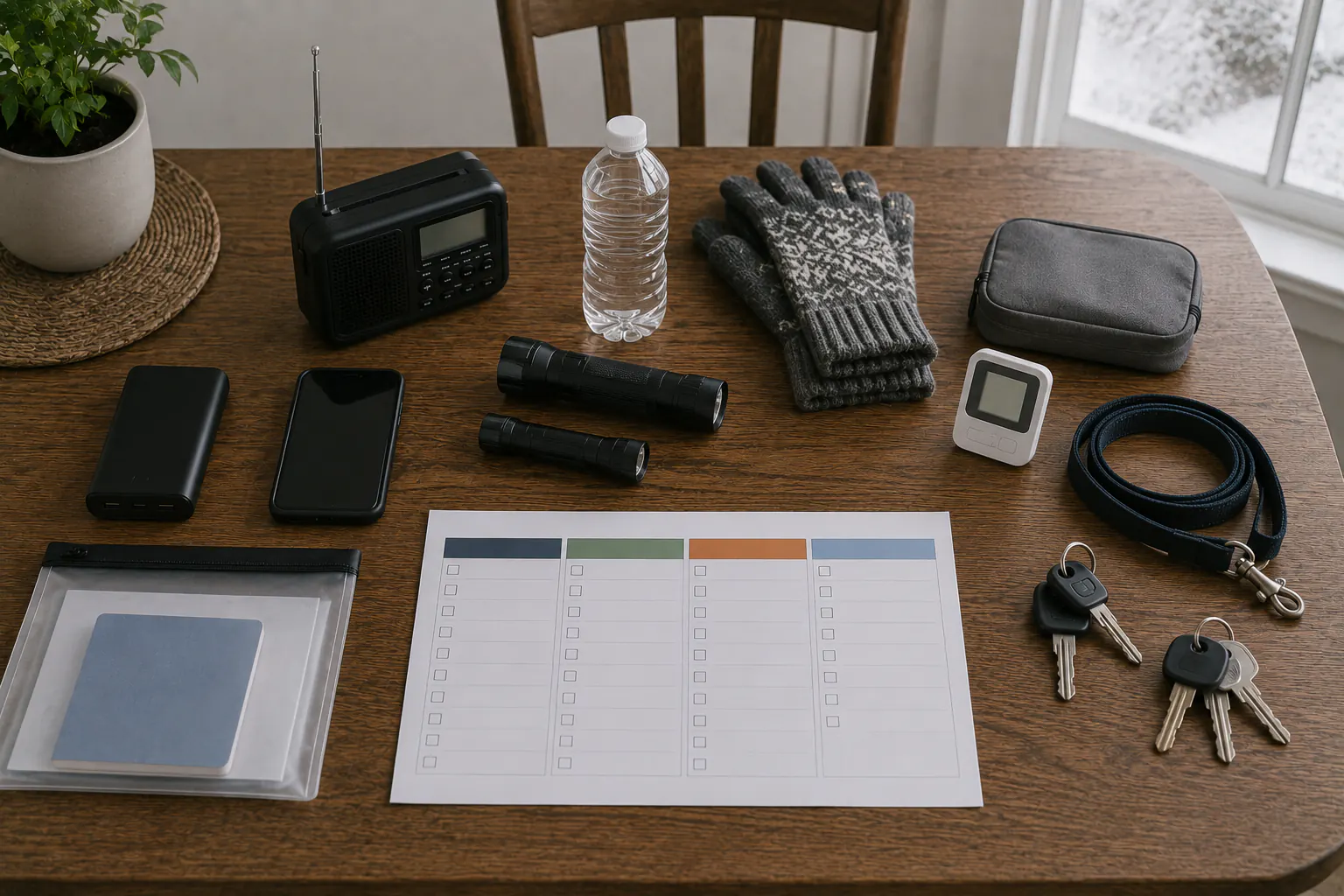
Seasonal baseline: finish before winter weather is forecast
These jobs are difficult to do safely once ladders, roofs, roads, and exterior equipment are icy.
Home systems
- Have the heating system, chimney, flue, and fuel-burning appliance vents inspected and maintained as required by the manufacturer, local code, landlord, and qualified professionals.
- Test smoke and carbon monoxide alarms and replace units or batteries according to their instructions.
- Learn which heating controls, pumps, thermostats, and blowers require electricity.
- Identify exterior exhaust and intake vents from stable ground. Create a safe snow-clearance plan that does not require climbing onto an icy roof.
- Identify exposed plumbing and the main water shutoff. Renters should record the management and after-hours maintenance contacts.
- Repair known leaks, failed weather seals, unsafe cords, damaged outlets, loose railings, and inadequate exterior lighting through the appropriate owner or professional.
- Arrange snow and ice help before the season for anyone who should not shovel, climb, or use powered equipment.
Household continuity
- Record the local National Weather Service office, emergency-management source, road authority, utility outage channel, building contact, and out-of-area family contact.
- Maintain drinking water, shelf-stable food, medication, hygiene supplies, lighting, radio, batteries, chargers, warm clothing, blankets, pet supplies, and infant or accessibility items.
- Ask clinicians and equipment providers for written power, temperature, medication-storage, and relocation instructions when health depends on them.
- Choose a warm destination and transport plan if the home loses safe heat, power, water, or care support.
- Service the vehicle to manufacturer specifications and keep a winter kit inside.
The winter storm preparedness hub connects these systems and explains the alert types.
Several days before: turn the forecast into household decisions
Forecasts may provide several days of notice, but this is not guaranteed. Start with the first credible local signal rather than waiting for a named watch.
- Read the forecast discussion and hazard outlook from the local NWS office, then check local emergency management.
- Identify the main concern: snow, ice, extreme cold, wind, coastal impacts, snow squalls, avalanche conditions, or a combination.
- Note the range of timing and impacts instead of planning only around one snowfall number.
- Review work, school, caregiver, delivery, pharmacy, and travel decisions that become harder if roads close.
- Refill prescriptions and essential supplies within legal and clinical limits; do not wait for shelves or delivery routes to fail.
- Check heating fuel and legitimate delivery schedules. Store fuel only in approved containers and locations.
- Charge phones, power banks, device batteries, lanterns, and radios. Test charging cables and adapters.
- Check the vehicle’s fuel or charge, tires, pressure, coolant, wipers, defrosters, lights, and washer fluid. Keep the winter car emergency kit separate from ordinary trunk clutter so its cold-weather supplies remain reachable.
- Move outdoor items that can blow or become inaccessible, working only from dry, stable ground.
- Confirm the plan for children, pets, older adults, neighbors who requested help, and people with disabilities or medical needs.
Do not buy an unapproved heater, generator, cord, fuel container, or improvised heating device as a last-minute substitute for a safe system.
When a watch is issued: prepare to change plans
A Winter Storm Watch means significant winter weather is possible. An Extreme Cold Watch means dangerously cold conditions are possible. Details can change, but the time for casual postponement is over.
| Decision | Confirm now | Trigger for action |
|---|---|---|
| Travel | official road source, route, destination, return timing | cancel when warnings, closures, visibility, ice, or local advice make the trip unsafe |
| Heat | primary system, safe backup, alarms, indoor thermometer | relocate before indoor conditions or equipment limits become unsafe |
| Water | stored supply, pipe exposure, shutoff and contact | act on leak, pressure loss, freeze signs, or utility/building instruction |
| Power | critical loads, charging, lighting, communications | use the outage plan; never improvise generator placement or backfeed |
| Care | medication, device runtime, caregiver, transport | follow the clinician-led trigger and move while transport works |
Complete these practical checks:
- Put flashlights and headlamps where people can reach them in the dark.
- Verify that smoke and CO alarms show normal status without disabling or moving them.
- Stage warm, dry layers and bedding in the occupied area.
- Fill clean water containers using the emergency water storage guide.
- Move vehicles away from weak limbs or known falling-ice zones when a safer legal location is available.
- Bring pets indoors and confirm unfrozen water, food, medication, and transport.
- Download or print key contacts and instructions; schedule family check-ins with the communication plan.
- Ask building management how heat, elevators, access control, fire systems, plumbing, and communications behave during an outage.
When a warning is issued: stop optional exposure
A warning means the hazardous event is expected or occurring. Read the local action statement. Blizzard and Ice Storm Warnings can make travel especially dangerous; a winter weather advisory can still create serious local travel and fall hazards.
Final household actions
- Cancel or complete travel according to official timing before roads deteriorate.
- Move everyone to the planned location if a medical, mobility, heat, or access trigger requires earlier relocation.
- Send the household status and next check-in time to the out-of-area contact.
- Set phones and radios to receive official alerts while conserving battery.
- Place medication, mobility equipment, documents, warm clothing, pet carriers, and go-bags together without blocking exits.
- Set refrigerator and freezer thermometers where they can be read without holding doors open.
- Keep exterior doors, stairs, fire exits, vents, alarms, sprinklers, and utility access clear.
- Park the vehicle safely and stop unnecessary driving.
Do not climb a ladder, roof, or tree; touch a downed line; operate a generator in a garage or near the home; or use an oven, grill, camp stove, or charcoal device for indoor heat.
During the storm: monitor conditions, not chores
Use a short household status cycle:
- People: location, warmth, symptoms, medication, mobility, rest.
- Heat: indoor temperature trend, primary equipment status, safe backup limits.
- Air: smoke and CO alarms, blocked vent concerns, unusual odor or symptoms.
- Power: utility status, battery reserve, critical loads, lighting.
- Water: pressure, leaks, frozen-pipe signs, stored supply.
- Information: official alerts, roads, utility estimates, next family check-in.
The stay-warm guide provides an outage decision sequence. Leave and call 911 if a CO alarm sounds or people have possible exposure symptoms. Call for urgent medical help for suspected hypothermia, frostbite, chest pain, breathing difficulty, serious fall injury, or confusion.
Avoid repeated door opening and unnecessary trips outside. Dress in dry layers and remove a layer before sweating. Do not send someone outside to clear a vent, branch, roof, or vehicle when wind, falling ice, visibility, cold exposure, or unstable footing makes the task unsafe.
After precipitation stops: wait for clearance
Snow ending does not prove roads, trees, roofs, utilities, or walkways are safe.
- Check official road and utility updates before leaving.
- Inspect from inside or stable ground for downed lines, damaged trees, hanging ice, structural movement, blocked vents, leaks, and water intrusion.
- Keep people and pets away from lines and trees touching lines; report them to the utility or 911 as directed.
- Check pipes and water pressure without using open flame or entering an unsafe area.
- Clear only a manageable exit route using appropriate footwear, tools, pacing, and help.
- Avoid overexertion. Stop for chest discomfort, unusual shortness of breath, dizziness, weakness, or pain.
- Document damage before temporary work when safe and follow insurer, landlord, utility, and building instructions.
- Restock used supplies and record the plan changes before the next event.
Use the winter storm recovery guide before tackling roofs, large branches, deep snow, ice, damaged equipment, or meltwater.
For the next storm, use the pre-storm exterior and drainage checklist during safe lead time. It excludes roofs, ladders, utilities, trees, active weather, and last-minute sealing; it is not a recovery-work instruction.
A one-minute go/no-go review
Before anyone travels, relocates, clears snow, checks an exterior system, or starts backup equipment, ask:
- What does the current official alert or closure say?
- Is this action necessary now?
- Can it be done from stable, dry, well-lit ground?
- Does it involve cold exposure, traffic, a line, roof, ladder, fuel, flame, electricity, or medical dependency?
- Is the responsible person trained and equipped?
- What is the stop condition?
If the answer is unclear, delay the task and contact the appropriate authority or professional. A completed checklist is not the goal. Preserving safe options is.
Sources reviewed
- National Weather Service: Winter Weather Warnings, Watches and Advisories
- National Weather Service: Before a Winter Storm
- National Weather Service: Understanding Cold Weather Alerts
- Ready.gov: Winter Weather
- CDC: Preparing for a Winter Storm
- U.S. Consumer Product Safety Commission: 2026 Winter Storm CO and Fire Warning
Sources reviewed July 14, 2026.
October 11, 2026 follow-up: the summary and outage handoff were checked against NWS winter preparation guidance. The broader source-review date above is retained.