
On a calm, dry day, choose one water path you can see from an occupied room or stable ground: a downspout outlet, a low doorway or a place that previously leaked. Report damage or blocked drainage early. Do not climb, approach utilities or start a repair to finish this checklist.
Run this checklist at the start of the local storm season, again while the forecast still leaves safe lead time, and after prior repairs. Once warnings, wind, thunder, ice, darkness, flooding, or official instructions make exterior work unsafe, switch to the household emergency plan. The permanent fixes behind this checklist belong to the home weatherproofing and insulation hub; this page is the pre-storm walk-through.
Set the stop time first
Before walking outside, check the official instructions and whether conditions and access are safe. Decide when you will stop; you do not need to complete a log first. Useful planning details include:
- current official forecast, watches, warnings, and evacuation instructions;
- daylight remaining;
- wind, thunder, rain, snow, ice, heat, smoke, and air quality;
- safe mobility, footwear, supervision, and communication;
- the point when all outdoor activity will end;
- emergency, utility, landlord, association, drainage, and contractor contacts.
Inspect only in calm, dry, well-lit conditions: lightning or thunder, strong wind, heavy rain, icing, flooding, wildfire threat, or poor visibility ends the session. Stay away from downed lines and anything they touch, and never delay evacuation to protect property.
Start from inside
Check normally accessible occupied areas for existing evidence:
- window and door stains, swelling, peeling, soft material, condensation, and odor;
- ceilings and top-floor walls for prior marks or change;
- basement or lowest occupied level for seepage, drain, sump, and stored-content concerns;
- plumbing, HVAC condensate, and appliance areas without opening equipment;
- emergency exits and windows for normal operation;
- electrical equipment near any prior water route;
- insurance inventory and previous repair documentation.
If safe and useful, photograph the existing condition. Move important documents and vulnerable contents to the approved higher or protected location when flood planning calls for it and the route is safe. Do not place heavy items where they create structural, falling, or evacuation hazards.
Walk the site only from stable ground
Use a fixed route that stays away from roofs, ladders, slopes, retaining edges, loose debris, utility equipment, and tree hazards.
Roofline and upper wall view
From the ground, look for visibly missing, lifted, loose, or displaced roofing, flashing, siding, trim, vents, gutters, downspouts, shutters, and mounted equipment. Note branches over the structure and previous repair areas.
Do not climb for confirmation, use a drone near utilities or restricted airspace, or attempt a last-minute roof patch. A ground view cannot certify the roof; it identifies where a qualified inspection may be needed.
Gutters and downspouts
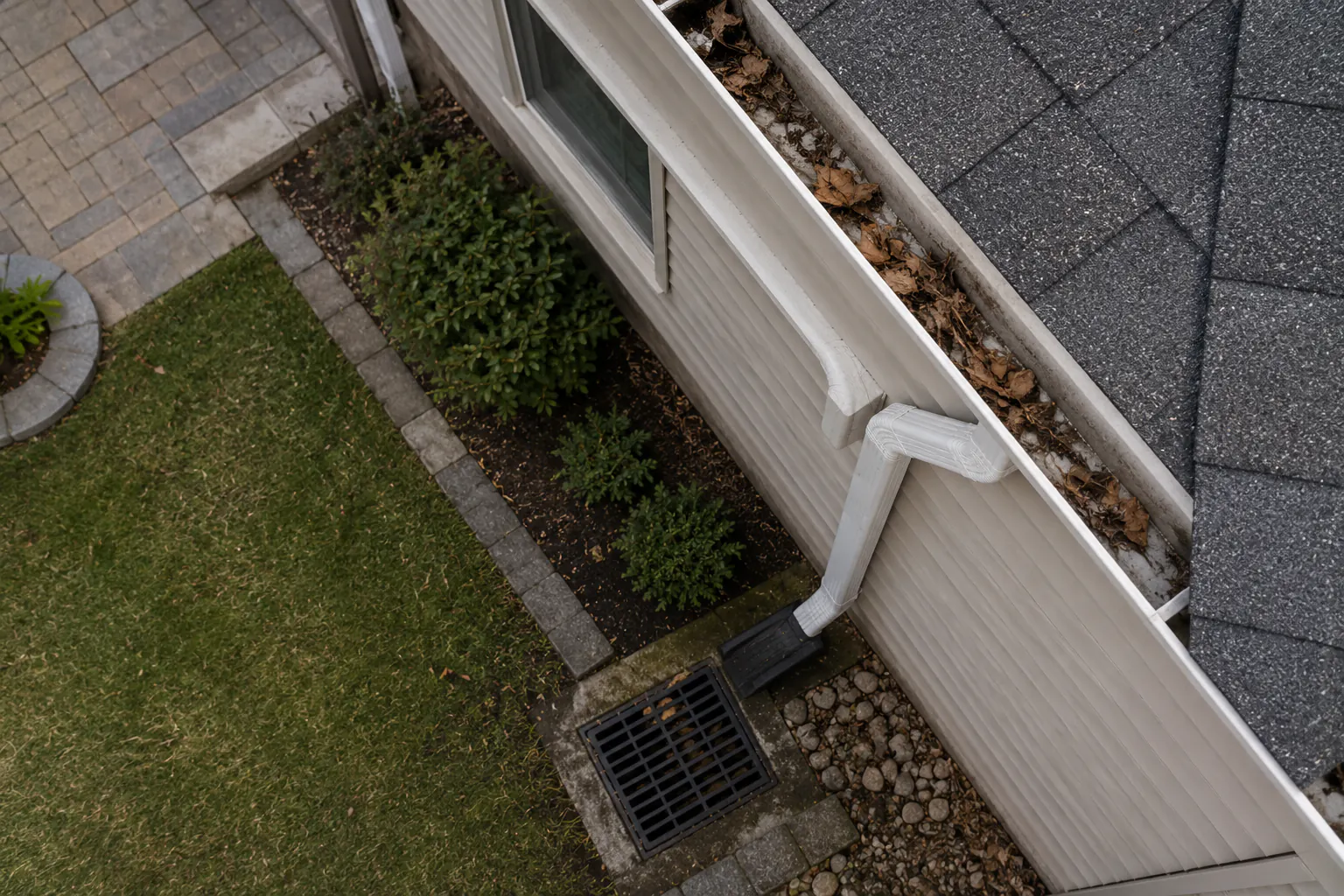
Look for visible sagging, separation, missing sections, overflowing history, debris at safely reachable ground outlets, and discharge toward the foundation. FEMA and Ready.gov advise maintaining gutters, downspouts, drains, and runoff paths.
Clean only ground-level debris that is dry, ordinary, safely reachable, and permitted — no climbing, reaching from a window, pulling on a downspout, disturbing sharp material, or working beneath unstable branches. Redirected water has owners too: it does not go onto a neighbor, sidewalk, slope, septic area, utility, or public drainage system without authority.
Ground drainage
Record ponding, erosion, soil settlement, blocked surface drains, debris lines, window wells, below-grade doors, basement stairs, and runoff flowing toward the building. Observe a normal rain from a safe indoor location when possible; do not enter flowing water.
Grading, swales, drains, foundation systems, flood openings, and retaining conditions require property-specific design. Permanent changes may shift water to another structure or violate permits.
Doors and windows
From stable ground and the interior, look for failed visible sealant, loose trim, damaged screens, shutters, storm panels, canopies, wells, and signs of previous entry. Confirm normal closing, locking, and escape operation.
Caulk earns its place only on a dry, stable, understood joint — never over active moisture, unknown drainage features, or a moving joint. Storm panels go up only when pre-fitted and approved; last-minute drilling near glass, wiring, masonry, or hidden services is outside this checklist.
Exterior equipment and utilities
Observe service equipment, HVAC units, generators, tanks, meters, well components, sump discharge, and vents only from the normal safe distance. Record loose covers, debris exposure, flood vulnerability, or impact risk.
Utility and fuel equipment stays exactly as the utility, manufacturer, code, and qualified installer left it — not moved, elevated, covered, disconnected, anchored, or sealed by the household. And never operate a generator indoors or near doors, windows, or vents.
Use a priority table
| Finding | Before the storm | During active weather |
|---|---|---|
| Downed or threatened utility line | Stay away and report to utility or 911 | Keep everyone away and follow instructions |
| Unstable tree or hanging limb | Use qualified arborist if lead time permits | Shelter or evacuate as directed; do not approach |
| Roof, facade, or upper gutter damage | Schedule qualified exterior inspection | Stay away from affected side and report active damage |
| Blocked ground drain or ordinary loose debris | Clear only if dry, permitted, stable, and safely reachable | Do not enter water or lightning exposure |
| Water path toward foundation | Document and use qualified drainage guidance | Protect life, follow flood plan, do not build improvised barriers in moving water |
| Window or door entry history | Document and arrange qualified repair | Move away from glass and electricity; contain only when safe |
| Sump or backflow concern | Use current plumbing and equipment service plan | Do not improvise or enter contaminated water |
| Exit obstruction | Clear ordinary movable contents immediately | Preserve escape and follow emergency plan |
Avoid emergency caulking
Sealant needs a compatible joint, dry prepared surface, suitable temperature, correct movement capacity, and an assembly that still drains. Applying it shortly before rain may not cure, may conceal a defect, and may block water inside.
Do not caulk:
- roof or facade joints from a ladder;
- window or door weeps and drainage openings;
- gaps around fuel-burning appliance vents, chimneys, or combustion air;
- electrical service entries or equipment;
- flood vents, foundation drainage, or unknown openings;
- moving, wet, dirty, icy, cracked, or structurally damaged material.
Use the water-intrusion warning guide to preserve evidence and route the repair.
Give renters and apartment residents a building route
Renters should not access roofs, exterior walls, common drains, utility rooms, balconies under restriction, or locked maintenance spaces. Report:
- exact location and unit side;
- photo from a safe position;
- prior water or drainage history;
- current forecast and urgency;
- electrical, accessibility, or exit impact;
- whether an after-hours response is needed.
Ask where to shelter, how common-area alerts work, who secures exterior components, and how to report active water. Keep corridors, stairs, doors, and windows in the building fire plan clear.
Transition to the hazard plan
When the stop time arrives:
- bring permitted loose ground-level items inside only while conditions remain safe;
- close and lock doors and windows normally;
- move away from glass as current hazard guidance directs;
- keep alerts, communication, lighting, medication, and evacuation supplies ready;
- shut off utilities only when current authorities direct and the identified normal control is safely accessible;
- never use a generator, grill, or combustion device indoors;
- follow evacuation orders immediately.
Use the hurricane hub, flood hub, or winter-storm hub for the full scenario.
Inspect after official clearance
After the event, wait for official clearance and daylight. Check first for downed lines, gas odor, structure, glass, trees, floodwater, sewage, and fire. Do not assume a dry interior means the exterior is safe.
Compare before and after photos from the same safe positions. Record water paths, debris lines, displacement, and operation. Use qualified inspection for roofs, facades, upper stories, structure, utilities, contamination, and concealed water.
The moisture-control guide explains the urgency of source control and drying without overriding reentry, electricity, contamination, and structural limits.
Sources reviewed
- Federal Emergency Management Agency: Protect Your Home from Flooding; Urban Flooding Guidance for Homeowners and Renters
- Ready.gov: Floods; Low and No Cost Preparedness
- U.S. Department of Energy: Moisture Control
Sources reviewed July 14, 2026. Current official alerts, evacuation instructions, utilities, property authority, permits, and qualified arborist, roofing, drainage, building-envelope, structural, electrical, and plumbing professionals control actual action.