
The most important winter driving tool is the decision not to drive. A shovel, blanket, tow strap, or all-wheel-drive system cannot restore visibility, reopen a closed road, stop another vehicle on ice, or guarantee rescue.
The vehicle and transportation resilience hub connects this winter plan with preventive checks, alternate transportation, EV outages, and general roadside stop rules.
A winter car plan combines maintenance, an early no-drive decision and suitable supplies for visibility, warmth, communication and individual care needs during a delay. None guarantees safe travel or rescue.
If you are already stopped in dangerous winter conditions, go directly to what to do if stranded. Packing advice comes after immediate safety.
Winter car emergency kit: a quick packing list
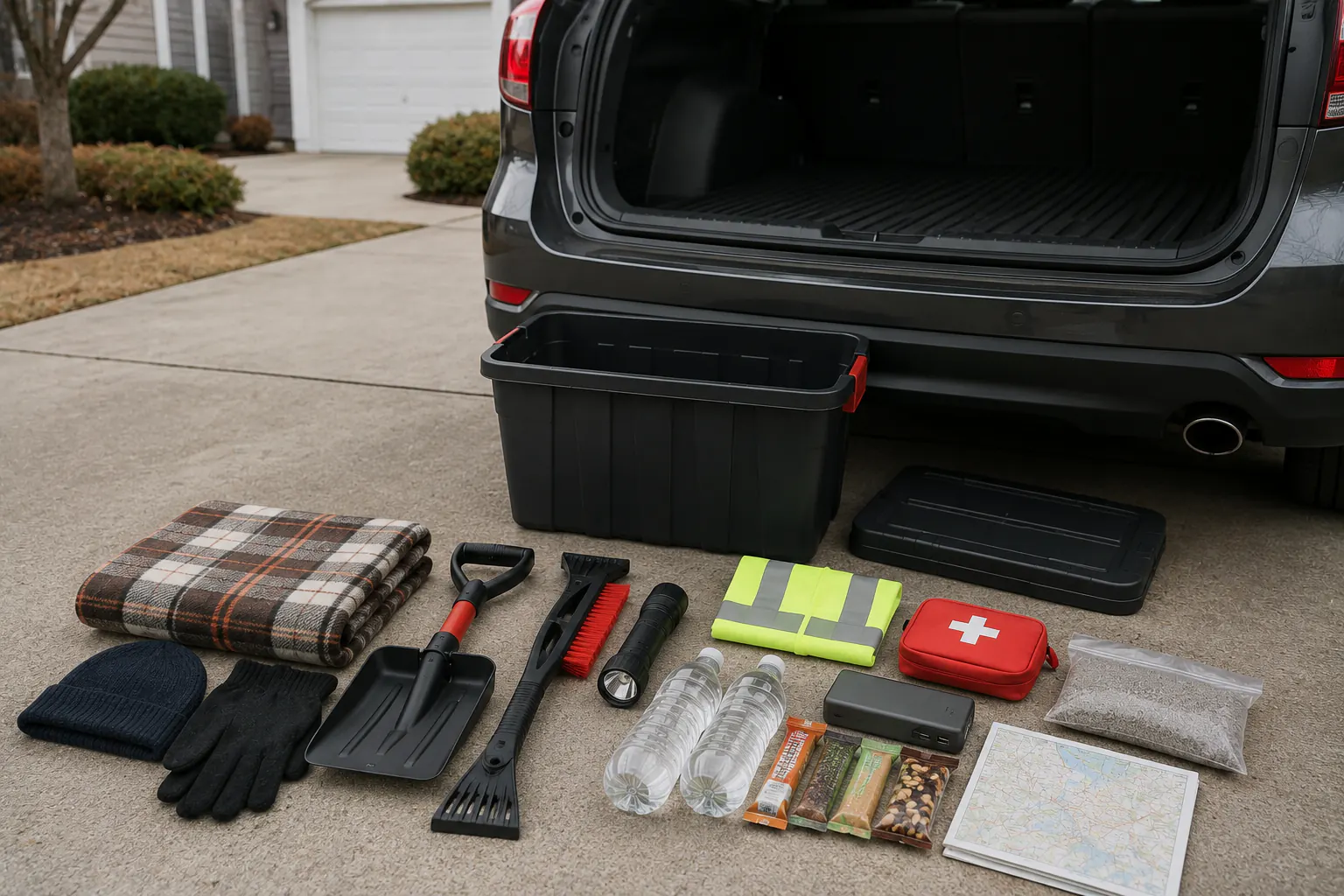
- Phone, compatible charger, charged power bank, and paper contacts.
- Flashlight or headlamp, spare batteries, and suitable warning markers.
- Blankets for every passenger, dry layers, hats, gloves, and suitable footwear.
- Drinking water, familiar shelf-stable food, and individual medication and care supplies.
- First-aid supplies you know how to use.
- Snow shovel, ice scraper, snow brush, and suitable traction material.
- Vehicle-compatible jump-start equipment used only according to its instructions.
NHTSA’s winter driving guidance covers these supply groups. Secure the kit, check temperature-sensitive items, and keep warmth, medication, light, and communication supplies reachable when traveling. The detailed sections below explain fit and limits; a packed kit is not permission to drive on an unsafe road.
Check the current National Weather Service alert, the state or local road authority, 511 where available, and local emergency-management instructions. A navigation app’s estimated arrival time is not evidence that a road is open or safe.
If you are stranded now
- Call 911 for immediate danger, injury, a medical emergency, a vehicle blocking live traffic, downed power lines, fire, or possible carbon monoxide exposure.
- Share the most precise location available: road, direction, mile marker, nearby landmark, coordinates if reliable, vehicle description, occupants, medical needs, and remaining fuel or charge.
- Stay with the vehicle unless emergency authorities direct otherwise or a clearly safe, occupied shelter is immediately reachable without exposure to traffic, poor visibility, deep snow, ice, or severe cold.
- Make the vehicle visible with hazard lights as conditions and battery reserve allow, a bright marker in a window, and the interior light when rescuers are near.
- Put on dry layers, cover the head and extremities, and use blankets without blocking controls or ventilation.
- Monitor occupants for confusion, slurred speech, unusual drowsiness, severe shivering or other concerning cold symptoms; report them to emergency dispatch and follow its instructions.
- Conserve phone battery after sending location and a check-in plan. Keep one device warm and dry.
- Run the engine only as needed and only when the exhaust is clear, the vehicle is outdoors, and official and manufacturer guidance permit it.
NHTSA advises making sure the exhaust pipe is clear of snow and running a stranded vehicle only sporadically, long enough to stay warm. CDC describes limited engine operation with a window opened slightly. Conditions vary. If the exhaust cannot be checked without dangerous exposure, if drifting snow blocks it again, if the vehicle is in an enclosed or partly enclosed place, or if exhaust may enter the cabin, do not run the engine and tell emergency dispatch.
Never sleep with the engine running. Leave for fresh air and call 911 if anyone develops headache, dizziness, weakness, nausea, chest pain, confusion, or unusual sleepiness.
Make a go-or-no-go decision before departure
Ask these questions in order:
- Is the trip necessary?
- Is any part of the route closed, under a warning, or expected to deteriorate before the return?
- Does the driver have experience with the conditions and a properly maintained vehicle?
- Can the destination receive the passengers if arrival is delayed or the route changes?
- Does someone know the route, alternate route, vehicle, passengers, and overdue time?
- Can every passenger remain warm and medically supported for a delay?
- Is there enough fuel or charge for congestion, detour, and reserve?
Delay the trip when visibility, ice, a blizzard warning, an ice storm warning, local direction, or road closure makes travel unsafe. Do not drive around a barricade, pass a closure sign, follow tracks onto a closed road, or rely on four-wheel drive to improve braking.
The winter preparation timeline helps make the cancellation decision before the warning stage.
Prepare the vehicle before winter
Follow the owner’s manual and manufacturer maintenance schedule. NHTSA highlights these systems:
- tires at the vehicle manufacturer’s recommended pressure, checked when cold;
- adequate tread and the tire type appropriate to local conditions and law;
- battery condition and charging system;
- coolant type, level, condition, and leak checks;
- lights, defrosters, heater, wipers, and winter-rated washer fluid;
- brakes and other scheduled maintenance;
- recalls and current registration, insurance, and roadside contacts.
Cold lowers tire pressure and can reduce battery performance. Do not inflate to the maximum molded on the tire sidewall; use the vehicle label or owner’s manual.
Clear snow and ice from windows, mirrors, lights, cameras, sensors, and the entire roof before driving from a safe location. Do not climb onto the vehicle or use hot water on glass.
Keep a gasoline vehicle’s tank near full when practical. Keep an EV or hybrid charged with reserve for cold-weather energy use and delay. Precondition while connected when the manufacturer recommends it, but do not assume the displayed range is guaranteed in cold, wind, snow, or detours.
Build the kit by function
Visibility and communication
- charged phone and vehicle charger;
- backup power bank kept within its temperature limits;
- flashlight or headlamp with spare batteries;
- reflective vest and warning markers used only when it is safe to exit;
- bright cloth or help sign for a window;
- paper contact list and road map;
- whistle.
Keep the readable regional road map you already have with the paper contacts if it covers the travel area. A road atlas is another printed reference when that coverage is missing or unsuitable. Consult it before travel or while safely parked; a road printed on a page is not proof that it is open, safe or permitted.
Rand McNally’s standard 2027 Road Atlas is one English paperback, ISBN 9780528029486, published in April 2026. It is not live navigation or rescue guidance. Check the exact edition and the publisher’s seller guidance, which specifies Amazon.com as both shipper and seller. No map accuracy, distance, arrival-time, legibility, storage fit or weather-protection result is established here. Keep current road-authority instructions separate and never use the book as a reason to drive, delay help or enter traffic to retrieve it.
View Rand McNally atlas on Amazon(opens in a new tab)Road flares create fire and handling risks. Choose warning devices appropriate to the vehicle, occupants, local law, and roadside environment, and learn their placement in dry weather.
Warmth and exposure
- a blanket or sleeping bag for each occupant;
- dry base layers, socks, gloves or mittens, hat, and water-resistant outerwear;
- insulated footwear sized for the user;
- hand warmers used according to instructions and kept away from infants, damaged skin, and people with reduced sensation;
- a waterproof bag for wet clothing.
Do not use candles, charcoal, camp stoves, fuel-burning heaters, or improvised flames inside a vehicle.
Traction and vehicle access
- snow shovel sized for the vehicle and user;
- ice scraper and snow brush;
- abrasive material such as sand or traction product;
- tire chains or cables only where legal, compatible, and practiced according to the vehicle and product instructions;
- jumper cables or an approved jump pack used according to vehicle instructions;
- basic tool kit and manufacturer-specified tow point information.
A tow rope is not automatically safe. Vehicle weight, attachment points, dynamic loads, traffic, and recovery method matter. Use trained roadside recovery rather than attaching to bumpers, suspension, or unknown points.
Health and waiting
- first-aid kit matched to actual training;
- necessary medication and a written medical summary;
- water in containers that tolerate vehicle temperatures and are rotated;
- shelf-stable food that passengers can safely eat;
- infant, disability, hygiene, and service-animal needs;
- tissues, waste bags, and hand-cleaning supplies.
Do not leave temperature-sensitive medication or medical-device batteries in a vehicle beyond their labeled conditions. The winter plan for medically vulnerable households covers transport and backup questions.
Package and inspect the kit
Secure equipment so it cannot become a projectile during a crash. Keep the most important warmth, medication, light, and communication items in the passenger compartment when travel begins; a blocked or damaged trunk may become inaccessible.
Label modules and inspect them at the start of the season and before long trips:
- battery charge and corrosion;
- food, water, medicine, and hand-warmer dates;
- clothing sizes for growing children;
- flashlight function;
- shovel and scraper condition;
- chain compatibility and instructions;
- emergency contacts and insurance;
- missing items after prior use.
Do not store fuel, loose propane cylinders, or unapproved combustion equipment in the passenger compartment.
If the vehicle becomes stuck but is not stranded remotely
Stop spinning the tires; it can dig the vehicle deeper and overheat components. Check the surroundings before anyone exits. Traffic, a shoulder drop, moving water, a downed line, unstable snow, or poor visibility may make remaining inside safer.
Use the vehicle instructions for traction control and recovery. Clear only enough snow to expose the driven wheels and exhaust when this can be done without overexertion or traffic exposure. Place traction material, make gentle attempts, and stop before equipment damage or exhaustion.
Do not crawl under a vehicle supported by snow or a jack. Do not stand between vehicles during towing. Call trained roadside assistance when the recovery path, attachment, traffic control, or ground is uncertain.
Manage cold and time while waiting
Tell dispatch or the family contact when conditions change. Huddle while preserving breathing space and seat-belt access. Move arms and legs gently without sweating or exhausting anyone. Replace wet clothing.
Ration battery use, but do not ration essential medication against clinical instructions. Keep the phone and batteries away from direct heater output and extreme cold.
Do not eat unmelted snow. It lowers body temperature and may contain contaminants. Stored water is the primary plan.
Use the family communication plan for short messages, an overdue trigger, and one out-of-area coordinator. Avoid sending multiple vehicles to search without coordination; this can create more stranded people.
Compare useful components, not item counts
Look for identified components, vehicle fit, temperature limits, accessible packaging, maintenance and replacement instructions. A large item count does not show that the supplies work for your passengers or conditions.
Preassembled kits often need vehicle-, climate-, passenger-, and medication-specific additions. This guide identifies functions, not products we claim to have tested.
Sources reviewed
- National Highway Traffic Safety Administration: Winter Weather Driving Tips
- National Weather Service: Before a Winter Storm
- National Weather Service: Winter Weather Warnings, Watches and Advisories
- CDC: Preparing for and Staying Safe During a Winter Storm
Sources reviewed July 14, 2026.
October 11, 2026 follow-up: the quick packing list was checked against NHTSA winter driving guidance. The broader source-review date above is retained.
The Streamlight 66318 example uses the manufacturer and exact Amazon identity check recorded October 11, 2026; its bounded dry reading-light placement was reviewed October 12. No cold-weather, vehicle-storage, signal or runtime test was performed, and the example does not approve travel or recovery work.
The publisher’s current standard 2027 atlas record, seller notice and exact new paperback listing were checked October 13, 2026. SKU/ISBN-10 0528029487 and ISBN-13 9780528029486 agree; the publisher labels the book barcode as UPC, but no twelve-digit UPC is invented here. Dimensions differ across sources and do not establish a fitted storage location. QR extras require a connected device and are not part of this nonpowered reference. I have not assessed the atlas’s map accuracy or routes.