
Move people away from spreading water, wet electrical equipment, hot discharge, and sagging or damaged material. Leave and call emergency services for immediate danger. Use only a previously identified, authorized shutoff reached from dry safe footing; otherwise call the utility or building emergency line. Do not begin repairing the pipe or collecting photographs first.
Use the emergency plumbing basics hub to prepare contacts and controls before this happens.
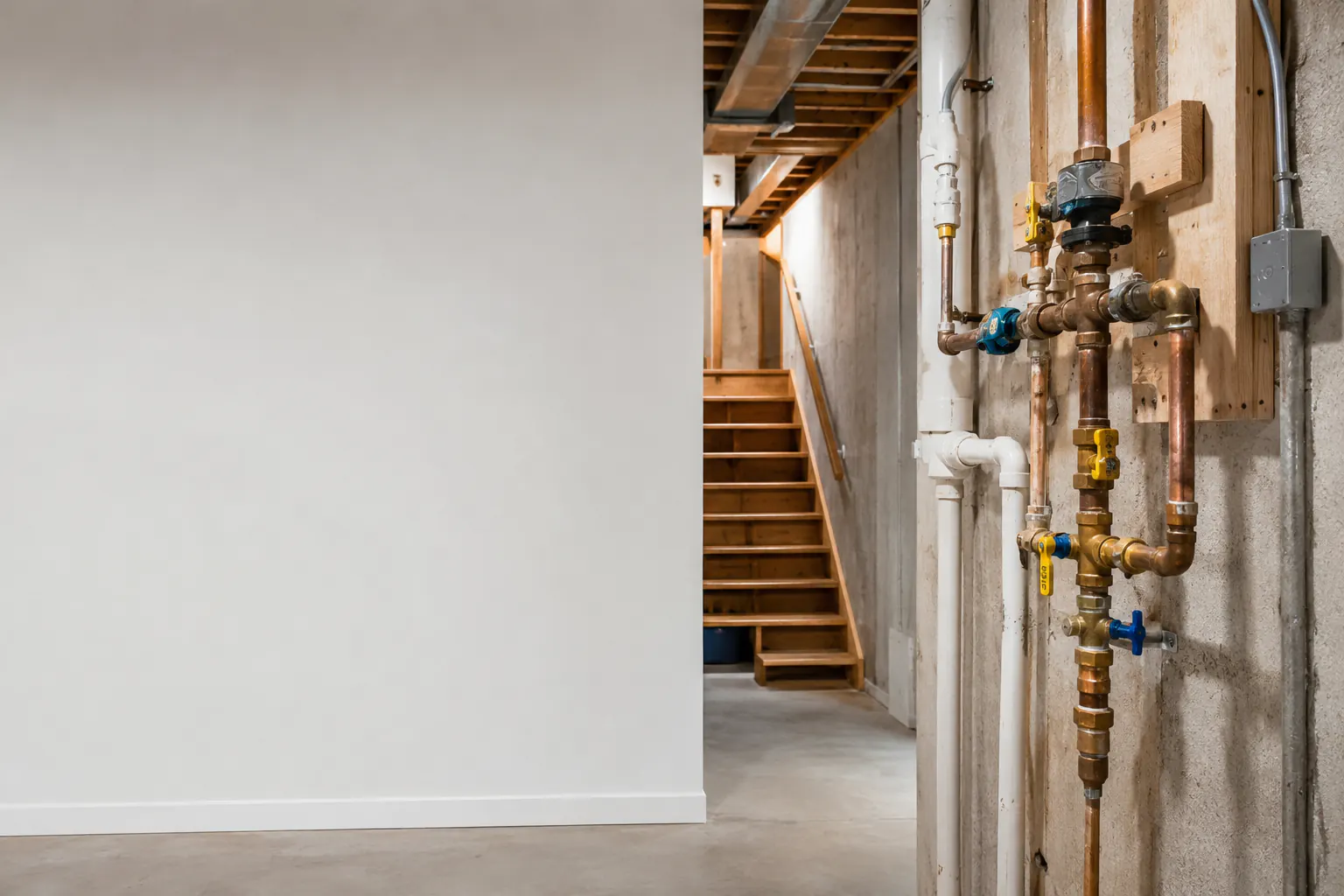
First: protect people
- Move everyone away from the water path, the room below, and any sagging ceiling or damaged finish.
- Do not touch water, wet surfaces, appliances, outlets, switches, panels, heating equipment, elevators, pumps, or batteries.
- Leave and call 911 for active electrical danger, fire, smoke, gas odor, structural movement, falling material, scalding water, steam, entrapment, or rapid flooding.
- Keep children, pets, neighbors, and bystanders out.
- In a multi-unit building, alert emergency maintenance and occupants who may be affected without entering unsafe areas.
Do not stand under a water-filled ceiling or puncture it. Do not turn on lights in a wet room. Do not pull an appliance, climb into an attic, or enter a crawlspace to find the source.
Determine whether this is a customer water line
From a dry safe location, note whether water appears clear, hot, discolored, odorous, or contaminated and whether it changes with a fixture. A rupture may involve:
- a cold or hot household supply;
- a fixture connector or appliance hose;
- a boiler or hydronic heating loop;
- a fire-sprinkler system;
- a well or pressure system;
- a service line before the customer valve;
- a roof, drain, sewer, or neighboring unit rather than a supply pipe.
Do not operate controls until the system is identified. Fire sprinklers, boilers, wells, public mains, and shared risers require specialized response.
Stop flow only through a verified safe valve
If the rupture is a known household supply and the route is dry, use the documented main water shutoff or a verified fixture valve. Apply only the normal documented motion.
Stop and call the utility or manager when the valve is stuck, leaking, corroded, frozen, unsupported, inaccessible, utility-owned, shared, or ineffective. Do not use a longer wrench, hammer, heat, penetrating oil, or improvised curb key.
Seattle Public Utilities instructs customers with a broken pipe to close the main shutoff and call for utility help when it cannot be operated. That does not mean every customer may operate every meter valve. The local utility decides.
Do not shut a fire-sprinkler control. Do not manipulate electrical breakers from a wet location. A licensed electrician or emergency responder must address wet electrical systems.
Make the calls in parallel
If another trusted adult is available, one can call while the other keeps people away. If you are alone, reach a safe place and make the urgent call first; a second person is not required:
- 911 for immediate life, fire, electrical, structural, or rapid-flood danger;
- landlord or building emergency maintenance for any rental or multi-unit event;
- water utility for a meter, service line, public main, or failed customer shutoff;
- licensed plumber for the broken household line;
- fire-sprinkler contractor for a suppression system;
- well contractor for pump and pressure equipment;
- insurer or property owner for documentation and mitigation instructions;
- qualified restoration provider for widespread, concealed, or contaminated water.
Give the address, unit, floor, visible source, water rate and temperature, shutoff status, electrical or structural concerns, and who remains in the building.
Limit clean-water spread without exposure
After flow stops and authorities confirm the area can be approached, move dry portable contents away. Use stable containers or absorbent materials for a small residual drip. Monitor the room below.
Do not:
- use a household vacuum that is not designed and safely powered for water;
- run extension cords through wet areas;
- remove wet drywall, insulation, flooring, cabinets, or ceiling material during the emergency;
- clamp, tape, heat, solder, glue, or pressurize a broken line as an experiment;
- direct water into a wall, floor opening, electrical route, or questionable drain;
- restart the supply to test an improvised patch.
Use stored water from the emergency water guide while the supply is isolated. Follow public-health advice after pressure loss or repair.
Record the incident before cleanup changes it
From outside the hazard area, photograph the source area, water path, affected rooms, damaged property, meter or alert, and shutoff position. Record:
- discovery time and estimated duration;
- weather, outage, freeze, renovation, appliance cycle, or pressure event;
- every valve and control operated;
- calls, names, case numbers, and instructions;
- rooms, units, electrical equipment, and contents affected;
- temporary mitigation authorized by a professional;
- when water stopped and drying began.
Ask the insurer before discarding failed pipe, connectors, valves, appliances, or damaged contents when keeping them does not create a health hazard. Preserve receipts and professional reports.
Treat hot water, sewage, and fire systems differently
Hot-water and hydronic ruptures may involve scalding temperatures, stored energy, fuel-fired or electrical equipment, pressure controls, and steam. Leave and use qualified service.
A drain or sewer rupture is contaminated. Keep people away and follow public-health remediation. Do not use the clean-water containment plan for sewage.
A fire-sprinkler release affects life-safety protection and may require fire-department or alarm-system coordination. Do not close, restore, or modify it as household plumbing.
Dry quickly, but only after safety clearance
CDC recommends cleaning and drying wet materials within 24 to 48 hours when possible to reduce mold growth. Contact qualified mitigation early when water entered walls, ceilings, insulation, flooring, cabinets, HVAC, electrical assemblies, or another unit.
The visible surface may dry while an enclosed assembly remains wet. Moisture readings and thermal images require context; they do not prove that material is dry, uncontaminated, or structurally sound.
Children and people with asthma, allergies, chronic lung disease, or weakened immune systems should not participate in mold or disaster cleanup. Do not aim fans into suspected mold, contaminated dust, or unsafe electrical areas.
Repair the cause, not only the opening
Ask the licensed plumber to document pipe material, failure location, likely cause, pressure observations, affected fittings, and recommended scope. Freeze, movement, corrosion, water hammer, excessive pressure, incompatible materials, installation error, appliance failure, and construction damage require different corrections.
Have electrical, structural, fire-protection, appliance, boiler, well, and remediation specialists assess their systems as needed. A plumber’s repair does not automatically release a wet panel or damaged ceiling.
Restore water in a controlled sequence
Do not reopen the valve until the responsible professionals authorize it and dependent equipment is ready. Confirm that open fixtures, water heaters, boilers, filters, softeners, irrigation, well systems, and appliances are in the required state.
Restore pressure as directed while someone watches accessible repaired and adjacent areas. Stop for leaks, abnormal sound, movement, discoloration, or pressure problems. Follow utility instructions for flushing and drinking-water advisories.
Update the household map, label the correct valve, repair access problems, and add leak detection only for a defined failure mode. Review the frozen-pipe plan if cold contributed.
Apartment boundaries
Renters should not enter locked service areas, operate shared risers, open ceilings, or authorize destructive work without the property process. Report in writing, preserve evidence, and request the incident and drying plan.
If the unit is unsafe or lacks essential water, heat, sanitation, or electrical service, use the relocation plan and contact local housing or emergency authorities. Rights and obligations vary by jurisdiction; this guide is not legal advice.
Sources reviewed
- Seattle Public Utilities: Frozen Pipes
- Portland Water Bureau: Prepare Plumbing for Winter Weather
- CDC: Mold Cleanup and Natural-Disaster Re-entry Guidance
Sources reviewed July 14, 2026. Emergency responders, utilities, building authority, code, lease, insurer, and qualified plumbing, electrical, structural, fire-protection, and restoration professionals control the actual response.