
A hidden leak rarely announces its exact pipe and fitting. It may appear as an unusual bill, intermittent meter movement, a stain that changes after fixture use, a musty odor, damaged flooring, peeling finish, reduced pressure, or water in a room below the source.
The safe objective is to build a pattern strong enough for a qualified diagnosis without cutting blindly into the building. Start with the emergency plumbing basics hub so the shutoff and contacts are ready before investigation.
Escalate immediately for danger
Keep people away and call 911 or the responsible utility when water is touching electrical equipment, entering a panel or outlet, threatening an elevator, moving rapidly, or accompanying smoke, gas odor, sparking, structural movement, or a collapsing ceiling.
Do not puncture a bulging ceiling. It may hold water and weakened material near wiring. Do not stand below it, place a ladder under it, or energize the room to improve lighting.
Treat sewage odor, drain backup, floodwater, chemical odor, oily water, and water from an unknown source as potentially contaminated. The sewage-backup stop rules apply.
Compare observations, not one dramatic clue
One sign may have several causes. Condensation can wet a cold pipe; roof or window entry can stain a wall; seasonal irrigation can raise a bill; HVAC condensate can appear near plumbing; and a neighboring unit can be the source in a multi-family building.
Use the condensation-or-leak framework to organize timing, humidity, weather, and location without opening the building. For rain around an opening, the window-and-door water-intrusion guide preserves drainage and evidence before cosmetic sealing.
Look for combinations:
| Observation | Possible category | What it does not prove |
|---|---|---|
| Meter changes while planned use is off | supply leak or unrecorded use | exact location or ownership |
| Higher bill than comparable period | leak, irrigation, occupancy, rate, or meter issue | that a pipe is broken |
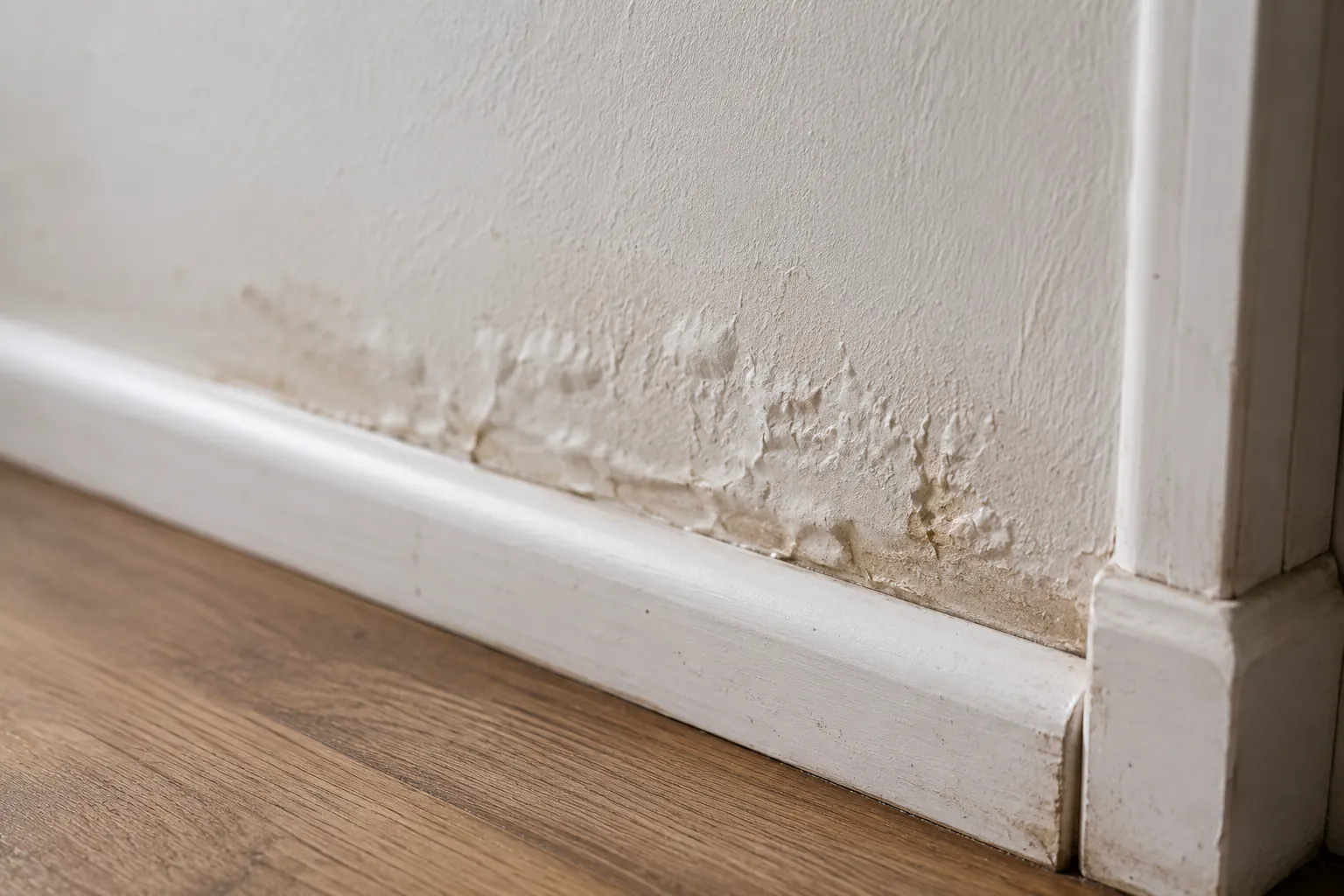
| Stain grows after shower or laundry | supply, drain, seal, appliance, or ventilation issue | which component failed |
| Musty odor and finish damage | persistent moisture and possible microbial growth | source or species |
| Sound of flow when fixtures are idle | water movement, appliance cycle, or building system | customer-side leak |
| Warm floor or wall | hot-water line, heating system, sunlight, or appliance | safe access or repair method |
| Reduced pressure | utility issue, valve, fixture, filter, pump, regulator, or leak | that more pressure is needed |
Avoid “diagnosing” from color alone. Rust, minerals, paint, wood extractives, dirt, and microbial growth can look similar in a photograph.
Establish a normal water-use baseline
EPA WaterSense recommends comparing bills to the same period in prior years and checking meters during a period when no water is being used. The local utility’s reading method controls because meters and customer access differ.
Record a weekly or monthly baseline:
- utility billing units and total use;
- occupancy, guests, irrigation, pool, humidifier, and seasonal changes;
- appliance replacement or maintenance;
- utility alerts and known service work;
- dates of travel or vacancy;
- well pump cycles or treatment-system regeneration where applicable.
A sudden change deserves investigation, but a national gallon threshold is not a diagnosis for every household. Climate, family size, landscaping, meter interval, and building systems vary.
Run a controlled no-use observation
Use the utility’s official instructions. Tell everyone in the household, stop intentional indoor and outdoor use, and account for toilets, ice makers, water treatment, irrigation, humidifiers, boilers, pools, and appliances that may cycle automatically.
Photograph or note the meter display at the beginning and end of the approved interval without entering a pit or removing a cover the utility restricts. If the reading changes, repeat only as the utility advises and contact it or a plumber.
Use the verified main water shutoff only when the local utility or plumber directs an isolation check. If the meter continues after a working customer valve is closed, the location may differ from an interior leak, but that interpretation depends on the service layout. Do not operate the utility valve to test a theory.
Inspect accessible areas without demolition
Use dry stable footing and a battery light. Check visible supply connectors, fixture bases, cabinet floors, appliance pans, water-heater surroundings, filter housings, exposed pipes, ceilings below bathrooms, and prior repair locations.
Document rather than disturb:
- stain outline, date, and size against a ruler;
- moisture appearance before and after normal fixture use;
- paint blistering, swollen trim, lifted flooring, soft finish, or corrosion;
- odor and sound location;
- indoor humidity and weather context;
- whether a utility, roof, HVAC, drain, or appliance event occurred.
Do not press hard on softened ceilings or walls, remove trim, drill inspection holes, peel flooring, open an appliance, or pull a built-in cabinet. Concealed electricity, gas, plumbing, fire protection, and hazardous legacy materials may be present.
Separate fixture checks from building diagnosis
EPA WaterSense provides simple checks for toilets, faucets, and other common fixtures. Follow the fixture manufacturer and utility instructions. A toilet dye check, for example, may identify water moving from tank to bowl; it does not explain water appearing under the floor.
Check one variable at a time and write the result. Do not pour colored products into plumbing, add pressure, block overflows, or run a fixture that is actively damaging material below.
For an appliance, use only its normal controls and manual. Disconnect or move it only when authorized and when electricity, gas, hot water, weight, and hose condition are safe.
Treat mold and long-wet material as separate risk
CDC advises drying wet materials within 24 to 48 hours when possible to reduce mold growth. If an area remained wet or cannot be completely dried in that period, assume professional assessment may be needed.
Do not paint or caulk over visible growth or a wet stain. Do not aim a fan into suspected mold or contaminated dust. Children and people with asthma, chronic lung disease, allergies, or weakened immune systems should stay away from mold cleanup.
The source must be corrected before cosmetic repair. A moisture meter reading or thermal image can support investigation, but neither automatically identifies water category, hidden damage, mold, or the failed component.
Prepare a useful service call
Give the plumber or building manager:
- address, unit, building type, and access limits;
- first observation and whether the pattern is changing;
- meter and billing records;
- fixture-use timeline;
- photos with dates and scale;
- valve map and prior plumbing work;
- known electrical, structural, hot-water, fire-sprinkler, well, septic, or contamination concerns;
- insurer claim instructions when relevant.
Ask how the provider will locate the source and what destructive access may be required. Obtain owner authorization before opening rented or shared assemblies. Preserve removed material and failed parts when the insurer or professional requests it.
Add detection only for a defined gap
Point moisture alarms can watch a specific floor location. Flow monitors can look for abnormal use patterns. Automatic shutoff systems may limit some supply-water events. None can detect every roof, drain, condensation, appliance, underground, or neighboring-unit problem.
Use the leak-detector comparison framework to define coverage, power, connectivity, maintenance, certification, installation, and fire-sprinkler interaction before purchasing.
An alarm that stays quiet is not evidence that the building is dry. Water may bypass the sensor, remain inside an assembly, occur upstream of the monitor, or develop while power, Wi-Fi, a subscription, or notification delivery is unavailable. Keep visual inspection, billing review, household reporting, and professional diagnosis in the plan.
Sources reviewed
- U.S. EPA WaterSense: Home Maintenance; Fix a Leak Week
- Portland Water Bureau: How to Check for Leaks
- CDC: Mold and Water-Damage Guidance
Sources reviewed July 14, 2026. Current utility procedures, lease and building authority, code, equipment instructions, insurer requirements, and qualified plumbing, electrical, structural, and remediation findings control the actual response.