
A sump pump is the quiet workhorse of a dry basement — and the moment it matters most, a storm, is exactly when the power it depends on is likely to fail. The pump is the easy part; the backup is the real decision. This guide explains how the system works, why the backup matters more than the pump, and how to test it before you need it. It is one branch of the home flood-preparation hub.
First, the safety line that overrides everything: a flooding basement with live electrical circuits is deadly. Standing water and electricity together can electrocute anyone who steps in. If water is rising and you cannot cut power safely from a dry location, stay out and follow the flood watch vs. warning guidance.
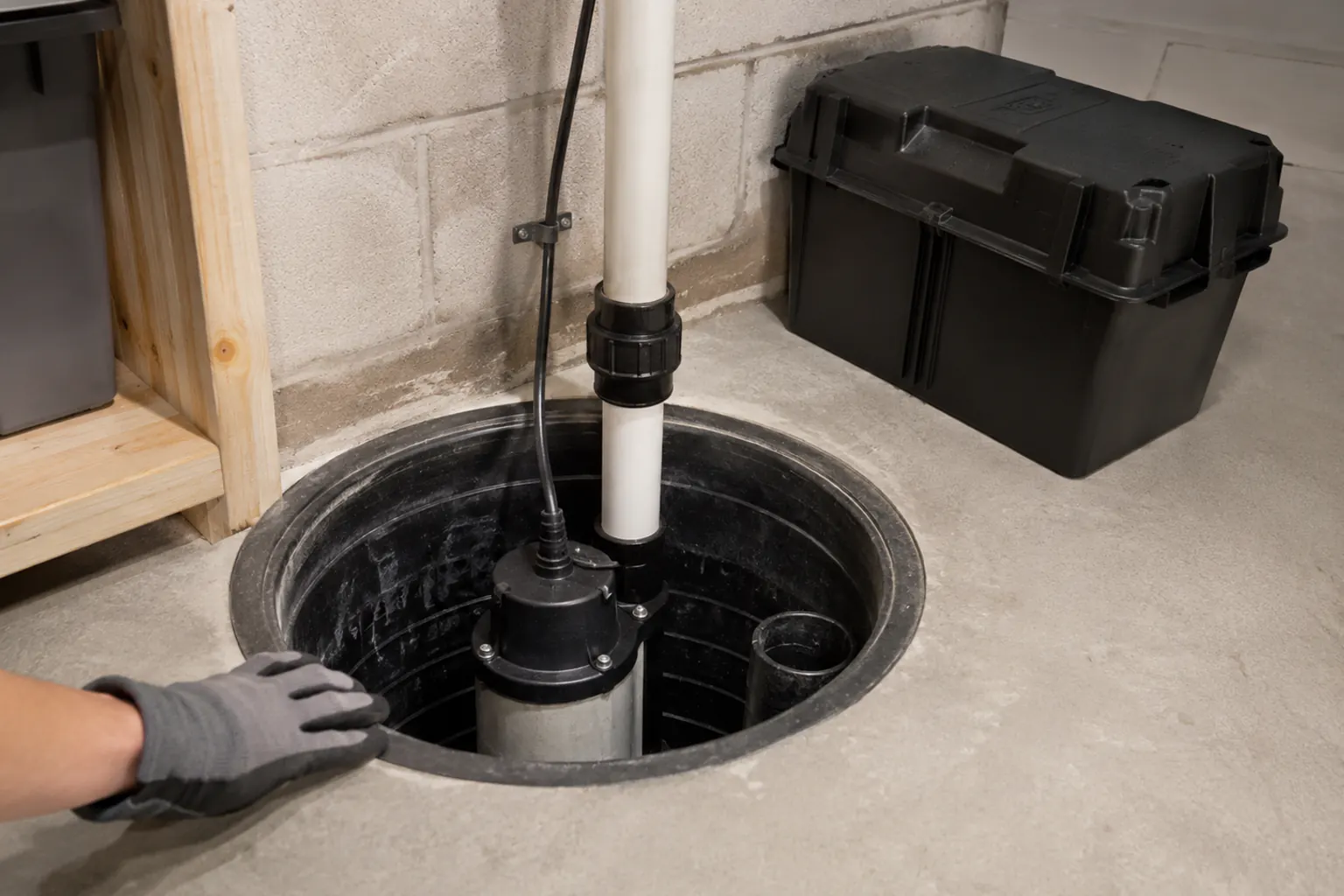
How a sump system works
A sump pump sits in a pit (the sump) at the lowest point of a basement or crawlspace. Groundwater collects in the pit; when it rises, a float switch turns the pump on and it pushes the water out through a discharge pipe away from the foundation.
Two things decide whether it does its job:
- The pump can keep up with the inflow. A heavy storm can overwhelm an undersized pump.
- The pump has power. A primary pump runs on household electricity — which storms routinely knock out.
The backup matters more than the pump
The most common sump failure during a flood is not a broken pump; it is no power. That is why flood-prone homes pair the primary pump with a backup:
- Battery backup pump. A second pump on a dedicated battery takes over when the power (or the primary pump) fails. It runs for a limited number of hours — sized by the battery — so it buys time, not indefinite protection.
- Water-powered backup. In homes with municipal water pressure, a backup that runs on water pressure needs no electricity at all, at the cost of using potable water. Local codes and backflow rules govern whether it is allowed.
- Generator power. A properly sized, correctly connected generator can run the primary pump — but never run a generator indoors or in any enclosed space. Carbon monoxide from a generator kills quickly. (Source: CPSC generator safety.) Generator sizing and safe connection belong to the home backup power guide.
A pump with no backup is a pump that fails in the exact storm you bought it for.
Test the system before the storm, not during it
A sump system is easy to forget until it fails silently. Test it on a schedule, especially before a storm season:
- Pour a bucket of water into the pit until the float rises. The pump should start, remove the water, and shut off.
- Confirm the discharge actually flows outside and away from the foundation — not into a frozen or clogged pipe.
- Check the battery backup (charge level, age; batteries fade in a few years) and trigger it by simulating a power loss if the unit allows.
- Clear the pit of debris that can jam the float.
A quiet pump on test day is worth more than any product feature on the label.
Choosing a sump pump and backup
Where the sump fits in the plan
A sump handles groundwater; it does not stop a river or a sewer backup. When water comes up through drains rather than the pit, that is the sewer backflow and basement intrusion problem, and temporary flood barriers handle water arriving at low openings. Knowing where the main water shutoff is helps you cut an indoor supply-line source without wading into a powered basement. The home flood-preparation hub ties the layers together. Test the backup, keep the discharge clear, and never treat a pump as permission to enter powered water.
Sources reviewed
- Ready.gov: Floods
- EPA: Flooded Homes
- U.S. Consumer Product Safety Commission: Generator safety
- FEMA P-312: Homeowner’s Guide to Retrofitting
Sources reviewed July 29, 2026. Licensed electrical/plumbing work, local codes, CPSC generator safety, and FEMA/EPA flood guidance control real installation and safety decisions.