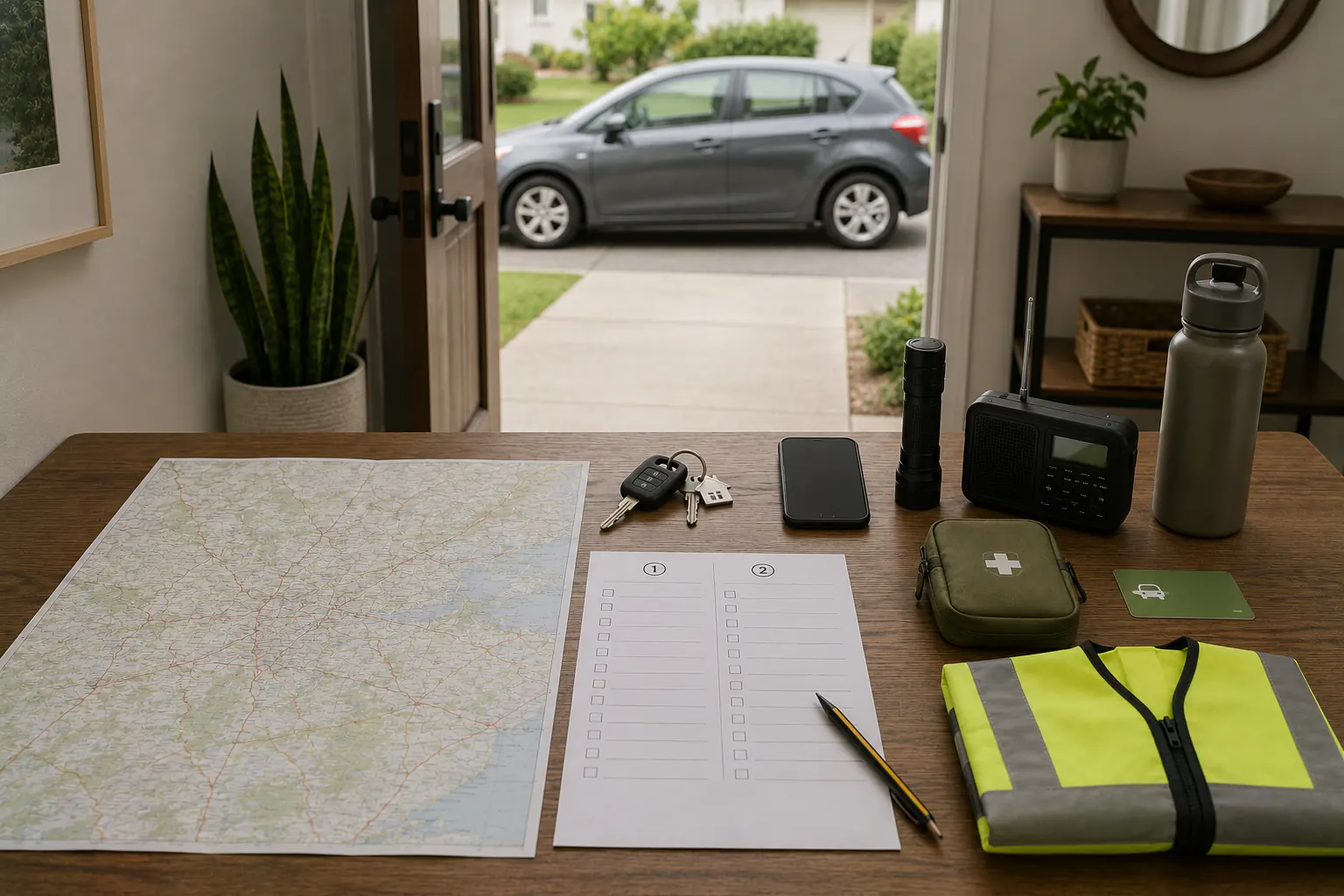
A practical household path for evacuation and disrupted travel: official instructions, documents, a usable go-bag, backup transport, and recovery.
This route organizes ReadyLience resources for planned movement and disrupted travel. It cannot issue an evacuation order, verify a route, identify an open shelter, assess road conditions, or replace current guidance from the responsible authority, carrier, property, clinician, or emergency service.
Mobility and evacuation path
Make the next move less of a scramble
Put the decision, documents, bag, transport fallback, and recovery step in an order the household can use without pretending to know local conditions.
A household can prepare routes, contacts, and bags in advance. When an incident is live, the applicable official instruction, current conditions, and individual access needs control whether to leave or stay.
Keep a private, simple plan for contacts, meeting points, transport limits, pets, mobility needs, and the documents the household would need to carry. Practice locating it, not predicting a future route.
A useful go-bag is personal, reachable, and light enough for the person who may need to move it. Review it around medications, children, pets, work, and mobility rather than copying a maximal list.
Vehicle condition, fuel or charge, a safe route, and a fallback are different parts of the same plan. Households without a car need an equally deliberate alternative, not an afterthought.
A broken trip, closure, or delayed return changes the plan. Preserve charge, contacts, documents, and payment access while you use current information from the organization controlling the route or accommodation.
Restock used supplies, update contacts and access needs, and note the part of the plan that was hard to carry out. The useful lesson is usually a smaller, more reachable correction.