
The plan at home usually assumes your normal phone on your normal network. Travel breaks each of those assumptions in turn: an unfamiliar network, roaming that may or may not be active, a battery that drains faster because the phone is hunting for signal, and people at home who do not know whether silence means “busy” or “something happened.” This is one branch of the travel preparedness hub.
Decide what silence means before you leave
The most useful thing you can do costs nothing: agree in advance on a check-in rhythm and what its absence means.
- A simple pattern — “I’ll message when I land and each evening” — turns a missed message into information rather than alarm.
- Name the person who would act, and what they would do. Usually that is “wait twelve hours, then call the hotel,” not “call the police at midnight.”
- Leave an itinerary with that one person: where you expect to be, and the accommodation’s number.
Your household’s family communication plan already defines out-of-area contacts and check-in roles. Travel does not replace it; it just adds a rhythm and a destination.
Assume the network will be worse than advertised
Coverage maps are marketing. Rural highways, canyons, national parks, and the inside of large buildings all produce dead zones, and a disruption at the destination can congest a network that normally works fine. (Source: FCC, emergency communications.)
Practical hedges, roughly in order of usefulness:
- Text instead of calling when a network is congested. A short message often gets through where a voice call fails, and it queues and retries by itself.
- Download the map before you go. The offline phone maps setup guide covers this properly — GPS keeps working without a signal, but the map has to already be on the device.
- Know the local emergency number. 911 is not universal; 112 works across much of Europe and on many networks worldwide, but confirm for your destination.
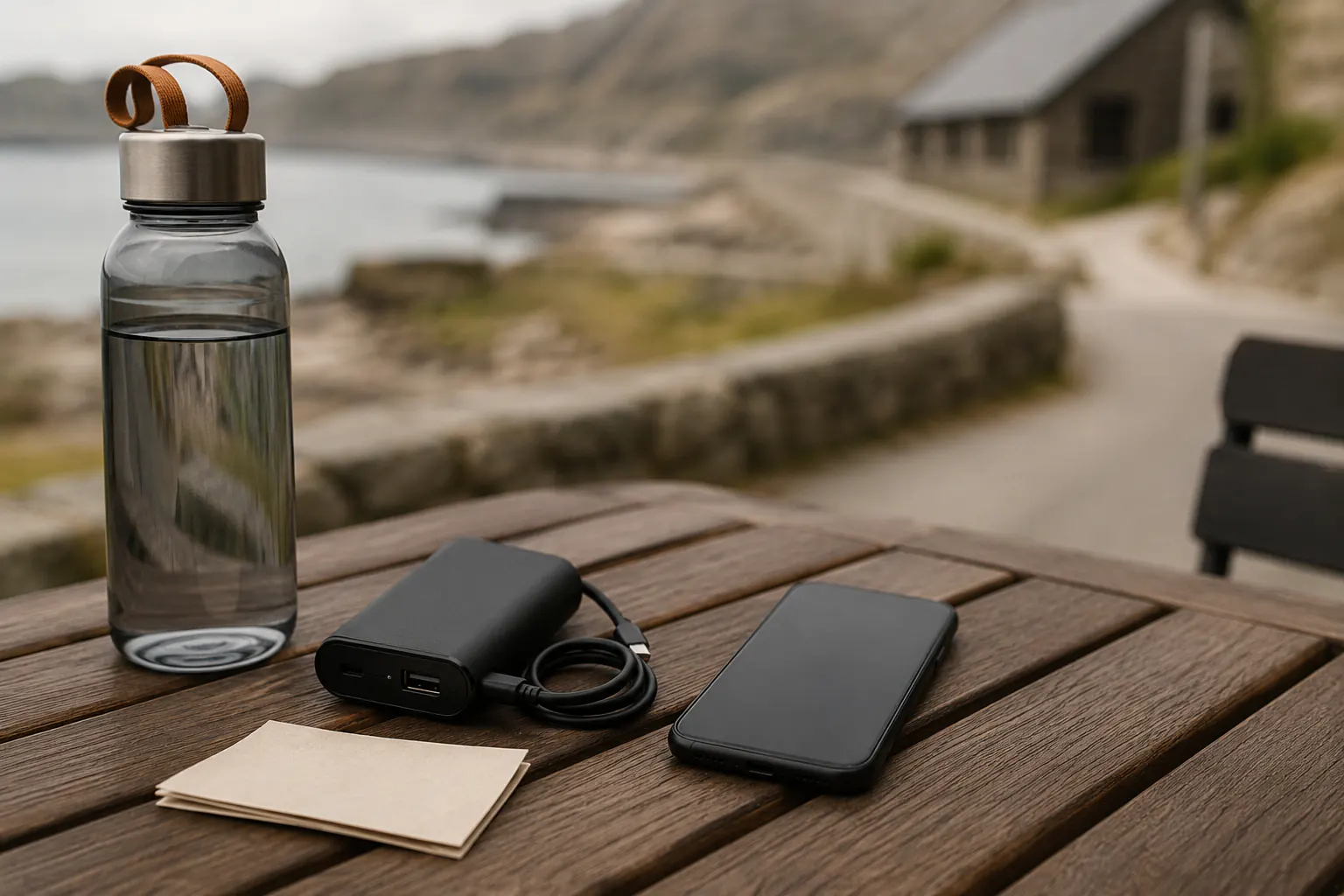
- Carry a way to recharge. A power bank is the difference between a phone that lasts the day and one that dies at the moment it matters.
- Enable emergency alerts at the destination where the option exists — receiving local emergency alerts covers the channels and their failure modes.
International adds two specific problems
- Roaming and eSIM. Sort out how the phone will actually connect before departure, whether that is a roaming plan, a local SIM, or an eSIM. Doing it at the airport on arrival, without connectivity, is a familiar and avoidable frustration.
- Enrollment. For U.S. citizens travelling abroad, the State Department’s Smart Traveler Enrollment Program lets the nearest embassy reach you during a crisis and lets family contact you through official channels. (Source: U.S. Department of State, STEP.)
When you cannot get through
If you cannot reach someone, or they cannot reach you, work outward in this order:
- Try a different channel — text, then a messaging app over Wi-Fi, then email. They fail independently.
- Use the accommodation. A hotel front desk has a landline, an address, and usually staff who know the local situation.
- Use the out-of-area contact. During a regional disruption it is often easier to reach someone far away than someone nearby, and they can relay.
- For a genuine emergency abroad, contact local emergency services and, for U.S. citizens, the nearest embassy or consulate.
If the reason you are out of contact is a cancelled flight or a closed road rather than a network problem, when travel plans break covers what to do with the rest of the day.
The short version
Agree a check-in rhythm and what silence means, download the map, carry a power bank, know the local emergency number, and sort connectivity before departure rather than on arrival. Communication planning is mostly a conversation you have before the trip, not equipment you buy for it.
Sources reviewed
- Federal Communications Commission: Emergency communications
- Ready.gov: Be informed
- U.S. Department of State: Smart Traveler Enrollment Program
- Cybersecurity and Infrastructure Security Agency: Emergency communications
Sources reviewed August 4, 2026. Local emergency services, your carrier, and current State Department destination guidance control real communication decisions.