
Most travel disruption is not dramatic. A storm system closes an airport, a pass shuts for the night, a connection evaporates, and several hundred people simultaneously discover they need somewhere to sleep. The people who come out of it best are not better prepared in equipment terms — they simply act about twenty minutes earlier than everyone else. This is one branch of the travel preparedness hub.
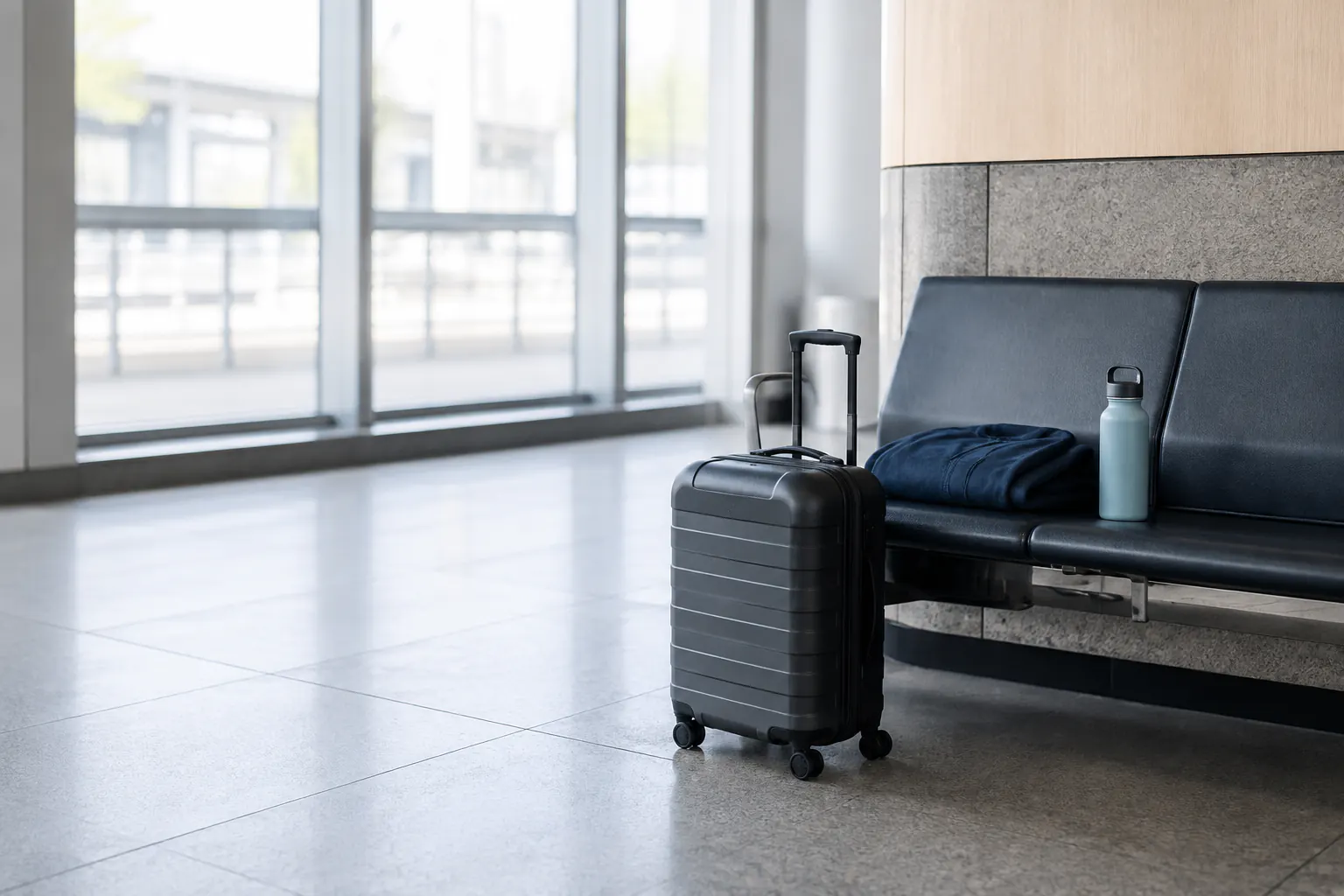
Move first, complain later
Two things are scarce during a disruption: hotel rooms near the airport, and human beings who can rebook you. Both run out on a first-come basis, so the order matters:
- Secure tonight before arguing about tomorrow. A refundable room booked in the first ten minutes is worth more than a better seat assignment negotiated in the second hour.
- Rebook through more than one channel at once. The app, the airline’s phone line, and the desk queue all move at different speeds; work them in parallel rather than committing to the longest one.
- Then sort out entitlements. Compensation, refunds, and hotel vouchers are worth pursuing, but they are a paperwork problem, not a tonight problem. The Department of Transportation publishes what U.S. airlines actually owe passengers and what each has committed to. (Source: U.S. DOT, flight delays and cancellations.)
Know what your ticket and your card already cover
Before spending your own money, check what is already yours:
- Airline obligations differ sharply between a cancellation the airline caused and weather. The DOT dashboard is the current, authoritative summary for U.S. carriers.
- Travel insurance or card benefits. Many credit cards include trip-delay or trip-interruption cover when the trip was paid with that card — often forgotten precisely when it applies.
- Keep every receipt from the moment things go wrong. Reimbursement almost always requires them, and gathering them later is much harder.
On the road, the closure is the plan
For driving, the equivalent decision is whether to stop early. Winter storms and wildfire closures both tend to produce the same sequence: an advisory, then a closure, then a queue of vehicles with nowhere to go.
- Stop while you still have a choice of where to stop. A town with fuel, food, and rooms beats a shoulder forty miles later.
- Never drive around a closure or barricade. It marks a road authorities have judged unsafe, and in flooding it is the single most preventable cause of death — see turn around, don’t drown.
- Check the state DOT source, not social media, for current road status. Conditions change faster than reposts.
- A vehicle that has been checked before the trip has far fewer ways to complicate this — preventive vehicle checks before severe weather covers that beforehand.
If stopping means genuinely nowhere to stay, the narrow case of sleeping in the vehicle is covered honestly in the vehicle as temporary shelter, including the risks that make it a last resort rather than a plan.
The things that make a stranded night ordinary
None of this is survival equipment. It is the short list that repeatedly turns an unpleasant night into a boring one:
- A charged power bank, because everything else depends on the phone.
- Water and something to eat that does not require a shop being open.
- Warm layers, kept in the cabin rather than the boot, particularly in winter.
- Your medication, per medication and health on the road.
- A payment method that fails differently from your main card, per travel documents and payment backups.
Tell someone
A delay becomes a worry the moment nobody knows where you are. One message — where you are, that you are fine, when you will next check in — costs nothing and prevents a search. Staying reachable while traveling covers the rhythm.
The short version
Book somewhere to sleep before you join the queue, work several rebooking channels at once, keep receipts, stop driving while you still have options, and message the person who would otherwise worry. Entitlements can be sorted out tomorrow; tonight is a logistics problem.
Sources reviewed
- U.S. Department of Transportation: Flight delays and cancellations
- Ready.gov: Winter weather
- Federal Highway Administration: Traffic and road conditions
- Ready.gov: Severe weather
Sources reviewed August 4, 2026. Your carrier’s own commitments, current DOT rules, and local road and weather authorities control real rebooking and travel decisions.