
Occasionally the honest answer to “where do I sleep tonight” is the car: a closed pass with no rooms left, a storm that ends the day early, a queue that is not moving. It happens, and pretending otherwise helps nobody. But a vehicle is also one of the classic places people die of carbon monoxide poisoning and cold, and both kill quietly. This is one branch of the travel preparedness hub, and it is deliberately a set of stop rules rather than a how-to.
This is a last resort for one night, not accommodation and not a plan. If a room, a shelter, a service station, or a friend’s floor is available, take it — when travel plans break covers finding one before the queue forms.
The rule that matters most: exhaust and snow
Carbon monoxide is colourless, odourless, and gives you symptoms that feel like being tired — which is exactly the wrong signal when you are trying to sleep. (Sources: CDC, carbon monoxide; CPSC.) In a stationary vehicle the danger is specific and well documented:
- Never run the engine in an enclosed space — a garage, a covered structure, anywhere air does not move freely.
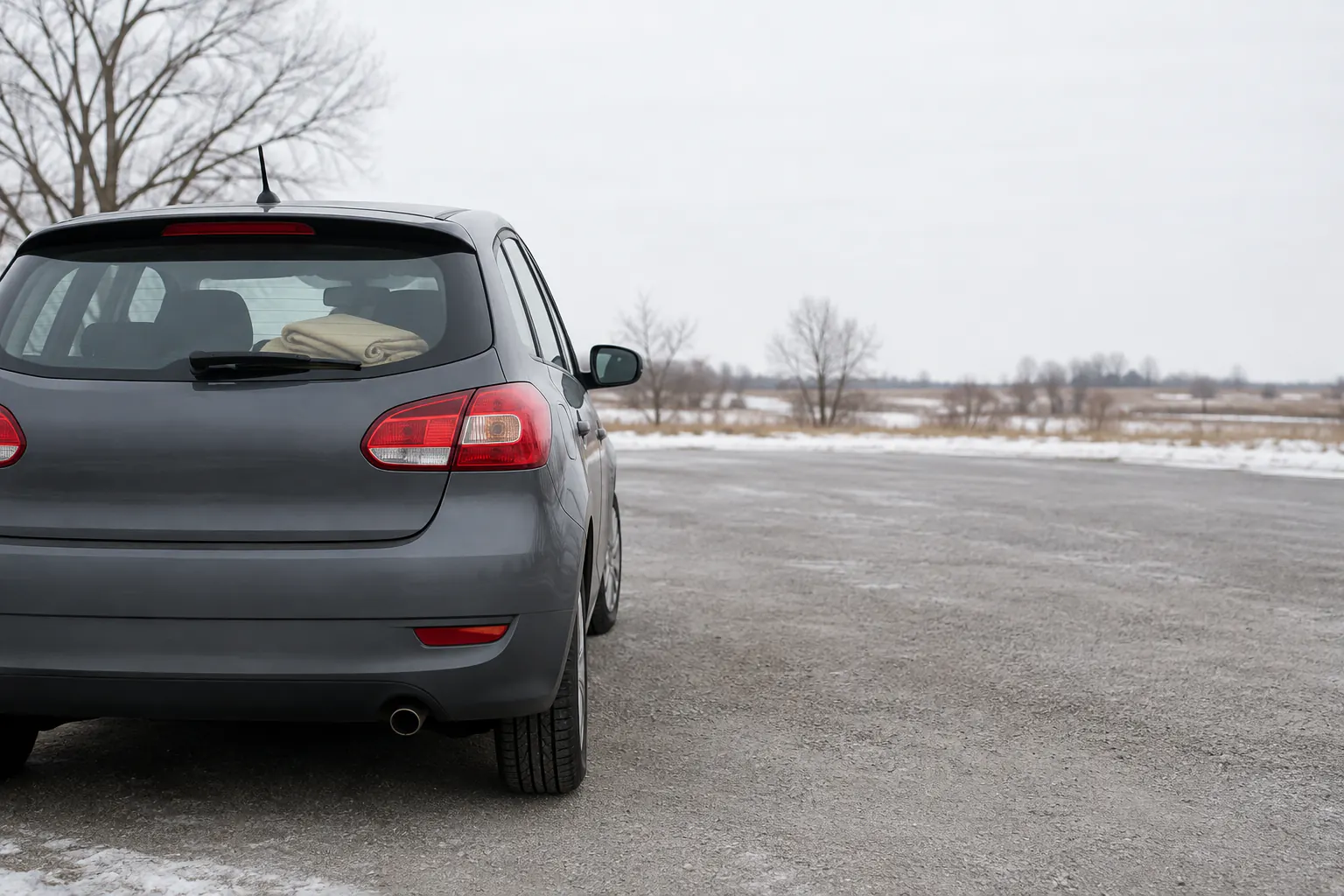
- Keep the exhaust pipe clear. Snow, mud, sand, or a drift banked against the back of the vehicle can push exhaust into the cabin. Check it before running the engine and again after any significant snowfall.
- If you run the engine for heat, run it briefly and intermittently, roughly ten minutes an hour is the common official guidance, and crack a downwind window while it runs.
- Get out into fresh air and call 911 at the first symptom — headache, dizziness, nausea, confusion, unusual drowsiness. Do not “sleep it off.” That decision is what makes the difference.
Cold kills more slowly and less obviously
Winter guidance is consistent: stay with the vehicle, because it is shelter and it is far easier to find than a person walking. (Source: Ready.gov, winter weather; NWS cold safety.)
- Insulate rather than heat. Layers, blankets, a hat — most heat is lost from an uninsulated body in a metal box, not from a lack of engine.
- Move periodically. Small movements keep circulation going without producing sweat, which then chills you.
- Do not use fuel-burning heaters, stoves, or charcoal inside a vehicle. Ever. This is the same category of mistake as running a generator indoors — see generator carbon monoxide safety for why it is so consistently fatal.
- Watch for hypothermia in others, particularly children and older adults: shivering that stops, slurred speech, confusion. That is a 911 call, not a “warm up in a minute.”
Where you stop is a safety decision
- Be visible to help but out of traffic. A shoulder on a fast road is dangerous for a different reason; a lit, level, legal spot away from traffic is worth driving a little further for.
- Legality varies enormously. Overnight parking is prohibited in many places and permitted in others; posted restrictions exist for a reason and being moved on at 2 a.m. is the least bad outcome of ignoring them.
- Avoid low ground in rain, avoid anything under trees in wind, and avoid anywhere a plough will need to be.
What actually makes it bearable
The equipment list is short, and most of it is what a winter vehicle kit already contains — the winter car emergency kit guide owns that properly:
- warm layers and a blanket, kept in the cabin rather than the boot;
- water and food that needs no preparation;
- a charged power bank and a torch;
- your medication;
- fuel kept above half a tank in winter, which is what makes intermittent heating possible at all.
Tell someone, and set a limit
Before settling in: message the person who would otherwise worry with your location and a next check-in time — staying reachable while traveling covers the rhythm. And decide in advance what changes the plan: a road reopening, a room becoming available, symptoms in anyone, or a temperature you are not equipped for. A vehicle night that was chosen and time-boxed is very different from one that simply happened.
The short version
Exhaust clear, engine only briefly and with a window cracked, no fuel-burning heater inside, insulate rather than heat, stay with the vehicle, park somewhere legal and out of traffic, tell someone, and treat any headache or drowsiness as carbon monoxide until proven otherwise. If any of that is not possible, it is a 911 call — not a night to endure.
Sources reviewed
- Centers for Disease Control and Prevention: Carbon monoxide
- Ready.gov: Winter weather
- U.S. Consumer Product Safety Commission: Carbon Monoxide Information Center
- National Weather Service: Cold safety
Sources reviewed August 4, 2026. Emergency services, local law, and current CDC, CPSC, and NWS guidance control real decisions about shelter, heating, and carbon monoxide.