
The single most preventable cause of flood death is also the most counterintuitive: people drive into water that looks shallow. The National Weather Service’s “Turn Around, Don’t Drown” campaign exists because most flood fatalities happen in vehicles, and it takes far less water than anyone expects. This is one branch of the flood alerts and immediate actions hub.
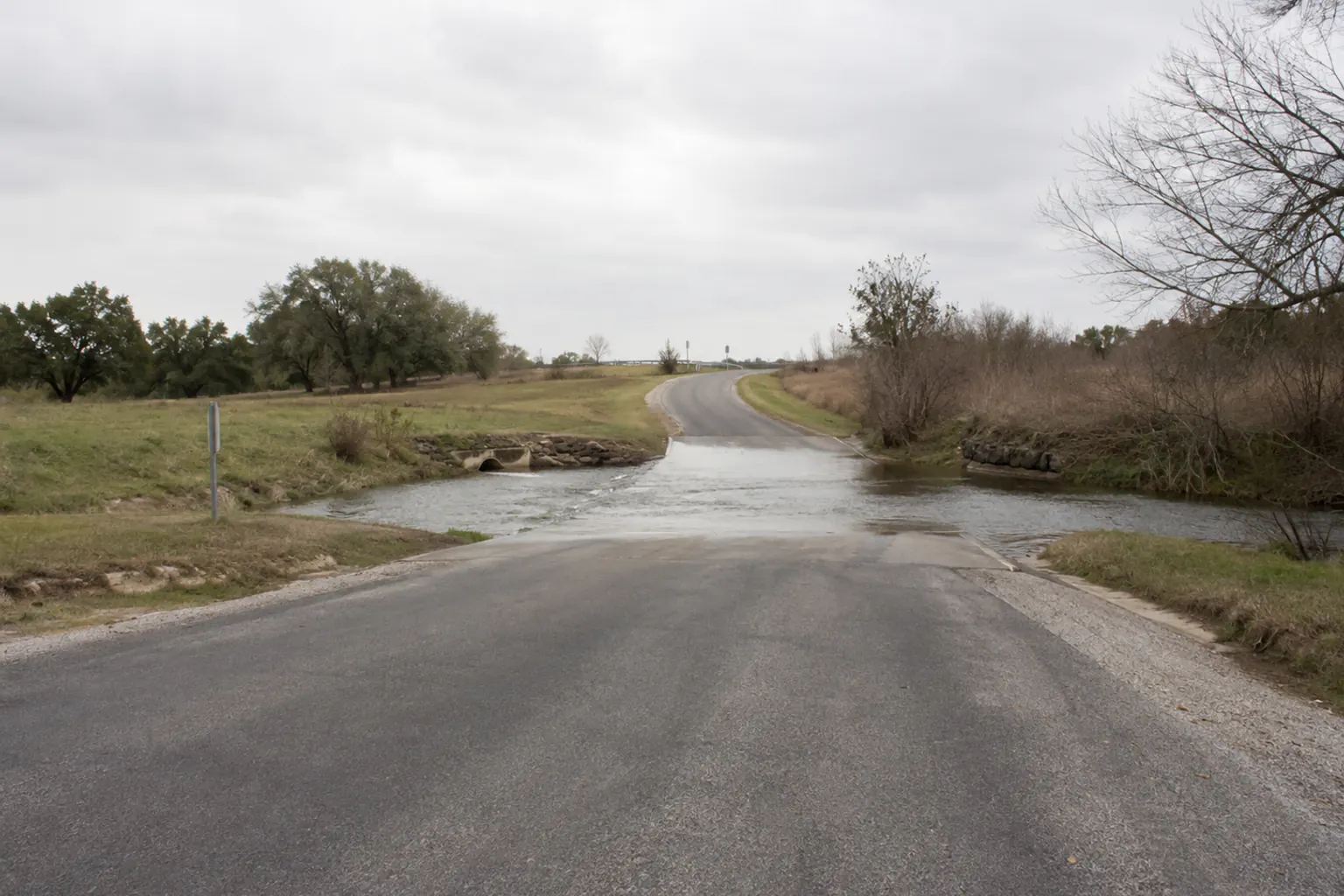
The numbers that should change your mind
The NWS is specific about how little water it takes (Sources: NWS, Turn Around Don’t Drown; NOAA):
- 6 inches of moving water can knock an adult off their feet.
- 12 inches (one foot) of moving water can float and carry away most cars.
- 18–24 inches of moving water can carry away most trucks and SUVs.
The water does not have to be deep — it has to be moving, and you usually cannot tell how deep or how fast it is, or whether the road beneath it has washed away. A covered road at night, over a low crossing, is the classic fatal setup.
The one rule
Turn around, don’t drown. If a road is covered by water, do not drive through it — turn around and find another route, even if it is far longer. This applies to:
- low water crossings, dips, and underpasses;
- roads over creeks, culverts, and drainage;
- any water of unknown depth, day or night;
- water that “looks like it did last time.”
Barricades and road-closed signs are not suggestions. Never drive around a barricade — it marks a road that authorities have judged unsafe, often because it has already failed.
Why the car makes it worse, not safer
People assume a vehicle protects them. In floodwater it does the opposite:
- A car floats sooner than people think, then loses steering and control.
- Once floating, it can be swept sideways into deeper water, a ditch, or a submerged hazard.
- Water pressure can make doors impossible to open, and a stalled car can trap occupants.
If you are ever caught in rapidly rising water in a vehicle and cannot drive out safely, get out and move to higher ground if you can do so safely, and call 911.
Walking is not safe either
Floodwater on foot is also deadly and is contaminated. Beyond the six-inches-sweeps-you-away threshold, moving water hides washed-out ground, open manholes, debris, and downed power lines that can energize the water. Never walk, wade, or let children or pets into floodwater. Contaminated-water and post-flood safety belong to the broader flood preparedness guidance.
Plan the decision before you are in it
The safest version of this is decided in advance, calmly:
- Know your low crossings — the specific dips and bridges on your commute that flood first.
- Pre-pick alternate routes so “turn around” has somewhere to go.
- Leave earlier or not at all when a Flood or Flash Flood Warning is in effect; the trip is rarely worth it.
- Match the response to where you are — home, car, or outdoors — using flash flood response by location.
No destination, appointment, or shortcut is worth a flooded road. Turn around.
Sources reviewed
- National Weather Service: Turn Around, Don’t Drown
- NOAA/NWS: Turn Around, Don’t Drown resources
- Ready.gov: Floods
- Centers for Disease Control and Prevention: Flood safety
Sources reviewed July 29, 2026. NWS/NOAA, Ready.gov, CDC, and local emergency-management instructions control real flood-safety decisions.