
Of everything that can go wrong away from home, this is the one that turns a delay into a real problem. A cancelled flight costs you a day. A cancelled flight when you packed exactly the number of pills for exactly the number of nights is something else. This is one branch of the travel preparedness hub.
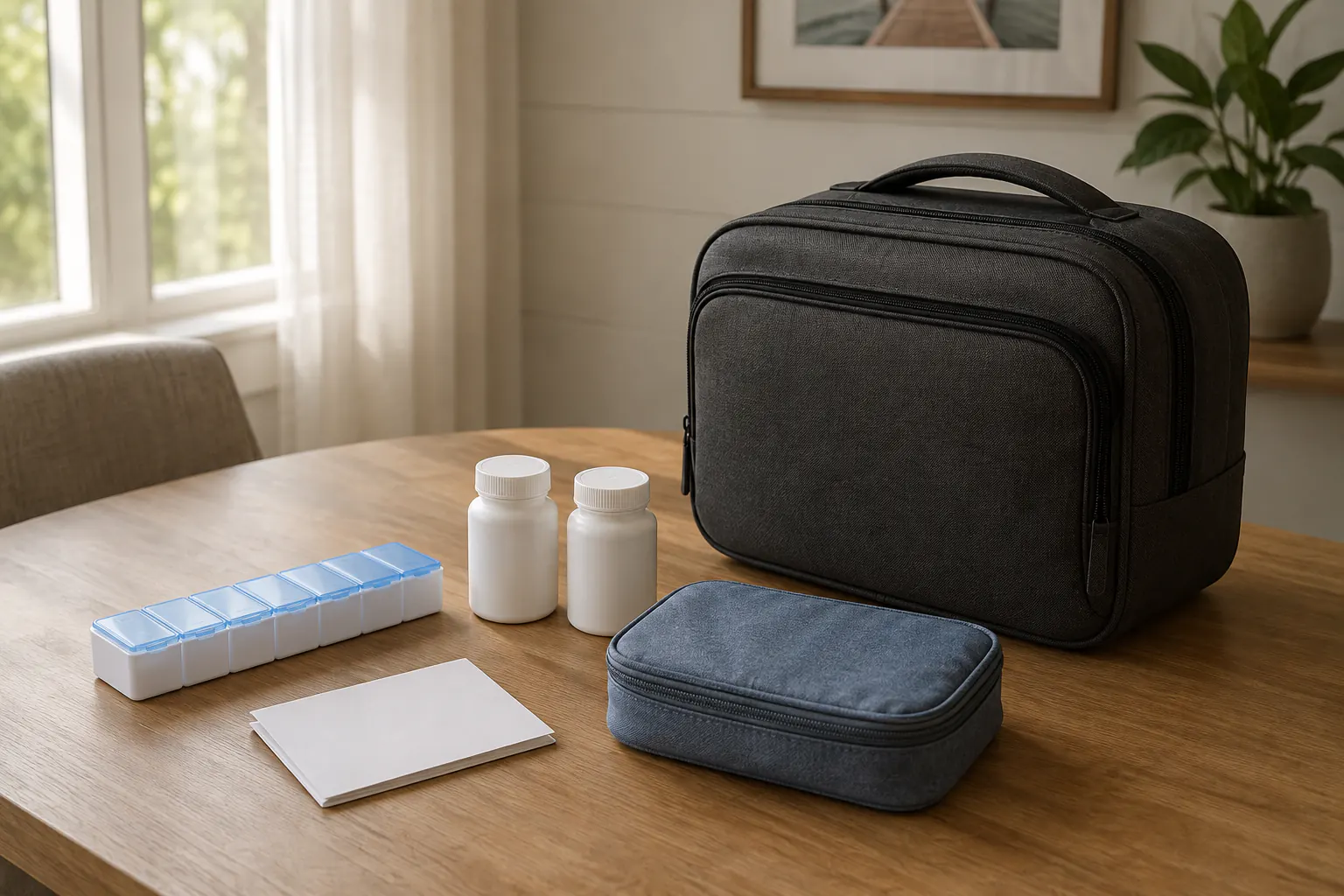
To be clear about the boundary before anything else: this guide covers logistics — how much to carry, where to keep it, what to have written down. It never suggests changing, splitting, stretching, or stopping a dose. That is a clinician’s decision, always, and especially when a supply is running short.
Carry more days than the trip has
The single most useful habit is padding. Pack for the trip you booked plus a realistic delay — commonly a few extra days for domestic travel and more for international or remote destinations, subject to what your prescription and pharmacy allow.
Ask the pharmacy before you go, not from the road. Insurance refill timing, quantity limits, and vacation-override policies vary, and they are far easier to sort out a week early than from an airport.
Keep it with you, not in checked baggage
The FDA and TSA both point the same way: essential medication belongs in your carry-on. (Sources: FDA, Safely Using Medicines When You Travel; TSA, medications.) Checked bags get delayed, misrouted, and occasionally lost, and a hold can be far colder or hotter than a cabin.
Practical points that come up repeatedly:
- Keep medication in its original labeled container where you can. It links the medicine to you and to a prescriber, which matters at a border and at a pharmacy.
- Medication is allowed through TSA screening in reasonable quantities, including liquids above the usual limit, though you should declare them. Rules change, so check the current TSA guidance rather than a remembered version.
- Split a supply across two bags if you are travelling with someone you trust, so one lost bag is not the whole supply.
- Pack the small first-aid items you actually use alongside it; the practical home first-aid kit guide covers what earns its place, and a travel version is a subset of it.
- Temperature-sensitive medication follows its manufacturer’s instructions, not general advice. If it needs refrigeration, plan the cooling before you leave — the refrigerated medication guidance covers the principles at home and the same physics apply on the road.
Write down what a stranger would need to know
If you end up at an unfamiliar pharmacy or urgent care, the useful thing is not the pill bottle — it is the information. Keep a short written record, on paper and in your phone:
- the generic name, dose, and schedule of each medication (generic names travel; brand names often do not);
- the prescriber’s name and phone number, and your pharmacy’s;
- allergies and significant conditions;
- your insurance details, and for international travel whether it covers you abroad at all.
The travel documents and payment backups guide covers where these copies live so they survive a lost phone.
Powered medical devices need their own plan
If a device matters — CPAP, a concentrator, a pump, anything that plugs in — the trip introduces two variables at once: unfamiliar power and unfamiliar altitude or climate. The medical device continuity hub owns that planning, and CPAP power backup covers the specific outage case. Confirm with the manufacturer and your clinician before relying on a travel arrangement.
If the trip runs longer than the supply
This is the moment the guide stops and a professional starts. Contact your prescriber or pharmacy as early as you realistically can — not on the last day. In the United States, a pharmacy can often help arrange an emergency supply or transfer, and in a declared emergency there are sometimes additional provisions. Abroad, the U.S. embassy or consulate can point to local medical resources. (Source: U.S. Department of State, Traveler’s Checklist.)
Do not ration, split, or skip doses to make a supply last. If you are somewhere that a pharmacy cannot help quickly, that is a reason to contact a clinician or local emergency services, not a reason to improvise.
The short version
Carry more days than the trip has, keep it in your carry-on and in its labeled container, write down what an unfamiliar pharmacist would need, and call your prescriber early rather than late. Everything about the medicine itself stays with the people qualified to decide it.
Sources reviewed
- Centers for Disease Control and Prevention: Travelers’ Health
- Transportation Security Administration: Medications
- U.S. Food and Drug Administration: Safely using medicines when you travel
- U.S. Department of State: Traveler’s Checklist
Sources reviewed August 4, 2026. Your clinician, pharmacist, the medication’s manufacturer, and current TSA and destination rules control real medication decisions.