
Start with the contact and identity information needed on the trip, then add care and destination records that apply. Keep the packet discreet and separate from access secrets. Take what is safely staged when it is time to leave; do not delay for paperwork.
The right packet is minimal, protected, current, and matched to the people, animals, destination, and event. Build it before the alert, then take only the version that the actual departure plan can protect.
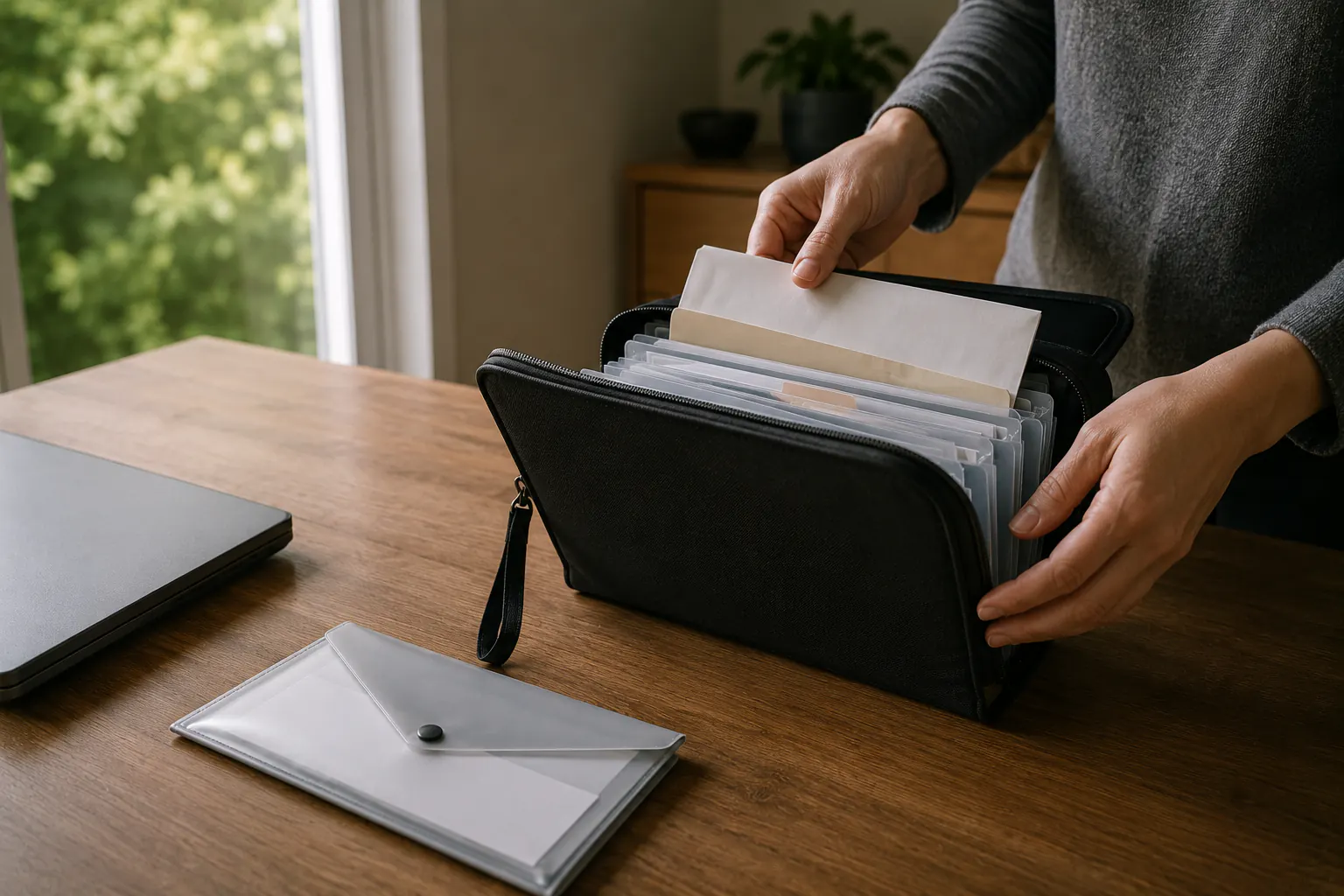
Separate the packet from the archive
Keep three related but different systems.
| System | Job | Where it belongs |
|---|---|---|
| Evacuation packet | Facts needed during travel and the first days away | Named bag or on-person layer |
| Recovery archive | Detailed insurance, property, tax, legal, and financial records | Protected home and separate secure backup |
| Access-secret system | Passwords, recovery codes, encryption keys, and account controls | Separate controlled method, never an unprotected packet |
The Consumer Financial Protection Bureau advises organizing records before a disaster and keeping copies separately. That does not mean every record should travel together. Loss, theft, water damage, a rushed shelter check-in, or a misplaced bag can expose identity and finances at the same time.
Use Keeping Essential Credentials Available Offline and Secure for the access-secret boundary. This checklist does not contain passwords, recovery codes, private keys, full account numbers, or instructions for bypassing another person’s account.
Build the minimum travel packet
For each traveler, decide whether to carry an original, a copy, a protected digital version, or simply the information needed to request a replacement. Local requirements and individual risk matter.
Identity and household connection
- government-issued identification when available;
- a concise paper contact card with out-of-area contact, destination, and reunion details;
- proof of address, lease, or ownership only when it may be needed for the immediate plan;
- a current household roster, including children, caregivers, and emergency contacts;
- photographs or descriptions that help reunite a missing child, dependent adult, pet, or service animal without posting private information publicly.
Keep copies legible and current. Do not assume a photo of an ID on an unlocked phone is protected or accepted for every purpose. Leave irreplaceable originals behind only after considering fire, flood, theft, and the actual need; a packet cannot predict every event.
Insurance, property, and practical contacts
- insurance card or policy contact details and policy number reference;
- landlord, property manager, utility, roadside assistance, employer, school, and legal contact information relevant to the household;
- vehicle identification and registration information when traveling by that vehicle;
- a limited property or room inventory reference and a secure location for fuller records;
- bank and card issuer contact numbers without exposing complete credentials.
This information can help start a claim or report a loss, but it does not prove coverage, set a deadline, or replace insurer instructions. Detailed recovery records belong in the recovery archive, with separate secure copies.
Health and personal support information
Keep a concise, controlled care summary with the person who needs it and the person authorized to help. CDC includes insurance, care plans, and medication information in its emergency paperwork guidance.
The packet may identify:
- health-insurance information;
- a medication and supplement list prepared with the clinician or pharmacist;
- allergies, communication needs, emergency contacts, and the location of a more complete care plan;
- device, mobility, sensory, caregiver, or accessibility information that a responder or destination genuinely needs;
- clinician, pharmacy, supplier, and veterinarian contacts.
Do not turn this into medical advice. Medication quantities, dosing, refrigeration, device settings, oxygen, feeding, and treatment decisions stay with the Medical Device and Medication Continuity plan and the qualified people named there.
Children, pets, and service animals
Keep the records that make transport, shelter, boarding, or return more feasible: current identification, care contacts, custody or school contact information as appropriate, and animal vaccination or veterinary records when the destination may ask. A service animal and a pet can be subject to different destination rules; confirm the current policy rather than arguing from a copied record.
Never write detailed child, care, or animal information on the outside of a bag. Keep it under the named adult’s control and use a simple label that does not advertise a vacant home or sensitive records.
Choose paper, digital, or both deliberately
Paper works without a battery, app, signal, login, or compatible cable. It can also be photographed, lost, or destroyed. A protected digital copy can carry more information but depends on a charged device, access method, and a recovery plan if the device is lost.
A practical pattern is:
- a small paper contact and identity layer;
- a protected, water-resistant packet for selected copies;
- a separate encrypted or controlled digital archive where the household can actually recover it;
- a second controlled location for copies that does not travel in the same bag.
Do not keep the only copy, only key, and only device together. Do not assume cloud access will work during an outage or that an unlocked phone is a secure archive.
Protect the packet in transit
Use a nondescript, water-resistant inner sleeve or pouch inside the bag. Keep it with a named adult or capable traveler, not in an exterior pocket, a visible vehicle compartment, or a bag that a child is likely to set down. Separate it from the only phone, key, or device it supports when possible.
At a shelter, hotel, host home, or transport hub, do not hand over more records than the organization asks for. Ask why a record is needed and use the official organization, not a person who approaches with an unsolicited request. A disaster can attract impersonation and financial scams.
If a packet is lost or exposed, treat it as a real incident: tell the relevant institution through a known official channel, replace compromised cards or credentials where applicable, and document what was missing. Do not rely on a pouch appearing unopened.
Inspect it with the go-bag
Review the packet at least twice a year, during insurance renewal, after a move, new job or school, household change, new pet, new provider, changed device, or updated legal arrangement. Check:
- names, phone numbers, addresses, and policy references;
- document expiry dates and legibility;
- destination, communication, and transport records;
- care and support contacts;
- whether a copy should replace an original;
- physical condition, water protection, and secure backup location;
- whether anyone who needs access can find the packet without exposing secrets.
Pair this review with the Practical Household Go-Bag Checklist and the Evacuation Planning hub. A packet that is current but buried behind a heavy bag or blocked exit will not help during a short departure window.
Do not delay departure for records
When officials direct immediate movement or a household trigger is met, take the packet that is already staged. Do not stay behind to find every document, photograph property, print forms, resolve an account login, or retrieve a record from an unsafe area. Leave, follow the current route and shelter instructions, and use official recovery channels later.
Sources reviewed
- Consumer Financial Protection Bureau: Get Prepared Before a Disaster or Emergency Strikes
- CDC: Paperwork; Drug and Supplement Lists
- Ready.gov: Evacuation
Sources reviewed July 15, 2026. This page is a preparation checklist, not legal, financial, medical, insurance, or identity-theft advice. Actual evacuation instructions and the organization that owns a record, account, policy, or care plan control the situation.