
Choose one bag location the assigned person can reach safely, then check the exit route. Keep doors, stairs, mobility routes and required equipment clear. A nearby shelf is not useful if retrieval needs a climb or moves clutter into the doorway.
Good staging makes the household’s departure plan easier on an ordinary day and safer on a difficult one. It is a location system: each person knows where their layer is, what travels with it, and what must remain clear around it. Staging is the last step of the household evacuation plan; the bags and the departure decision are built there first.
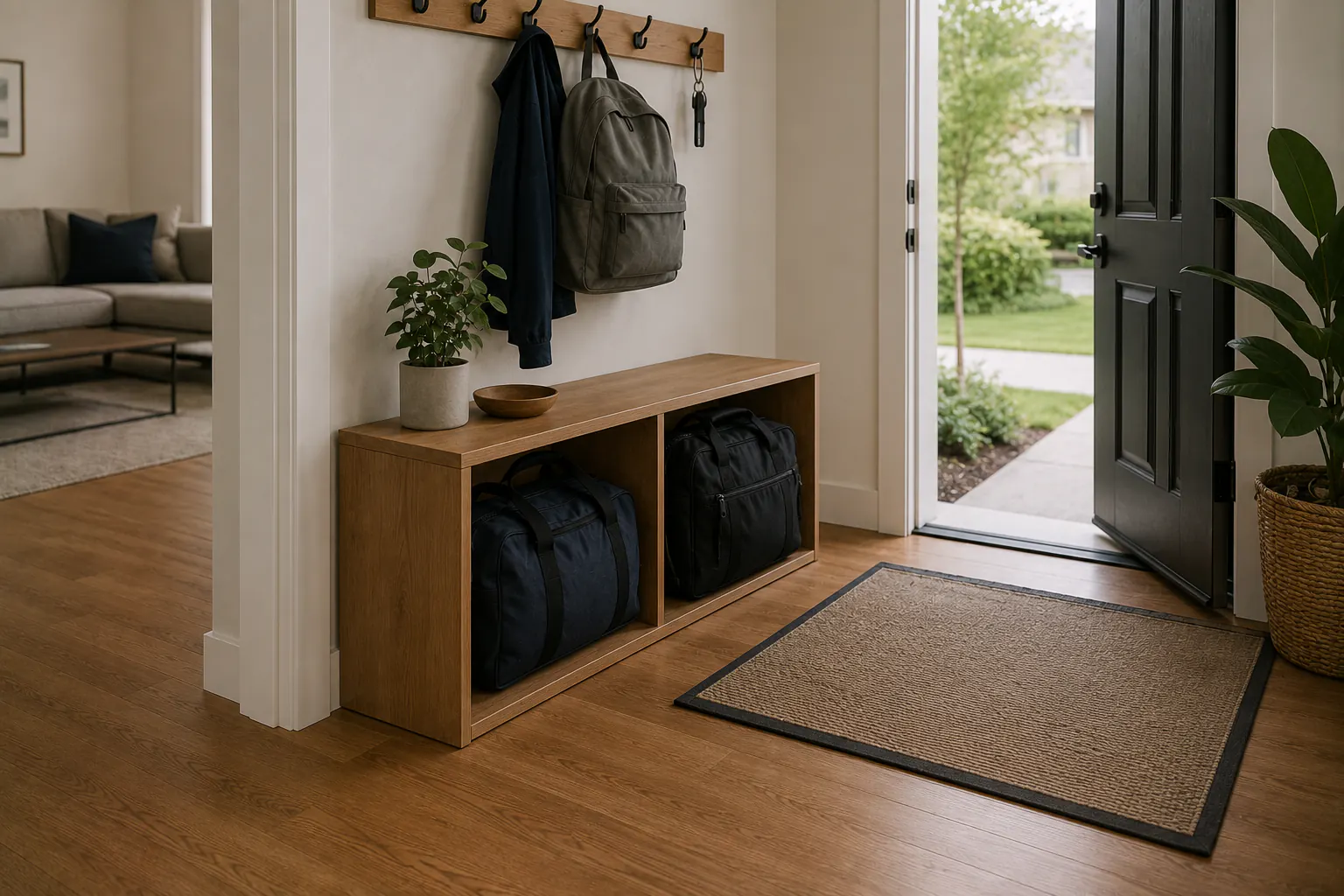
Choose the route before choosing the shelf
Start at the planned exit and walk backward. Identify the door, hallway, stairs, elevator or lobby, shoes, keys, carrier, mobility equipment, and pickup path that the household expects to use. The bag location must support that route, not merely be close to the front door.
Never use a bag location that blocks or narrows:
- a door swing, exit, stair, landing, hallway, or shared corridor;
- an accessible route, wheelchair turn, cane path, transfer space, or elevator approach;
- an electrical panel, utility shutoff, smoke alarm, fire extinguisher, sprinkler control, or required building equipment;
- a window or door used as an emergency exit;
- a child’s usual safe route or a pet’s carrier access.
Apartment common areas, landings, halls, and exterior walkways are usually not household storage. Building rules and fire requirements control them. A tidy-looking bag outside an apartment can still create a life-safety issue or be removed, damaged, or stolen.
Give every layer a named home
Use the layered plan from the Practical Household Go-Bag Checklist. The on-person layer might live with keys or a daily bag; personal bags can live on an interior closet shelf; shared supplies may have a separate protected container; care equipment follows the individual continuity plan.
Do not store every item in one heavy trunk. A single container can make inspection easier, but it also creates a single point of failure when the person carrying it is absent, the route involves stairs, or one household member needs to leave sooner. Label storage by role, not by a list of valuables: “shared departure items” is more discreet than “cash, IDs, and devices.”
Keep medication, medical devices, approved batteries, refrigerated supplies, mobility equipment, and care records with the person and plan that govern them. The Medical Device and Medication Continuity plan owns those dependencies. A generic closet location cannot decide their temperature, charging, hygiene, or clinical requirements.
Use a simple staging map
Draw a small household map or write a list that answers four questions:
| Question | Example answer |
|---|---|
| Where is each person’s bag? | Interior closet shelf the assigned person can reach safely |
| Who retrieves shared items? | Named adult or driver |
| What must remain with a person? | Phone, glasses, communication card, mobility aid |
| What changes when leaving by car or pickup? | Shared bin goes with driver only if transport is confirmed |
Keep the map with the departure record, not on an exterior door or public wall. A visitor, contractor, neighbor, or online image should not learn where personal records, a vacant-home key, or sensitive supplies are stored.
Keep bags ready without freezing them in time
Some items belong permanently in the bag: paper contacts, a light, a copy of the departure record, basic hygiene supplies, a map, and a small weather layer. Other items are used daily and should be added through a departure checklist: phone, wallet, keys, glasses, current medication, current mobility accessories, pet food, or a child’s comfort item.
The answer is not buying duplicates of every item. It is keeping a short “add before leaving” card beside the staged bag and practising it. A daily object that is never replaced after use is a greater risk than a blank slot that the household notices during a drill.
Rotate for the season and the household you have now
The bag should match the next likely departure, not the season when it was first packed. Review weather layers, spare clothing, sun or rain protection, water, batteries, school materials, pet supplies, and destination assumptions when seasons change. A winter layer may be too bulky for summer travel; a lightweight summer plan may be inadequate for a cold overnight shelter. Replace only what the household can identify and use, rather than turning each review into a shopping trip.
Household roles also change. A teenager may begin carrying a personal layer; a new baby may need supplies that cannot be split between adults; an older adult may need a smaller bag and a named helper; a new pet may change carrier space and destination options. Write the changed role into the departure record, weigh the affected bags, and check the actual route again. Do not leave the old assignment in place merely because the bag still fits in the closet.
In a shared apartment or household, agree on access without exposing every private item. Each person can keep a personal bag in a known interior location while a named adult holds the shared departure record and limited common supplies. Do not assume roommates can carry another person’s medical equipment, care supplies, pet carrier, or confidential documents. Agree on what is shared, what is personal, and how an absent roommate is contacted, then keep the plan short enough to be understood under stress.
If a lease, landlord, building manager, or shelter policy changes the location or contents, revise the plan rather than hiding equipment where it blocks an exit. The purpose of staging is to reduce delay, not to win a storage contest.
Inspect the bags twice a year and after a move, household change, new job, school change, new pet, new device, changed route, or changed destination. Check battery condition, food rotation, clothing fit, document relevance, charger compatibility, bag straps, water damage, pests, and whether the space around the bag remains clear.
Protect privacy and ordinary security
Use an interior, dry, discreet location that the household can access in low light. Avoid labeling containers with medical information, cash, firearms, identity records, or a message that the home will be empty. Do not leave bags visible through a vehicle window or next to an exterior door where they can be grabbed during an ordinary visit.
Security should never make exit harder. Do not lock a bag behind a barrier that the household cannot open quickly, require a phone app to locate it, or place it in a room that may become inaccessible during a power outage. The Home Security and Hardening guide explains the priority of safe exit over added delay or hardware.
Practise a quiet retrieval drill
In normal conditions, ask each household member to retrieve their layer, put on shoes, find the shared bag, locate carriers or mobility items, and reach the departure point without moving stored bins or blocking anyone else. Time is useful only as a way to identify a bottleneck; do not turn the drill into a contest or push someone to carry more than is suitable.
Record what failed: a bag on a high shelf, a pet carrier behind storage, an inaccessible closet, a missing key, an expired power bank, or a shared item assigned to someone who is often away. Change one thing, then test the calm route again.
Sources reviewed
- Ready.gov: Evacuation; Build a Kit
- CDC: Be Prepared in Case You Need to Evacuate
Sources reviewed July 15, 2026. This page is household staging guidance, not building-code, accessibility, fire-safety, medical, or live-event advice. Current building and emergency instructions control.