
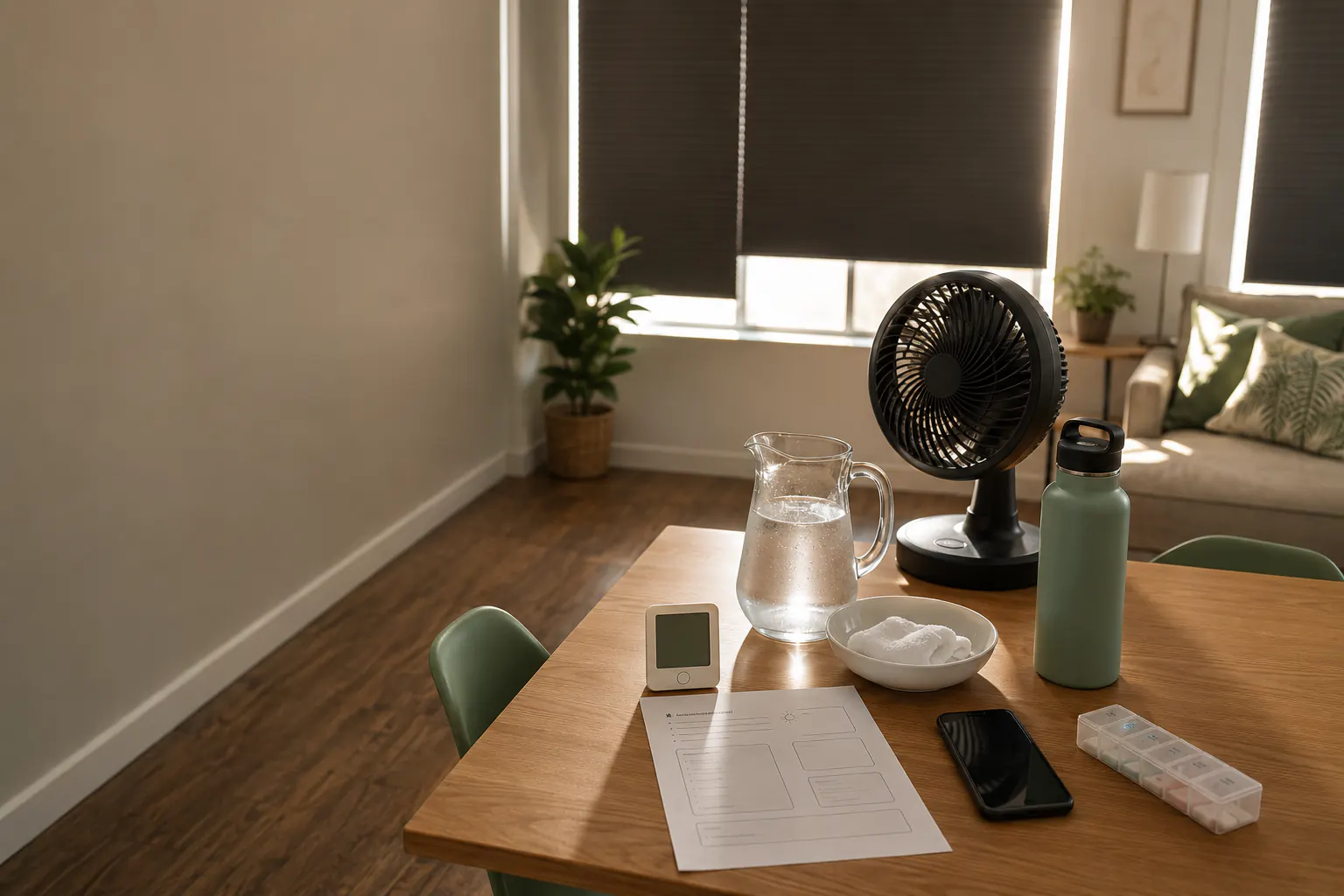
Choose where the household can get air-conditioned relief, who needs help getting there, and who will check on them. Write the destination and contact on paper. Those arrangements matter more than buying another fan when the home cannot stay safely cool.
Build the plan before the forecast peaks. A home can become dangerous even when everything inside still looks normal, and a power outage can remove the one system the household expected to rely on.
If dangerous heat is happening now
- Check the current National Weather Service alert, local HeatRisk information, and any instructions from the local health or emergency-management authority.
- Move household members into the coolest available indoor zone and reduce physical activity.
- Close sun-facing shades and stop avoidable indoor heat from ovens, clothes dryers, incandescent lights, gaming computers, and other high-load equipment.
- Use air conditioning when available, or move to a confirmed air-conditioned location if the home cannot stay safely cool.
- Use a fan only within the limits described below. A fan is not a substitute for air conditioning during dangerous indoor heat.
- Drink fluids according to the household’s health plan. Anyone with a fluid restriction or medication concern needs clinician-specific instructions, not a generic hydration target.
- Check children, older adults, pregnant people, people with disabilities or chronic illness, outdoor workers, socially isolated neighbors, and pets.
- Call 911 for emergency symptoms or suspected heat stroke.
CDC guidance says indoor fans should be used only when indoor temperatures are below 90°F; above 90°F, a fan can increase body temperature. Air conditioning or time in an air-conditioned location is the safer primary cooling layer during dangerous heat. (Source: CDC, About Heat and Your Health, reviewed July 2026.)
Build the plan around four systems
People
List every person whose heat risk, communication ability, mobility, or medical plan changes the household response. Do not use age alone as the only screen. Include pregnancy, asthma, cardiovascular disease, diabetes, disability, mental-health conditions, medication storage, fluid restrictions, powered medical devices, outdoor work, and social isolation.
For each person, record:
- the person who checks on them and how often;
- the coolest practical place they can reach;
- transportation and accessibility needs;
- medication and device continuity instructions;
- symptoms or condition changes that require the clinician, urgent care, or 911;
- a backup contact if the first caregiver cannot arrive.
Do not stop or change medication, fluid restrictions, or medical equipment settings based on general heat advice. CDC clinical guidance recommends developing an individualized heat action plan with the health care team because medicines, chronic conditions, and storage requirements vary.
Place
Choose one primary cool zone in the home, but do not treat it as permanent shelter. The room should have the best shading, lowest solar exposure, useful ventilation when outdoor air is cooler, and enough space for the people who need it. Avoid a room that blocks the only safe exit or separates a medically vulnerable person from help.
Identify at least two cooler destinations outside the home:
- an official cooling center confirmed for the current event;
- a library, community center, mall, family home, hotel, or other air-conditioned place that is open and accessible;
- a destination that accepts pets, mobility devices, and required medical equipment when relevant.
Confirm hours, transport, accessibility, pet rules, and whether the location is actually operating during a power outage. A name on an old list is not a live plan. Ready.gov advises contacting the local health department or emergency-management agency to identify current cooling options.
Power
Inventory what electricity is doing for heat safety:
- central, window, portable, or mini-split air conditioning;
- fans and air movement;
- powered mobility or medical equipment;
- medication refrigeration;
- phones, alerts, and transportation coordination;
- elevators, building access, pumps, and electronic locks.
The loads your backup supply can support depend on the exact equipment, its permitted connections, and usable energy. The backup power for cooling guide explains those differences, and the power station runtime calculator estimates runtime from documented inputs. An estimate is not connection approval or proof that a hot home is safe; departure triggers still control the plan.
Path
Write the decision that causes the household to leave before symptoms become the signal. Useful triggers include:
- air conditioning fails and no safe repair or restoration estimate exists;
- indoor temperature reaches the household’s clinician-approved threshold;
- a vulnerable person develops early symptoms or cannot follow the cooling plan;
- the building loses elevators, water, ventilation, or safe access;
- nighttime conditions do not provide meaningful cooling;
- local authorities advise relocation or open cooling centers;
- batteries cannot support the next safe travel window.
Choose a route, backup route, transport contact, meeting point, and go-bag location. In an apartment, assume the elevator may stop and the lobby may be hotter than the unit. The apartment extreme-heat plan covers building-specific decisions.
Prepare 48 hours before the peak
Forecast lead time is an operational advantage. Use it.
The pre-season cooling and shade audit records sun exposure, equipment service, usable windows, the thermometer, and destinations. If it is unfinished, prioritize the current alerts, people and available cooling; do not delay their response to complete an audit.
Verify information
- Enable local emergency alerts and weather notifications.
- Check the National Weather Service forecast, HeatRisk, heat index, overnight lows, and air quality.
- Confirm cooling-center information through a current local authority.
- Put essential contacts and addresses on paper in case the network fails.
- Tell the household what would trigger a move and who makes the decision.
HeatRisk adds context beyond one afternoon high. National Weather Service materials describe a 0-to-4 scale that considers unusual heat, duration, and health impacts; higher levels indicate risk spreading from sensitive groups to most or all people without adequate cooling and hydration. Use the current local forecast and official instructions rather than importing a temperature threshold from another climate.
Prepare the building
- Follow the exact equipment’s permitted normal checks; do not operate damaged or uncertain equipment as a trial.
- Replace or clean filters only where the instructions allow occupant maintenance and safe access.
- Note visible obstructions from an ordinary accessible position; leave service equipment, electrical work and uncertain access to qualified service.
- Address room-equipment seals only within its instructions and property permission, without moving heavy units or reaching outside.
- Prepare permitted window shading without blocking egress or compromising fall protection.
- Identify which windows can provide secure ventilation after outdoor air becomes cooler.
- Move heat-producing tasks to a cooler period or postpone them.
Use the HVAC resilience hub for pre-season maintenance and the room air-conditioner selection guide when one occupied zone needs mechanical cooling. Neither replaces a cooling-location or relocation plan.
The Department of Energy notes that shading, insulation, efficient windows and doors, and appropriate ventilation can reduce cooling demand. Ventilation is not universally useful: hot outdoor air can add heat, and humid climates reduce the value of evaporative approaches.
Use the temporary window insulation guide to compare reversible shades, curtains, films, and inserts without blocking egress or trapping moisture. The broader weatherproofing and insulation hub keeps air sealing behind ventilation, combustion, and water checks.
Use the cooling a home without air conditioning guide to sequence these layers rather than opening every window automatically.
Prepare supplies without creating false confidence
Keep drinking water, food that requires little cooking, prescribed medication, charging equipment, a flashlight, a battery radio, a thermometer, cooling cloths, and the household plan together. The existing emergency water storage guide provides a disruption baseline, but hot-weather drinking needs and medical limits are individual.
Charge phones and batteries. Freeze water containers only when the container is freezer-safe and leaves expansion space. Do not use a generator, grill, camp stove, or other combustion device indoors, in a garage, on a porch, or near openings.
Control heat in the right order
1. Keep outdoor heat out
Close shades before direct sun reaches the glass. Prioritize windows with the strongest afternoon exposure. Keep exterior doors closed when outdoor air is hotter than indoor air. Weather stripping and insulation help slow heat flow, but they do not actively cool an already hot room.
2. Stop adding indoor heat
Avoid oven use, long clothes-dryer cycles, unnecessary lighting, and high-power electronics during the hottest period. Cook earlier, use no-cook foods, or move a safe approved cooking method outdoors only when local fire rules, weather, and manufacturer instructions permit it.
3. Ventilate only when conditions help
Open secure windows when outdoor air is meaningfully cooler than indoor air and air quality is acceptable. Use cross-ventilation or a fan to exhaust hotter air when the direction of airflow is understood. Close the building again before outdoor temperatures rise.
4. Cool people and occupied space
Use air conditioning or an air-conditioned public location as the primary protective layer during dangerous heat. Cool showers, baths, damp cloths, light clothing, reduced activity, and shade can support the plan. Fans may improve comfort below the CDC indoor limit, but they do not lower room temperature and must not delay relocation.
The fan safety guide separates air movement, room ventilation, and body cooling so the tool is not asked to do a job it cannot do. Before buying equipment for any of these layers, the research-only cooling products comparison is blunt about which categories remove heat, which only provide comfort, and which cannot run on a household battery at all.
Plan for a heat-related power outage
Treat a summer outage as a different incident from an ordinary evening blackout. Determine whether the outage is local to the home, check utility and official updates, preserve phone power, and begin monitoring the indoor trend immediately.
Do not wait for the battery percentage to reach zero before deciding to move. The relevant clock is the household’s safe-cooling window, which depends on the building, outdoor conditions, overnight lows, health needs, and accessible destinations.
Use the extreme heat power-outage plan for the first 15 minutes, first hour, and extended-outage sequence. The broader power outage preparedness hub covers food, lighting, water, communications, carbon monoxide, and recovery.
Recognize a failing plan
General warning signs of overheating can include unusually heavy sweating, cramps, headache, dizziness, weakness, nausea, or shortness of breath. Move toward a cooler place and seek medical guidance as appropriate. Confusion, altered mental status, loss of consciousness, seizures, or suspected heat stroke are emergencies; call 911.
Do not require every textbook symptom before acting. A person may not describe their symptoms clearly, and a chronic condition can worsen in heat. The plan should make early relocation easier than waiting for certainty.
Walk through the plan without creating an outage
Use a paper discussion under normal, safe conditions. Keep cooling and medical equipment operating; nobody needs to endure heat, lose essential power, or attempt an unfamiliar connection for this exercise.
- Check the current forecast and identify the hottest expected period.
- Find the indoor thermometer and record where it is positioned.
- Close the correct shades and identify avoidable heat sources.
- Call or verify the primary cooling destination.
- Pack medication, device accessories, water, keys, paper contacts, and pet items.
- Discuss the permitted exit route and assistance arrangements; do not use stairs or move anyone beyond their safe ability to test the plan.
- Estimate communication and cooling-device runtime from documented figures; identify missing information for the manufacturer or qualified professional.
- Ask each person to state the departure trigger in their own words.
- Record one obstacle and assign its correction.
Keep the next action small: confirm one destination, name the check-in person, and record the assistance contact. Reconfirm conditions during the event; a completed discussion does not guarantee the destination or route will remain available.
Sources reviewed
- Ready.gov, Extreme Heat and the Extreme Heat Hazard Information Sheet.
- CDC, About Heat and Your Health and clinical heat-action planning materials.
- National Weather Service, Heat Safety and HeatRisk resources.
- U.S. Environmental Protection Agency, Extreme Heat and emergency indoor-air guidance.
- Ready.gov, Power Outage Hazard Information Sheet.
Sources reviewed July 14, 2026. Local alerts, public-health instructions, clinician guidance, building conditions, and individual health plans take priority over general planning information.
CDC’s indoor fan limit and cooling-location guidance were checked again October 2, 2026. This narrow check is not a new review of every source or a household safety certification.