
Start with the windows receiving direct sun: close their existing shades without blocking exits. Then confirm an air-conditioned place the household can reach if the home keeps getting hotter. Shading and ventilation may reduce indoor heat, but neither guarantees that the building will remain safe during dangerous heat.
Know whether that destination is open and has power, how you will get there, what you must carry, and what condition will trigger the move. The complete extreme heat plan helps set those decisions for the whole household. Symptoms, current official instructions and the person’s clinical plan take priority over completing the steps below.
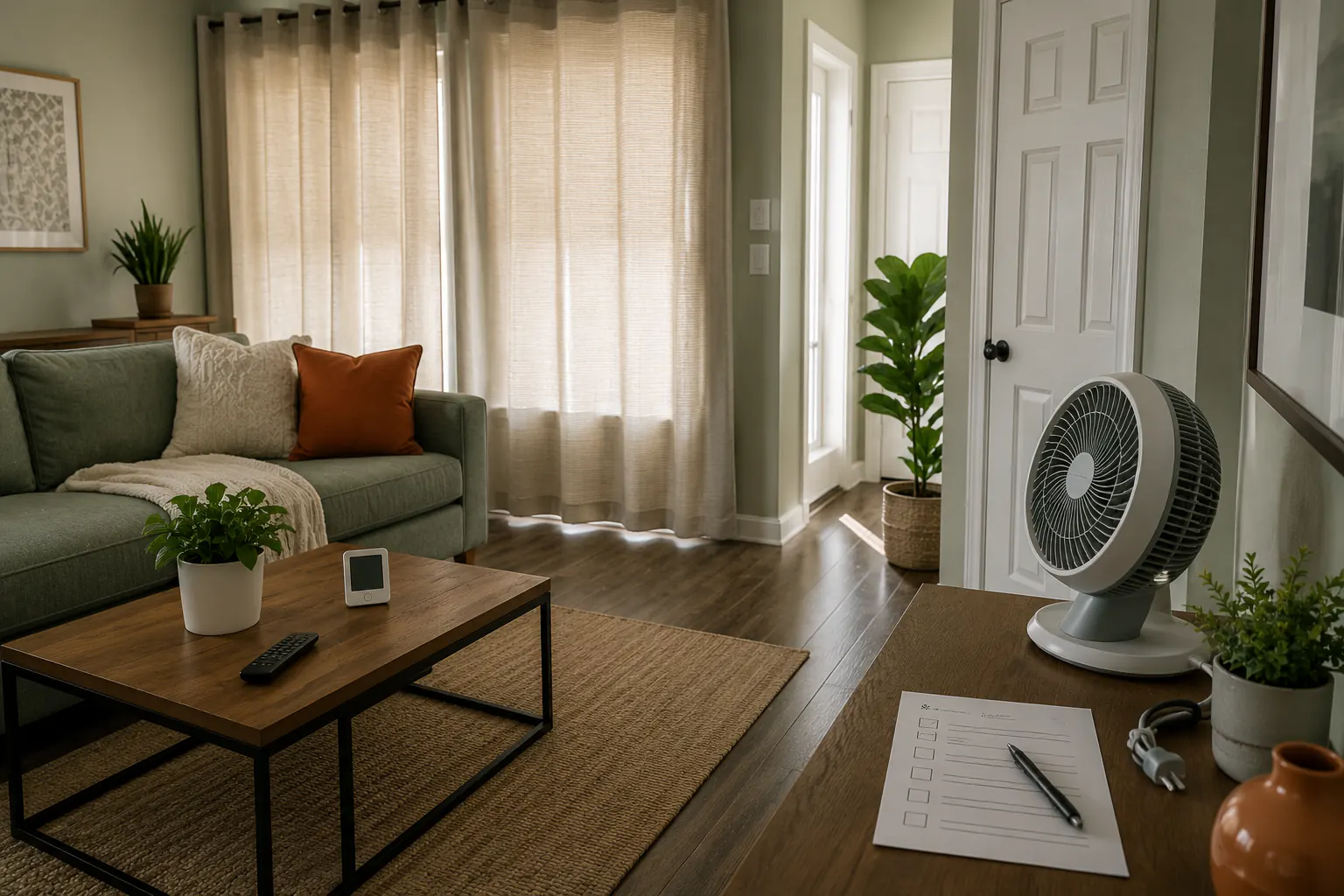
First, measure the indoor conditions
Place a reliable indoor thermometer in the occupied zone, away from direct sun, cooking equipment, electronics, and the immediate airflow of a fan. A second thermometer in another representative room can reveal whether a cooler zone actually exists.
Record the temperature in the morning, during the afternoon peak, and after sunset. Watch the direction and speed of change rather than trusting how one person feels. A shaded room can feel calm while its temperature continues to climb.
Temperature is only one part of heat stress. Humidity, overnight lows, direct sun, air movement, health conditions, medications, physical effort, and time exposed all matter. A consumer thermometer does not diagnose heat illness and should never delay a move or a 911 call.
Block solar heat before it crosses the glass
Windows can admit intense solar energy. Start with the windows receiving direct morning or afternoon sun.
- Close blinds or curtains before sunlight reaches the glass.
- Use the lightest-colored reflective surface that is appropriate and safe for the window system.
- Consider properly installed exterior shading for a planned improvement; it intercepts sun before the glass and room absorb it. Do not climb, reach outside, or improvise an attachment during a heat event.
- Keep emergency exits, required ventilation openings, fire-safety equipment, and window operation accessible.
- Follow lease, condominium, historic-district, and manufacturer requirements before attaching anything to the exterior.
Do not press improvised reflective materials against insulated glass without checking the window manufacturer’s guidance. Uneven heat absorption can stress some glazing systems. Cardboard, fabric, and temporary panels also need secure placement away from heaters, flames, and exit paths.
Create a quick sun map by noting which windows receive direct sun at 9 a.m., noon, 3 p.m., and 6 p.m. That simple observation tells you where limited shade materials will have the greatest effect.
Keep hot outdoor air out during the peak
When outdoor air is hotter than indoor air, close windows and exterior doors unless an official instruction, indoor-air hazard, or building condition requires ventilation. Air sealing around obvious gaps can slow unwanted heat exchange, but it does not create cooling.
Close off an unused sun-heated room only if doing so does not block circulation needed by the household’s cooling equipment, trap a person or pet, or interfere with smoke and carbon-monoxide alarms. Keep the chosen occupied zone shaded and easy to exit.
If wildfire smoke, ozone, a chemical release, or another air-quality problem is present, opening windows may be unsafe even after outdoor temperature drops. Follow local public-health and emergency instructions rather than a generic cross-ventilation schedule.
Reduce the heat produced inside
Reduce avoidable indoor heat sources during the hottest hours:
- avoid the oven and long stovetop cooking sessions;
- postpone the clothes dryer and dishwasher heated-dry cycle;
- turn off unnecessary lighting, televisions, gaming computers, and chargers;
- prepare cold meals or food cooked earlier;
- keep refrigerator and freezer doors closed;
- move strenuous cleaning, exercise, and repair work to a cooler time.
Outdoor cooking is not automatically safe. Never use a grill, camp stove, generator, or other combustion device in a home, garage, porch, tent, or near doors, windows, and vents. Check fire restrictions, wind, local rules, and product instructions before any permitted outdoor use.
Ventilate when outdoor air is truly cooler
Ventilating at night can release stored heat when outdoor air is cooler than indoor air and air quality is acceptable. Use only safely accessible windows that preserve fall protection, security and emergency exits. A fan may support airflow only in a placement and operating condition permitted by its instructions and within the indoor heat limit below. Do not improvise a window mount or reach outside to arrange it.
Do not assume sunset is the right moment. Compare actual temperatures. In some heat events the outdoor air remains too hot for much of the night, and opening early simply warms the building faster.
Use these steps:
- Confirm that outdoor air is cooler and safe to bring inside.
- Identify the inlet and outlet rather than pointing multiple fans randomly.
- Secure windows against falls, intrusion, rain, and unattended operation.
- Keep bedroom doors and egress paths usable.
- Close windows and shades again before outdoor temperature rises.
Upper floors and attics can store substantial heat. Do not enter an excessively hot attic to adjust ventilation during an event. Permanent attic ventilation, insulation, and roofing changes belong in a planned building project that respects moisture, fire, electrical, and code requirements.
Use fans for the job they can do
A fan moves air; it does not lower the room temperature. Airflow across skin can support evaporative cooling, and a window fan can exchange indoor and outdoor air when conditions favor it. Neither function turns dangerously hot air into safe air.
CDC advises using an indoor electric fan only when indoor temperatures are below 90°F. Above 90°F, fan use can increase body temperature. Read the fan safety during extreme heat guide before relying on one during an outage. (Source: CDC, About Heat and Your Health, reviewed July 2026.)
Do not place a fan where it can fall into water, overload an extension cord, block an exit, or allow a child to reach moving parts. A misting arrangement should be a listed product used exactly as directed; do not improvise water around household electrical equipment.
Cool people, not just rooms
Lightweight clothing, reduced activity, shade, cool showers or baths, and cool damp cloths can reduce heat burden. Drink fluids in accordance with individual medical guidance. People with fluid restrictions, kidney or heart conditions, medication concerns, or special dietary needs should use a clinician-approved heat plan.
Check other household members rather than assuming silence means comfort. Children, older adults, pregnant people, people with chronic illness or disability, outdoor workers, isolated neighbors, and pets may need more frequent checks or earlier relocation.
Common signs of heat-related illness can include heavy sweating, weakness, dizziness, headache, nausea, cramps, or worsening health symptoms. Move toward a cooler place and seek appropriate medical guidance. Confusion, altered mental status, loss of consciousness, seizures, or suspected heat stroke require 911.
Choose one occupied cool zone
Concentrating people in the best room can make shading, monitoring, and limited cooling more manageable. The best room is often on a lower level, away from west-facing glass and the roof, with safe access to water and an exit. It is not necessarily the basement: a basement with flooding, mold, combustion equipment, radon concerns, or no safe egress may be a poor choice.
Move thermometers, communication equipment, medications, task lighting, water, and pet supplies into the occupied zone. Keep the floor clear, especially if the household may move in low light.
For a rental or upper-floor unit, use the apartment extreme heat plan, which accounts for elevators, shared systems, security, and limited window control.
Set a relocation trigger before the home gets hotter
There is no single indoor temperature that is safe for every person and every duration. Build a conservative trigger from:
- local public-health and emergency instructions;
- current indoor trend and expected overnight low;
- symptoms or worsening medical conditions;
- medication and powered-device needs;
- whether the cooling destination is open and reachable;
- the time required to pack and travel;
- loss of power, water, communication, or safe air quality.
Relocate early enough to travel safely. Waiting until someone is confused, weak, or unable to walk makes every other part of the plan harder.
Improvements to make after the event
Longer-term improvements can reduce heat gain and cooling demand: exterior shading, air sealing, insulation, efficient lighting and appliances, roof or attic measures suited to the climate, heat-pump equipment, and professionally evaluated window upgrades. The Department of Energy recommends combining efficient cooling equipment with insulation, air sealing, shading, and ventilation strategies rather than treating one device as the whole solution.
When mechanical cooling is the next improvement, start with the HVAC resilience hub or the narrower room air-conditioner sizing guide. This page remains the passive and behavioral cooling layer.
Document what happened before buying products. Record the outdoor conditions, room temperatures, shade positions, window schedule, devices used, power status, and whether the plan preserved a comfortable and functional occupied zone. This creates a useful baseline for the next improvement.
Turn that record into next spring’s work with the pre-season cooling and shade audit, which schedules the sun map, equipment service, window checks, and destinations while nothing is urgent. If a purchase looks justified, the research-only cooling products comparison separates what removes heat from what only provides comfort.
A short setup checklist
These are planning prompts, not a waiting period. Act on symptoms and current instructions immediately; do not stay to finish the list or record more temperatures.
- Locate thermometers and choose the occupied zone.
- Close shades on every sun-facing window.
- Turn off avoidable heat-producing equipment.
- Check outdoor temperature and air quality before opening windows.
- Confirm the cooling destination, transport, hours, pets, and accessibility.
- Pack essential medication, water, identification, contacts, chargers, and keys.
- State the relocation trigger out loud to everyone present.
Keep the destination and assistance contact beside the plan. If indoor conditions keep worsening or someone needs help, follow the person’s clinical plan and current local instructions; do not wait for every shading or ventilation option to be exhausted.
When grid power is unavailable, use the extreme-heat power-outage plan for the household sequence and backup power for cooling for documented load assumptions, runtime estimates, and relocation boundaries.
Sources reviewed
- Ready.gov: Extreme Heat
- CDC: About Heat and Your Health
- U.S. Department of Energy: Home Cooling Systems and Energy Saver guidance
- U.S. Environmental Protection Agency: Extreme Heat
Sources reviewed July 14, 2026.
Narrow check October 2, 2026: CDC’s indoor fan limit and cooling-location guidance, and EPA’s shading, ventilation and air-quality conditions. The historical full-source review date remains unchanged.