
An apartment can heat differently from the weather forecast and differently from the unit next door. Floor level, roof exposure, window direction, neighboring units, shared ventilation, elevator access, security systems, and landlord-controlled equipment all change the plan.
The goal is not to turn a rental into a sealed survival room. It is to slow heat gain, monitor the occupied space, coordinate with the building, and leave early when reliable cooling is elsewhere. The extreme heat preparedness hub covers the full hazard; this plan adapts it to a building the household does not control.
Use the Apartment Emergency Preparedness hub for the all-hazards building-system, storage, blackout, water, and evacuation plan. This page remains its extreme-heat extension.
If dangerous heat is happening now
Check current National Weather Service alerts and local public-health instructions. Move into the coolest practical area, close sun-facing shades, stop avoidable heat sources, and reduce physical activity. Confirm an air-conditioned destination and transportation.
CDC advises using indoor electric fans only when indoor temperatures are below 90°F. Above 90°F, a fan can increase body temperature. A fan is not a substitute for air conditioning during dangerous heat. (Source: CDC, About Heat and Your Health, reviewed July 2026.)
Call 911 for confusion, altered mental status, loss of consciousness, seizures, or suspected heat stroke. Move toward a cooler place and begin safe cooling while following dispatcher instructions.
Map the apartment’s heat profile
Place thermometers in the main occupied zone and, if practical, a second representative room. Keep them away from direct sun, cooking equipment, electronics, and fan airflow. Record morning, afternoon, evening, and overnight readings during ordinary hot days.
Note:
- which windows receive direct sun and when;
- whether the unit is under the roof or above an unconditioned space;
- which room remains coolest;
- when outdoor air becomes cooler than indoor air;
- whether hallway or common-area temperature is actually better;
- how long the unit remains tolerable after cooling stops;
- whether windows open safely and create useful cross-ventilation.
Do not prop open fire doors or apartment entry doors to create airflow. Rated doors protect the building, and open corridors can introduce smoke, hot air, or security risks.
Ask management specific questions
Before the heat event, contact the landlord, manager, or condominium association in writing. Ask:
- Who handles an air-conditioning outage after hours?
- Is there a cooled common area, and will it operate during a power failure?
- What is the emergency contact for elevator entrapment or accessibility support?
- How do electronic entry, garage, intercom, and fire-safety systems behave without utility power?
- Are window air conditioners, portable units, shade screens, or window fans permitted?
- What electrical-circuit limits and drainage rules apply?
- Where are official notices posted if internet service fails?
Keep the answers in the household plan. A promise that “the generator runs the building” is incomplete: confirm which systems it actually supports and for how long.
Housing requirements and tenant remedies vary by state, city, lease, building, and circumstance. Document temperatures, outage times, maintenance requests, responses, and unsafe conditions. For a legal or habitability dispute, use a qualified local tenant-resource organization or attorney rather than generic advice.
Reduce heat without damaging the rental
Close blinds or curtains before direct sun reaches the windows. A removable exterior shade may work better than an interior one, but obtain permission and follow window, facade, wind, and fire rules. Do not attach a material that can fall from the building or block emergency egress.
Avoid the oven, clothes dryer, heated dishwasher cycle, unnecessary lighting, and high-power electronics during peak heat. Keep refrigerator and freezer doors closed. Ventilate only when outdoor air is cooler and air quality is acceptable.
The no-air-conditioning cooling guide provides a complete sequence for shading, internal heat, and timed ventilation.
Never use a grill, generator, camp stove, or other combustion device inside the apartment, on a balcony, in a garage, in a hallway, or near any building opening. Exhaust can enter your unit or someone else’s. A balcony does not make portable-generator operation safe.
Plan for an elevator outage
If anyone cannot safely use the stairs, the decision to relocate must happen before an outage or service shutdown traps the plan upstairs. Arrange assistance with people who understand the person’s mobility and medical needs. Do not improvise a carry down stairs unless trained responders direct it.
Keep mobility equipment charged and the manual, charger, spare parts, and service contact accessible. Know whether a powered chair has an approved manual mode and who can operate it. Never change medical or mobility equipment based on generic instructions.
During a fire, use stairs unless firefighters or building-specific instructions say otherwise; do not use an elevator. During other outages, follow building and emergency-authority instructions.
Create a floor-level neighbor network
Apartment preparedness improves when a few nearby people exchange useful, limited information. Identify who can check an older neighbor, who has a working radio, who can communicate with management, and who may need help reaching a cooled destination.
Use consent. Do not publish medical details or announce that a unit is empty. A simple check can ask:
- Is your power and cooling working?
- What does your indoor thermometer show?
- Do you have new symptoms or trouble moving?
- Is your destination confirmed?
- When is the next check?
Set a missed-contact action, such as calling a designated family member, management, emergency services, or requesting an appropriate welfare check based on the situation.
Build an apartment-sized backup power plan
Prioritize phones, a radio, task lighting, approved medical-device continuity, and a limited monitored fan load. Measure device watts and calculate expected runtime before buying a battery.
A portable power station can be used indoors when its manufacturer permits, but it still needs correct charging, clear ventilation, dry placement, undamaged cables, and protection from heat. Do not charge or operate a damaged, swollen, recalled, wet, or unusually hot battery.
Large air conditioners can draw far more power than a small station can deliver or sustain. Use the backup power for cooling guide to separate fan runtime from compressor loads. Keep enough reserve to communicate and relocate.
Choose two cooling destinations
An official cooling center is one option, not the entire plan. Confirm two destinations for the current event:
- operating hours and current power status;
- transport and travel time;
- wheelchair and communication accessibility;
- pet and service-animal rules;
- restroom and water access;
- medication and approved device needs;
- what happens overnight.
For a high-rise resident, include the time required to reach the exit without an elevator. For a pet household, never assume a cooling center accepts animals other than service animals.
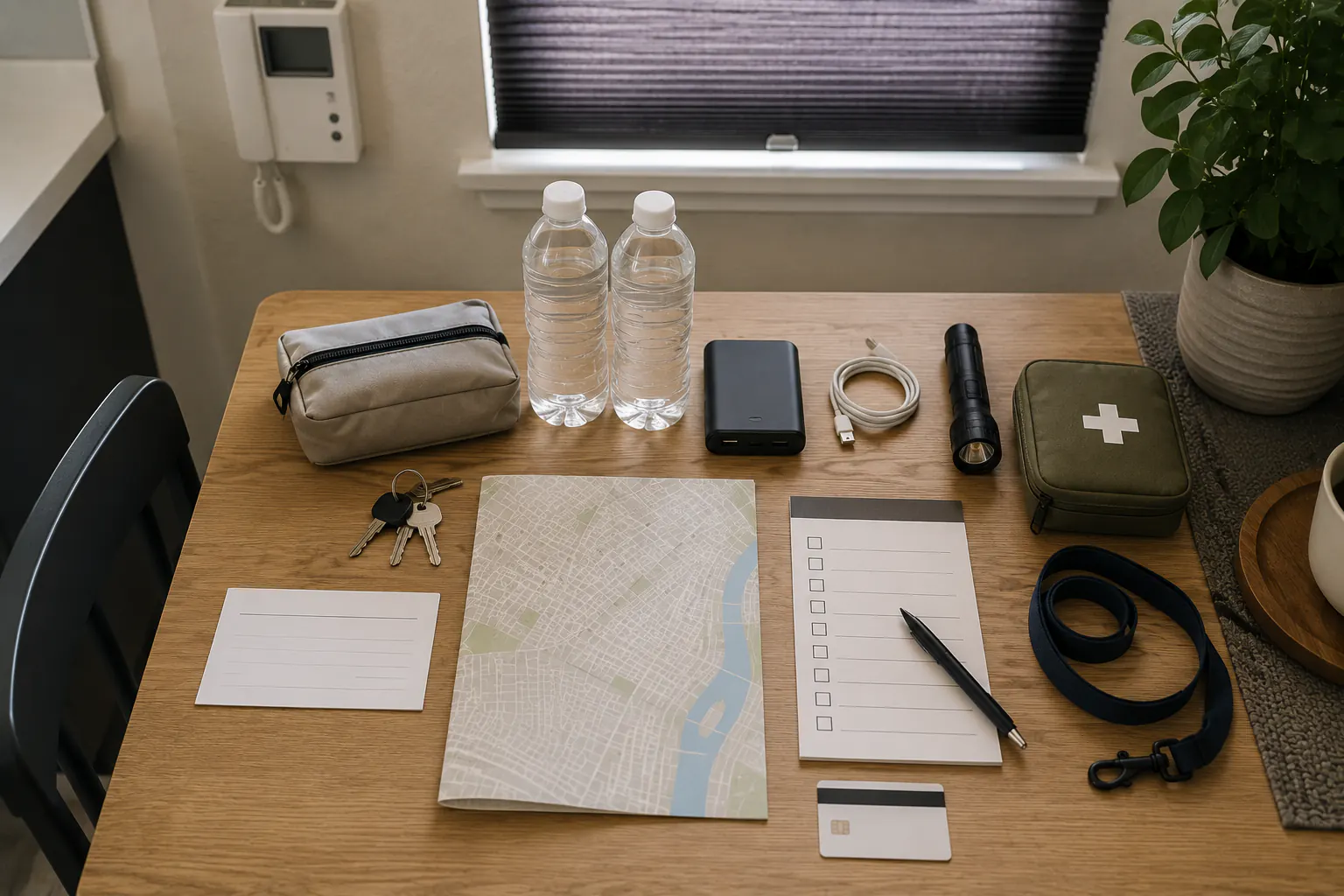
Keep a departure bag by the door with keys, identification, medication, written contacts, water, chargers, basic food, light clothing, and accessibility or pet supplies. Avoid making it so heavy that it delays travel.
Set an early relocation trigger
There is no universal safe indoor temperature for every person and duration. Combine local health guidance with the apartment’s temperature trend, symptoms, health plan, floor level, expected overnight low, elevator status, transport time, and destination hours.
Useful triggers include:
- cooling equipment fails and repair is not imminent;
- the room continues heating despite shading and reduced loads;
- a medically vulnerable person develops symptoms or loses device continuity;
- the elevator, water, access, or communication system is expected to fail;
- the destination will close before a later departure;
- the household no longer has enough battery or physical capacity to travel safely.
Say the trigger out loud and write it down. The extreme heat outage procedure organizes actions by the first 15 minutes, first hour, and extended outage.
Prepare for pets
Pets can also overheat. Keep water, carriers or leashes, medication, identification, and a pet-appropriate destination ready. Never leave an animal in a parked vehicle or on a hot balcony. Species, age, coat, breathing anatomy, health, and medication change risk; obtain veterinary guidance for the animal in your care.
Do not depend on an apartment floor surface, open window, or fan as proof that the pet is safe. Monitor behavior and the actual environment.
Run a building-exit drill
- Time the route from the unit to the exterior using the planned accessible path.
- Test the departure bag’s weight.
- Confirm that all household members can unlock and operate the exits.
- Locate the stairwell without relying on the elevator.
- Send a test check-in to the out-of-area contact.
- Call the primary cooling destination and verify the information needed.
- Record one building obstacle and assign a correction.
Do the drill in safe conditions, not during peak heat. Never block halls, stairs, or fire equipment.
Sources reviewed
- Ready.gov: Extreme Heat
- CDC: About Heat and Your Health
- U.S. Environmental Protection Agency: Extreme Heat
- National Weather Service: Heat Safety
Sources reviewed July 14, 2026. Building rules, local law, official instructions, and individual medical plans take priority over this general guide.