
Check on the people in the home first, including anyone who needs help moving or depends on powered medical equipment. Call 911 for emergency symptoms. Then contact the planned cooling destination and transport contact; do not wait for a restoration estimate before arranging help.
Use this procedure with current utility, weather, public-health, and emergency-management information. For preparation before the event, start with the extreme heat preparedness guide.
Call 911 for emergency symptoms
Confusion, altered mental status, loss of consciousness, seizures, or suspected heat stroke require 911. Move toward a cooler place and begin safe cooling while following dispatcher instructions. Persistent chest pain, severe shortness of breath, or another medical emergency also requires immediate help.
Do not wait for power restoration, a specific thermometer number, or every expected symptom.
First actions: people, alerts and shade
The sequence is not a waiting period. Emergency symptoms, a clinical backup plan or official instructions may require action before any log, packing or outage check is complete.
Account for people
Locate every household member. Check children, older adults, pregnant people, people with chronic illness or disability, anyone using medication affected by heat, and anyone who cannot relocate independently. Call the person assigned to check an at-risk relative or neighbor.
Ask about symptoms and changes in normal function. Reduce physical activity immediately.
Confirm the outage
Use the utility or building management’s outage channel to establish the scope. Do not open a panel, touch unfamiliar equipment or investigate smoke, burning odor, buzzing, water intrusion or heat damage. Keep away and contact the appropriate emergency service, utility or qualified electrician; do not repeatedly reset a breaker that trips.
Use the utility’s outage channel and local official alerts. Preserve phone energy by lowering screen brightness, closing unnecessary apps, and assigning one device for updates.
Start an indoor heat log
Record the occupied-room temperature, time, outdoor conditions, and whether the home’s cooling system stopped. Place the thermometer away from sun, appliances, and direct fan airflow. Repeat at the interval in the household plan, but never delay help or departure to gather readings. Temperature alone does not establish that someone is safe.
Block incoming heat
Close sun-facing shades, exterior doors, and windows when outdoor air is hotter than indoor air. Turn off avoidable heat sources. Keep the refrigerator and freezer closed. Move people into the coolest practical occupied zone without blocking exits.
During the first hour
Confirm where you will go
Contact the current cooling destination and one backup. Verify that it has power, is open, can accommodate the household, and meets accessibility, pet, medication, and device needs. Identify transport and a driver now.
An old web listing, voicemail, or memory from last year is not confirmation. Local health departments and emergency-management agencies can provide current cooling-center information.
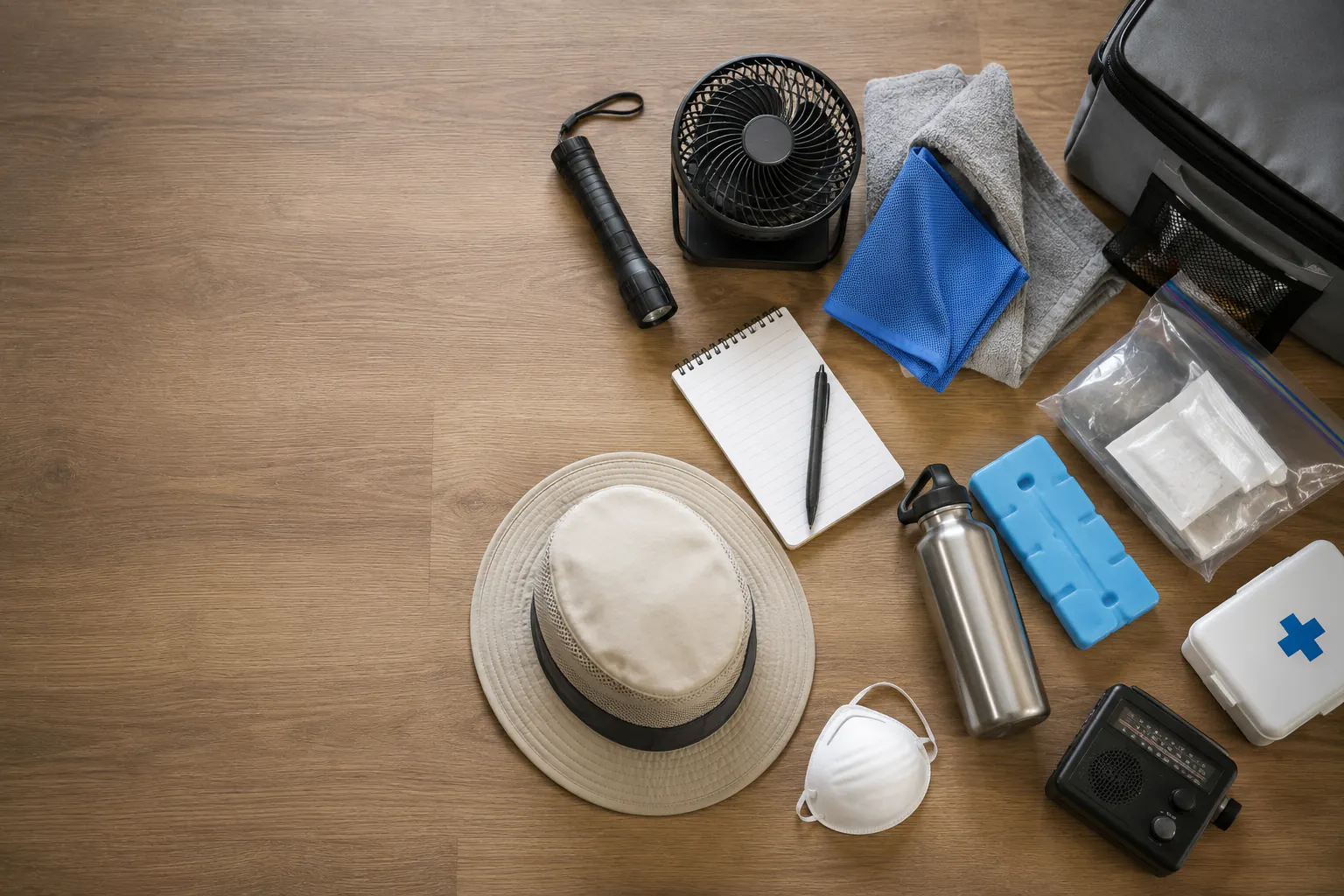
Pack a heat departure bag
Keep it small enough to carry without strenuous effort:
- essential medication and written instructions;
- approved medical-device batteries, adapters, and manufacturer contacts;
- water and food appropriate to individual needs;
- identification, payment method, keys, and paper contacts;
- phone, charging cables, power bank, and radio;
- light clothing, a cool damp cloth, and basic hygiene items;
- infant, mobility, communication, service-animal, and pet supplies.
Do not leave temperature-sensitive medication in a hot vehicle. Follow storage instructions from the pharmacist, manufacturer, or care team.
Decide what backup power is for
Follow the individualized medical-device plan first. For other permitted loads, record what the exact backup supply can support and the reserve needed for communication. Fan and air-conditioner demands differ; capacity, output, total startup load and allowed connections all matter. Do not assume a portable battery can support central or room air conditioning.
Use the backup power for cooling guide and runtime calculator for estimates. Medical-device continuity must use approved equipment and an individualized plan.
Use fans within the CDC limit
CDC advises using an indoor electric fan only when indoor temperatures are below 90°F. Above 90°F, fan use can increase body temperature. A fan does not make the room cooler, so monitor the actual occupied zone and do not let airflow delay relocation. (Source: CDC, About Heat and Your Health, reviewed July 2026.)
Read fan safety during extreme heat for placement, ventilation, and battery decisions.
Set a departure trigger
Write the trigger before anyone is exhausted. It should combine more than one signal:
- current official instruction or evacuation order;
- symptoms or worsening medical condition;
- indoor temperature and rate of increase;
- forecast peak and overnight low;
- remaining cooling-device and communication runtime;
- elevator, water, security, or building-system failure;
- travel time and destination closing time;
- whether safe transport is still available.
There is no universal indoor number that protects every person. Use clinician guidance and local public-health instructions for vulnerable household members. Leave earlier when the health risk or travel difficulty is higher.
If you remain temporarily
Staying for a limited period should be an active, monitored decision, not inertia.
Manage the building
Keep solar shades closed and avoid cooking, clothes drying, high-power electronics, and unnecessary lighting. Open secure windows only when outdoor air is cooler and air quality is acceptable. Close them before outdoor temperatures rise again. The passive cooling guide provides the complete sequence.
Manage people
Use cool showers or baths, cool damp cloths, light clothing, shade, and reduced activity as appropriate. Drink according to the person’s medical plan. Never change fluid restrictions or medication based on generic internet advice.
Schedule checks. A named person should confirm temperature, symptoms, power status, and departure readiness at each interval. People living alone need a missed-contact escalation.
Manage communication
Send one concise status update to the household’s out-of-area contact. Include location, people accounted for, intended destination, planned departure time, and the next check-in. Text may use less battery and may work when calls are congested.
Use the family outage communication plan to avoid scattered, conflicting messages.
Generator and combustion warning
Never use a portable generator, grill, charcoal device, camp stove, or other fuel-burning equipment indoors, in a garage, on a porch, in a carport, or near doors, windows, and vents. Opening a window does not make indoor or near-building generator use safe.
Follow the generator manufacturer and current CPSC guidance for outdoor distance and placement. Keep working carbon-monoxide alarms on every level and near sleeping areas as directed by their manufacturer. CO shutoff features are additional protection, not permission for unsafe placement.
Do not refuel hot equipment. Do not connect a generator to home wiring through a receptacle. Household transfer equipment requires a qualified electrician and compliance with local rules.
Food, water, and medication
Keep refrigerator and freezer doors closed. Use appliance thermometers and the power outage food safety guide; smell and appearance cannot establish food safety.
If municipal water pressure changes or an advisory is issued, follow the water utility and public-health authority. Do not ration drinking water so aggressively that heat exposure worsens, but follow individual medical fluid instructions.
Temperature-sensitive medicine needs a prearranged storage plan. Do not place medication directly against ice or freeze it unless the product instructions specifically allow that. Ask the pharmacist or manufacturer what to do after a temperature excursion.
Apartment and multifamily complications
Elevators may stop, electronic entry systems may behave differently, common areas may lose cooling, and upper floors may heat faster. Do not use an elevator during a fire or when authorities or building management prohibit it. If stair travel is difficult, departure must begin earlier and assistance must be arranged before the outage.
Do not prop open fire doors to improve airflow. Keep hallways and stairs clear. The apartment extreme heat plan addresses these constraints and neighbor check-ins.
When power returns
Power restoration does not end the heat event.
- Observe from an ordinary safe position; do not approach smoke, burning odor, damaged cords, water near electrical equipment or abnormal appliance behavior to investigate.
- Follow utility, manufacturer and qualified-service instructions before restoring permitted loads; do not handle a damaged panel or uncertain connection.
- Confirm cooling resumes only through permitted normal controls and observations; leave faults, drainage access and repairs to appropriate service.
- Continue monitoring people and indoor temperature.
- Evaluate refrigerated food and medication under authoritative guidance.
- Recharge communication and backup-power equipment on a noncombustible, manufacturer-approved setup.
- Record the outage duration, indoor temperature trend, energy used, and departure decision.
Call the utility or a qualified electrician for downed lines, damaged service equipment, repeated breaker trips, arcing, burning odor, or other electrical hazards. Keep away from downed lines and anything touching them.
A compact heat-outage checklist
- Account for people and screen for emergency symptoms.
- Confirm outage scope and official alerts.
- Start the indoor temperature and time log.
- Shade windows and stop indoor heat sources.
- Confirm two cooled destinations and transportation.
- Pack medication, communication, water, keys, and accessibility items.
- Allocate battery energy by consequence.
- State the departure trigger and next check time.
- Leave while the household can still travel safely.
Keep one immediate next action clear: confirm the destination and who will help the household reach it. Recheck availability as conditions change, and do not let equipment calculations or a completed checklist delay needed care or departure.
Sources reviewed
- Ready.gov: Extreme Heat
- Ready.gov: Power Outage Hazard Information Sheet
- CDC: About Heat and Your Health
- National Weather Service: Heat Safety
Sources reviewed July 14, 2026.
CDC’s indoor fan limit, cooling-location guidance and medical-plan boundary checked October 2, 2026. This narrow check does not replace the historical review of the other sources.