
Growing some of your own food is one of the most satisfying parts of a resilient household — and one of the easiest to oversell. A home garden can lower a grocery bill, put fresher food on the table, and give a household a real skill it controls. What it cannot do is guarantee to feed a family through a disaster. This hub treats gardening as a practical supplement worth building deliberately, and it stays honest about what a season of real gardening actually returns.
This cluster teaches how to grow food realistically and safely. It hands off the neighboring jobs to the guides that already own them: preserving a harvest belongs to food preservation and dehydration, identifying wild plants belongs to foraging and wild foods, and stored shelf-stable food belongs to the emergency food storage hub.
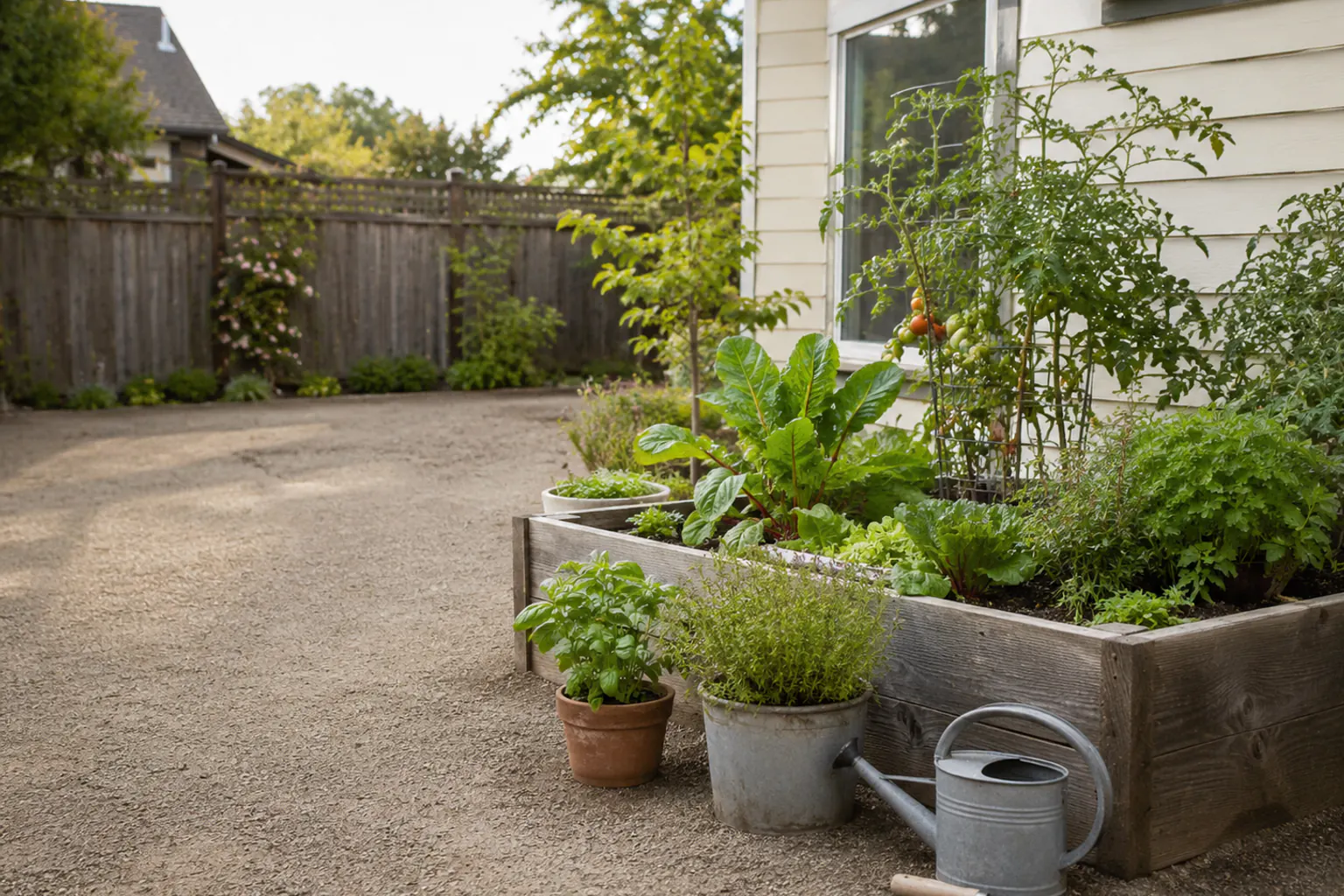
The honest promise of a home garden
A garden is a supplement, not a survival plan. A household that expects a backyard to replace the grocery store during a crisis will be disappointed at exactly the wrong moment. The realistic goals are better ones:
- Lower ongoing food cost on crops you actually eat.
- Fresher, higher-quality produce you control from seed to plate.
- A durable skill — soil, water, timing, and seed handling — that compounds each season.
- Some genuine resilience: a household that already gardens has tools, seeds, and know-how when it matters, rather than starting from zero under pressure.
Treat any “grow all your food” or “survival garden feeds your family” claim with the same skepticism you would treat a miracle diet. Calorie self-sufficiency from a home plot takes significant land, years of experience, storage, and reliable water — far beyond what most households have.
Start where you are
The single biggest predictor of a garden that lasts is starting at a size you can actually maintain. A small bed you tend beats a large one you abandon in July.
- Have a yard? A few square feet of raised bed or in-ground space is plenty to start. The how to start a practical food garden guide covers sun, water access, soil, and first crops.
- Renting, on a balcony, or indoors? Container and small-space growing is a real path, not a consolation prize. See container and small-space food gardening.
- Not sure what to plant? Match crops to your climate and your appetite before you buy anything. The choosing reliable, high-value crops guide uses USDA hardiness zones and realistic returns.
Build the skills the garden actually depends on
Four things quietly decide whether a garden succeeds, and none of them is the plant catalog:
- Crop selection for your zone. USDA’s Plant Hardiness Zone Map tells you what can survive your winters and when your season runs. Growing the wrong crop for your zone is the most common beginner disappointment. Owned by choosing reliable, high-value crops.
- Seeds you can rely on and store. Viability, storage, and the basics of saving seed turn one purchase into several seasons. Owned by seed selection, storage, and saving basics.
- Water and soil you can trust. Produce is only as safe as the water and soil it grows in, and a garden’s water demand is real. Owned by garden water, soil, and produce safety.
- Tools that fit the job. You need very few tools to start. When you do buy, buy by the job. Owned by gardening tools and supplies.
Keep produce safety in view
Home-grown does not mean automatically safe. CDC and FDA are specific that fresh produce can carry harmful germs from soil, water, animals, or handling, and that washing, clean water, and clean surfaces matter. (Sources: CDC, Steps to Safer Fruits and Vegetables; FDA, Selecting and Serving Produce Safely.) Contaminated soil or irrigation water is a genuine hazard, especially on unknown urban lots. The garden water, soil, and produce safety guide covers the stop rules; when soil or water contamination is a real question, a qualified test and your local Cooperative Extension come before the harvest, not after.
Garden water demand is real, and any question about whether water is safe to use — barrels, greywater, or after a flood — belongs to the emergency water filtration and treatment guide.
Two more boundaries protect a household:
- This cluster never identifies wild or unknown plants. If a plant was not deliberately grown from a known seed or start, its edibility is a foraging question, and foraging and wild foods owns it — conservatively.
- Allergies, pregnancy, immune conditions, and medical diets are clinical questions. A garden does not change them; a clinician answers them.
Use your local Cooperative Extension
The best free gardening resource in the United States is your state’s Cooperative Extension service, funded through USDA. It publishes region-specific planting dates, variety recommendations, pest guidance, and soil-testing services tuned to exactly where you live — something no national article can match. (Source: USDA NIFA, Cooperative Extension.) Before a first season, find your county’s extension office; it will save more failed plantings than any product.
The point of the cluster
The goal is not a homestead fantasy. It is a household that grows a meaningful amount of its own food, safely, at a scale it can sustain — and that keeps the harder jobs (preserving, foraging, storing, treating water) with the specialists that already own them. Start small, grow what you eat, and let the skill compound.
Sources reviewed
- U.S. Department of Agriculture, National Institute of Food and Agriculture: Cooperative Extension
- USDA Agricultural Research Service: Plant Hardiness Zone Map
- Centers for Disease Control and Prevention: safer fruits and vegetables
- U.S. Food and Drug Administration: selecting and serving produce safely
- U.S. Environmental Protection Agency: safe pest control
Sources reviewed July 29, 2026. Local Cooperative Extension, public-health, agricultural, and product-label guidance control actual growing, safety, and pest decisions.