
Seeds are where a garden’s resilience actually lives. A few dollars of well-chosen, well-stored seed can plant several seasons, and knowing which crops you can save seed from turns a one-time purchase into a renewable supply. This is one branch of the home food gardening hub.
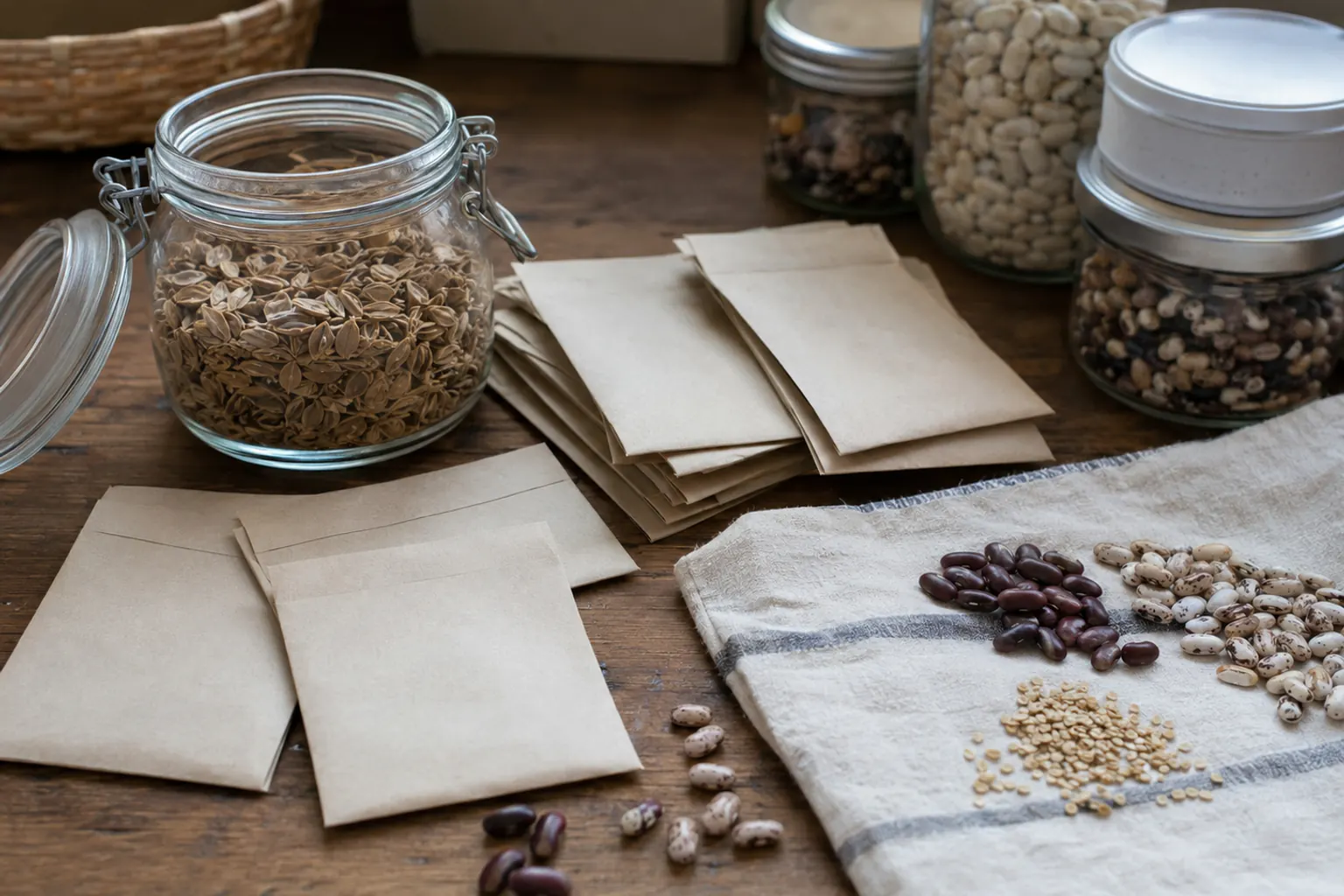
Understand the seed terms that matter
A few labels change what a seed can do for you:
- Open-pollinated: breeds true from saved seed, so next year’s plants match this year’s. The basis of seed saving.
- Heirloom: an open-pollinated variety passed down over time — also save-able.
- Hybrid (F1): often vigorous and productive, but seed saved from it does not reliably reproduce the parent. Buy hybrids to grow, not to save.
- Treated vs untreated: some seed is coated with fungicide; the packet says so. Read the label, especially if children or pets are around the storage.
If self-reliance is a goal, favor open-pollinated and heirloom varieties for the crops you want to save. If pure productivity is the goal for a given crop, a hybrid may outperform — just do not expect to save its seed.
Choose seed suited to your zone
The best seed for you is the variety that matures in your climate. Match choices to your USDA hardiness zone and the shortlist from choosing reliable, high-value crops, and lean on your local Cooperative Extension for varieties proven in your county. (Sources: USDA ARS, Plant Hardiness Zone Map; USDA NIFA, Cooperative Extension.)
Store seed so it stays alive
Seed is alive, and three things age it: heat, moisture, and light. Store to slow all three:
- Cool, dark, and dry. A closet interior beats a hot garage or a sunny windowsill.
- Airtight containers (jars or sealed bags) keep humidity out; a desiccant packet helps in humid climates.
- Label everything with variety and year — viability drops over time and varies by crop.
- Rough viability: many common vegetable seeds stay usable for a few years when stored well; some (like onions and parsnips) fade fast, others (like tomatoes and beans) last longer. When in doubt, run a simple germination test on a damp paper towel before planting a whole bed.
The USDA even maintains a national seed genebank for long-term preservation — a reminder that seed keeping is a real discipline, not an afterthought. (Source: USDA ARS, plant genetic resources preservation.)
Saving your own seed — the basics
Start with the easy, self-pollinating crops that reward beginners:
- Beans and peas: let pods dry on the plant, then shell and store.
- Tomatoes and peppers: save from open-pollinated (not hybrid) fruit; tomatoes benefit from a short fermentation of the seed-and-pulp before drying.
- Lettuce: let a plant bolt and flower, then collect the dried seed.
Save from healthy, true-to-type plants; let seed dry fully before storing; and keep saving to open-pollinated varieties. More advanced saving (crops that cross-pollinate readily, like squash and corn) needs isolation techniques your Cooperative Extension can explain.
Buying seeds and starter supplies
Keep it connected
A seed supply is only useful with somewhere to plant it — start with how to start a food garden, stocked with the few tools in gardening tools and supplies — and a harvest is only useful if you can keep it, which belongs to food preservation and dehydration. Seeds complement, but never replace, the shelf-stable reserve in emergency food storage: a “survival seed vault” is a fine hedge, but seeds you actually grow and save each year are the real resilient supply.
Sources reviewed
- USDA National Institute of Food and Agriculture: Cooperative Extension
- USDA Agricultural Research Service: plant genetic resources preservation
- USDA Agricultural Research Service: Plant Hardiness Zone Map
Sources reviewed July 29, 2026. Local Cooperative Extension and seed-packet directions control variety, viability, and planting decisions.