
The gardening aisle is designed to sell tools, and a new grower can easily spend more on gadgets than on a season of groceries. The truth is that a productive home garden needs very few tools, and the rest is preference. This is a research-based comparison of categories, not a hands-on ranking — ReadyLience has not tested specific products. It is one branch of the home food gardening hub.
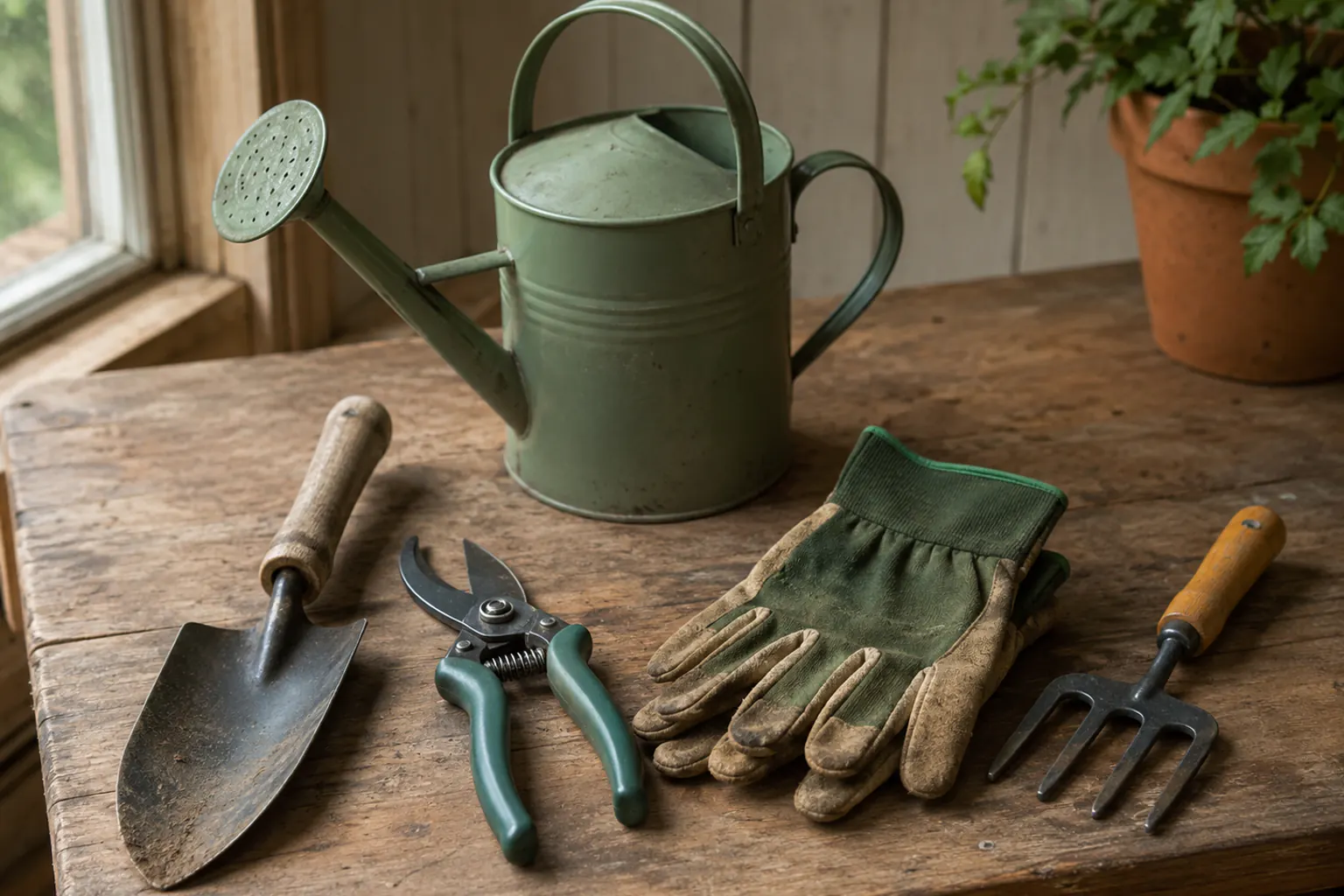
The short list that actually matters
Most home food gardens run on a handful of tools. Buy these first, and buy them decently made — a cheap tool that breaks or a comfortable one you actually use is the whole difference:
| Tool | The job it does | Why it earns its place |
|---|---|---|
| Hand trowel | Planting, transplanting, digging in beds and containers | The one tool nearly every task starts with |
| Watering can or hose with a gentle nozzle | Reliable, controllable watering | Watering is the skill gardens fail on; make it easy |
| Pruners / garden scissors | Harvesting, trimming, deadheading | A clean cut protects the plant and speeds harvest |
| Digging fork or spade | Turning soil, breaking new ground (in-ground beds) | Only needed for ground beds, not containers |
| Sturdy gloves | Protection and comfort | Keeps you gardening longer and safer |
A container or balcony garden needs even less — often just a trowel, pruners, gloves, and a watering can.
The supplies that decide the harvest
Tools are cheap; the supplies that hold the soil and water are where results are won:
- Good soil or potting mix — the single most important purchase, especially for raised beds and containers. See how to start a food garden for the soil-vs-potting-mix distinction.
- Containers with drainage for small-space growing — covered in container gardening.
- Seeds suited to your zone — the renewable part of the system, covered in seed selection and saving.
- Mulch to hold moisture and slow weeds — cheap and high-value.
What to skip, at least at first
A long list of specialty gadgets adds cost without adding harvest for a beginner: single-purpose planters, elaborate tool sets, gimmick “grow anything” kits, and most powered equipment. Add specialty tools only after a repeated, specific need appears — the same discipline the essential home toolkit applies to household tools.
Buying tools and supplies
Keep buying connected to growing
A cart full of tools does not grow food; a few good tools plus soil, seeds, water, and the habit of showing up does. Start with the short list, spend the supply budget on soil and seeds, and let the garden itself tell you what one specialty tool it actually needs next.
Sources reviewed
- USDA National Institute of Food and Agriculture: Cooperative Extension
- U.S. Environmental Protection Agency: safe pest control
- Centers for Disease Control and Prevention: safer fruits and vegetables
Sources reviewed July 29, 2026. Product labels, manufacturer instructions, and local Cooperative Extension guidance control real tool, soil, and pest decisions.