
The reason most first gardens fail has nothing to do with a green thumb. It is starting too big, in the wrong spot, with the wrong crops, at the wrong time. Get four decisions right — location, soil, crops, and timing — and a first food garden usually works. This is one branch of the home food gardening hub.
1. Pick the spot: sun and water first
Most food crops — tomatoes, peppers, beans, squash — want at least 6 hours of direct sun a day. Leafy greens and herbs tolerate less. Watch your actual yard for a day before committing; the sunniest corner in June is not the same as in April.
Just as important, and usually forgotten: put the garden where watering is easy. A bed a hose reaches is a bed that gets watered. A bed at the far end of the yard is a bed that dries out in the first busy week. Garden water demand is real, and the garden water, soil, and produce safety guide covers using safe water and not over-committing your supply.
2. Start small — genuinely small
A bed you can reach across (about 4 feet wide) and a length you can maintain in fifteen minutes is a better teacher than a large plot. You can grow a surprising amount in a few square feet, and a small success gets expanded next season. A large failure usually ends the hobby.
- Raised bed: the easiest reliable start — you fill it with good soil and skip poor native ground.
- In-ground row: cheapest, but only as good as the soil under it.
- No yard? Containers are a full path, not a fallback — see container and small-space food gardening.
3. Build soil you can trust
Plants live in soil, and soil is where most produce-safety and yield questions start.
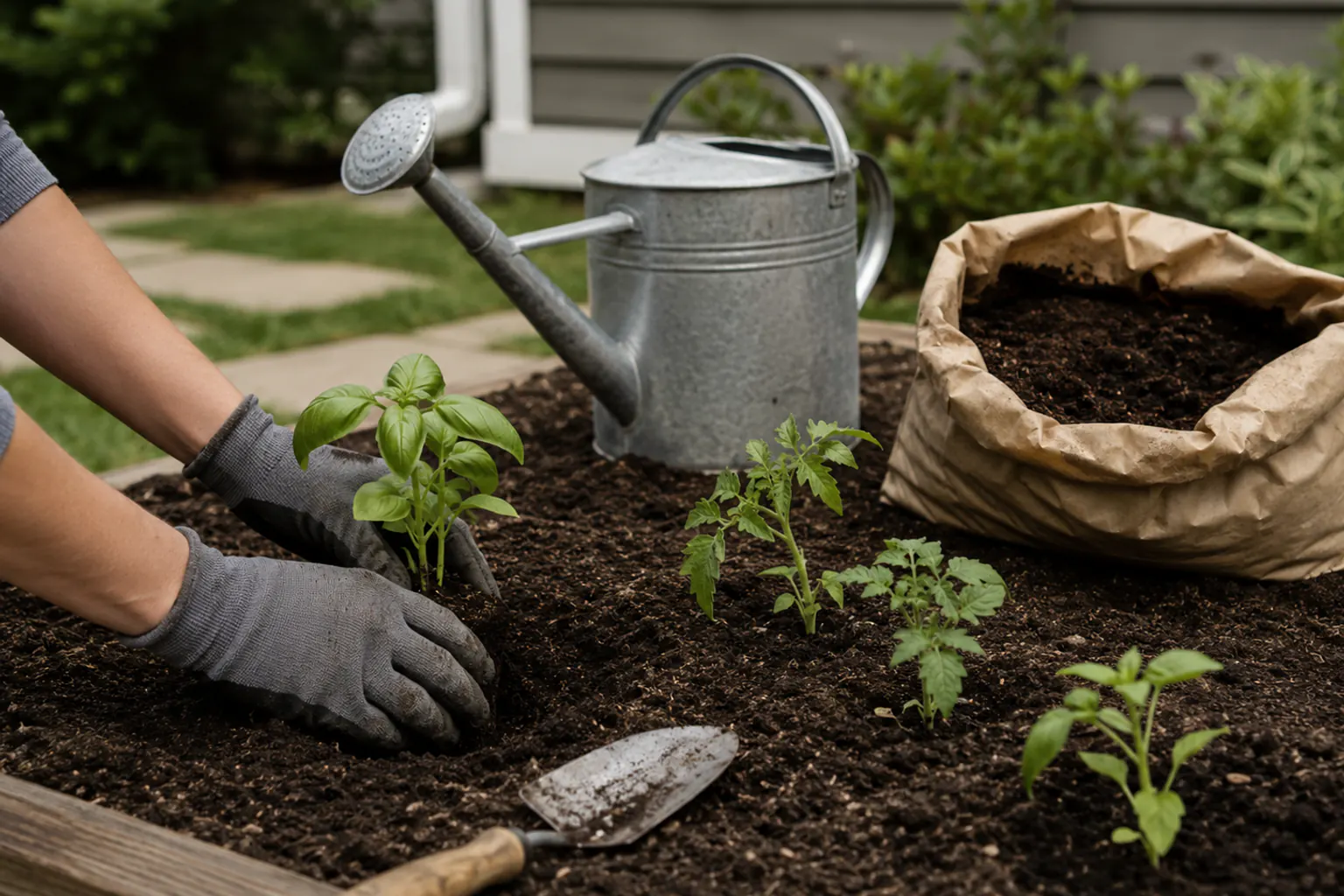
- For a raised bed or containers, buy a quality bagged garden or raised-bed soil so you know what you are growing in.
- For in-ground beds, improve the native soil with compost, but test unknown or urban ground first. Old city lots can carry lead and other contaminants. Your local Cooperative Extension offers affordable soil testing and tells you what is safe to grow. (Source: USDA NIFA, Cooperative Extension.) Do not skip this step on a lot with an unknown history — the produce safety guide explains why.
4. Choose a few easy, high-value crops
Resist the catalog. Start with three to five crops you actually eat and that forgive beginners: leafy greens (lettuce, kale), bush beans, cherry tomatoes, zucchini, and herbs are common reliable starters — but the right list depends on your climate. Match crops to your USDA hardiness zone and your appetite using choosing reliable, high-value crops, then buy seed suited to your zone with seed selection, storage, and saving basics.
5. Plant at the right time for your zone
Timing is where zone knowledge pays off. Plant a warm-season crop before your last frost and you lose it; wait too long into summer heat and cool-season greens bolt. Your USDA Plant Hardiness Zone sets the frame, and your local Cooperative Extension publishes the actual planting calendar for your county — the single most useful free document you can get before a first season. (Sources: USDA ARS, Plant Hardiness Zone Map; USDA NIFA, Cooperative Extension.)
6. Keep it alive: water, weed, watch
- Water deeply and less often rather than a daily sprinkle; it drives roots down.
- Weed early, while weeds are small and easy.
- Watch for pests and identify before you spray. If you use any pest product, follow the label exactly — it is the law and the safety instruction. The EPA’s safe-pest-control guidance and your Extension office cover lower-risk approaches first.
- Harvest often. Many crops produce more when picked regularly.
What this guide hands off
- A harvest to keep? Preserving belongs to food preservation and dehydration.
- Water supply concerns? Emergency water filtration and treatment owns safe-water decisions.
- A plant you did not plant on purpose? That is a foraging identification question, not a garden one.
A first garden is a set of four good decisions and a habit of showing up. Start small, grow what you eat, and let next season be bigger.
Sources reviewed
- USDA National Institute of Food and Agriculture: Cooperative Extension
- USDA Agricultural Research Service: Plant Hardiness Zone Map
- Centers for Disease Control and Prevention: safer fruits and vegetables
Sources reviewed July 29, 2026. Local Cooperative Extension and current public-health and product-label guidance control planting, soil, and pest decisions.