
Home-grown food feels safe by definition. It is not. Produce can carry harmful germs and contaminants from soil, water, animals, or handling — the same hazards that trigger commercial recalls apply to a backyard. Growing your own food is worthwhile; growing it safely is a short set of stop rules. This is one branch of the home food gardening hub.
Start with the soil you cannot see into
The biggest hidden hazard in a garden is contaminated soil, especially on urban or unknown lots. Old industrial sites, former building footprints, near-road strips, and lots with unknown history can carry lead and other contaminants that plants can take up or that cling to produce.
The stop rule: on any ground with an unknown history — and always in an urban lot — have the soil tested before growing edibles. Your local Cooperative Extension offers affordable soil testing and tells you what is safe to grow and where. (Source: USDA NIFA, Cooperative Extension.) If a test shows a problem, raised beds filled with clean bought soil, or containers, sidestep the ground entirely.
Use water you would drink
Plants are only as clean as their water, especially for leafy crops eaten raw.
- Use potable (drinking-quality) water for the garden where you can, particularly for greens and anything eaten uncooked.
- Rain barrels and greywater carry real risks. Barrel water can pick up contaminants from roofs; greywater can carry pathogens. If you use them, keep them off the edible parts of leafy crops and follow your local rules — safe-water decisions belong to the emergency water filtration and treatment guide.
- After a flood, treat the garden as contaminated. Floodwater carries sewage, chemicals, and germs. Public-health guidance generally advises discarding leafy greens and soft produce that contacted floodwater and following local advisories before harvesting anything — the flood-contamination stop rules apply to grown food too.
Handle produce the way public health says to
CDC and FDA are specific about the handling that prevents illness. (Sources: CDC, Steps to Safer Fruits and Vegetables; FDA, Selecting and Serving Produce Safely.)
- Wash hands before and after handling produce.
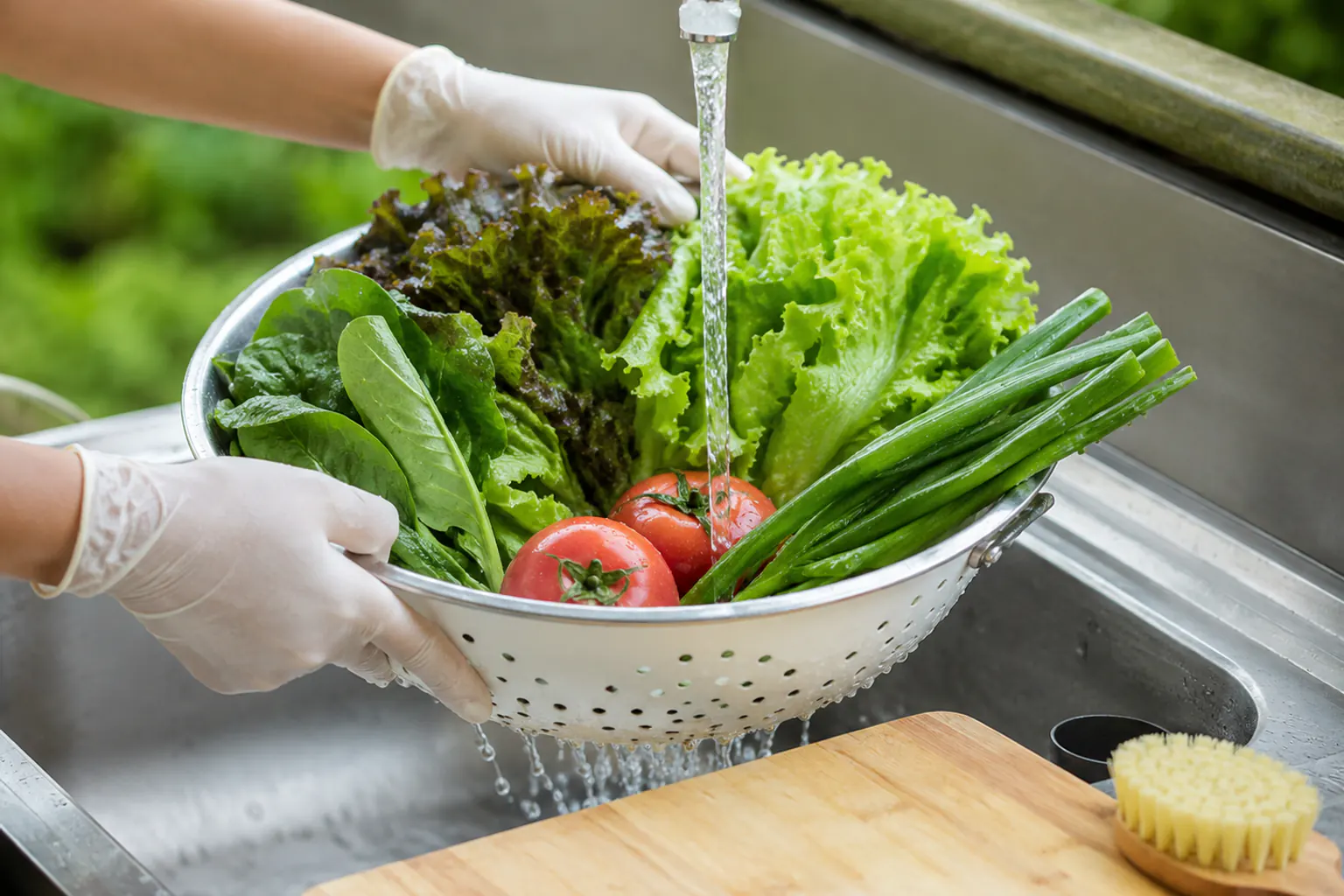
- Rinse produce under clean running water before eating or cutting — even home-grown, even “clean-looking.” Do not use soap or bleach on produce.
- Cut away damaged or bruised areas.
- Keep produce away from raw meat, animal waste, and dirty surfaces, and refrigerate cut produce promptly.
Home-grown skips the supply chain, but it does not skip the germs that live in any soil and garden.
Use pest and soil products by the label
If you treat pests or amend soil, the product label is both the law and the safety instruction.
- Follow the EPA and label directions exactly — application rate, pre-harvest interval, and protective equipment. The pre-harvest interval (how long to wait between spraying and picking) exists for your safety. (Source: EPA, safe pest control.)
- Favor lower-risk approaches first: physical barriers, hand-removal, and identifying the pest before reaching for a chemical. Your Extension office covers integrated, lower-risk pest management for your region.
- Keep products away from children, pets, and food storage, in their original labeled containers.
Two boundaries this guide keeps
- It does not identify wild or unknown plants. If a plant appeared on its own and you are unsure it is edible, that is a foraging question, and foraging and wild foods owns it — conservatively. Never eat a volunteer plant you cannot positively identify.
- It gives no medical advice. Allergies, pregnancy, immune conditions, and illness after eating produce are clinical questions for a clinician or poison control, not a gardening article.
The short version
Test unknown soil, water with clean water, wash every harvest, respect flood and pesticide rules, and never eat a plant you did not deliberately grow and cannot identify. Do those, and a home garden is both rewarding and safe.
These rules run alongside how to start a food garden as you plant, and food preservation and dehydration takes over once a safe harvest needs keeping.
Sources reviewed
- Centers for Disease Control and Prevention: safer fruits and vegetables
- U.S. Food and Drug Administration: selecting and serving produce safely
- U.S. Environmental Protection Agency: safe pest control
- USDA National Institute of Food and Agriculture: Cooperative Extension
Sources reviewed July 29, 2026. Current public-health, EPA, product-label, and local Cooperative Extension guidance control soil, water, pest, and produce-safety decisions.