
Before touching or collecting for food, ask the owner or land manager and responsible health or environmental authority about the site’s history and current conditions. If a plausible contamination route remains unresolved, do not collect. Correct identification, healthy appearance, washing, and cooking do not clear an uncertain site.
Contamination is not always visible, odorous, or removable. This guide uses stop rules; it does not offer a household test that declares a site safe.
Screen before touching or collecting
Build a dated site-history file with the owner/manager and relevant health or environmental authority. Ask about current and past:
- roads, parking, bridges, rail, airports, and vehicle runoff;
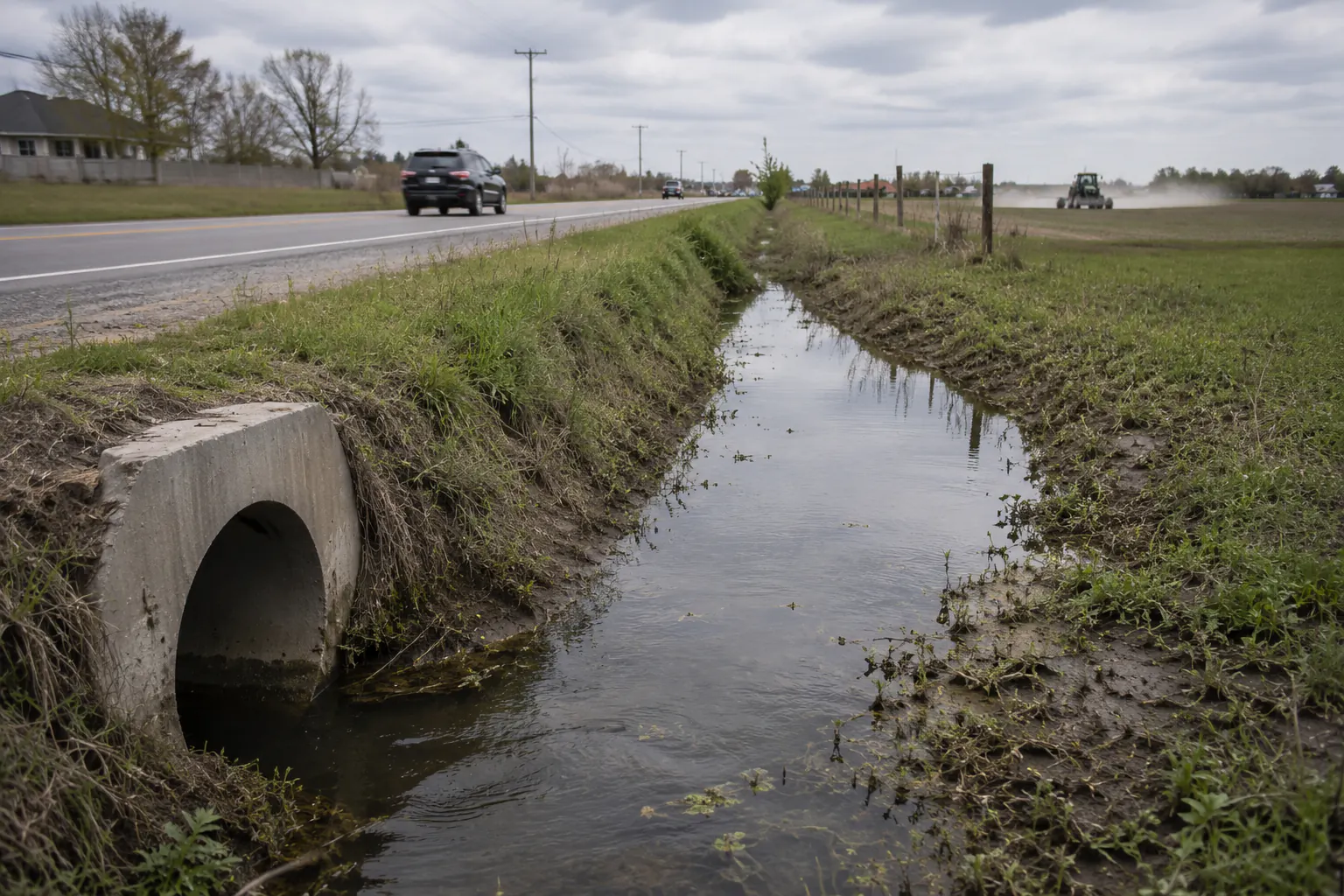
- utility, pipeline, power-line, drainage, ditch, and rights-of-way maintenance;
- farms, orchards, nurseries, golf courses, lawns, parks, and pesticide/herbicide use;
- industrial, mining, smelting, military, landfill, dump, burn, demolition, or brownfield use;
- sewage, septic, animal feeding, manure, compost, wastewater, or biosolids;
- flood, storm surge, runoff, erosion, mudslide, dam release, and standing water;
- wildfire, structural fire, ash, retardant, burned vehicles/buildings, and debris;
- fuel, oil, battery, solvent, paint, treated wood, chemical, or unknown spill;
- contaminated water, harmful algal bloom, irrigation, and drainage sources;
- restoration, research, invasive-species, pest-control, or disease treatment;
- illegal dumping, needles, waste, carcasses, feces, or heavy litter.
If the responsible authority cannot resolve a plausible contamination route, do not collect for food. Abundance and healthy appearance do not answer exposure.
Avoid roadsides and transportation corridors
Road edges can receive exhaust-related particles, brake/tire/road wear, deicing material, fuel and fluid leaks, litter, pet waste, stormwater, mowing, and vegetation treatments. Rail corridors, airports, parking areas, bridges, and maintenance yards add their own access and contamination issues.
Do not invent a universal number of feet from a road. Traffic volume, wind, slope, drainage, soil, barrier, road age, maintenance, chemical use, item, and contaminant differ. A generic setback cannot characterize the site.
Road shoulders and rail property can also be illegal and physically dangerous. Never stop a vehicle, walk along traffic, cross a barrier, enter rail property, or stand below a bridge to collect. The owner/transport authority controls access; unresolved contamination keeps the item out of food even if access is legal.
Treat rights of way as managed spaces
Power, pipeline, drainage, municipal, park, and roadside rights of way may be treated to control vegetation or pests. Application records, signs, flags, dye, or visible damage may be absent by the time a person arrives.
Ask the responsible owner or contractor what was applied, where, when, under which label, and what restriction controls harvest. A product being legal for vegetation management does not mean a passerby can infer a food-harvest interval.
Do not wash away a treatment notice, collect just beyond a visible spray line, or rely on rain since application. Active or unknown treatment means no collection for food.
Exclude floodwater and sewage impact
CDC warns that floodwater can contain sewage, hazardous waste, chemicals, debris, and pathogens and advises people to stay out. Eating or drinking something contaminated by floodwater can cause illness. Flooded soil and vegetation cannot be cleared for wild-food use by appearance or a routine rinse.
Any area that was submerged, splashed, silt-deposited, or plausibly affected by floodwater is closed for collection until the controlling public-health/environmental authority establishes what use, if any, is appropriate. No waiting period appears here because source, contaminant, soil, organism, and remediation differ.
Sewage overflow, septic failure, wastewater discharge, animal-waste runoff, and combined sewer overflow are immediate stop conditions. Keep people and animals away and follow authority instructions. The flood water guide owns household water; neither it nor boiling clears wild food.
Stop after spills and unknown waste
Do not investigate a fuel odor, sheen, drum, cylinder, battery pile, discolored soil, dead vegetation, powder, vapor, illegal dump, needle, or unknown container. Move away without touching and contact the owner, fire department, environmental authority, or emergency service as appropriate.
PPE does not convert an unknown hazardous-material site into a foraging area. Do not collect a sample, dig soil, move waste, smell closely, or take an item home for testing.
Food from an uncertain site should not be donated, sold, fed to animals, composted into a food garden, or preserved to avoid waste.
Add wildfire and structural-fire boundaries
Wildfire smoke and ash can coincide with damaged buildings, vehicles, utilities, treated wood, pesticides, batteries, fuel, metals, retardants, sewage, and disturbed soil. A rain event can redistribute residue.
Do not collect in a burned or ash-affected area based on a clean-looking plant or new growth. Follow closure, public-health, environmental, agricultural, and land-manager direction. The wildfire cleanup guide addresses household residue, not wild-food clearance.
Do not rinse ash into waterways or bring ash-covered material into a vehicle or home.
Consider animals and biological contamination
Wildlife, livestock, pets, rodents, birds, insects, and human activity can deposit feces, urine, saliva, pathogens, or physical contamination. Standing water, carcasses, nests, dens, feed areas, campsites, trash, and heavy recreation can increase contact.
Material visibly contaminated by feces, urine, vomit, carcass fluid, mold, rot, insects beyond the expert’s food criteria, or unknown biological material stays where it is — and so does wildlife, which is never disturbed to reach food. Report unusual animal illness or death, or a concentrated contamination event, through the responsible authority.
Correct cooking may reduce some biological hazards for an exact food, but it does not repair every toxin, chemical, identity, or custody problem. Do not create a generic “cook it well” override.
Keep wash water from adding risk
FDA advises washing produce under running water and not using soap, detergent, or commercial produce wash; washing can reduce bacteria but does not eliminate it. Those consumer steps apply only after the item is suitable food. They do not clear an uncertain wild site or remove every chemical, metal, natural toxin, or contamination absorbed into tissue.
Use potable water and clean food-contact equipment under the exact food-safety process — never stream, lake, rain-barrel, flood, or otherwise uncertain water, and never a shared soak of mixed batches, which can spread contamination and erase identity.
The cleaning and preservation handoff owns downstream custody.
Reject home clearance tests
Color, odor, taste, plant vigor, wildlife feeding, a home soil strip, consumer air sensor, water filter, UV light, rinse clarity, or a photo cannot establish that an item is suitable to eat. Laboratory analysis has sampling, analyte, method, detection-limit, interpretation, and representativeness limits and must be directed by the responsible authority or qualified professional.
Do not sample an unknown site yourself based on this page. A result for one contaminant, location, medium, or date does not clear every organism or future collection.
Use a stop-rule table
| Observation or history | Decision |
|---|---|
| Floodwater, sewage, wastewater, manure runoff | No collection for food; follow authority closure/remediation |
| Active or unknown pesticide/herbicide treatment | No collection; obtain responsible record and instruction |
| Road, rail, right of way, parking or drainage uncertainty | No food collection; resolve access and contamination separately |
| Fire ash, burned structures/vehicles, retardant or debris | No collection; follow incident/environmental authority |
| Spill, dump, fuel/chemical odor, container or dead zone | Leave area and report; do not investigate or sample |
| Unknown prior industrial/mining/brownfield use | No collection until qualified authority resolves intended food use |
| Animal/human waste or unexplained illness/death | Avoid contact and report as directed |
| Uncertain wash water, container or custody | Do not retain as food |
Photograph a sign or condition only from a lawful safe position and without delaying departure. Record the issuer and date, not a personal conclusion.
Respond to possible exposure
After suspected ingestion or chemical exposure, contact U.S. Poison Control at 1-800-222-1222 or the appropriate clinician/public-health route promptly. Call 911 for breathing difficulty, collapse, seizure, severe confusion, loss of consciousness, or immediate danger. Follow professional instructions; do not induce vomiting, neutralize a chemical, give a home remedy, or return to collect a sample.
Return to the Foraging and Wild Foods hub. The contamination gate is passed by responsible, site-specific evidence before collection, never by trying harder to clean a questionable harvest afterward.