
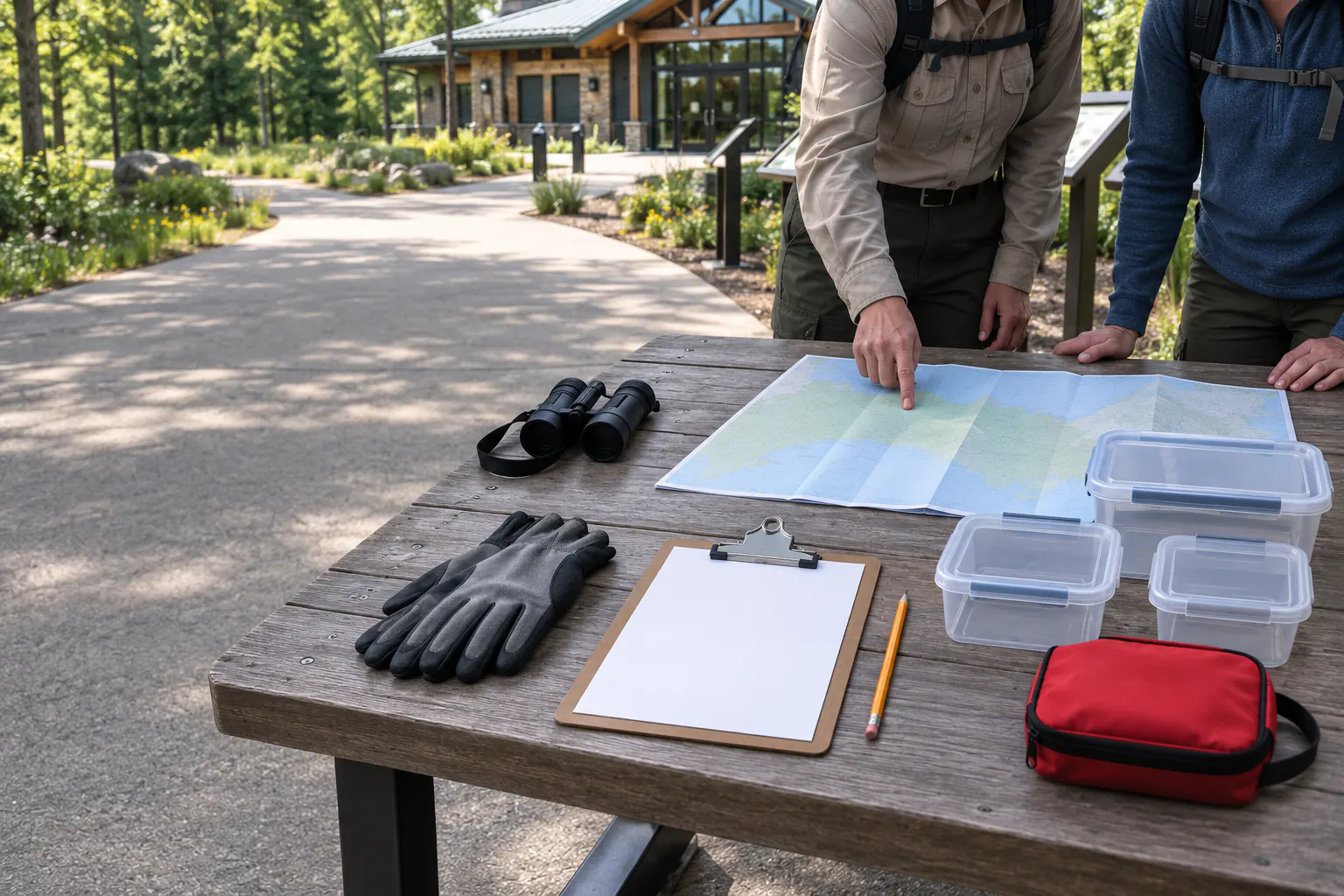
For a beginner, start by asking an accountable local program about observation-only instruction. Do not collect or plan a meal from a wild item because it resembles something familiar. Qualified physical confirmation, permission, contamination, custody, individual suitability, and exact preparation are separate requirements.
ReadyLience does not identify wild food. This family contains no edible-species list, regional look-alike chart, taste test, identification key, detoxification process, dose, or remote verdict. A beginner’s default is observation and no consumption until a qualified regional expert has physically examined the complete specimen and relevant context.
The CDC’s 2026 report on an amatoxin mushroom outbreak in northern California documented 39 cases, three liver transplants, and four deaths. People can become critically ill after mistaking a toxic organism for something edible, and symptoms may be nonspecific or delayed. That consequence sets the standard for this cluster: uncertainty means do not eat.
Use this wild-food family
- Why Photos and Apps Cannot Confirm That a Wild Food Is Safe explains why a remote image, AI answer, common name, or folk test cannot authorize handling or consumption.
- How to Find Qualified Local Foraging Instruction builds a verification file for a regionally scoped instructor, program, and physical teaching process.
- Legal and Sustainable Wild-Food Harvest Rules keeps owner permission, land status, protected resources, species, amount, method, season, personal/commercial use, and low-impact limits in one dated record.
- Wild-Food Contamination Stop Rules screens roadsides, rights of way, floodwater, sewage, pesticides, wildfire residue, waste, animals, and unknown land history before a food plan begins.
- A Conservative Foraging Trip Safety Plan creates an observation-first field session with no consumption, no remote detour, and a planned return.
- How to Clean, Transport, and Preserve Expert-Identified Wild Foods preserves identity and custody while routing each confirmed item to exact food-safety and research-tested instructions.
The Transferable Outdoor Skills hub owns benign navigation, weather, communication, and practice. The Food Preservation hub begins only after physical expert confirmation, legal collection, contamination clearance, and a suitable food history remain attached to the batch.
Reject emergency-foraging promises
Wild food is not a dependable emergency reserve. Availability changes with location, season, weather, land access, fire/flood conditions, development, disease, contamination, regulations, wildlife needs, and the learner’s current competence. A disruption can also remove refrigeration, clean water, communication, transport, and medical access.
Do not reduce stored food because plants or fungi may be nearby. The Emergency Food Storage hub owns food already controlled by the household. Foraging belongs in ordinary times, through repeated local instruction, with every field day allowed to produce zero food.
Hardship does not create permission to enter private property, closed land, protected habitat, research plots, restoration areas, Tribal land, utility rights of way, agricultural property, parks, or disaster zones. It does not suspend protected-species rules or make flood-exposed organisms suitable to eat.
Pass seven separate gates
| Gate | Evidence needed | Default when missing |
|---|---|---|
| Qualified learning | Verified regional instructor, physical teaching, defined scope, emergency boundary | Observation only |
| Complete identity | Expert physically examines the complete item and context for this batch | Do not handle for food or consume |
| Legal permission | Current owner/manager rule for exact place, date, item, amount, method, and use | Do not collect |
| Conservation | Harvest level and method approved for the exact population and site | Photograph without disturbing, where permitted |
| Contamination | Land history, current event, water/soil/use context, and authority questions resolved | Do not collect or consume |
| Food custody | Batch identity, clean separation, time/temperature, storage, and household suitability known | Do not retain for food |
| Exact preparation | Responsible food-safety or research-tested process matches the confirmed item | Do not prepare or preserve |
Passing one gate cannot repair another. Correct identification does not grant access. Permission does not prove an organism is edible. Washing does not resolve every contaminant. Cooking does not neutralize every toxin. Preservation does not repair uncertainty or poor custody.
Keep the instructor and the specimen local
Regional scope matters. Similar organisms can occur in different parts of the country or at different life stages. Common names can refer to unrelated organisms. Habitat, substrate, season, maturity, damage, storage, and the full base or attached structures can matter to expert work.
Use the USDA NIFA land-grant directory and current state or county Cooperative Extension route as starting points, then verify whether a particular office actually offers the needed botanical, mycological, food-safety, or conservation expertise. Extension membership alone does not make every employee a wild-food identifier.
An instructor should state geographic and organism scope, qualifications, insurance/permit status where relevant, teaching method, physical-specimen requirements, poisoning response, and what they refuse to identify. A confident social profile, large following, app partnership, book, or class price is not a credential.
Separate learning specimens from food
Begin with observation-only walks. Do not pick merely to practice unless the owner/manager and instructor authorize it. If a lawful teaching specimen is collected, keep it separate from food, children, pets, household surfaces, and other specimens. Label it as not for consumption.
Never place an uncertain item in a food basket, pocket with snacks, refrigerator, compost, pet area, or kitchen. Do not nibble, lick, chew, brew, smoke, inhale cooking vapor, rub on skin, or feed it to another person or animal as a test. Animal feeding or lack of immediate symptoms does not establish human safety.
Discard or return teaching material only as the authority and instructor direct. Moving seeds, soil, insects, pathogens, or invasive organisms can create ecological and legal problems.
Preserve the identity chain
For a batch that a qualified expert has physically confirmed for the intended use, record:
- expert name, scope, date, and confirmation method;
- exact site and lawful permission file;
- collection date/time and responsible collector;
- identity wording supplied by the expert without expanding it;
- life stage and batch separation required by that expert;
- contamination screen and unresolved questions;
- quantity and legal/conservation limit;
- clean container and custody history;
- time/temperature and storage history where relevant;
- exact preparation or preservation authority;
- household allergy, medication, pregnancy, child, immune, or other clinician question;
- final use, discard, and any reaction.
Do not mix batches from different sites, dates, experts, identities, or custody histories. Do not transfer an identification from one item to another that merely appears similar.
Plan for poisoning before any food use
Save the U.S. Poison Control number, 1-800-222-1222, and local emergency route before a class or trip. Confirm communication coverage and location description. Poison Control advises that wild mushrooms should not be eaten unless identified by an expert and warns that cooking does not make a poisonous mushroom safe.
After a suspected ingestion, do not wait for symptoms, identify treatment online, induce vomiting, give a home remedy, or discard all evidence before professionals advise. Contact Poison Control promptly; call 911 for immediate danger or severe symptoms. Tell professionals that a wild item may have been eaten and preserve packaging, batch records, and remaining material only as they direct.
The First Aid hub owns household contact and supply readiness but does not treat poisoning.
Use a conservative success measure
A successful beginner season can contain no wild-food meals. Measure:
- verified classes attended;
- observation-only trips completed on time;
- permissions researched correctly;
- specimens left undisturbed when uncertain;
- contamination and weather stops respected;
- expert scope understood;
- batches kept separate;
- emergency contacts practiced;
- conservation impact avoided;
- unsafe claims rejected.
Return to this hub whenever a new region, site, season, organism group, instructor, land rule, contamination event, household member, or preparation method enters the plan. Confidence does not transfer automatically. The durable skill is knowing what evidence is missing and stopping before uncertainty becomes food.