
Before retaining a wild batch for food, confirm that its exact physical identity, lawful collection, contamination questions, custody, individual suitability, and responsible handling method are resolved. If any answer is missing, keep it out of the food pathway. Cleaning and preservation cannot supply the missing approval.
This workflow begins only after all earlier gates have passed for the exact batch: physical confirmation by a qualified regional expert, current permission for the exact collection, sustainable harvest approval, site-specific contamination clearance, suitability for the people who may eat it, and an exact responsible handling or research-tested process. When any gate is missing, do not retain the item for food.
The Foraging and Wild Foods hub owns the complete decision. The photo and app warning prevents a remote suggestion from entering this workflow.
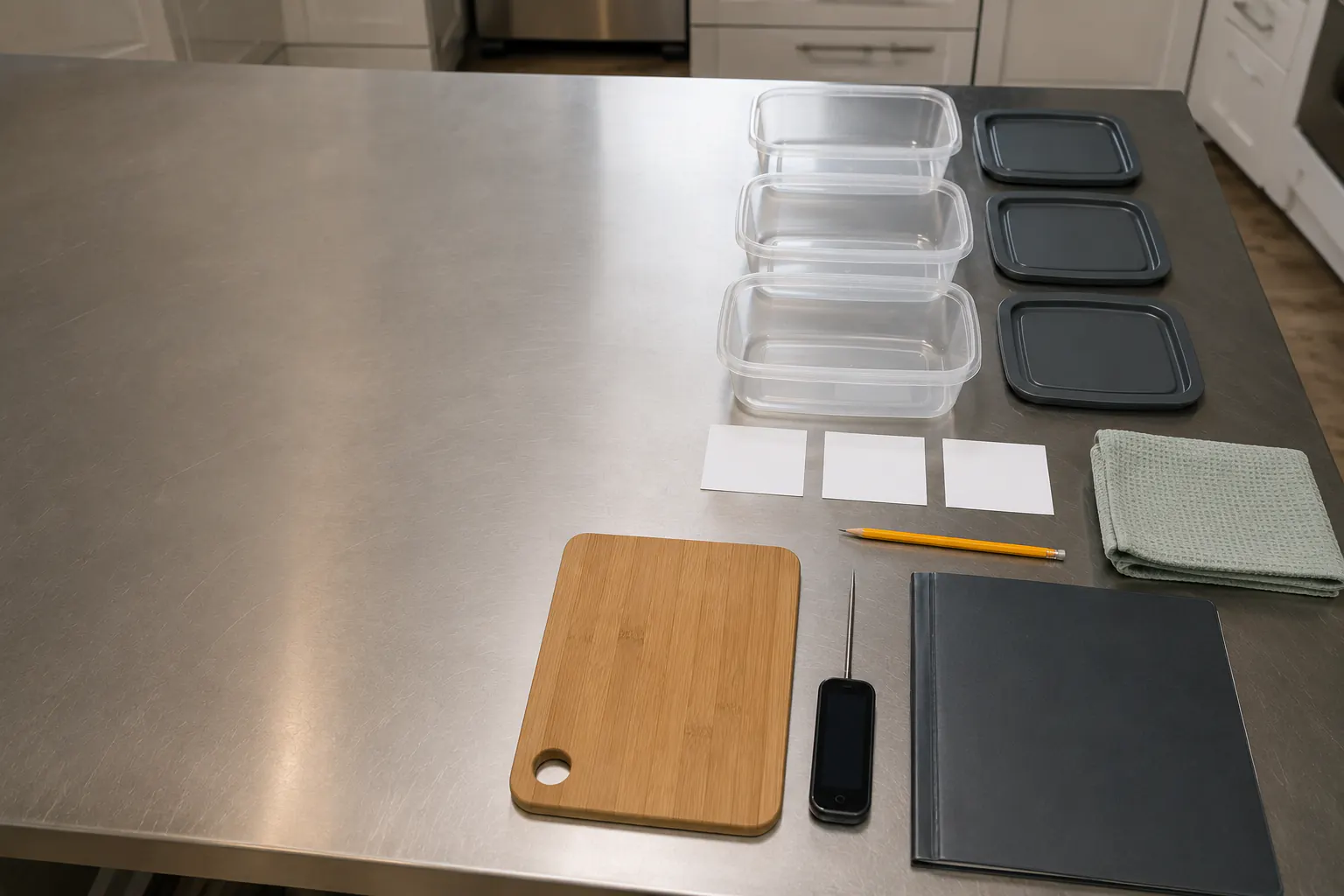
Preserve identity before preserving food
Batch identity must survive collection, transport, cleaning, preparation, storage, and service. Record the qualified expert, exact item as confirmed, physical specimen or batch examined, date, authorized site, collection time, collector, permission file, contamination decision, and the limits or preparation instructions given.
Do not combine:
- different locations, dates, collectors, or expert-confirmation sessions;
- different life stages, conditions, substrates, or organism groups;
- a confirmed batch with an uncertain or teaching specimen;
- an authorized collection with something found outside the approved area;
- a batch with different handling time, temperature, contamination, or damage history.
If identity depends on structures discarded in the field, if an item becomes mixed, or if the label can no longer be matched confidently to the exact batch, it leaves the food pathway. A photograph, memory, common name, color, smell, texture, or resemblance to the earlier item does not restore custody.
Separate teaching material from food
A specimen retained for instruction, poisoning response, or further expert work is not food. Use the container, contact protection, labeling, and disposition specified by the instructor or professional. Keep it physically separate from food containers, coolers, utensils, kitchens, refrigerators, children, pets, medicines, and drinking water.
Mark uncertain or teaching material plainly as NOT FOOD — DO NOT EAT. Do not rely on color coding alone. Never place it in a reused grocery bag, lunch container, produce drawer, drinking cup, or unlabeled jar where another person could mistake its purpose.
Do not invite household members to compare tastes, prepare a small sample, or rely on one person’s prior success. An expert’s confirmation applies only within the stated scope and to the physically examined batch. It does not authorize a second person’s independent collection.
Decide the handling plan before collection
The exact expert-confirmed item and responsible food-safety source should determine whether it can be retained, how quickly it must be handled, what temperature and container apply, which parts are excluded, what cleaning is appropriate, and whether any valid preservation method exists. ReadyLience does not supply a generic wild-food recipe.
Before collection, answer:
| Control | Required answer |
|---|---|
| Identity | Who physically confirmed this complete batch and within what scope? |
| Permission | Does the current rule allow this item, amount, method, place, date, and use? |
| Site | Which authority resolved land, water, treatment, flood, fire, waste, or spill concerns? |
| Custody | Who collected it, when, and how will batches remain separate? |
| Time/temperature | What exact handling limit and cooling method apply? |
| Cleaning | What potable-water and surface controls fit the exact item? |
| Preparation | Which responsible exact food-specific instruction controls? |
| Preservation | Does a current research-tested process exist for this exact food and form? |
| Household | Are allergy, pregnancy, age, immune status, medicine, disease, and dietary questions resolved? |
No answer means no food collection. Do not gather first and plan later while an unfamiliar item warms in a vehicle or crosses into the household.
Use clean, food-dedicated transport
Start with clean hands and clean, intact, food-suitable containers appropriate to the confirmed item and exact instructions. Keep each batch separate and labeled before another batch is added. Protect it from fuel, chemicals, bait, game, fish, soil-contaminated tools, dirty footwear, pets, waste, teaching specimens, and nonfood equipment.
Do not use a container that previously held chemicals, paint, pesticides, cleaners, fuel, automotive fluids, unknown material, or garbage. A liner does not necessarily make such a container food-suitable. Keep sharp or dirty collection tools outside food storage and follow their authorized sanitation process.
Control time and temperature according to the exact food-safety instruction. A shaded car, cool day, open window, damp cloth, stream, cellar, or unverified cooler temperature is not a cold-chain measurement. When refrigeration applies, use a suitable clean cooling system and a working thermometer; record departure, collection, cooling, arrival, and processing times.
If a delay, temperature excursion, broken container, fluid leak, unlabeled transfer, cross-contact, or vehicle contamination makes the history uncertain, discard through the responsible route. Cooking or preservation does not rewind the custody record.
Recheck before the kitchen threshold
Pause outside the food-preparation area and compare the physical batch, label, expert record, permission file, site screen, and handling log. Reject anything that was not physically included in the confirmation, was collected by another person or elsewhere, has become mixed, shows an unexplained condition, or lacks a complete time-and-temperature history.
Run the contamination stop rules again if rain, flood, spraying, wildfire, spill, waste, animal activity, harmful-water notice, or new land information appeared after the original check. Washing is not a substitute for that decision.
Keep rejected material out of compost, animal feed, shared waste, drains, and yards when it could expose people, animals, water, or wildlife. Ask the land manager, poison professional, health authority, environmental authority, or waste service for event-specific disposition instructions.
Clean without inventing a safety claim
Clean hands, food-contact surfaces, utensils, and containers before and after handling, while preventing cross-contact. Use potable water where water contacts food. Keep raw items and their soil or debris away from ready-to-eat food, clean dishes, medicines, feeding supplies, and drinking-water equipment.
FDA’s general produce guidance says to rinse produce thoroughly under running water and not to wash it with soap, detergent, or commercial produce wash. That general advice does not identify a wild item, clear a contaminated site, specify suitability for every organism, or replace exact expert and food-safety instructions.
Do not soak an item in bleach, disinfectant, soap, vinegar, alcohol, salt water, or another household mixture unless a responsible exact food-specific authority requires a defined process. Do not use a taste, smell, color change, floating test, animal response, silver utensil, cooking water, or skin contact as evidence of safety.
Remove only the parts directed by the responsible exact instruction. Trimming visible dirt or damage cannot be assumed to remove toxins, pesticides, heavy metals, pathogens, floodwater, sewage, ash, or chemical contamination. The correct response to unresolved contamination is rejection, not more aggressive cleaning.
Prepare only through an exact responsible source
Use the current exact item-specific preparation issued by an appropriate food-safety, public-health, Extension, land-management, or other qualified authority after identity and custody are established. Match the confirmed item, part, condition, batch, method, equipment, quantity, and consumer.
Do not generalize a process from a related species, common name, commercial product, family tradition, social video, cookbook, field guide, or prior meal. Do not assume boiling, repeated water changes, frying, roasting, pressure cooking, fermentation, drying, freezing, or alcohol removes an unidentified toxin or contaminant.
Individual suitability remains a separate decision. A legally collected, expert-confirmed item may still be inappropriate because of allergy, pregnancy, age, immune status, medical condition, medicine interaction, dietary restriction, or clinician advice. Never serve it without preserving identity and communicating what the exact confirmed item is.
Preserve only with a matching research-tested process
The Food Preservation hub explains why storage quality, drying, freezing, fermenting, pickling, and canning are different systems. A method must match the exact food, form, preparation, container, equipment, batch size, altitude when relevant, and current research-tested instruction.
Search the current National Center for Home Food Preservation, USDA, or appropriate Cooperative Extension material for an exact match. If no tested process exists, do not invent one by analogy or adjust a recipe. More time, more pressure, a smaller jar, extra acid, a vacuum seal, a desiccant, or refrigeration does not validate an unsupported process.
The National Center for Home Food Preservation’s mushroom-canning guidance explicitly says: Do not can wild mushrooms. ReadyLience does not provide a workaround. Physical identification, cooking, a pressure canner, or experience cannot turn that prohibition into a home-canning method.
Drying and freezing are not universal safety steps. They can preserve an unsuitable item, concentrate some hazards, fail to destroy toxins or pathogens, and erase features needed to resolve identity. Fermentation is not a detoxification experiment. Vacuum packaging changes the storage environment and requires a validated product-specific process.
Label storage so another person cannot guess
Use a durable label that remains with the container:
- exact expert-confirmed identity and batch code;
- collection site and date as appropriate for private custody;
- collector and physical-confirmation record;
- processing method and date;
- storage condition and discard or quality date from the controlling instruction;
- allergen or household restriction information;
- explicit status when an item is not ready to eat.
Keep the supporting record with household food documentation. Do not use a decorative common name, photo, or unlabeled freezer bag as the only identifier. If a label detaches, leaks, becomes unreadable, or cannot be matched to the batch, discard rather than reconstructing it from memory.
Inspect storage according to the exact method. Container seal, vacuum, dryness, frozen state, smell, or appearance alone cannot prove safety. Never taste food to decide whether an uncertain container is safe. Follow the controlling source for spoilage signs and disposal without exposing people or animals.
Keep service and leftovers inside the custody chain
At service, preserve the batch name and preparation record. Prevent cross-contact, use clean utensils, maintain exact time-and-temperature controls, and tell every eater what is being offered. Do not blend a wild ingredient invisibly into a shared dish or serve it to someone whose health suitability has not been resolved.
Label leftovers with the batch and preparation history and apply the current food-specific storage rule. Do not keep a small portion indefinitely as proof of identity, and do not feed leftovers or rejected material to pets, livestock, or wildlife.
The food-safety outage guide controls refrigerated or frozen food after power loss. An outage, evacuation, failed thermometer, unknown duration, or broken storage condition can end the batch even when the original collection was sound.
Escalate suspected exposure promptly
After suspected ingestion, cross-contact, chemical exposure, allergic reaction, or symptoms, stop serving the batch and prevent further access. In the United States, contact Poison Control at 1-800-222-1222 promptly when poisoning may be involved, and contact the appropriate clinician or public-health route. Call 911 for collapse, breathing difficulty, seizure, severe confusion, loss of consciousness, or immediate danger.
Do not induce vomiting, give a home remedy, neutralize a chemical, or ask the person to taste more. Follow professional instructions about remaining food, teaching specimens, packaging, labels, photographs, times, symptoms, storage, and transport. Tell responders clearly that a wild item may be involved.
Return to the Foraging and Wild Foods hub. The safest preservation decision is sometimes to preserve the record and discard the batch. Identity, legality, site evidence, custody, and an exact tested process must remain intact together; no later technique can replace one that was missing.