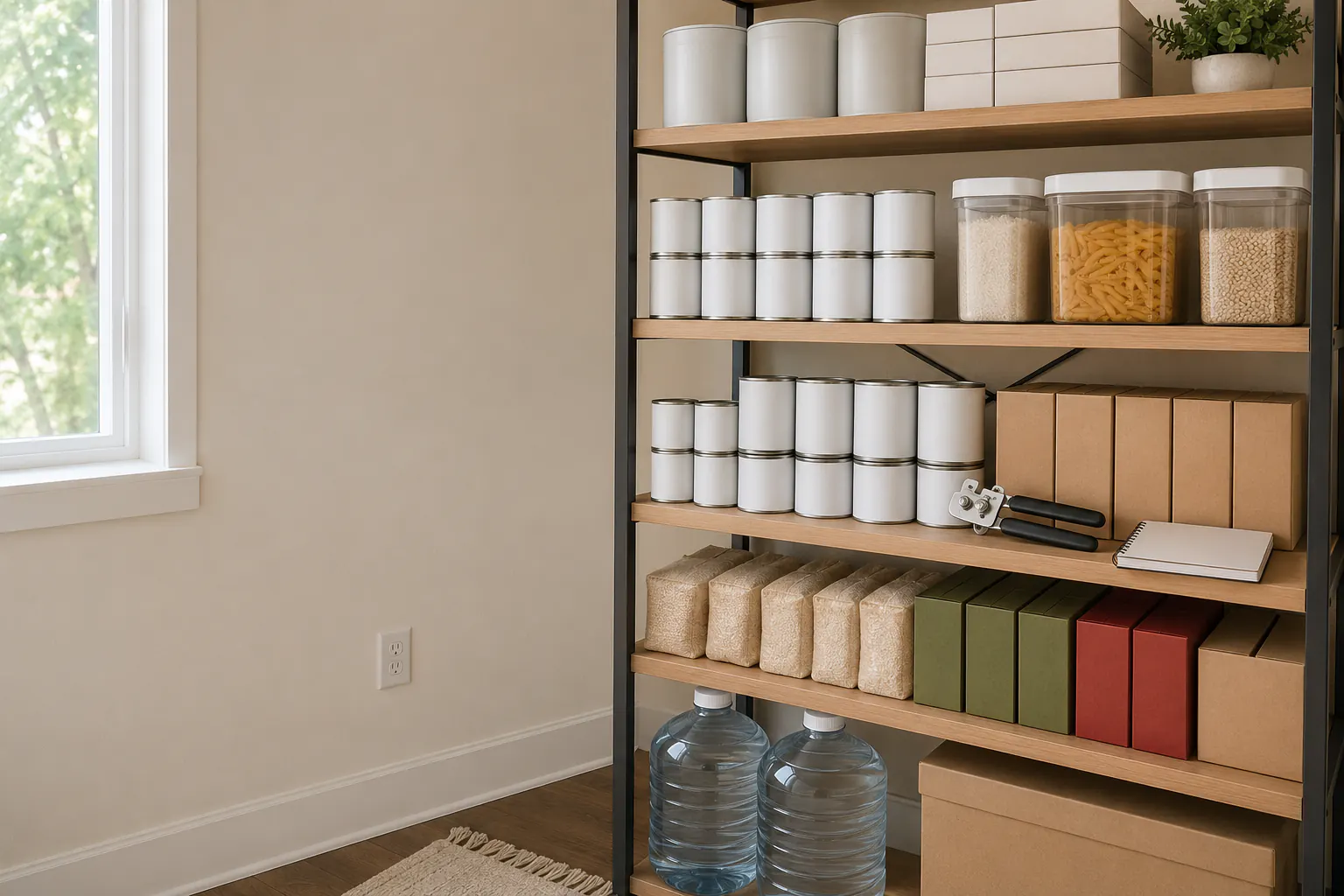
A practical household path for building and using an emergency food reserve: quantity, rotation, limited-utility meals, outage food safety, and recovery.
This route organizes the published food-storage and outage-food-safety library around the decisions a household needs to make. It does not replace a clinician, a prescribed diet plan, a product label, or current food-safety guidance for a specific food and situation.
Food continuity path
Build a reserve that works on an ordinary Tuesday
Start with familiar meals and usable quantities, then separate pantry planning from the decisions that protect refrigerated food when power is interrupted.
Begin with ordinary meals, a realistic household size, and the days you can actually support. A visible, usable reserve is more valuable than an ambitious shelf that never rotates.
Use the household's actual people, days, and meal pattern to turn a vague supply list into a starting quantity. The result is a planning estimate, not a nutrition prescription.
Separate shelf-stable meals that need little water or fuel from foods that need full cooking. Treat safe water, ventilation, fuel, and appliance limits as part of the meal plan.
Refrigerated and frozen food need their own timeline, temperature record, and discard decisions. Do not use a pantry checklist to decide whether perishable food is safe.
Clean and restock only after the food-safety decision is complete. Note what ran out, what was hard to cook, and what the household would not choose again.