
After an outage, the food decision comes first and the cleanup comes second. Do not start washing shelves while a household is still deciding which food is kept, cooked, refrozen, or discarded. Use the current Power Outage Food Safety reference for that decision. Once the questionable or spoiled food has been removed according to the applicable guidance, this page helps clean the empty appliance and restore a usable food-storage space.
This is not a repair guide. It does not tell a reader to work on electrical parts, refrigerant lines, sealed components, controls, or a flooded appliance. It also does not decide whether an appliance is damaged, whether power is stable, or whether a household’s food is safe. Those are different questions with different owners.
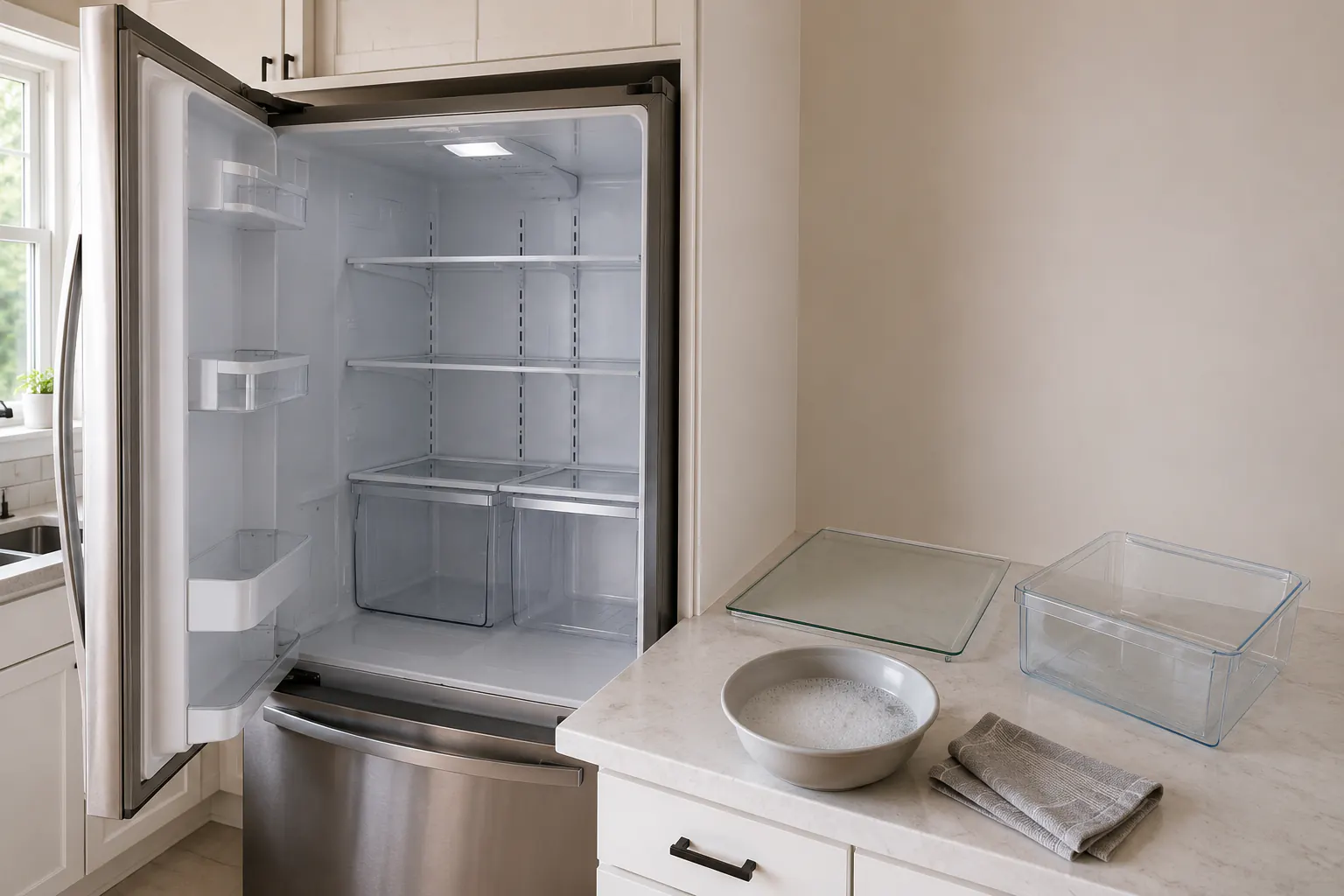
Separate the food decision from the cleaning job
Food that looks or smells normal is not automatically safe, and food with an off odor is not the only reason a food-safety chart may call for disposal. Do not use the cleanup task to revisit a decision by taste-testing, inspecting packaging, or trusting a smell alone. The food-safety reference remains the single route for refrigerator, freezer, cooler, food-category, temperature, discard, cook, and refreeze decisions.
Once that decision is complete, make a simple cleanup boundary:
- Remove the food chosen for disposal and keep it away from food that has not yet been handled.
- Empty removable storage pieces only as the manufacturer allows.
- Clean the interior, shelves, crispers, ice trays, door, and gasket as separate surfaces.
- Allow the appliance to air out before placing food back inside.
- Stop and seek appliance, building, utility, or flood-specific help when the equipment condition is uncertain.
This sequence prevents a rushed kitchen from mixing a food-safety choice, a waste task, chemical use, and an appliance repair into one uncontrolled project.
Prepare the space before taking anything apart
Keep children, pets, and people who do not need to help away from the immediate work area. Clear a stable surface for shelves or bins, but do not use that surface for food preparation until it has also been cleaned. Have ordinary dish detergent, clean water, clean cloths or disposable towels, and the cleaning materials specified by the current USDA and manufacturer instructions ready before beginning.
Read the appliance instructions for removable parts and surfaces. A refrigerator or freezer can have glass shelves, plastic bins, coated panels, lights, dispensers, an ice maker, drawers, seals, and components that should not be forced, soaked, or removed by a household user. Do not pry, disassemble panels, touch wiring, or make a repair decision because an odor is unpleasant. If a light, outlet, cord, display, plug, breaker, water line, ice maker, or any part of the appliance behaves abnormally, stop and use the manufacturer or a qualified appliance professional route.
For an apartment or shared building, the appliance may belong to the owner or property manager. Document the non-sensitive condition through the approved maintenance route rather than attempting a repair. The plumbing emergency guide handles water-supply and leak stop rules; it does not authorize refrigerator repair.
Remove food and removable pieces deliberately
Dispose of food only after the applicable food-safety decision has been made. Follow local waste instructions, especially if a building uses shared chutes, containers, or pickup rules. Keep the disposal bag closed and avoid resting it on food-preparation surfaces. If the household is still using a cooler, keep that cooler separate from the cleaning area and follow the cooler and ice guide for its organization and factual record.
USDA guidance for spoiled-food odor cleanup begins with removing shelves, crispers, and ice trays. Take out only the pieces designed to be removed. Set them on a washable surface in a way that does not create a trip or cut hazard. Do not assume a cracked shelf, swollen panel, damaged ice component, loose seal, or electrical issue is a cleaning problem. It may be a reason to stop and consult the manufacturer, a qualified professional, or the building owner.
If a refrigerator or freezer was exposed to floodwater, sewage, fire residue, or another contamination event, do not use this page as the cleanup plan. Floodwater can carry contamination that changes both food and equipment decisions. Move to Safe Drinking Water After a Flood for the authority-led water boundary, and use the incident-specific property and public-health instructions. A power outage is not the same kind of event as a flood.
Wash first, then use the authorized sanitizing step
USDA’s refrigerator and freezer guidance distinguishes washing from sanitizing. Wash removable shelves, crispers, and ice trays thoroughly with hot water and detergent, then rinse with the sanitizing solution specified in the authority guidance. Wash the interior of the refrigerator or freezer, including the door and gasket, with hot water and baking soda before the same authority-led sanitizing rinse.
The current USDA emergency guidance specifies a sanitizing solution of one tablespoon of unscented liquid chlorine bleach per gallon of drinking water for these surfaces. Measure the ingredients rather than guessing. Use only an unscented liquid chlorine bleach suitable for the stated use, follow its label, and do not make a stronger mixture in the belief that it will clean better. The manufacturer instructions can be more restrictive for a particular surface, dispenser, or component; where they conflict, stop and obtain appliance-specific direction.
Never mix bleach with ammonia, acids, vinegar, toilet cleaners, drain cleaners, alcohols, solvents, or another cleaning product. Do not combine the USDA sanitizing step with an odor remedy in the same container. Keep the work area ventilated according to the product label, avoid splashing, and keep cleaning products in their original containers. The emergency sanitation and hygiene guide covers broader household hygiene boundaries, but neither page turns a chemical label into an appliance-repair instruction.
The goal is not to perfume the appliance or make it appear new. The goal is a cleaned interior and removable surfaces that have been handled under the applicable guidance, with no food returned until the refrigerator or freezer is operating normally and the household has completed its food plan.
Clean the gasket and door without forcing parts
The door gasket deserves attention because it can retain residue and odor, but it is also easy to damage by pulling, scraping, or using an abrasive material. Clean only accessible surfaces as the appliance instructions allow. Do not remove the gasket, use a sharp tool, or force a seal into place. Avoid solvents, abrasives, and cleaners that can damage an interior finish or leave a chemical taste or odor in future food or ice, as USDA refrigeration guidance cautions.
If the door does not close normally, the gasket is torn, the appliance is warm after restoration, water is leaking, a panel is damaged, or the unit makes an unfamiliar electrical sound, stop. A clean interior does not establish that the appliance can safely hold temperature. The home backup power hub can help a household plan essential loads before a future outage, but it does not authorize connecting or repairing a refrigerator.
Let the appliance air out, then reassess its condition
USDA’s emergency guidance calls for leaving the door open for about fifteen minutes after the first cleanup to allow free air circulation. Keep the area controlled while the door is open so a child or animal cannot climb into the appliance or interfere with it. Do not leave an unplugged or discarded appliance accessible where someone could be trapped. If an appliance must be removed from service, follow local waste-provider and manufacturer instructions; older units can create a serious entrapment hazard if their door or latch remains functional.
An odor can outlast the initial cleaning. USDA notes that odor-removal procedures may need to be repeated. Its published options include airing the unit out, an equal-parts vinegar-and-water wipe used separately from bleach, and odor-absorbing materials such as baking soda or coffee grounds in a shallow container. Keep those options separate from the sanitizing step, and do not place a loose material where it can enter a fan, drain, dispenser, or inaccessible component.
If the odor remains after the authority and manufacturer-compatible measures, do not cover it with fragrance and resume ordinary storage as though the issue were solved. The appliance may need a qualified assessment or removal from service. That is a condition and maintenance question, not an invitation to use stronger chemicals or dismantle the appliance.
Return food only after the storage system is ready
Before food goes back in, confirm that the appliance is assembled as intended, its removable parts are dry and seated correctly, the door closes normally, and the unit is operating normally under its own instructions. Then return only food that the household has already decided to keep using the current authority guidance. Do not put discarded-food bags, cleaning supplies, open bleach, or a written food-decision worksheet inside the appliance.
Use this moment to reset the practical household plan:
- put the appliance thermometer back in its intended place if the manufacturer permits it;
- return the food outage timeline to household records or destroy it when the incident is closed;
- restock ordinary cleaning supplies without treating them as food or medication supplies;
- update the emergency food storage plan if the outage exposed a realistic gap; and
- write down an appliance service or building-maintenance question that remains unresolved.
That final list is a recovery checklist, not a declaration that the refrigerator, freezer, food, or home is safe. It gives the next household review a useful starting point without replacing the authority and professional decisions that belong elsewhere.
Stop conditions that need another route
Pause this guide and use a more appropriate authority when any of the following is true:
| Condition | Better next route |
|---|---|
| Food has not yet been evaluated after the outage | Power Outage Food Safety |
| Food is still being kept in a cooler | Cooler and Ice Food Safety |
| The household needs an observation record | Food Outage Timeline and Temperature Log |
| Medication or a medical product was stored in the appliance | Clinician, pharmacist, manufacturer, or supplier; then medical continuity planning |
| Floodwater, sewage, fire residue, or unknown contamination reached the appliance | Current public-health and incident-specific guidance, not this outage cleanup page |
| There is damage, a leak, an electrical symptom, a failed seal, or abnormal operation | Manufacturer, qualified appliance professional, property manager, or utility as applicable |
The safest cleanup is a limited one: remove the decided food, wash, use the authorized sanitizing step, air out, and stop whenever the problem becomes an appliance, electrical, contamination, or clinical question.